“The Nord Stream Story Is Not Over” — Bojan Pancevski
Four years have passed since the Russian Nord Stream 1 and Nord Stream 2 gas pipelines were sabotaged in the Baltic Sea. The Wall Street Journal reporter Bojan Pancevski spent three years working on “The Nord Stream Plot: The Inside Story of the Explosions That Shook the World,” published in spring 2026. In the book, he reconstructs the sabotage, describes the work of German investigators—who were aided by images from automated speed cameras—and tells the story of the sabotage team, which included both military personnel and civilians. This autumn, Ukrainian veteran Serhii Kuznietsov, who was detained in Italy last year, is due to go on trial in Hamburg. German investigators believe he coordinated the team.
On the “When Everything Matters” podcast, journalist Nataliya Gumenyuk speaks with Bojan Pancevski about Vladimir Putin’s main geopolitical project in Europe, the role Nord Stream played on the road to full-scale war, the investigation into the sabotage of the pipelines and the accusation that Ukrainians committed a war crime, as well as who may have been behind the destruction of the Russian pipeline.



Bojan, welcome. So many people in Kyiv have asked to borrow your book, “The Nord Stream Plot: The Inside Story of the Explosions That Shook the World,” that there is now a genuine waiting list. I also learned a great deal from it. Why is the story of this pipeline sabotage so extraordinary?
The book was written primarily for a Western audience—a global reader who does not know Ukraine as well as Ukrainians do. The war has changed enormously since then. Today, the Armed Forces of Ukraine can strike targets across Russia, in the Mediterranean and Baltic seas, and in other parts of the world—and they do. Against that backdrop, the attack on Nord Stream looks like the first of many operations against Russian assets abroad, some already under way and others still to come. For me, this operation matters above all because it is unique in the history of covert intelligence operations. Since the Second World War, critical infrastructure on this scale had never been destroyed in this way. An extraordinarily complex operation was carried out with simple means and minimal resources. That is broadly characteristic of how Ukraine is fighting this war. I would identify three main features of the “Ukrainian style” of warfare: asymmetry, the ability to learn quickly, and innovation. Ukrainians do things no one has tried before, despite extremely limited human, technical and financial resources. That is what surprises readers in Britain, the United States and Germany, where people are accustomed to enormous government spending, lengthy procedures and a large administrative apparatus. The operation’s geopolitical consequences also matter, because this story is not over. Since the explosions, Putin has been trying to restore and restart the pipelines. According to my information, the Kremlin has made clear to Witkoff and Jared Kushner that Nord Stream is one of the key issues in reaching any agreement. The subject has repeatedly arisen in negotiations since the middle of last year. Even Sergey Lavrov has said publicly: “We will restart Nord Stream—we are discussing it.” This truly is Putin’s main geopolitical project in Europe. It took 16 years to build, 20 years to plan, and cost $20 billion. The project had two aims: to bypass Eastern Europe and Ukraine by delivering gas directly to Germany, and to bind Western Europe tightly to Russia by creating energy dependence. Opponents warned of this trap from the beginning, and their fears proved justified. It was the world’s largest offshore gas-pipeline system, stretching roughly 1,200 kilometers, yet it cost only about $250,000 to destroy. The operation was carried out by a team of seven—four divers and three military personnel. The people themselves were my main reason for writing the book. When I met those who carried out the operation and the German investigators pursuing them, I realized what remarkable characters they were. Their story could not fit into a conventional article—it needed a book.
I once attended an event where, as we discussed Russian war crimes, a rather strange journalist kept his hand raised and insisted: “Here in the Netherlands, people are starving and freezing because you Ukrainians blew up Nord Stream.” I explained that the system was not supplying gas at the time and that the situation was not critical. What actually happened?
This is an important question, because many people in the West manipulate the issue. Alternative for Germany, for example, uses the sabotage as one of its main arguments in its campaign against the government of Chancellor Friedrich Merz, who strongly supports Ukraine. The party is effectively calling for an end to aid for Ukraine, the reopening of the pipeline and renewed friendship with Putin. Its representatives even tried to cite my book in the Bundestag by taking quotations out of context, though the government immediately rebutted those distortions. The facts are straightforward: at the time of the attack, the system was not supplying any gas at all. Nord Stream 1 entered service in 2011, while Nord Stream 2 was completed in October 2021 but never began operating because of the full-scale invasion. Both pipelines were under technical pressure and filled with gas, but no deliveries were taking place. Putin himself shut down Nord Stream 1, blackmailing Germany and inventing pseudo-technical problems at Gazprom. It was political pressure designed to force Berlin to abandon its support for Ukraine. Before the explosions, many in Europe hoped supplies would resume, because Angela Merkel had spent years insisting that this was a purely commercial project and that Russia needed the money. But Putin does not think in business terms; he thinks in imperial ones, seeing himself as the heir to Peter the Great or Ivan the Terrible. The West struggled to understand this because it had seen no leaders of that kind since the Second World War. Claims about “Europeans freezing” are an outright lie. No one froze in Germany, the Netherlands or France. Europe quickly replaced Russian gas with spot-market purchases, liquefied natural gas and increased imports from Norway. There was indeed an energy crisis and prices were high, but the causes were the war and Putin’s blackmail. Before the invasion, Russia supplied 50 percent of the EU’s gas imports and 55 percent of Germany’s. The damaged pipelines could now be repaired technically, as Russian experts also acknowledge. But the project is under severe US and EU sanctions. Unless those sanctions are lifted, the pipelines will remain dead. So blaming Ukraine for “the cold and high prices in Europe” is baseless. Prices had already risen because of the war before the explosions, and the conflict surrounding Iran is now adding further pressure.
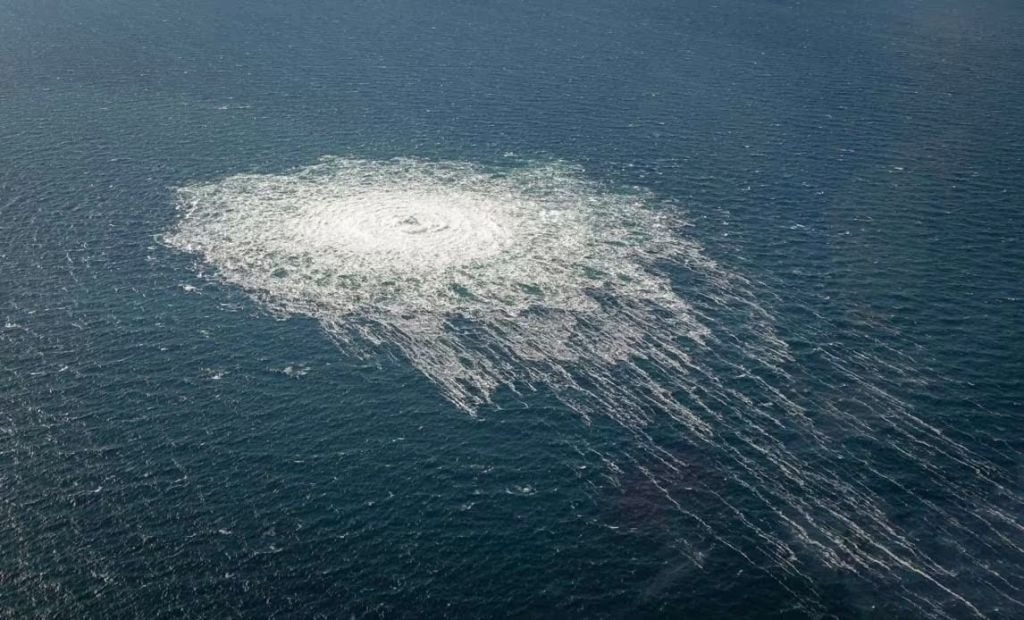
Gas leaking from the damaged Nord Stream pipelines near the island of Bornholm. Photo: Danish Defence / Anadolu Agency via Getty Images.
Tell us more about how Germany became dependent on Russia and what we should understand about that relationship—especially in light of Angela Merkel and her memoir, “Freedom,” which I still have not been able to bring myself to read. There are already interesting projects in Germany, such as Hito Steyerl and Oleksiy Radynski’s exhibition “The Leak: The Other Side of the Pipeline,” whose creators trace this gas connection back to the “Deal of the Century” in the 1970s. What was the essence of this relationship?
This is a complex and ambiguous subject that ultimately became a problem for Germany itself. I lived in the country for a total of ten years and know it quite well. As for Merkel’s memoir: if you do not want to read the book, you can read my highly critical review instead. I was struck by how few mistakes she acknowledges from her 16 years in office. She describes traveling to Siberia to meet Putin and eating bear-meat steak with him, and her position can be reduced to this: “Everything was right. Gas was cheap, the economy grew, and the war that later began was an unfortunate accident.” The problem is that Nord Stream 2 was built after 2014—after the annexation of Crimea and the beginning of the war in Donbas. People within her own government asked why it should be built, but Merkel’s logic was purely economic. Her national security adviser, Jan Hecker, told me directly: “It is our sovereign right, and neither Ukraine nor Trump will tell Germany what to do.” This thinking rests on a philosophy dating back to Chancellor Willy Brandt: “change through trade” (Wandel durch Handel). Germans believed that tying themselves closely to a potential enemy would create an interdependence that made war impossible. They had the example of France before them: after centuries of conflict, the two countries became close allies following the Second World War. They decided they could repeat that success with Russia. Nord Stream became this philosophy embodied in steel and concrete. But the calculation was wrong. When Putin saw that the Germans were building the pipeline even after the events of 2014, he concluded that he could do anything he wanted in Ukraine and Europe would still buy Russian oil and gas. Even today, nearly five years after the full-scale war began, the EU has no complete embargo on Russian gas because Europe still depends on it. Anders Fogh Rasmussen, the former NATO secretary general, personally told Merkel at the time: “This is a geopolitical weapon and a path to war.” She replied: “No, it is a purely private commercial project.” Merkel’s decision to accelerate Germany’s phase-out of nuclear power made matters worse. Gas was chosen as the replacement. Germany’s strategy became the construction of gas-fired power plants because gas was considered “cleaner” than coal. Russia consistently offered the cheapest gas, deepening Germany’s dependence. Today, most analysts and military officials agree that Nord Stream 2 gave Putin an additional incentive to launch the full-scale invasion of Ukraine. The story has deep roots. The Battle of Stalingrad was fought in part because Hitler wanted access to Baku’s oil; before that, Soviet oil supplied the Nazi blitzkrieg across Europe under the Molotov–Ribbentrop Pact. In the end, the “cheap gas” Merkel writes about proved to be the most expensive in history. Over the past several years, Germany has spent hundreds of billions of euros in an emergency effort to escape the trap. The supposed savings had to be repaid with enormous interest after she left office.
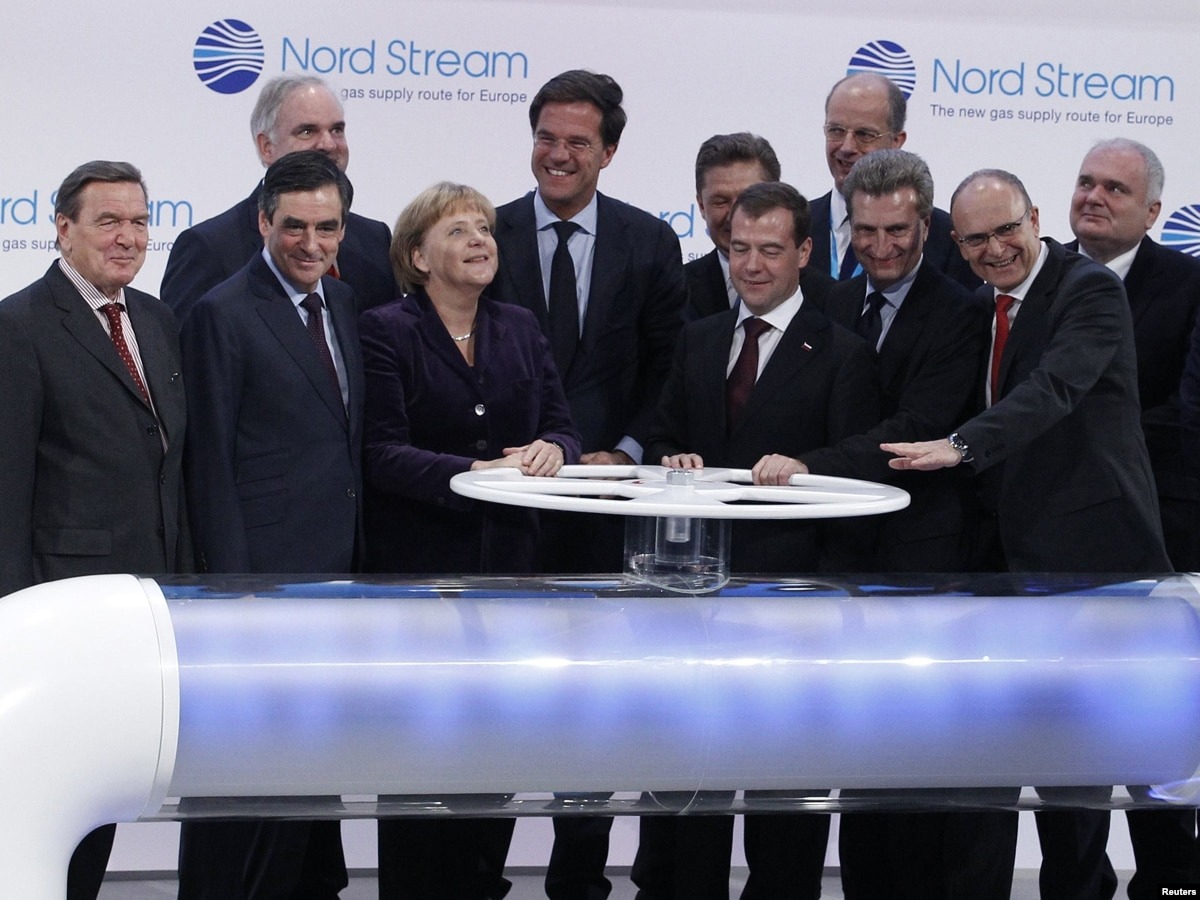
Angela Merkel, Dmitry Medvedev and other European politicians at the launch of Nord Stream in Lubmin. Photo: Sean Gallup / Getty Images.
You said that the people at the center of the story—Ukrainian civilians and military personnel—were your main reason for writing the book. You describe them in detail, but without identifying information. What impressed you most about them? What makes them exceptional, and what should Ukrainians themselves know about them?
First, I want to stress that the book contains no legally sensitive information that German investigators did not already possess. Details about these people’s daily lives, habits or childhoods make the story compelling, but they are irrelevant to a criminal investigation. What readers should know is that these were extraordinary yet ordinary people, driven by extraordinary circumstances to go beyond what seemed possible. Planning began roughly a month after the full-scale invasion, immediately after the Battle of Kyiv. The organizers—experienced intelligence and counterintelligence officers—had themselves defended the capital with weapons in hand. Once the enemy withdrew, they began considering how to inflict the greatest damage on Russia and reached a logical conclusion: they had to strike its main source of revenue, the oil and gas sector. In essence, this is the same strategy Ukraine is now pursuing successfully with drones and long-range strikes on Russian oil refineries and terminals. The most interesting challenge emerged when they discovered that the Armed Forces of Ukraine had no combat divers capable of working at depths of 70 to 80 meters. Special forces normally operate close to the surface; those depths require civilian technical-diving skills and special gas mixtures because pure oxygen becomes toxic there. The military therefore recruited civilian diving instructors with 20 years of experience. They took an extraordinary risk not for money or a career, but out of patriotism, at a moment when their country’s fate hung in the balance. One diver descended to 80 meters while acutely ill with COVID-19—something close to biological absurdity. The team also included a woman who had a civilian business abroad but returned to Ukraine and personally delivered machine-gun mounts and humanitarian aid to the front. The boat was captained by a man who left a comfortable life in the EU, returned home and enlisted. Most of those aboard were Russian-speaking—an important detail for understanding the Ukrainian political nation, and one that Western theorists such as John Mearsheimer often miss. These people embody the spirit that has prevented Putin, despite all his nuclear weapons, from subjugating Ukraine. Even the head of the German investigation pursuing the team admitted to me that if the chancellor gave the Bundeswehr a similar order, it would spend three or four years coordinating the operation, assemble a fishing fleet and submarines, and provide a separate boat for health-and-safety inspectors. The Ukrainians carried it out with minimal resources. To the Germans, they are criminals, and the investigation will take the case to court. But in Poland, the Baltic states, Britain and the United States, the sabotage is regarded with sympathy—or at least quiet gratitude—because it spared European politicians from having to make painful decisions.
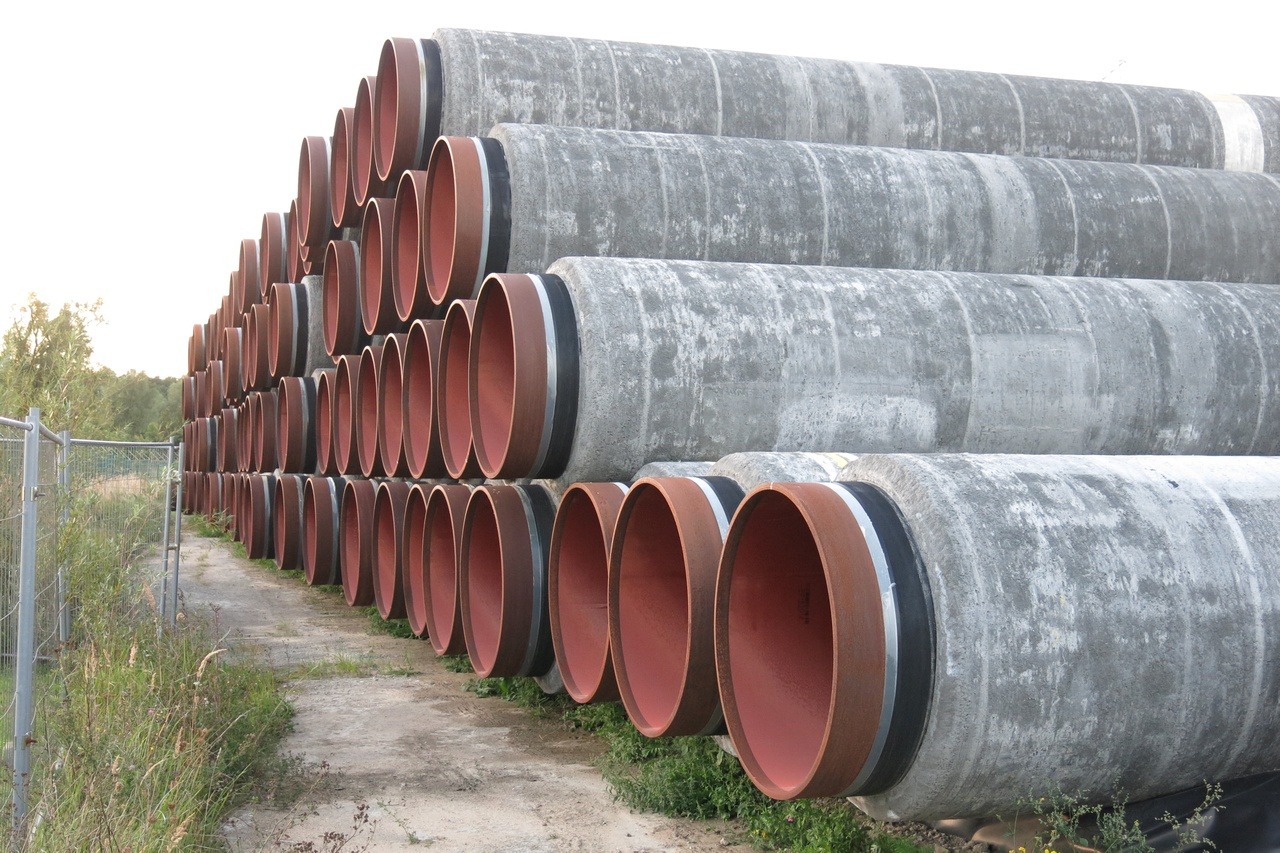
Pipes for Nord Stream 2 at Mukran Port on the island of Rügen. Photo: Pedant01 / Wikimedia Commons.
Another difficult question is who authorized the operation. Ukraine’s Presidential Office officially denied involvement, and Zelensky says he learned about it from the news. At the same time, this was a military operation. How do you interpret that?
This was a military operation conducted within one of the Armed Forces of Ukraine’s elite units, and two or three generals were involved in planning it. The highest-ranking officer to approve it at an early stage was General Valerii Zaluzhnyi. German prosecutors are not interested in whether Zelensky knew about it. What matters to them legally is that the participants had passports issued by the Security Service of Ukraine and that three of them were active-duty military personnel. Front-line officers cannot travel around Europe on a private boat during wartime without their command knowing; to the investigators, that makes it indisputably a state operation. Did Zelensky know? In the book, I give the position of his office, which says it learned of the explosions from television. Zaluzhnyi has declined to comment, although beneath a Facebook translation of my article he left a rather telling remark: “Interesting days lie ahead, but we will never be ashamed.” The Hamburg trial will inevitably push this story to a new level, both in the media and in law, and force everyone to clarify their position. I am extremely interested to see whether General Zaluzhnyi comments, especially given his possible political ambitions.
Let’s turn to the trial itself. One suspect was in Poland, but was not extradited to Germany: in the context of the war, a Polish court did not consider the Nord Stream sabotage a crime. Germany takes a different view. What exactly is the German prosecution trying to prove, and what is important to understand about this case?
The trial is due to begin in early October this year, and it is extremely important. Ukrainian veteran Serhii Kuznietsov will be the defendant. In 2022, he was a captain in the Armed Forces of Ukraine, took part in the defense of Kyiv and commanded an air-defense unit; before that, he had served in the Security Service of Ukraine. After leaving military service, he worked with the Ministry of Defense, helping the country, among other things, to procure weapons. He has been charged with a war crime, which is very serious. Having followed the investigation from the beginning, I was surprised by that classification. Initially, the case involved purely criminal charges: unlawfully causing an explosion, endangering Germany’s constitutional order, and sabotage. But after his arrest, prosecutors radically changed their strategy. They realized the defense would invoke combatant immunity: Kuznietsov was a serviceman acting in the course of a war against Russia and therefore could not be tried under ordinary criminal law. That is a very strong argument in international law. The German prosecution therefore effectively said: “We accept that this was a war and that he was a serviceman. But we do not accept that Nord Stream could lawfully be destroyed as part of that war, because we regard the pipeline as German rather than Russian. The Russians were merely shareholders, but the gas was coming to us. You attacked our infrastructure, and that is not a legitimate military target.” On that reasoning, the sabotage was classified as a war crime to deprive the defendant of combatant immunity. The indictment has already been filed; it is a complex legal document more than 100 pages long. There is enormous irony here. In this horrific war—which is itself one continuous Russian war crime against Ukraine—the first person to be tried in Europe for a related “war crime” will be a Ukrainian defender. The case will attract tremendous attention, including in the German media. The judges will face a difficult question: if no one was killed or injured in the attack, and the pipelines themselves belonged partly or wholly to Russia or to consortia in which Russia participated, is this really a war crime? The defense will argue that Nord Stream was a lawful military target: it was not an ordinary gas pipeline, but a geopolitical weapon. Gazprom itself is also a direct participant in the war. It had its own armed formations fighting in Donbas, and the European Union imposed sanctions on it specifically because of its involvement in the war against Ukraine. This creates a strange legal contradiction. Germany frequently applies universal jurisdiction, with its courts hearing cases against foreign citizens accused of crimes against humanity—members of ISIS for the genocide of the Yazidis, representatives of the Assad regime, or the Taliban. Yet it has never used universal jurisdiction against Russian service members for mass crimes in Ukraine, while it has used ordinary jurisdiction to charge a Ukrainian officer with a war crime. This will be a unique case at the intersection of German criminal law, international law, the law of the sea, and the law of armed conflict. Its seriousness is underscored by the fact that a special five-judge panel at the Higher Regional Court in Hamburg will hear it. Ukraine’s government and military leadership will not be able to pretend for long that the trial does not exist. Serhii Kuznietsov is a veteran who defended Kyiv and a father of four. When he stands trial before cameras from around the world, silence will be impossible, because the state has obligations to its service members.
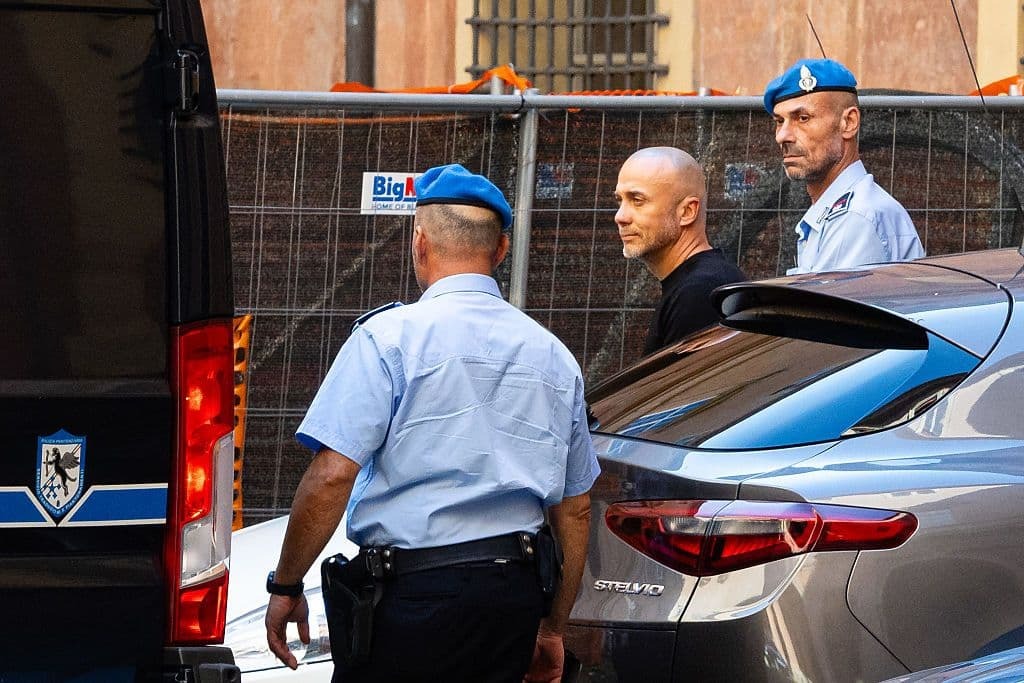
Serhii Kuznietsov after a hearing at the Bologna Court of Appeal. Photo: Massimiliano Donati / Getty Images.
There is something troubling here. Ukraine has opened criminal proceedings into the Nord Stream sabotage. The Prosecutor General’s Office has issued vague statements, but the very existence of the case raises questions. How should we interpret it?
I would rather not comment on this in too much detail, because the issue is highly politicized, and I have not been in Ukraine since October 2025 and do not know all the details. But the very fact that a case has been opened is extremely serious, because it could potentially indicate cooperation with the German investigation. This creates a paradox. Under its Constitution, Ukraine does not extradite its citizens. In Poland, a judge released a suspect who had been detained under a German warrant, effectively ruling that sabotaging the pipeline was not a crime in the context of resisting Russian aggression, because Ukraine is fighting a just war. So a judge in Poland says it was not a crime, while the Security Service of Ukraine is investigating it in Ukraine. Does that mean Ukraine’s own law-enforcement system nevertheless regards the actions of its military personnel as criminal? If so, that will be extremely difficult to explain to Ukrainian society. The overwhelming majority of Ukrainians do not consider the destruction of Nord Stream a bad thing. Volodymyr Zelensky openly opposed the pipeline. I was in Berlin during his meeting with Merkel, when he desperately urged her to stop Nord Stream 2 and she simply brushed him aside. I wonder whether he considers its destruction a crime today. It is possible, however, that the investigation is merely a tactical or strategic move. If a Ukrainian citizen is convicted in Germany, for example, a bilateral agreement allows him to be transferred to Ukraine to serve his sentence. But if this is a genuine criminal case intended to impose punishment, it would create a dangerous precedent. Ukraine risks declaring criminal something that some of its European allies do not regard as a crime. I have spoken with senior officials in Finland, Estonia and France. Three years ago, one of Macron’s former close advisers told me that this was a brilliant Ukrainian decision that relieved pressure on all of Europe. The Ukrainian side should therefore think very carefully before taking such legal steps.
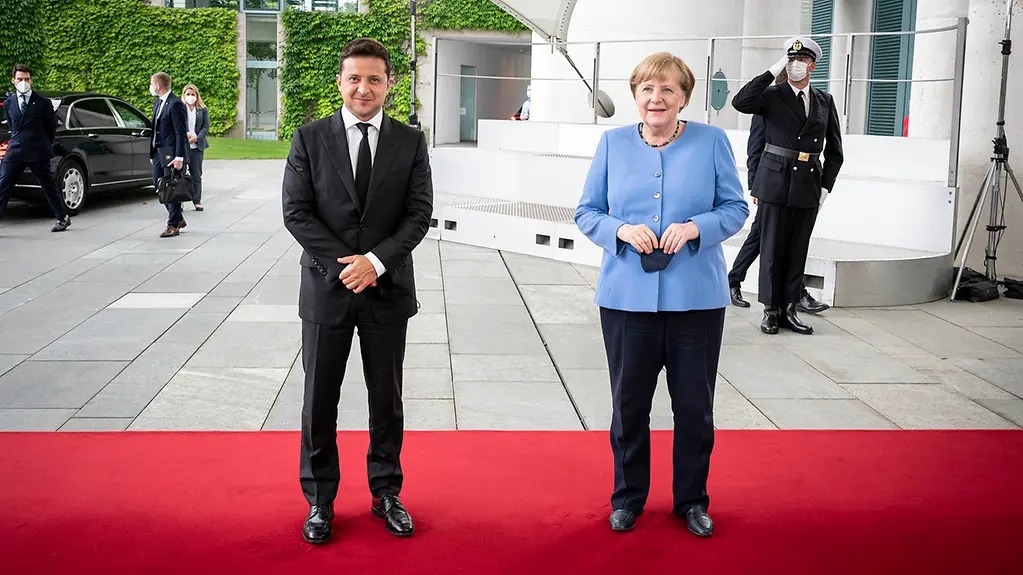
Volodymyr Zelensky and Angela Merkel during a meeting in Berlin where they discussed the completion of Nord Stream 2. Photo: Bundesregierung / Bergmann.
While preparing for this conversation, I saw a Facebook review of your book by a Russian dissident living in Germany. He praised the book, but then dismissed the Ukrainian lead and blamed everything on the CIA. Why is it so difficult for many people to believe Ukrainians did this?
It is hard for people to change their minds once they have committed to one theory, especially because the official indictment has not yet been made public. But blind faith in an “all-powerful CIA,” and in Ukrainians’ supposed inability to design such an operation, makes me smile. Technically, descending to the seabed and blowing up a pipeline is much easier than building drones that penetrate the world’s densest Russian air defenses and destroy oil refineries outside Moscow. At the same time, the narrative of an “all-powerful NATO” suits the Kremlin very well: it is easier for Putin to explain his defeats to Russians as a war against the West than to admit that little Ukraine “kicked his ass.” Dictatorships do not like the truth, so Russian intelligence agencies that had evidence of a Ukrainian lead were simply afraid to report it to Putin.
How did German investigators identify the people who ultimately became the subjects of the court case?
The German investigators did a truly brilliant job. When I first met them, I did not believe they would achieve anything, but in the end they accomplished an extraordinary amount. It was a classic investigation, combining traditional methods with modern technology and work on the ground. Of course, the investigators also had some luck. One key lead was an image from a speed camera. The boat used in the sabotage departed from a German port on the island of Rügen. One of the cameras captured a car driven by one of the suspects. In Germany, these cameras take high-quality photographs in which the driver’s face is clearly visible. At that point, investigators had no leads at all, and the people who had been aboard were ghosts to them. Then one investigator had a good idea: only two roads led to the port, so he ordered a review of every speed-camera image from the area. They went through about six thousand pictures before finding a car with Ukrainian license plates. That was the breakthrough. The image was uploaded to facial-recognition software, which found other photographs of the man online. He turned out to be a Ukrainian diving instructor. From there, the chain expanded: investigators found DNA traces, fingerprints and other evidence. They obtained lists of everyone who had stayed in local hotels and Airbnb properties during that period and spent weeks interviewing tourists and examining the photos and videos on their phones. The boat was beautiful, and the captain had moored it with unusual skill, so one holidaymaker filmed the maneuver; the video later reached the police. Traces were also left because the operation was far from perfect. As many as half the team were civilians, and the military participants had no special training for covert operations abroad either. Under pressure and in wartime, people inevitably make small mistakes. Without that speed-camera image, the case might never have been solved. But every operation leaves traces—even those conducted by the world’s best intelligence services. Mossad agents were similarly captured by surveillance cameras during an assassination in Dubai.
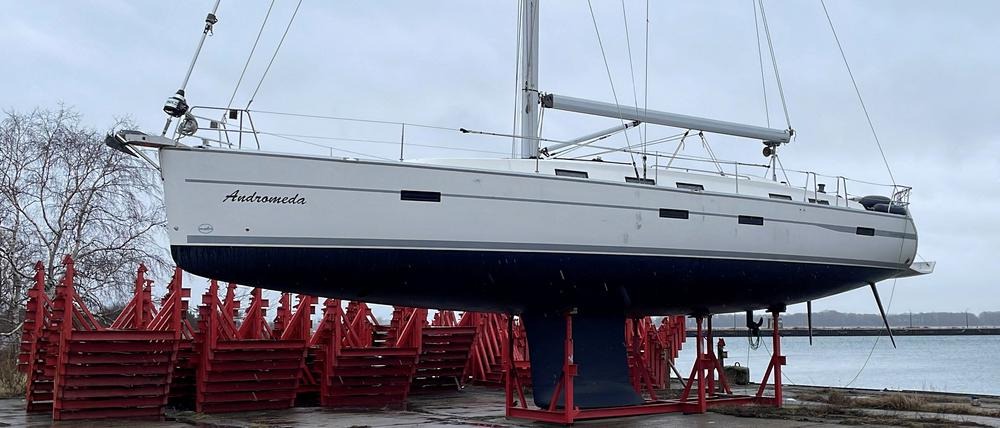
The yacht Andromeda, which German investigators have linked to the Nord Stream sabotage, in dry dock on the island of Rügen. Photo: Oliver Denzer / Reuters.
Returning to the people in the book: did you speak with them again later? How do they now view what they did, its consequences, and the way the Ukrainian state has treated them?
Yes, I spoke with them after the operation and continued talking to some of them until recently. Of course, I cannot speak for everyone, because many people were involved. But at least some of them are deeply bitter and disappointed. They feel abandoned. They believe they did their duty: they volunteered to risk their lives, and they truly did. They were told it would help Ukraine and Europe break free from their toxic dependence on Putin’s gas. Now they are being hunted: arrest warrants have been issued, and they cannot travel abroad on their own passports because they would be detained. They are trapped by this story. What angers them most is that the military and political leadership has not come to their defense. They believe someone—a general or even the president of Ukraine—should appear on television and say: “We did this, we are proud of it, and these people are not criminals.” Regardless of who knew about the operation and when, its consequences were clearly positive for the country. At the same time, there is a painful contrast. The military participants received at least some internal recognition—a letter of appreciation from the general who commanded them. The civilians received nothing but international wanted notices. Yet there is an almost complete consensus, both within Ukraine’s security institutions and across its political establishment, that Nord Stream was harmful to Ukraine, while Zelensky always openly opposed the project. These people therefore do not understand why they have been left to fend for themselves. It is important to remember that they are ordinary people with families, jobs and responsibilities. The man due to stand trial in Hamburg is a father of four; his youngest child is about five, and his family depends on him entirely. For them, this is a very bitter reality. Whether anything will change with time is difficult to say. I spoke with senior officials in Ukrainian intelligence, and one of them told me—I quote him in the book—that sooner or later these people will certainly receive medals, because the story will not remain secret forever. From the standpoint of the national interest, it is difficult to argue that they acted against Ukraine’s interests.