“Hope Is a Strategy, Not an Emotion” — Igor Blažević
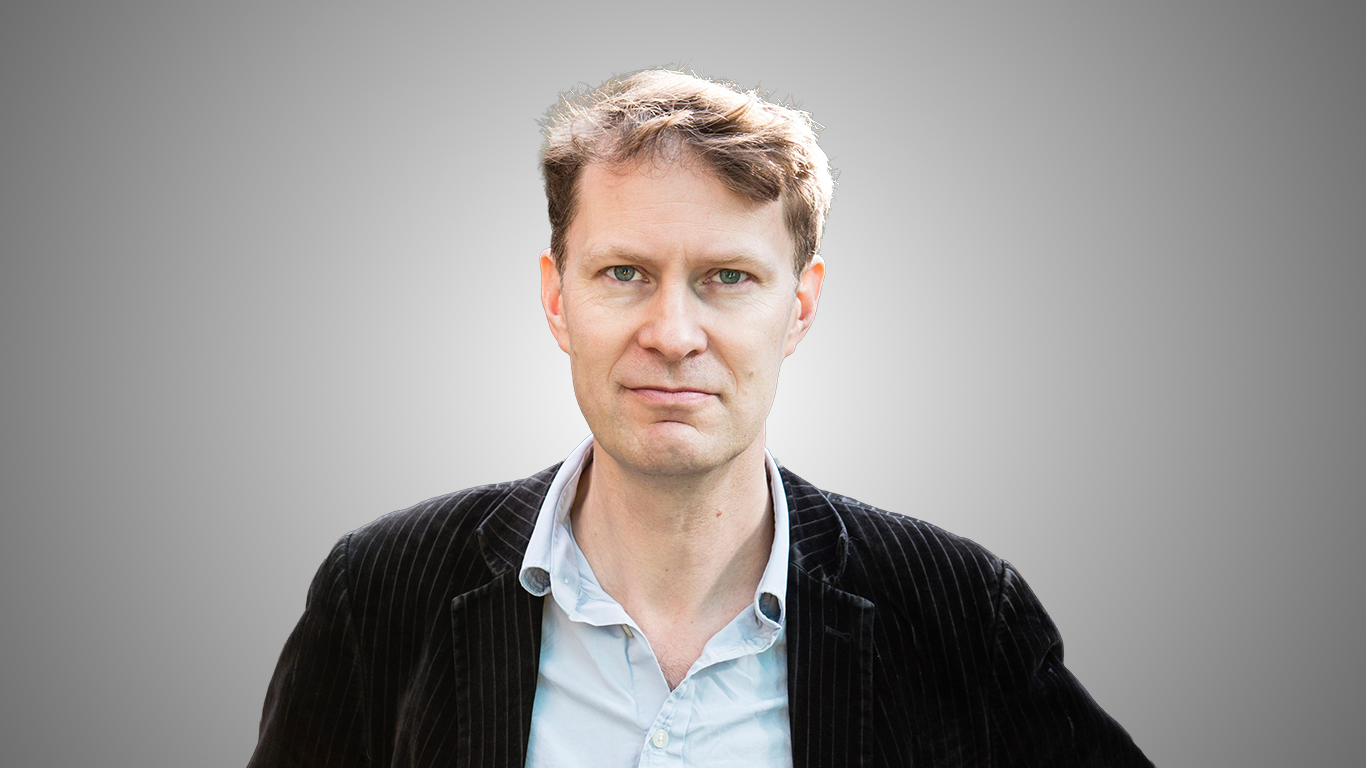
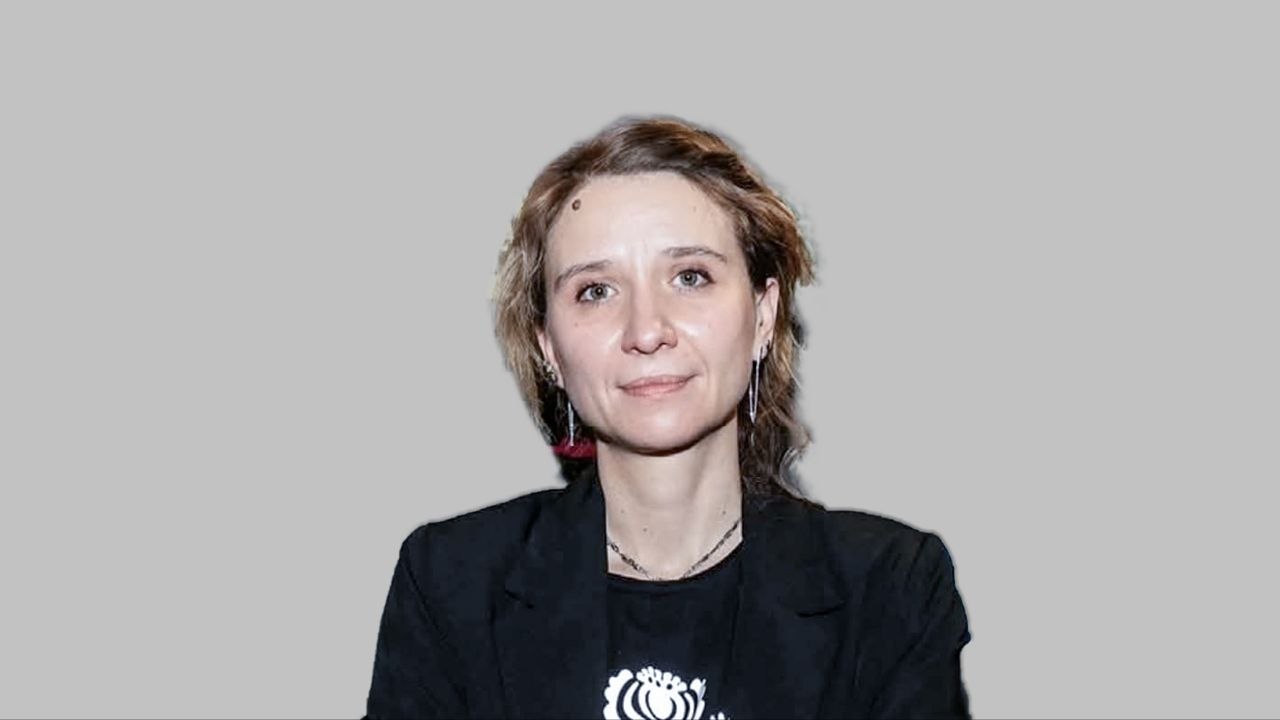
Igor Blažević is a European human rights advocate of Bosnian origin and an expert on the development of democracy and civil society. For more than 17 years, he worked at the international humanitarian organisation People in Need, where he headed its Human Rights and Democracy programme. Blažević also founded One World, Europe’s largest human rights documentary film festival. For many years, he has worked with civic activists in countries experiencing wars, authoritarian regimes and democratic transitions.
In the podcast “When Everything Matters”, journalist Angelina Karyakina speaks with Blažević about the state of democracy and polarisation around the world, the lessons he drew from the Balkan wars, the struggle against Myanmar’s military junta, why the post-war period can be harder, and why he rejects the word “victim”.


Igor, thank you for making time for us. Let us begin with a personal question: you have recently returned from a retreat. How do you feel after this experience, and what are the main conclusions you have drawn from it?
The ten-day Vipassana retreat was demanding: complete silence; no phone, laptop, reading or writing; waking up at four in the morning; vegetarian meals twice a day; and no food after noon. I arrived utterly exhausted and emotionally drained. Now I feel it was a necessary detox: my energy and desire to continue my work have returned. We meditated for nine hours a day, but I have only just touched on this practice — to go deeper, much more time is needed. Still, radically disconnecting from everyday life and sorting through my thoughts and emotions was already very helpful. When people live constantly with trauma, pressure and stress, it is important to notice their own limits in time. Then you need a practice that helps you stop, even for a few days, and restore your strength. This is a matter of responsibility towards the work we do. We need to understand when our reserves of energy are running out and replenish them in time. Vipassana became that experience for me, though a different practice may suit someone else.

My next question is about our overall state of mind: how pessimistic or optimistic is it today? How would you describe this historical moment from the perspective of the struggle for democracy? What has changed for democratic movements since the change of administration in the United States and the entire defence paradigm? Perhaps it is already time to speak of a new NATO paradigm: the United States is stepping back, and Europe has to defend itself. How important is this shift?
The United States’ withdrawal is part of a deeper process that did not begin with Donald Trump. It can be linked to the failures of the invasions of Afghanistan and Iraq, or to 2008, when major crises began to follow one another: the financial crisis, the Arab Spring and its defeat, the security crisis caused by terrorism and migration, Brexit and the rise of populism, the COVID-19 pandemic, Russian aggression and the consequences of climate change. They accumulate and create a sense of anxiety and loss of stability. At the same time, civil society often still thinks in the models and expectations of the 1990s. We need to acknowledge that we no longer live in the 1990s and reconsider our expectations and ways of thinking.
What exactly needs to be reconsidered? I am speaking from the position of a democratic country at war. Paradoxically, I feel safer and more confident in Ukraine than in many Western countries because I know what I am doing and what I am fighting for. Freedom and democracy are not abstractions here: I know what it takes to preserve them. So what should other societies reconsider?
For now, I would set Ukraine aside: in several respects, it is an exception in today’s world. The pain and tragedy you are living through are exceptional. But Ukraine also stands out because, much more than most societies, it has taken its fate into its own hands. You have stopped waiting for someone else to solve your problems and understood that you must do it yourselves. I think this internal shift began during the Euromaidan. After the Orange Revolution, responsibility for change was handed over to someone else. Later, society realised: this is our task. You have undergone a profound transformation. Most other societies are still waiting for the international community, the United States or the West to come, save them and solve their problems. Ukraine receives inadequate but still meaningful assistance because it lies within Europe’s security interests. The countries I work with are often far from what the West considers its own security sphere. They are left alone with struggles that are no less heroic and tragic. Democratic countries no longer support democratic aspirations in distant countries — that era has passed. Authoritarian regimes, meanwhile, act decisively, confidently and help one another: China supports Russia, and Russia and China support the military junta in Myanmar. The West generally does not act this way. In Ukraine’s case, it is primarily defending its own security, not Ukrainian democracy. Authoritarian regimes feel free enough to resort to extreme cruelty. They used to depend on the international community, the IMF and other institutions; now they can obtain money, technology and weapons from China. If we enter into a struggle, we must understand that we will face extraordinary cruelty. The international system and the UN are not performing their functions. And finally: the struggle for democracy is now taking place everywhere, including in established democracies. We do not know whether the United States will remain a democracy. Europe may preserve its democratic order, but lose geopolitical weight. Societies with long democratic traditions must therefore fight for their own democracy too.
Yes, but it is interesting to ask to what extent what is happening in some countries, including the United States, can truly be called a struggle. Even America’s democratic elites seem to want to sacrifice as little as possible while expecting change. They are not ready for a confrontation in which they would have to give up something important for the sake of their principles and democracy.
I disagree with you here. We have sufficiently persuasive empirical evidence that people all over the world aspire to democracy, justice, human rights and a free, fair society. That is why, in different countries, they rise up to fight again and again. In the United States, this cannot be reduced to party politics: a significant part of the citizenry self-organises and resists. During Trump’s first administration, many movements emerged that influenced public sentiment and, to some extent, contributed to his defeat in the next election. The problem is different: there are very many people who stand up for democracy, and it is difficult for them to develop a shared strategy and a coherent vision. Returning to the previous model of democracy is not a solution either — a better, renewed model is needed, but there is no shared understanding of it yet. At the same time, we are confronting very powerful forces. The global economy no longer creates a stable middle class; instead, it plunges people into anxiety about themselves, their families and their children’s future. Modern technologies also work against democracy, and authoritarian leaders skilfully exploit these fears. We are up against concentrated economic and technological power, while supporters of democracy are too numerous to self-organise easily. But I am not a pessimist: I am simply describing the situation, and I believe people will not give up.
You live in Prague, where we can see both a sharp turn to the right with Babiš’s government and strong civil-society protests. People are taking to the streets, including to defend public service broadcasting. As a journalist at Ukraine’s public broadcaster, it is very important for me to see thousands of people defending freedom of speech. At the same time, society is becoming increasingly polarised: it seems almost impossible for different groups to find common ground. Where do you think this polarisation comes from? And how do you see the changes in the Czech Republic, where you have lived and worked for many years?
What is happening in the Czech Republic now neither surprises nor depresses me. I expected it. If you followed Czech politics, it was quite obvious that Babiš would win the last election. It was also possible to predict whom he would form a coalition with. It was entirely foreseeable that they would try to weaken the system of democratic checks and balances and other institutions. To some extent, what I see here is happening in many other countries as well. A populist wins an election with the support of the majority and then seeks to substantially weaken democratic mechanisms in his own interests, so that he can enrich himself and face no limits on his power. Democracy, after all, is precisely about limiting executive power. So I expected this to happen. At the same time, I am fairly confident that Czech society and its institutions have enough resilience to defend themselves. The next four years, then, will be marked by constant attempts to weaken and dismantle the democratic system, and by society’s constant struggle to defend it. Our advantage is that democracy is not protected by civil society alone. We have a very good constitution, a president, a Senate and a decentralised political system with strong regional authorities and local self-government. At the institutional level, there are many safeguards that already create serious obstacles for Babiš and do not allow him to act as Orbán did, for example. A significant part of our economy is also independent of the state. Business, therefore, can also defend democracy. We have good media. The state system retains a high level of professional integrity. Many civil servants have strong professional principles. They do not submit so easily to the executive, partly because they are qualified enough to find better-paid work outside the public sector. So they are not afraid to defend certain red lines and say: “No, the executive cannot use threats to force us to do whatever it wants.” Civil society, activists and engaged citizens are therefore only part of the story. In reality, it is much more complex and encompasses an entire system of institutional safeguards that protects our democracy. But when I say I am confident in this, it does not mean we will not have to work very hard

Of course, everything works until it does not. Let us return to polarisation: where does it come from, and how can we get out of it? It is the million-dollar question, but we still have to ask it.
It is a difficult question, but I will try to outline a few factors. One of the most obvious is social media and its algorithms. Russia’s hybrid war against the West is also part of the problem. But there are deeper reasons. The modern global economy and globalisation undermine democracies around the world, generating one crisis after another. National governments are unable to protect societies adequately from these shocks. People feel that they are fulfilling their part of the social contract: they work, raise children, pay taxes and obey the law. Yet they still cannot pay their bills and do not know whether their children will have a better future. This builds up deep anxiety. Add to this the very rapid changes in established democracies brought about by globalisation and changing cultural habits. When I arrived in Prague, roughly 90–95% of its inhabitants were Czech; now, about 40% are foreigners. In two decades, striking transformations have taken place. It is therefore not surprising that part of society feels it is losing the familiar world. Broadly speaking, we can distinguish two groups. Around 30–35% of people feel comfortable in a dynamic, globalised world: they have an education, the necessary skills, perhaps capital, and can easily navigate Kyiv, Prague, London or Tokyo. For 60–70%, adapting to such a competitive and turbulent environment is much more difficult. Populists can easily turn their fear into anger and channel it in ways that benefit themselves. The way out lies in a new model of the global economy and a state that better protects its citizens. This is an enormous task because the forces that shape the current economy are too influential. It is difficult for us to fully understand the anxiety of those who find it hard to navigate this world, because we often belong to the 30–35% who feel confident in it.
You have already mentioned Myanmar. You have worked consistently with its civil society, so I would like to ask: what lessons can other societies draw from five years of war and struggle in Myanmar? And what in your work with Myanmar’s civil society gives you hope?
This is less a lesson than an experience I have had in conversations with friends in Ukraine and Myanmar. It is about the extraordinary courage, bravery and resilience of hundreds of thousands of ordinary people who, in a catastrophic situation, find humanity, creativity and the ability not to break within themselves. With tragedy on such a scale, it is difficult to speak of inspiration, but it inspires deep respect. At the same time, Myanmar’s experience is very bitter: it is a sense of total abandonment. For five years now, a struggle no less tragic and heroic than Ukraine’s has been going on there, but hardly anyone notices it and hardly anyone helps. Meanwhile, the brutal junta is supported by China, Russia, India and Iran. It makes you ask: what else must they do for the world to notice their struggle and offer even some assistance? When we speak about hope, I usually say: in a struggle, hope is a strategy, not an emotion. Today we may feel hopeful, and tomorrow we may fall into despair. But without hope, people will not dare to leave slavery; and if they do, they will not be able to walk through the desert for forty years. For me, therefore, hope is a strategic obligation. Political leaders, civil society and the media have a responsibility not to create illusions or pass wishful thinking off as reality, but to articulate a convincing hope that people can genuinely believe in.

A participant in an anti-coup protest in Yangon raises a three-finger salute, Feb 8, 2021. Photo: Wikimedia Commons.
My next question is about the image of a victim and of a person who resists. On the one hand, you receive help when you help yourself. On the other, when you offer armed resistance, a question arises: are you then seen as a victim who needs help? I remember our conversation in Lviv and your words that the world is more willing to support the documentation of war crimes than to help stop them by providing weapons for resistance. Why does this happen, and what might change this perception of a victim?
I am a Bosnian who lived through a terrible war in my country, and I strongly objected to our being portrayed only as victims. During the war in Bosnia, I was partly involved in humanitarian assistance, but it was important to me to show the world the dignity of our struggle for survival and our right to defend ourselves. The image of the victim is largely produced by the humanitarian system, as well as by human rights and judicial mechanisms. They create the impression that the international community acts fairly and according to the rules: it is enough to collect evidence of crimes and one’s own suffering, send it out into the world, and someone will come to help. But humanitarian, human rights and legal work often creates a false idea of how the world and wars operate. The reality is that you must defend yourselves. If you do not defend yourselves, you will be defeated. And in our case, as in yours, defeat means the genocidal destruction of identity. The European project was economic and peace-building, but not geopolitical. Europe did not know how, and was not ready, to use force in the international arena — one of the reasons it was so slow to begin doing what you expected from it. I think the situation is now beginning to change. Ukraine’s success could transform it profoundly. I tell the people I work with that it is a mistake to think someone will come to help simply because you have gathered compelling evidence of suffering and commitment to democracy. People help when it serves their interests. That is why I advise those who are struggling to divide their efforts in a 70–30 or 80–20 ratio: continue documenting human rights violations and engaging in advocacy, because this has a limited but important impact and is needed for future memory. At the same time, most efforts should go into acting independently and self-organising. I often cite Ukrainians as an example when I speak with like-minded people in Georgia: there is no point travelling between Brussels, London and New York hoping that somewhere there will be a force capable of radically changing the situation. Georgians themselves must become the driving force of these changes. The world has changed: we must defend ourselves and resist brutal, genocidal attacks, because there is no other choice.
I agree. As a journalist, I speak a great deal with European colleagues. Some of them are extremely brave: they come to Ukraine, stay here and report on the war. But at the same time, we constantly hear the view that you must not take anyone’s side and must maintain balance. Sometimes, though, this is not about balance, but about seeing reality honestly.
Such “neutrality” is very convenient. If you do not want to take responsibility, take risks and pay the price of confronting criminal ideologies and states, you can hide behind the requirement to maintain balance. During the war in Bosnia, we were subjected to genocidal attacks, yet the international community put more pressure on us, the Bosnians: it demanded that we make concessions and not put forward overly ambitious demands. For four and a half years, it tried to appease Milošević, hoping that he would stop if concessions were made to him. Only after the Srebrenica massacre and the taking of French and British soldiers hostage did the West finally decide to punish him. So talk of balance often becomes a convenient excuse to tell the victim: you must make concessions.
We do not have much time left, but I want to ask a question that matters because of your personal experience. You have already mentioned Bosnia. I do not like mechanically comparing every war with the Balkans, including Russia’s war against Ukraine. But you have experience of what comes after war. Ukraine has already been at war for twelve years, and we do not know when it will end or whether we are already beginning to live with its consequences. What should civil society do now to make life after a ceasefire easier? Above all, what can be done for those who have suffered the most?
A great deal depends on how the war ends. In Croatia, it ended in victory and the implementation of a positive national project: the country gained independence and was able to move towards Europe. In Bosnia, the war ended in a frozen conflict. We are still paralysed by the divisions that emerged during the war. It therefore matters enormously for society exactly how the war ends. I hope Ukraine is closer to the Croatian than to the Bosnian scenario. If a war ends as it did in Croatia, society gains a new positive national project and can focus on reconstruction. If it turns into a frozen conflict, the country remains stuck in an unresolved confrontation for a long time. My experience is more Bosnian than Croatian, although I am a Bosnian Croat and in some sense belong to both communities. It taught me that the post-war period can be harder than the war itself. During war, adrenaline keeps you going: you fight for survival. All the time, it feels as though you cannot take any more, but you endure another loss and move on again. You think that after the war you will return to your previous life. But that does not happen: you remain where the war has thrown you. My family belonged to the middle class, had a country house, savings and a certain status — and lost everything. My parents hoped to return to their former life, but that did not happen. Their grandchildren helped them recover. Another lesson from Bosnia is that after a war some people become winners in an economic, political or social sense, while many others lose the most. It is the internal winners who determine what the post-war period will be like, while people who have suffered the greatest losses often do not take part in shaping the future. Politics, justice and the economy cannot compensate for their pain. That is why the post-war economy and politics are a new struggle for the future. People who have lost a great deal must self-organise. Civil society should not only help them from the outside; it should enable them to come together, become part of civil society and later a political force. This is not easy, because they often lack resources, but I see no other way. They should not rely entirely on post-war politics or even on post-war civil society.

I have to say honestly: this is one of the conversations that brings me back to reality most forcefully. After twelve years of war, I have something to compare it with. When you remember 2014 or the beginning of the full-scale invasion, it seems that some actions and people are so heroic that they can never be forgotten or pushed to the margins of society. But time passes, and you see that it is possible.
This is extremely painful, but it is the reality. We should look at it not only from a moral perspective, but also from the perspective of organisation and self-organisation. Can civil society help these communities strengthen their own voice so that they can represent their interests themselves and organise their communities? Ukraine has very many people who have suffered enormous losses. If they self-organise, they can become an influential social and political force that cannot be ignored. If they are left to fend for themselves, political operators will inevitably appear and use them for power or economic gain. If you do not organise yourselves, someone else will manipulate you.