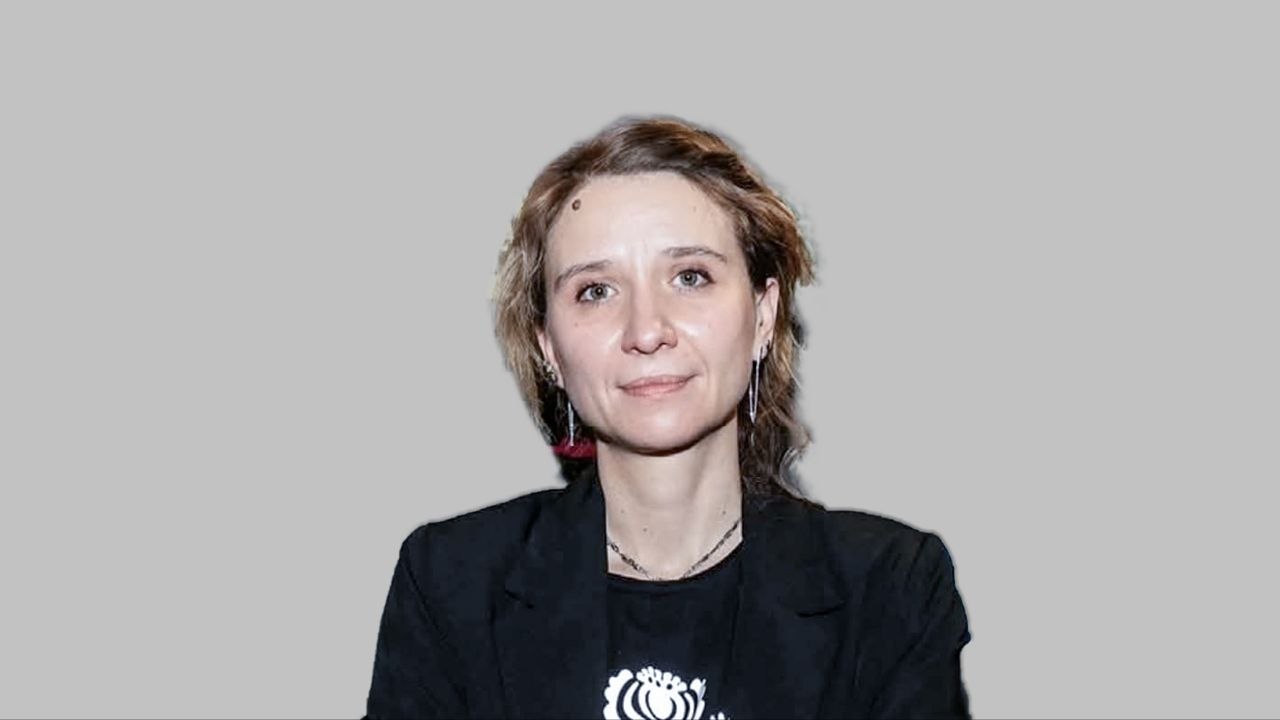
“I Don’t Expect Ukraine to Be Perfect” — Timothy Snyder
“I don’t expect Ukraine to be perfect,” says American historian Timothy Snyder. But even support for a country fighting for its survival has limits. Where are those “red lines”? What could make Ukraine’s Western friends turn away from it? And what should the Ukrainian state be like in order not to lose the support of those who are helping it stand today? Snyder discusses these questions with journalist Nataliya Gumenyuk in the podcast When Everything Matters.


Tim, we are sitting in the wonderful apartment of Yurii Shevelov in Kharkiv. You regularly come to Ukraine — at least once a year, and sometimes more often. Over the past few years, we have traveled around the country a lot, met with military personnel, and talked about the front and defense. Our conversation after a trip to the Kherson region was the first episode of our podcast — exactly three years ago. Reality has changed dramatically since then. How do you see the situation on the battlefield now?
I’m sure we’ll return to history a little later, but as a historian, I can’t travel through the South — Odesa, Kherson, Mykolaiv — or the southeast, Dnipro, Zaporizhzhia, Nikopol, or Kharkiv, without being struck by the power, diversity, and richness of Ukraine’s regions.
Like many foreigners, when I first began discovering Ukraine, my understanding was largely limited to Kyiv and Lviv. Ukraine was often presented through the simplistic prism of an “East versus West” divide. Of course, that is fundamentally wrong. Ukraine consists of a great many distinctive and extraordinarily interesting regions.
The past five years of war have only accelerated a process in which, on the one hand, regional differences within Ukraine have become increasingly visible, while on the other, we can see how these regions are coming together under these terrible circumstances.
This directly applies to the situation at the front as well. One thing that really stands out in this war is that, although you can look at it as one very long front line, in reality it is a whole series of different situations in different places. The Russians fight differently on each section, but Ukraine’s relatively decentralized armed forces also respond differently in each place.
At the beginning of the summer, there were many predictions that Ukraine had turned the tide of the war, and now the mood has shifted again. At the same time, we are seeing real technological successes, including long-range strikes deep into Russia. How should we talk about the situation at the front in a measured way — without excessive optimism, but also without downplaying Ukraine’s successes?
I would start with the basic narrative, because that has been the biggest problem from the very beginning. The false myth went something like this: Russia is a big country and Ukraine is a small one; or Russia is supposedly a “real” state, while Ukraine’s status was called into question. You are right to point this out: many of us still have to break free from this way of thinking.
So before analyzing any facts, we need to decisively reject this toxic narrative and remind ourselves of some simple historical truths: colonial empires usually lose wars; enormous countries very often suffer defeat in them; and Russia itself — whether as the Russian Empire, the Soviet Union, or today’s Federation — has lost wars more than once.
Our thinking needs to be recalibrated before we start going through the facts. And if we move beyond this narrative and look at the facts, we see that, in reality, from 2022 to 2026, the struggle has been relatively even throughout. Yes, the balance has shifted at different moments, but the forces have remained broadly comparable.
This is a war in which, if the Russians are helped enough, they can win. But it is also a war in which, if the Ukrainians are helped enough, they can win. The framework of an “even struggle” is not simply true — it gives people a sense of agency, helping Europeans and the rest of the world understand that their decisions and actions really do matter.
Ukraine has been given neither an easy triumph nor an inevitable defeat: it is waging this even, exhausting struggle at its own expense — at the cost of extraordinary sacrifice, ingenuity, and resilience. But what we do can ultimately tip the scales in Ukraine’s favor.
So this is the perspective we should start from: this is an even struggle on an unprecedented scale, with the stakes at their highest and historical responsibility resting on all of us.
Last year, when we were in Dnipro and traveling closer to the Pokrovsk direction, there was a lot of discussion in the information space about how Ukraine would survive without American weapons. At the same time, the Ukrainian commanders we met were talking about something completely different — China, because Ukraine’s drone industry is critically dependent on Chinese components. What are you noticing in Ukraine this year that the rest of the world is not talking about enough or does not yet fully understand?
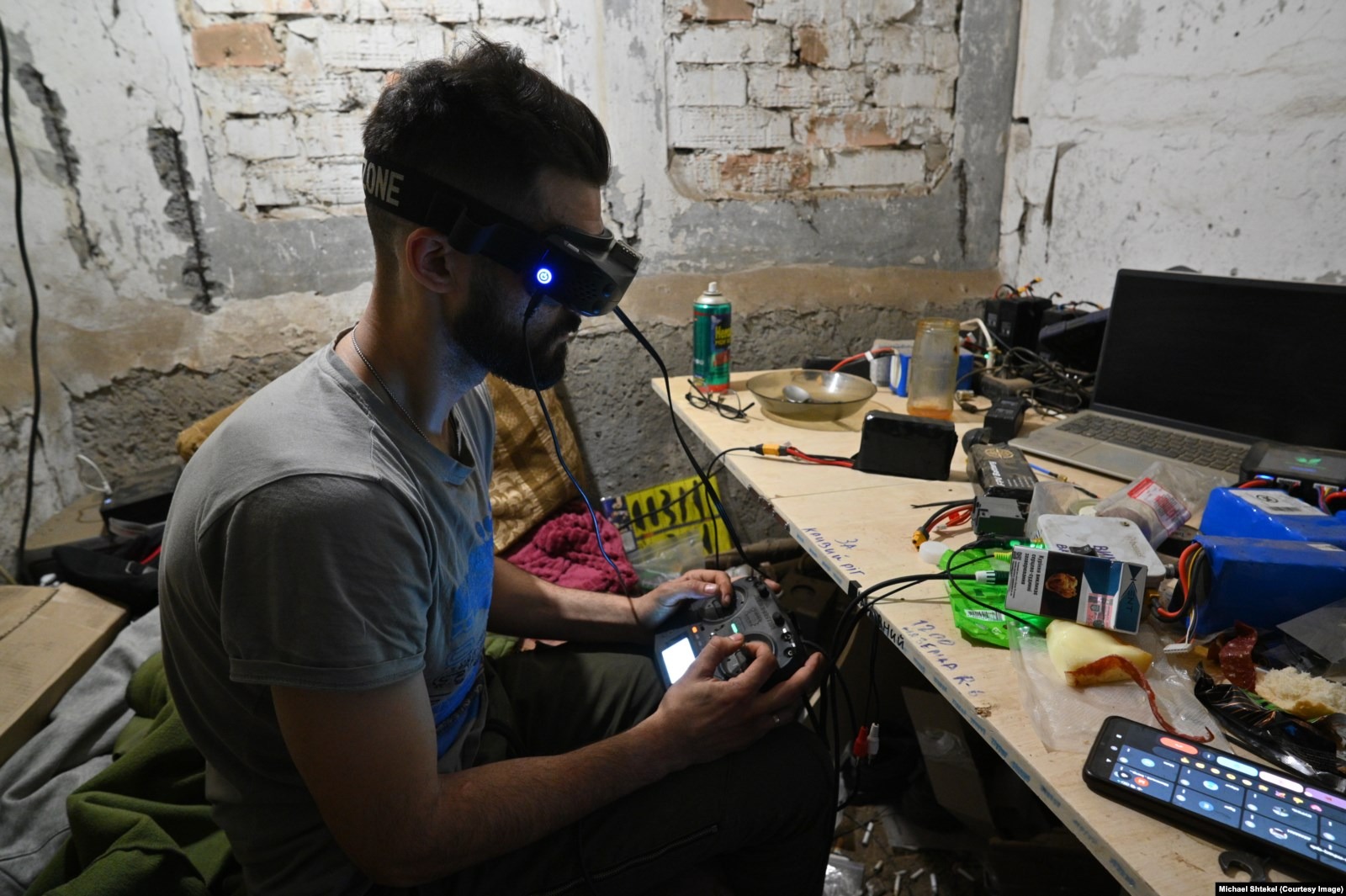
Ukraine sometimes allows you to glimpse the future — what will inevitably unfold elsewhere before long. That is why Ukrainians, especially military commanders, are forced to look at American politics with icy pragmatism. They cannot afford the luxury of illusions about what will happen next.
From the Ukrainian perspective, something is more clearly visible that people inside the United States itself still do not notice: the rapid erosion of American power. And this decline has been provoked by America itself during the year and a half that Trump has been in power.
You can talk about this in moral terms — and that is mostly what I do. You can criticize the injustice and the horrors. But if we are talking about power and influence, there are very few examples in history of a great power or superpower deciding to become less powerful and taking concrete steps that undermine its own interests, both in the short and long term.
For Ukrainians, this remained, and probably still remains, a mystery. But they have to come to terms with a basic reality: the United States has not simply distanced itself from Ukraine in terms of rhetoric or material assistance. The state itself is behaving as though it does not really understand its own national interests.
Ukraine is, in a sense, an example that proves this from the other side. This is a war we could quite conceivably have won. If Trump genuinely wanted to go down in history as a triumphant leader, the recipe was right there: impose tough sanctions on Russia and seriously provide Ukraine with weapons. Under that scenario, Ukrainians could have won.
I am convinced that Ukrainians could have won this war as early as 2022 under Biden, and could just as well have brought it to a close in 2025 under Trump. In both cases, political decisions in Washington prevented that from happening.
Returning to the Ukrainian commanders: what exactly in their rhetoric demonstrates this sober pragmatism? What do they see in the present situation and in the future that we may not notice?
I would put it differently: Ukrainian commanders are trying to create the future. Their pragmatism lies in their ability to hold the situation together day by day, month by month. They see the creation of the future as a direct responsibility. They are doing everything they can to prevent the threads woven into reality from breaking right now.
They think in horizons of three, six, nine months, or a year ahead, imagining how to stabilize the front — although that is a somewhat misleading term, because stabilization here requires constant movement and effort.
What they cannot influence are the external political conditions — in Kyiv, in Western capitals, and in the United States. Their realism manifests itself differently: they never underestimate the enemy. This is extremely clear in conversations with them. They openly acknowledge the Russians’ strengths, and they see how the enemy adapts and finds new solutions.
They assess the adversary soberly and, just as pragmatically, understand what they need from the rest of the world to make that tomorrow possible at all.
A year ago, during one of our trips, we met with Mykhailo Drapatyi, and on another occasion with Mykhailo Fedorov. These are people you know personally and whom you have associated with Ukraine’s future. At the same time, this summer was politically difficult: some people gained new powers, while others were dismissed. How do you see this contradiction — between optimism about people and the system, and the failures and setbacks we also see?
Before talking about people, I would like to outline two things that concern systems.
First, I am convinced that democracy is an extraordinarily valuable thing, and in general we need more democracy, not less. I fully understand all the pragmatic arguments against holding elections during wartime. But it is fundamentally important to remember that democracy exists to maintain a living connection between leaders and society.
No matter how outstanding a particular person may be, the essence of a democratic system is recognizing that no one is perfect. Leaders represent a nation not because of who they are in themselves, but because of their ability to listen to others. By the way, this was a key point Volodymyr Zelenskyy made to me at the beginning of the war: representing people is your job. It is not about self-expression; it is about representing the interests of society.
I understand how technically difficult it is to organize elections during wartime, and I am not going to offer ready-made solutions. But I do think it is vitally important for people themselves to emphasize that, in principle, we want elections and the right to choose.
The second systemic factor is civil society. In every one of the crises you mention, it was not simply a matter of whom the president appointed or dismissed. The activity of civil society played a crucial role — a unique component of the Ukrainian system that you sometimes take for granted, although it is far from obvious to the rest of the world.
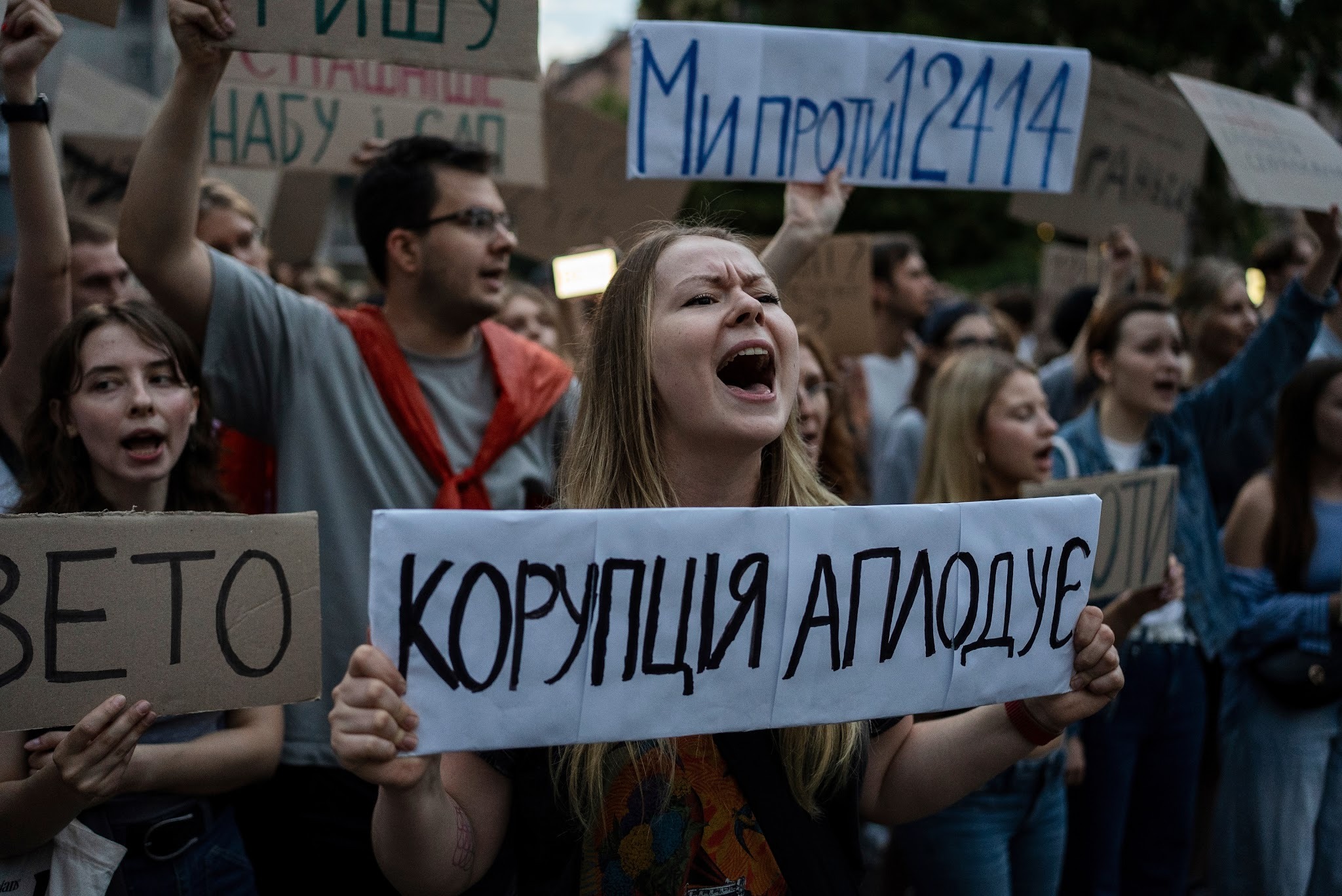
And now, regarding the people. Of course, I have my own assessments of individual figures, although telling the president of Ukraine whom to appoint or dismiss is certainly not my business.
But I am convinced that Mykhailo Fedorov was thinking several steps ahead from the very beginning, clearly understanding the digital needs of this war, both at the front and behind the lines. He implemented a number of extremely smart and forward-looking things that became a strong shield for Ukrainian statehood and sovereignty.
This is not my country, not my political system, and I am not responsible for political decisions. But in general, during a war, you cannot afford to lose the innovation race.
And here I return to my professional perspective as a historian and to my conversations with commanders. What do they most often want to talk about? The history of innovation. They want to understand — and this is a difficult question — under what conditions innovations emerge. How do we introduce new solutions? What does that require?
And they are right. Their starting point is correct: war is a time of technological innovation. If we understand that, and also take into account that Ukraine is the smaller side, that it does not have the same capacity for mass production or even the same ability to import as Russia, then the human dimension of innovation becomes extraordinarily important.
So perhaps that is what I would connect with Fedorov: in this, I think, he was right, and this is where he made his contribution — to the human dimension of innovation during wartime.
I remember another question. You gave a short lecture to a group of commanders from the Khartia Corps and other units working with them. One of the officers asked what would have to happen for you to stop supporting Ukraine or regret the support you have given us, which we very much appreciate.
I appreciated the question as well, because it was motivated by more than just self-interest. Of course, there was a practical interest: when could we lose your support? But I think there was also a certain empathy in it. This man understood how difficult, unusual, and risky the work I do in fundraising and public advocacy is. And he had every right to ask that question.
I do not demand some kind of sterile perfection from Ukraine, and I am not going to judge it more harshly than other states. If we are going to talk about corruption, my own country is currently in an entirely different weight class — compared with the Ukrainian Presidential Office, our presidential administration looks much more corrupt.
But at the same time, I support Ukraine not simply because it is Ukraine. Partly, I support it because I know people here and feel that I understand what is happening here. You have to work where you are capable of understanding the situation.
But partly it is also a matter of principles: non-aggression, international law, the ideas of freedom and genuine representation that I see in Ukrainians and that I myself learned here. At the same time, I cannot imagine a Ukrainian regime that would contradict all of these principles to such an extent that it would become difficult for me to support it.
Sometimes it is easy, then everything can become more complicated, and then it can become genuinely difficult — but you keep going anyway. But there is a certain point beyond which it becomes practically impossible. And this is not only about me — to some extent, it concerns Ukraine and the world as a whole.
I sense a certain tension around this when I speak with people in Ukrainian politics. So I simply want to emphasize: it is not necessarily about someone trying to tell you what to do. Sometimes it is simply an honest question about what other people are capable of.
It is not only about Timothy Snyder — and I do not want to speak for others — but also about other people around the world who are your friends. They support you precisely because they see qualities in you that they genuinely admire.
You are talking about red lines — the point beyond which Ukraine could lose support. For me, that means above all turning the state into a rigid authoritarian system in which all diversity disappears, a single “true Ukrainian” template is imposed, law enforcement agencies accumulate enormous power, and the freedoms that have been won gradually disappear. We already have a certain level of self-censorship, but I am talking about a situation in which there is effectively only one permitted way of talking about things. What are your red lines?
I think you and I see this very similarly. As an American looking at the situation from outside, I understand that some people might reason coldly that even an authoritarian Ukraine is better than an authoritarian Russia. But the current leadership of my country has completely lost sight of its own long-term interests.
You cannot demand that people support you according to the logic of “authoritarian versus authoritarian,” because genuine solidarity is fueled not by cynical geopolitics but by the conviction that some things are right and others are wrong. Today, for me, as for many people in the West, geopolitical interests align perfectly with law and freedom. But if those reference points disappear, all that remains is cold calculation, and genuine engagement will disappear.
Freedom of speech is something I value enormously in Ukraine. And, of course, there is the question of elections: abandoning them not for reasons of military necessity but as a matter of principle would become the same red line for me.
And I want to develop your point about homogeneity a little further. This is a delicate subject that can provoke a lot of controversy, but it is directly connected to historical memory. It is entirely understandable that Ukrainians do not have much time right now to reflect on their own history. It is equally understandable that they look to history for examples of resistance.
But in my view, it is very important to see that the OUN and UPA tradition, in its essence, is much closer to Putin’s vision of politics than to the open Ukraine you are fighting for today. It was based on the idea of a single hierarchy, the suppression of opposition, the absence of freedom of speech, and building a state exclusively on an ethnic principle — all things that would destroy the very civil society that is sustaining your defense today.
I understand how painful and controversial this subject is. In the West — and not only among historians — people know that this far-right tradition existed in Ukraine. By the way, it was never dominant in any way. It always remained fairly marginal, but it did exist.
If there is a movement toward saying, “We admire the OUN and UPA and at the same time believe that the Ukrainian state should resemble them more,” then a great many people in the West will simply turn away from Ukraine. And not just me.
If we are going to talk about this — although, honestly, this has more to do with the present than with the past — you know both Poland and Ukraine well and have friends in both countries. I imagine it is difficult for you to watch the current state of Ukrainian-Polish relations. How can at least some of the disputes arising between the two countries be prevented? What can Poles do, and what can Ukrainians do? Different Poles and different Ukrainians, as you always insist.
First of all, it is extremely important to keep returning to the basic geopolitical argument: regardless of emotional grievances or disputes over the past, the survival of the Polish state is impossible without the existence of the Ukrainian state — and, conversely, Ukraine cannot survive without Poland.
Warsaw and Kyiv sometimes forget this. In Kyiv, people may think there are plenty of other allies in the West, while Poles are sometimes perceived as competitors. But geography does not change: Poland will always remain the closest neighbor of every Ukrainian. You cannot afford strategic mistakes in this relationship.
The problem on the Polish side is somewhat different. Poland has achieved significant economic success, become wealthier, and become more deeply integrated into the Western world. But as a result, Poles have started to become what they themselves always criticized. They have become very much like the Germans. Especially in the sense of saying: “We no longer really need to worry about Russia.”
So the first step is to remind both Kyiv and Warsaw of this existential geopolitical connection: neither side will have sovereignty if the other does not.
The second point for Ukrainians is recognizing that national history is never something isolated. The UPA will always be perceived in polarized ways: Ukrainians naturally remember 1945–1947 and the heroic resistance to Soviet totalitarianism, while Poles painfully remember 1943–1944 and the tragic events in Volhynia and Galicia.
This is an objective reality: your history is simultaneously someone else’s memory and pain. You may disagree with other people’s interpretations or consider them unfair, but this shared historical space is not going anywhere. Accepting this fact despite all the current turbulence is a sign of maturity. And many Poles also approach this with great understanding and patience.
From the Polish side, the key is to distinguish between concepts. History is what is inevitable and what Ukrainians are living through right now, under bullets and explosions. What happened in Volhynia or during the Warsaw Uprising eighty years ago is collective memory.
Memory is a luxury of the living, while history is a brutal necessity for survival.
This situation is further complicated by migration. For Poles, Ukrainians are primarily those who live nearby in Poland, rather than somewhere in Zaporizhzhia or Kharkiv. At the same time, this is also a major advantage: there are so many Ukrainians in Poland today who can communicate directly with Poles.
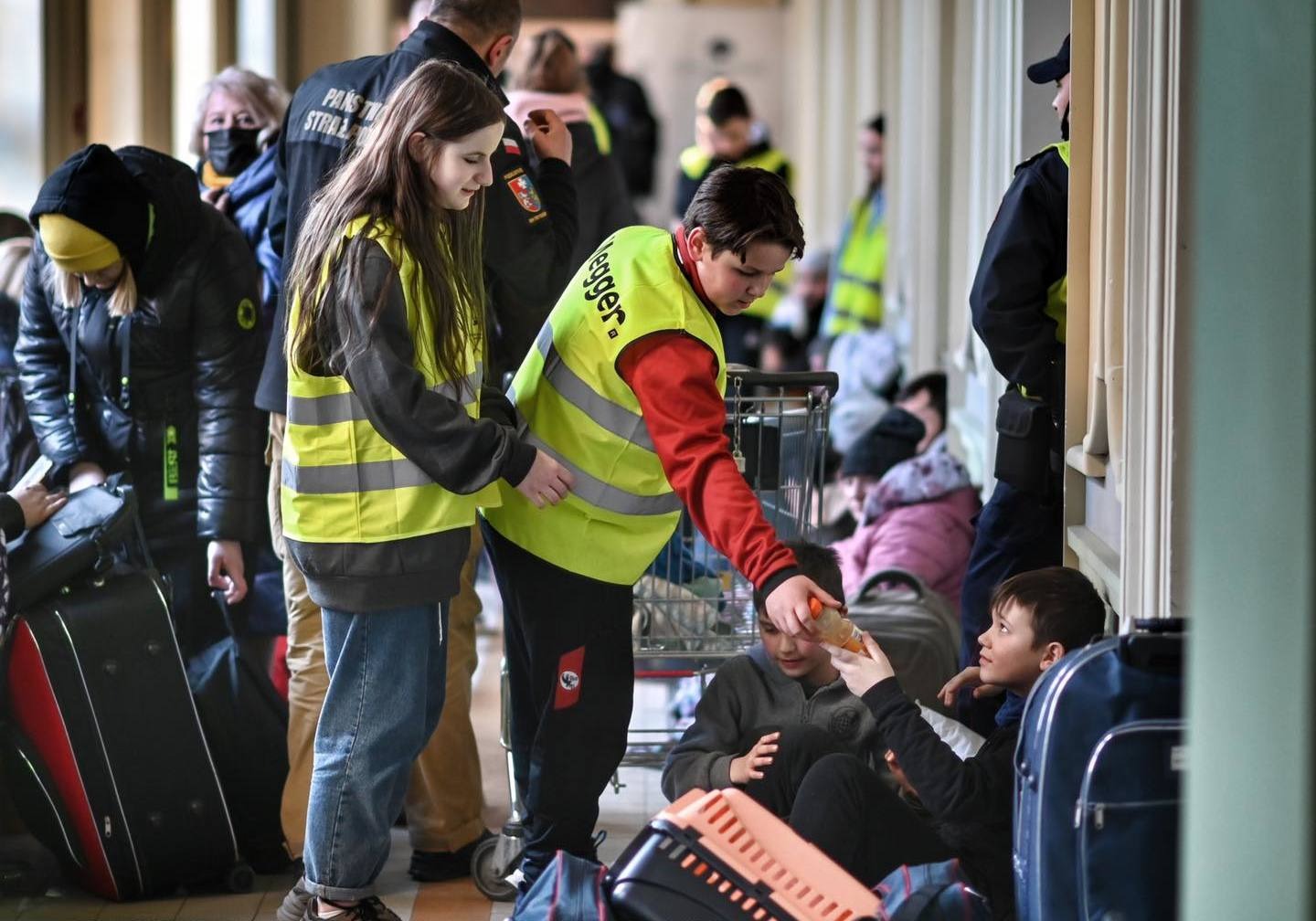
If we look at the situation historically, I am very concerned about the duration of this war. It has already been 12 years since the beginning of Russia’s occupation of Crimea and Donbas, and the full-scale invasion has been going on for five years. How normal is it, historically speaking, for a war to last 20–25 years, with society living in a state of war all that time? I know there are examples of this — Colombia and other countries. But when we are talking about a war of such intensity, I still find it very difficult to accept. At the same time, I feel that perhaps we will have to.
If I think back to my conversations with commanders in 2024–2025, one of the most frequent ideas was that the war would last a long time. Later, however — toward the end of 2025 and the beginning of 2026 — people became more optimistic and said that Ukraine was winning. But overall, Ukrainians understand the reality very well.
The second important point is that we need to talk about Western participation. Because the way you formulate the question makes it sound as though the war is simply continuing on its own.
In my view, it is being prolonged by artificially created circumstances. It is highly unusual for Ukraine to have to wage a war of this scale essentially on its own. Usually, conflicts end through confrontation between coalitions.
Russia has the support of North Korea, Iran, and China; Ukraine is not alone either, but its coalition — especially its largest member, the United States — has proved unreliable. I want to emphasize that this is, to some extent, why the war is still going on. It is strange for a country in such a major war to be left so much on its own.
Returning to the question of historical agency, I try to attribute it not to the war itself but to the large, powerful, and wealthy countries — Ukraine’s friends — that at critical moments, such as 2022 or 2025, could have done much more to change the course of events, but did not.
I think this war, like many others, will ultimately end as a result of political changes — in Kyiv or in Moscow. Both sides understand this. So the real question is not some Russian breakthrough. The question is when something will break in either Kyiv or Moscow.
Let me try to look at this from a European perspective — through the prism of the militarization of society and the role of the army. In my generation, we grew accustomed to thinking that armies should not fight for long, that all of this should end after a war, and that strong militarization of society is rather dangerous. This is, to some extent, a legacy of the European Union after World War II. But history shows that strong armies have always existed, and being a warrior was often considered a noble thing. I am trying to think about this historically: what should our lives look like if the war lasts a long time and we constantly have to explain to ourselves the value of a strong, permanent army? How do we imagine a normal life with a strong army, where service is considered noble but does not turn into a naive romanticization of war?
After 1945, a powerful myth of peace emerged in Europe. Germany and the rest of Western Europe declared: war was terrible, peace is good, and economic cooperation is the guarantee of peace. But this myth left out one crucial detail — peace came to Germany not by itself and not because the Nazis suddenly wanted peace, but because the armies of other states arrived there.
One of the main lessons of World War II is that sometimes wars have to be won, and the side that is right has to prevail. Western Europeans instead chose the more comfortable approach: we love peace, we learned our lesson, and the Americans are crazy because they keep fighting.
There was also a Soviet version of this myth: supposedly only fascists start wars, while we are the eternal bearers of peace. Both of these stories still influence us.
War is not good, but you are right to consider it a historically normal phenomenon. Ukraine has suffered from viewing war as something exceptional, because this made society hesitant to recognize self-defense as something entirely natural.
We should also mention the influence of popular culture and Hollywood conventions: in movies, everything is supposed to end after an hour and a half or two hours with a successful mission and a return home. But the reality of Ukrainian soldiers is completely different. They are not simply fairy-tale heroes from an adventure movie, and at the same time they are not conquerors. What they are doing is creating the space for everything else.
Here we are, calmly talking in Kharkiv. Life in Kharkiv is not normal, but Kharkiv exists. Then we will go to Kyiv. Life in Kyiv is certainly not normal, but Kyiv exists. And then I will return to the West. In the West, life is normal in the sense that we create our own problems.
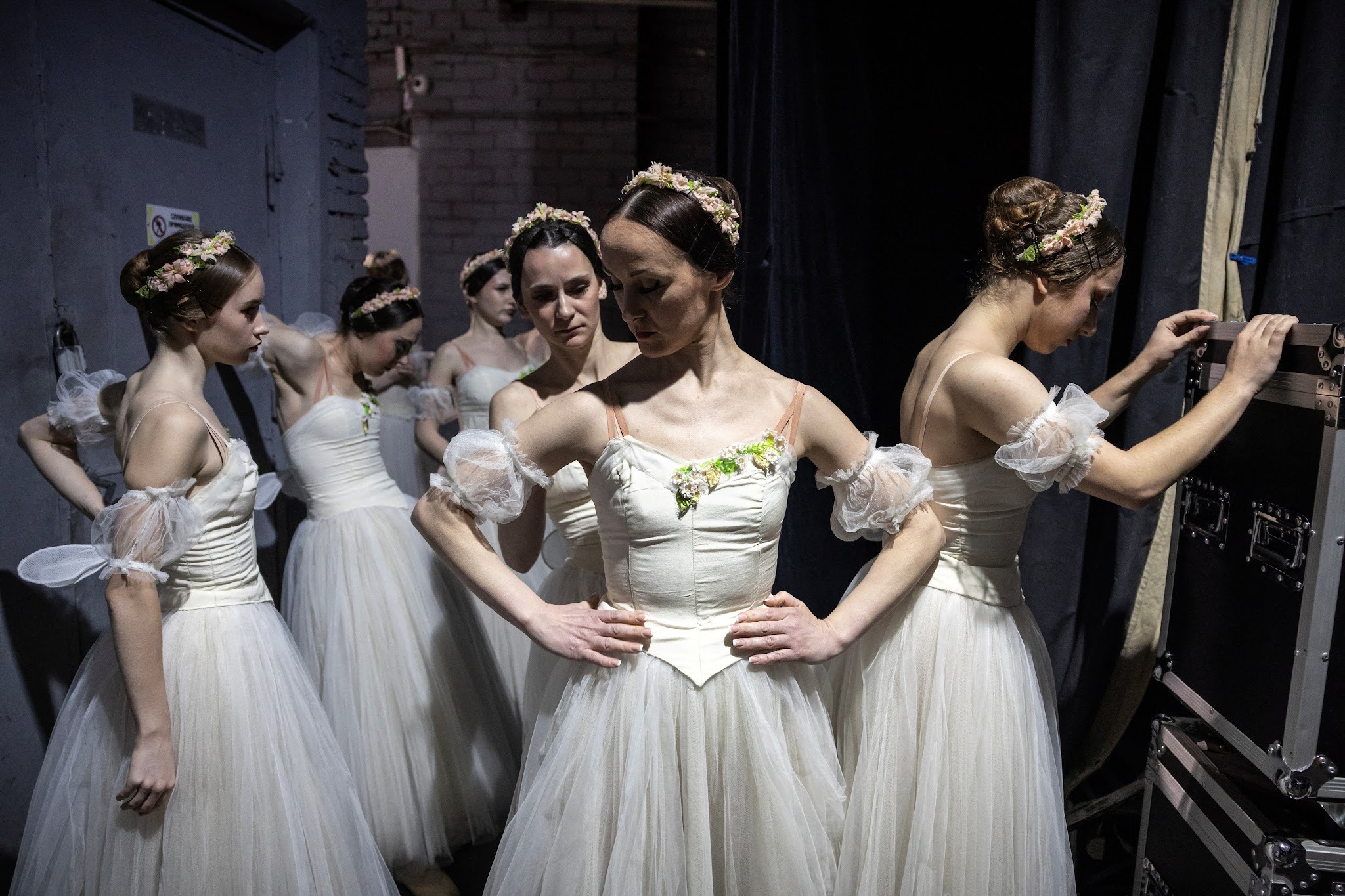
And all of this is thanks to the Armed Forces of Ukraine.
If Ukraine stops resisting, we will get a world in which there will be even more violence and abducted children, and any sense of normality will disappear completely.
But at almost any lecture or public event in Europe, you are unlikely to hear someone genuinely glorifying the army. People simply do not do that. On the contrary, they try not even to speak in those terms, so that it is not perceived as militarization or naivety. But at the same time, all of our popular culture is built around the image of the good guys who keep fighting. For me, there is a certain contradiction here: we see heroes in movies and readily accept them. But when the same kind of hero does something similar in real life and we start talking about it, there is suddenly a sense of ambiguity.
Kryvtsov has a poem in which his cat appears. The cat is sleeping. Then it hears something, wakes up, and looks around. And then it says to itself: “Oh, our own,” and goes back to sleep.
This notion of “our own,” of who is really yours, obviously works well in Ukraine. That very word — “our own,” “our boys.” For Ukrainian civilians, the Armed Forces of Ukraine are also “our own.”
Outside Ukraine, however, this perception works differently. And here we come to the main problem: I don’t think enough people in Poland look at the Ukrainian Armed Forces and think, “These people are in some direct way connected to the fact that I can live my normal life.”
And this exposes a certain moral problem: the ability to calmly have a cup of coffee in Berlin is directly connected to the front line in Zaporizhzhia. But Germans can afford not to see that. Objectively, it is Ukrainians who are creating the conditions for life in Europe, but subjectively, it is very difficult for people to see that connection.
So that is probably how I see it.
There is a second point I want to emphasize — the American version. Americans are very militaristic. They constantly talk about heroes and constantly describe themselves as heroes: the U.S. president can constantly emphasize his own extraordinary physical courage and heroism, even though Americans themselves are not actually exposed to any real risk. This is another manifestation of populism: loud declarations of one’s own greatness without any real action.
Perhaps my sample is limited, but in conversations with Ukrainian soldiers and officers, you see a completely different attitude — they maintain a certain healthy distance from themselves. This is visible even in their call signs: alongside many serious ones, there are plenty of ironic ones, showing a deep awareness of the complexity of their work without losing their sense of self.
Of course, there is genuine heroism here that deserves the highest respect, but at the same time there is a culture in which there is no impermeable wall between an “ordinary person” and a “soldier” — rather, there is a continuous spectrum in which these states overlap. Call signs are one example of this.
In recent years, you have spoken a lot about Donald Trump and his circle. The last time we spoke for this podcast was during Biden’s presidency. How do you see Ukraine’s interaction with MAGA and Kyiv’s attempts to build relationships with people such as Laura Loomer, Steve Witkoff, or Jared Kushner? We talk about certain values, while at the same time the Ukrainian leadership is forced to interact with people whose values it may not share. How do you see this?
I have to say that, for me, there is not really a problem here. If Ukraine is in an existential situation, it has to seek friends and allies wherever it can. So, for example, I see no problem at all with Laura Loomer coming to Kyiv. I have more of a problem with the fact that Laura Loomer exists in the United States at all. But I completely understand Ukraine, and I see nothing wrong with such things, because we are talking about a sovereign state in existential circumstances.
And secondly, I could be wrong, but perhaps there is hope, and some of these people may change their minds — you never know in advance. If I were in Kyiv’s position, it would be absolutely absurd to say, “I will listen only to those Americans who belong to a certain part of the political spectrum,” because they can be right or wrong.
And in general, you should not impose your own political views too much on people in other countries, and I try to avoid doing that. So this does not bother me at all: the job of Ukrainian politicians is to protect the interests of the state, and that requires interaction with all kinds of people.
This fall, the U.S. midterm elections will take place, and there is a chance of a Democratic victory. What is their strategy toward Ukraine right now?
The first thing I want to say is that U.S. policy toward Ukraine under Trump does not actually reflect the mood of American society at all. If you look at public opinion polls, not only Democrats or independent voters but also Republicans, when asked who is right in this war, answer: “Ukraine.” Of course, there are differences — Democratic voters support Ukraine more strongly, while Republicans are more restrained. But what strikes me is that after five years of war, people’s views remain almost the same as they were in the spring of 2022. Support among Republicans has declined somewhat, but overall American society remains predominantly pro-Ukrainian.
So if the Democrats win, they will try to pass legislation supporting Ukraine, allocating billions of dollars. Of course, Trump would almost certainly veto those initiatives, but the process of preparing support packages by American lawmakers would almost certainly take place.
This trip to Ukraine is primarily connected with the Ukrainian History Global Initiative, a project that has been underway for three years. We have brought together around two hundred historians from different countries, most of them Ukrainians. They are all working on a major project, a kind of foundational book about the history of Ukraine. What should people expect from it? The project now has much clearer contours: whereas before it was only a general idea, we can now read draft texts because the project is essentially at the final stage.
Before talking about the final result, I would like to say a little about the process itself, because what is happening now is genuinely impressive — perhaps this is the largest humanitarian and historical project being carried out anywhere in the world.
What happened in the lands north of the Black Sea is extraordinarily interesting, not only over the last several centuries but also thousands and tens of thousands of years ago. All of this is extremely important, and putting it together requires precisely this kind of scale: bringing together people from different disciplines and different countries in a common space and allowing them to communicate and exchange ideas.
That is exactly what we are trying to do — put everything together into a coherent picture, see the history of Ukraine in the context of world history, and at the same time understand world history more deeply through what happened on your territory.
The process has involved dozens of workshops and hundreds of individual meetings, and we are now approaching the third major conference in Kyiv.
We support Ukrainian scholars in various ways while also moving toward a concrete result, trying to demonstrate how it is possible to ask large questions, collaborate seriously, and read colleagues’ work on subjects about which you initially knew nothing.
This process has been incredibly successful: there have been countless wonderful interactions, and even before any publications, a huge amount of knowledge about Ukraine has already been shared and people from outside Ukraine have been brought into thinking about fundamental questions of our history.
I say this also because Ukrainians have a tendency to immediately ask: okay, but where is the big, flashy result? Where is the billboard? That result will come.
The main outcome will be a free, publicly accessible online resource in Ukrainian and English, bringing together all this research — from tens of thousands of years ago to the present. Everything will be connected through images, maps, and easy navigation.
So whatever interests you — Cossacks or Vikings, mammoths or ecology, the Ukrainian People’s Republic or dissidents of the 1970s — you will be able to open the topic you need and easily move to any related subject.
There will be books as well, but the online resource will remain the main thing. Just give us a few more years: this is a gigantic undertaking, and although a significant portion of the texts has already been written, the authors need time. At this point, it is entirely realistic to expect that we will get where we want to go.
One more brief question about something you have been talking about a lot and that we may have somewhat underestimated: there is a genuine technological revolution taking place in the study of history. What is so special about it? What has changed over the past five to ten years that now allows us to look at the history of the territory of Ukraine in a new way?
For me, as a historian of the modern period, this is truly astonishing. If you look at the modern period — the nineteenth and twentieth centuries — not that much has changed during my lifetime. Of course, important books have appeared. Access to sources from Eastern Europe — that was the biggest revolution, and there probably will not be a bigger one. When archives opened after 1989 or 1991, and Ukrainian archives remain open today, that was the most important change for people in my field.
But if you look at earlier periods, especially those in which written sources are not the primary ones, everything has changed dramatically.
One example concerns Trypillia and the settlements near Uman, which are around six thousand years old: Nebelivka, Maidanetske, Talianky, and others. These sites have been known since the 1970s. Now, thanks to LIDAR, certain types of radar scanning, and more advanced radiocarbon dating methods, which allow us to extract much more information from fragments of wood, human remains, or any other organic material, we have a very good understanding of what these settlements looked like.
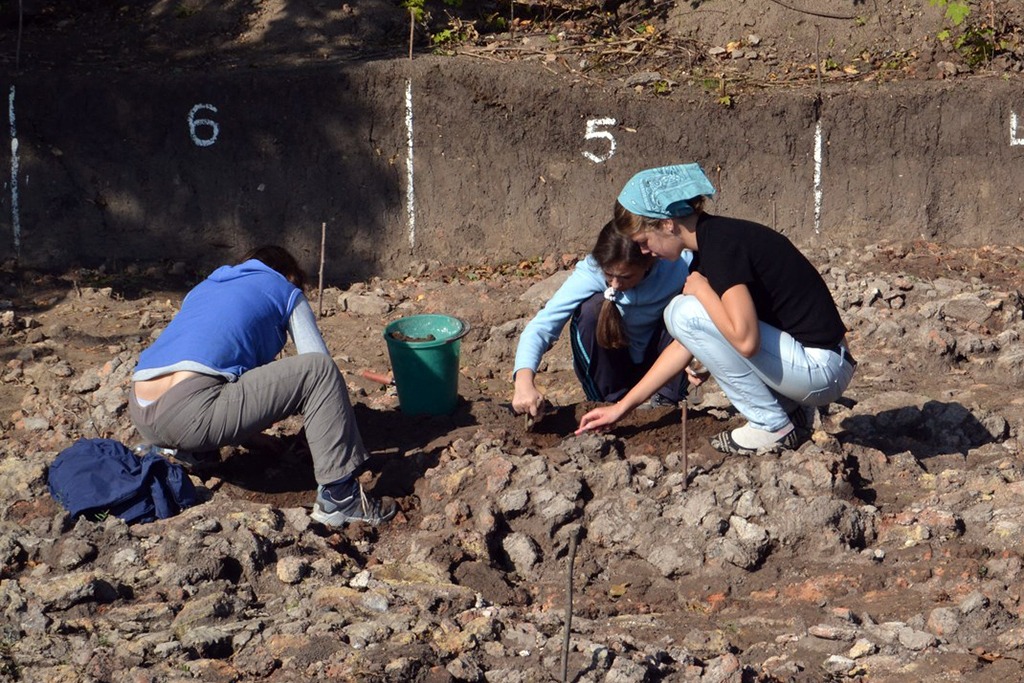
We have a fairly good understanding of how people lived there. We have a reasonably clear picture not only of what these settlements looked like, but also of how the society of that time may have functioned.
Or take another extraordinarily important subject in the ancient history of Ukraine — the Yamnaya culture and the spread of Indo-European languages. Right now we are speaking English. But if we were speaking Ukrainian, the point would be the same. Half the world speaks languages belonging to the Indo-European language family. The question is: why? Where did they all come from?
If we wind history back and try to find that place, it was most likely in Ukraine — probably in the territory east of the Dnipro. How do we know this? There are fairly compelling archaeological and linguistic arguments.
But over the past eleven years, there has been a huge and constantly growing body of ancient-DNA data — and this is an entirely new technology. Ancient DNA allows us to see who was related to whom and who physically moved where. We are talking not about hundreds, but thousands of years ago. Even tens of thousands of years ago, if the right sample can be obtained.
These data broadly support the idea that these languages spread from the territory of Ukraine — that it was people from this part of the world who brought the foundations of this culture and language to Europe and also to East and South Asia.
The fact that Sanskrit, Hindi, English, Ukrainian, Spanish, and other languages have something in common is connected to what was happening on the territory of Ukraine approximately five thousand years ago.
In both of these cases — whether we are talking about the first large human settlements and cities, or about languages still spoken by half the world — we are talking about Ukraine as one of the cradles of civilization. Just in different senses.
This puts Ukraine on the map in a new way: it allows us to say, let’s talk about Ukraine and Mesopotamia in the same context. Let’s think of Ukraine as something truly fundamental to the history of civilization.
That is the point: the more advanced our technologies become, the further back into the past they allow us to look. When we go back that far, we begin to see that the beginnings of all our great historical narratives have to include Ukraine.
When Ukraine appears in these great histories, the whole picture changes.
To conclude. You have said several times that after this project you want to leave something simply for your own enjoyment — stories about myths that are connected in one way or another to Ukraine. Without going into detail for now, what are these myths? What other stories are there besides Achilles and Snake Island?
Stories are real, too. Stories are also part of history. Even if they are not literally true, they are still part of history.
You mentioned The Lord of the Rings earlier, at a completely different point in our conversation. But The Lord of the Rings draws on Tolkien’s knowledge of the history of the Goths and the history of Scandinavia. Practically all the most interesting elements in these books — whether it is the broken sword that needs to be reforged, the dwarves and the wizard with certain names, the heroine who plays a decisive role, or the ring of power — all of it reaches back to Gothic stories connected to events in the territory of Ukraine. And also to Scandinavian stories, which were shaped to a considerable extent by encounters and interactions between Scandinavians and other peoples in this part of the world.
We still need to do more work to trace these connections precisely. But you remember when we traveled south and spoke with local people, and they used the word “orcs.” It is funny, but Russia is called Mordor. All of this seems very contemporary — and of course, in a certain sense, it is. But this story, the story of The Lord of the Rings, which resonates so strongly with people today, would not exist without the real history of Ukraine.
These are exactly the kinds of things I find interesting. Your region is important not only in the historical senses we have just discussed — language, cities. It is also important because it is, so to speak, mythogenic — a place that generates myths, a kind of exporter of legends.
That is what I am trying to think about: the connection between, so to speak, “hard” history, about which we continue to learn more and more, and the stories and narratives that all of us take for granted.
Yes, now everything makes perfect sense. I can even explain why, in this war, a coalition of Ukrainians and Scandinavians ultimately came together on the side of good, fighting together for everything good.