On the Ruins of a Small World: Recovery Work Continues in Kyiv’s Darnytskyi District
Olena Maksymenko visited the site of one of the strikes in Kyiv’s Darnytskyi district, where rescue workers are clearing rubble, while municipal workers and volunteers help residents of the destroyed building. Her report and impressions from the scene.

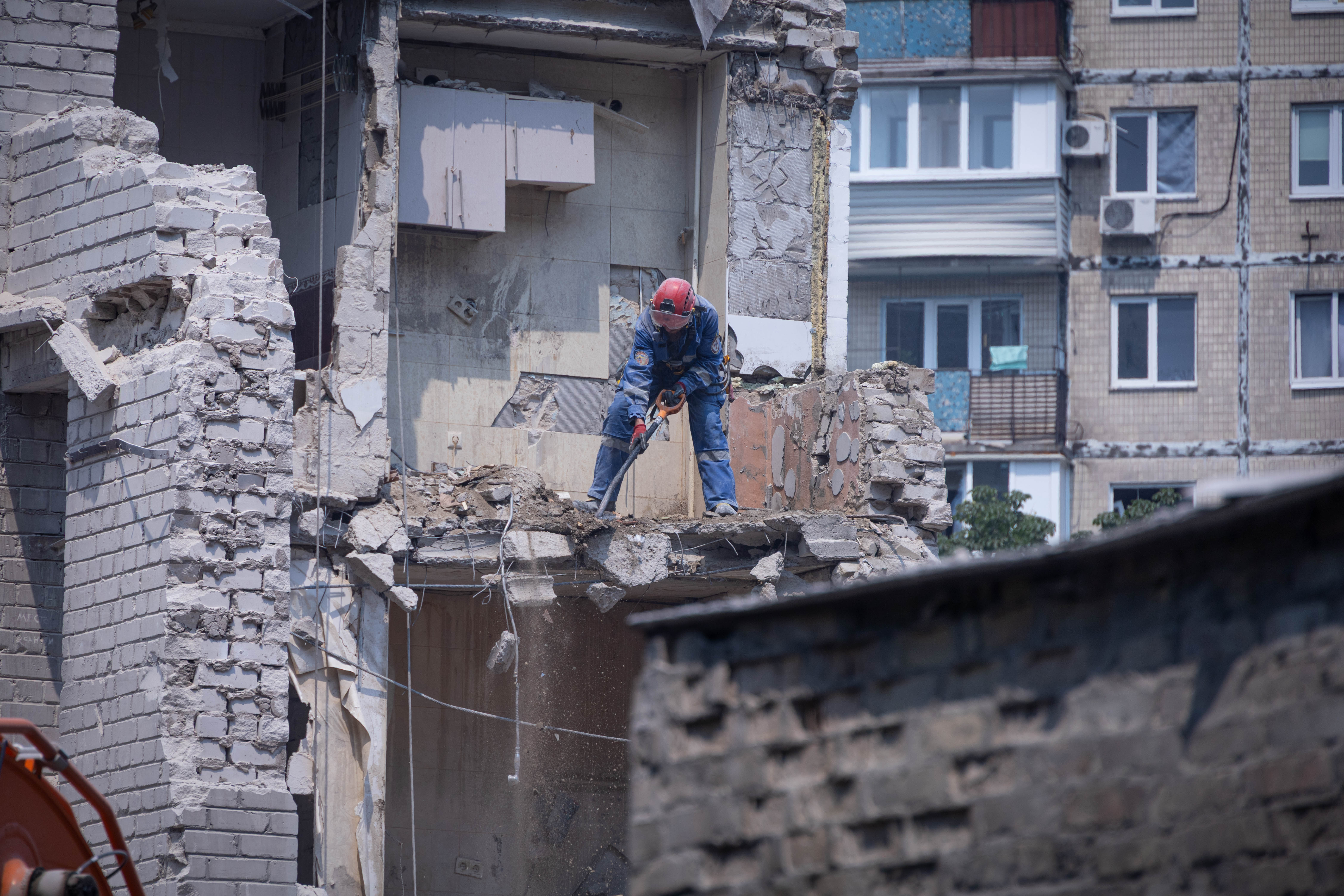


As of the morning of July 3, 30 people are known to have been killed in the massive Russian attack. Search-and-rescue operations are ongoing, and some people remain unreachable and are considered missing. Ninety-two city residents were injured, with 56 of them hospitalized. Animals at the Kyiv Zoo were also affected. Educational institutions were damaged as well.
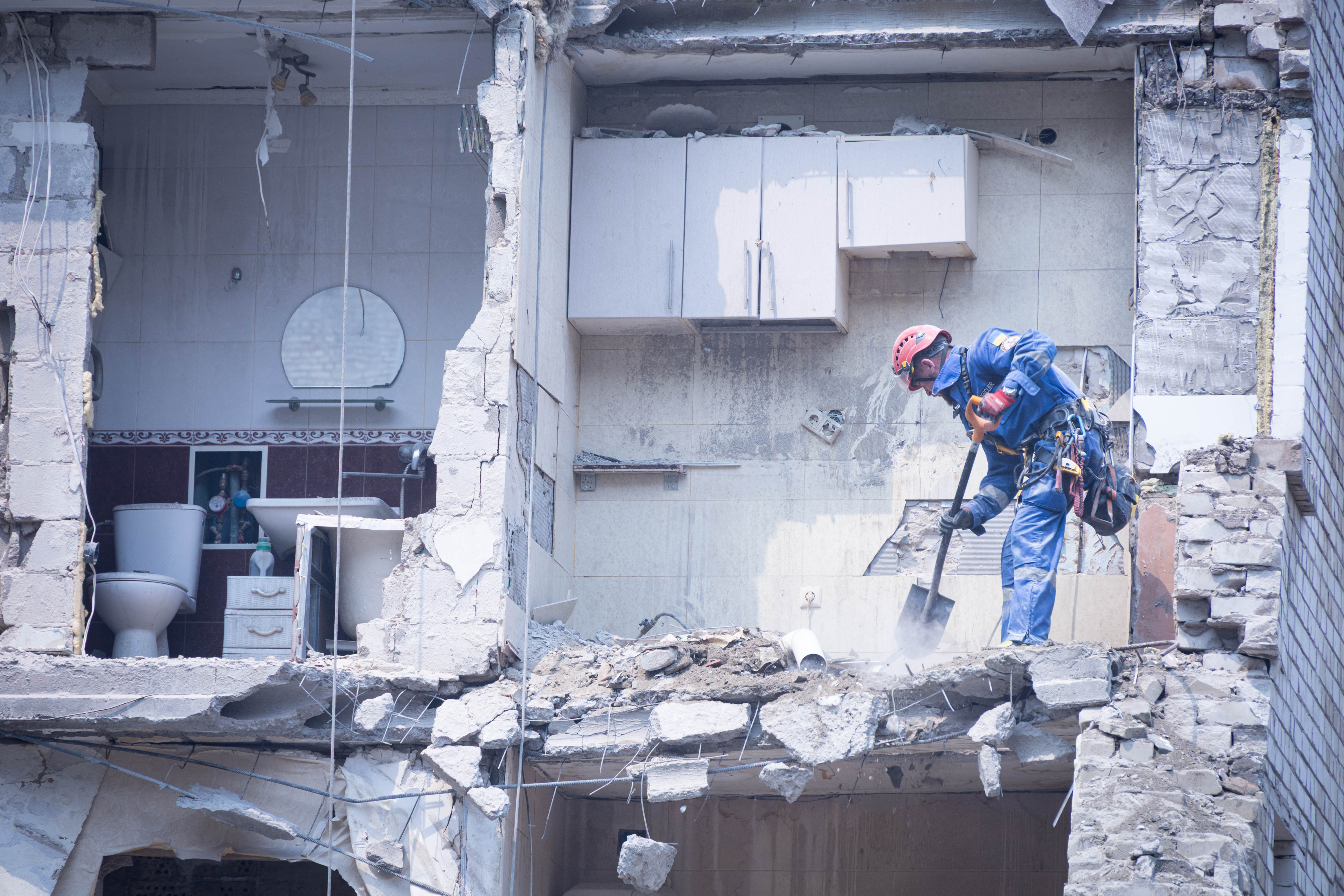
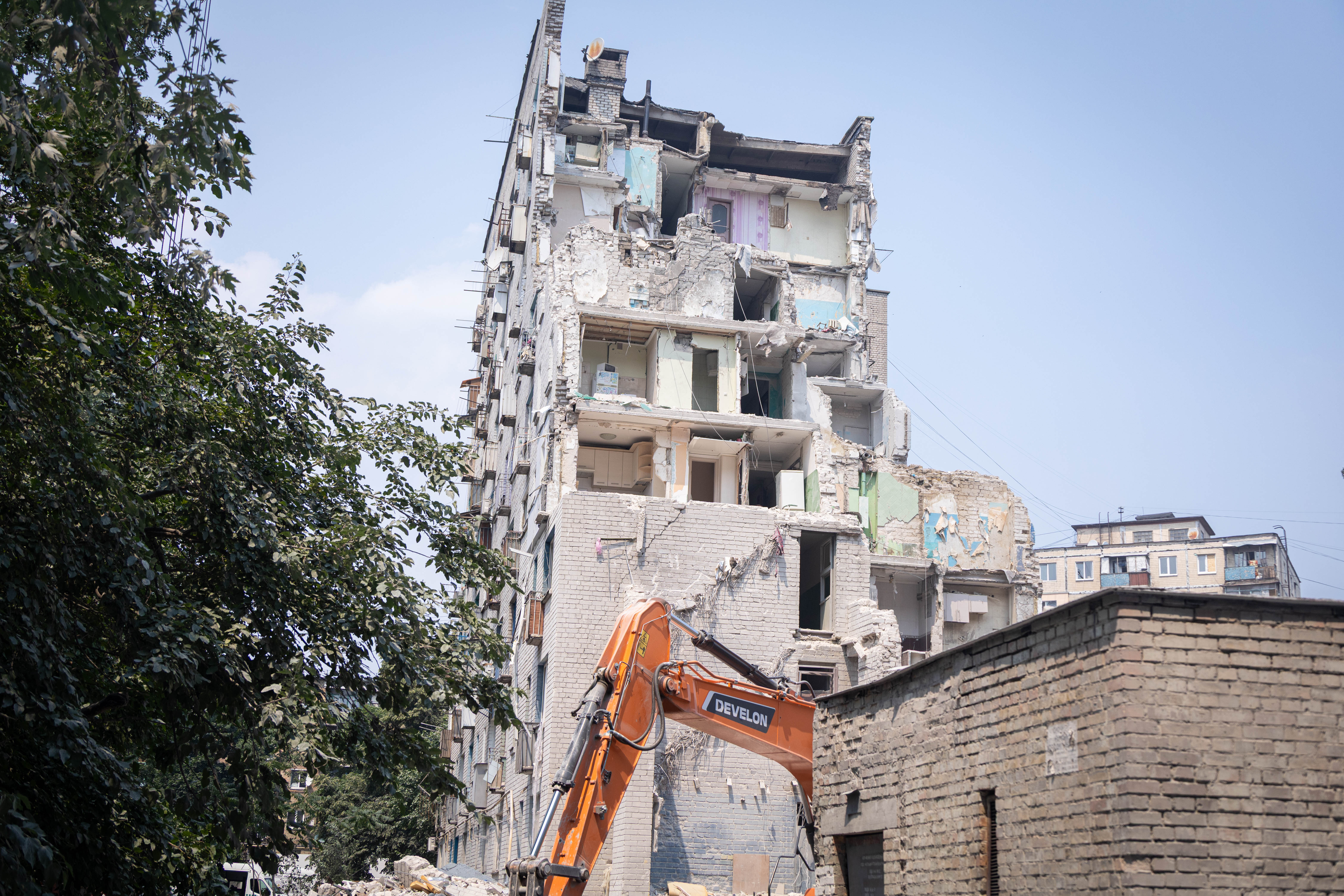
Half of the building has simply been destroyed. Rescue workers are operating against the backdrop of mangled interiors. Hanging kitchen utensils, stickers on a refrigerator, soft pink wallpaper — countless small things collected over the years have been reduced to ruins. White dust hangs in the air and covers everything around. Some municipal workers are wearing protective masks. Shattered glass has been carefully swept into piles. Ambulances stand nearby. Most of the surrounding buildings were also damaged, though less fatally.
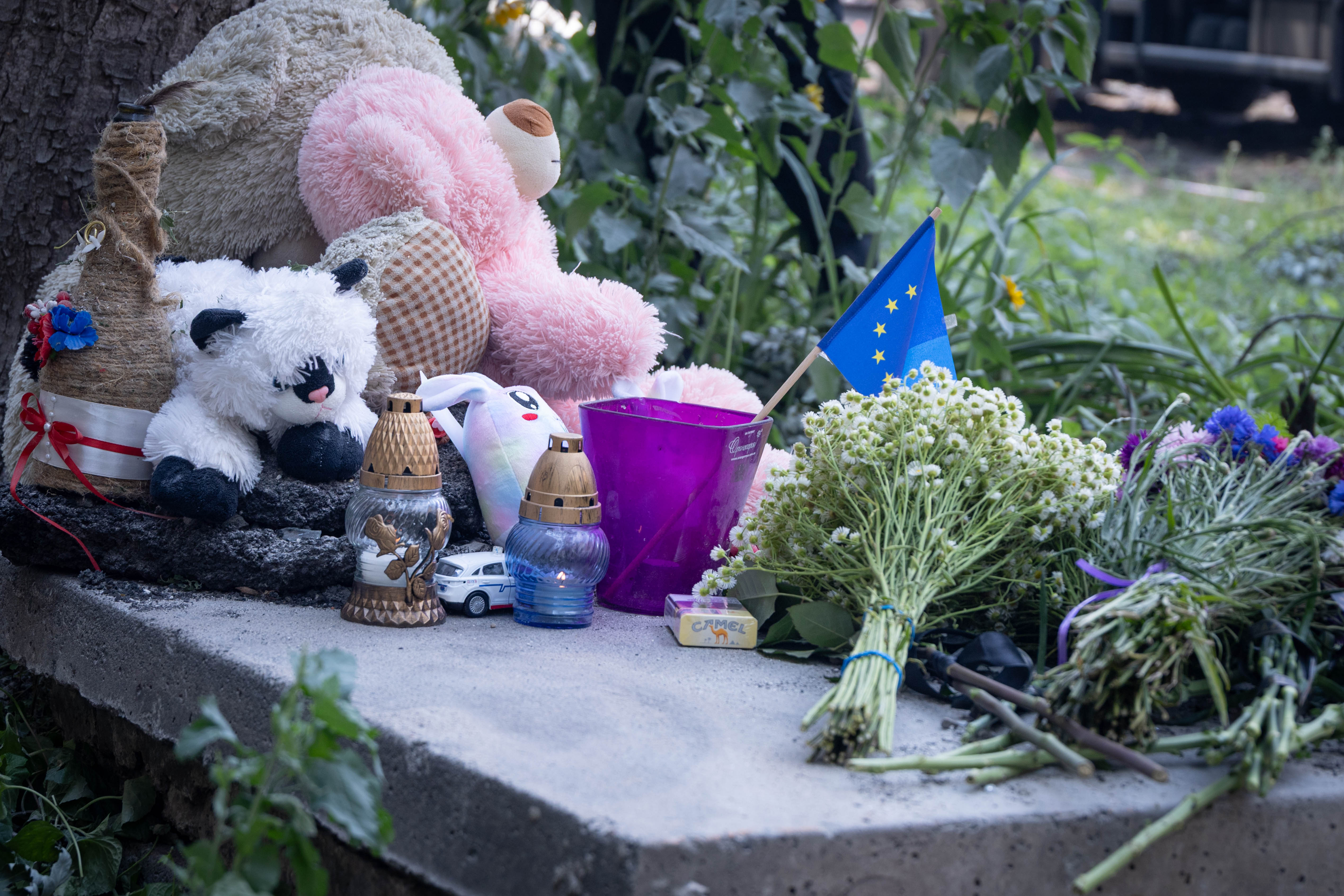
People were killed in the building. Amid the ruins, an impromptu memorial has appeared, where people bring toys, flowers, cigarettes, and small flags.
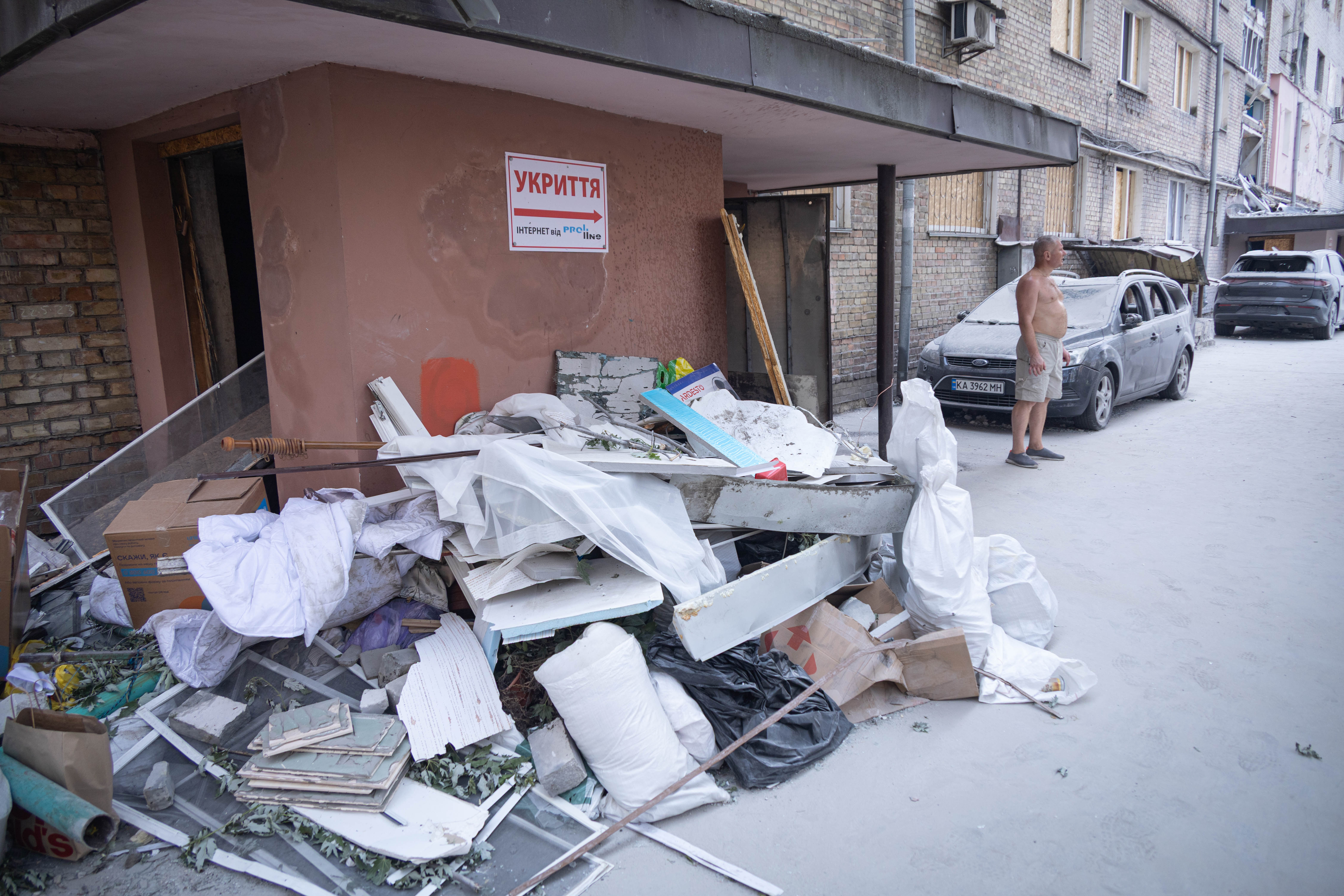
Some people stand and watch in silence. Others carry out broken belongings or board up shattered windows with wood. Some wait in lines near social services tents, trying to understand their next legal steps. Among them is Yuliia. She says nothing is left of her apartment, but fortunately she and her family were unharmed because they were in a shelter. What to do next remains unclear: she walks around with documents in her hands, following the crowd of other victims from one line to another. She says no one is currently allowed into the building, so she does not even know which of her neighbors are being honored at the small memorial.
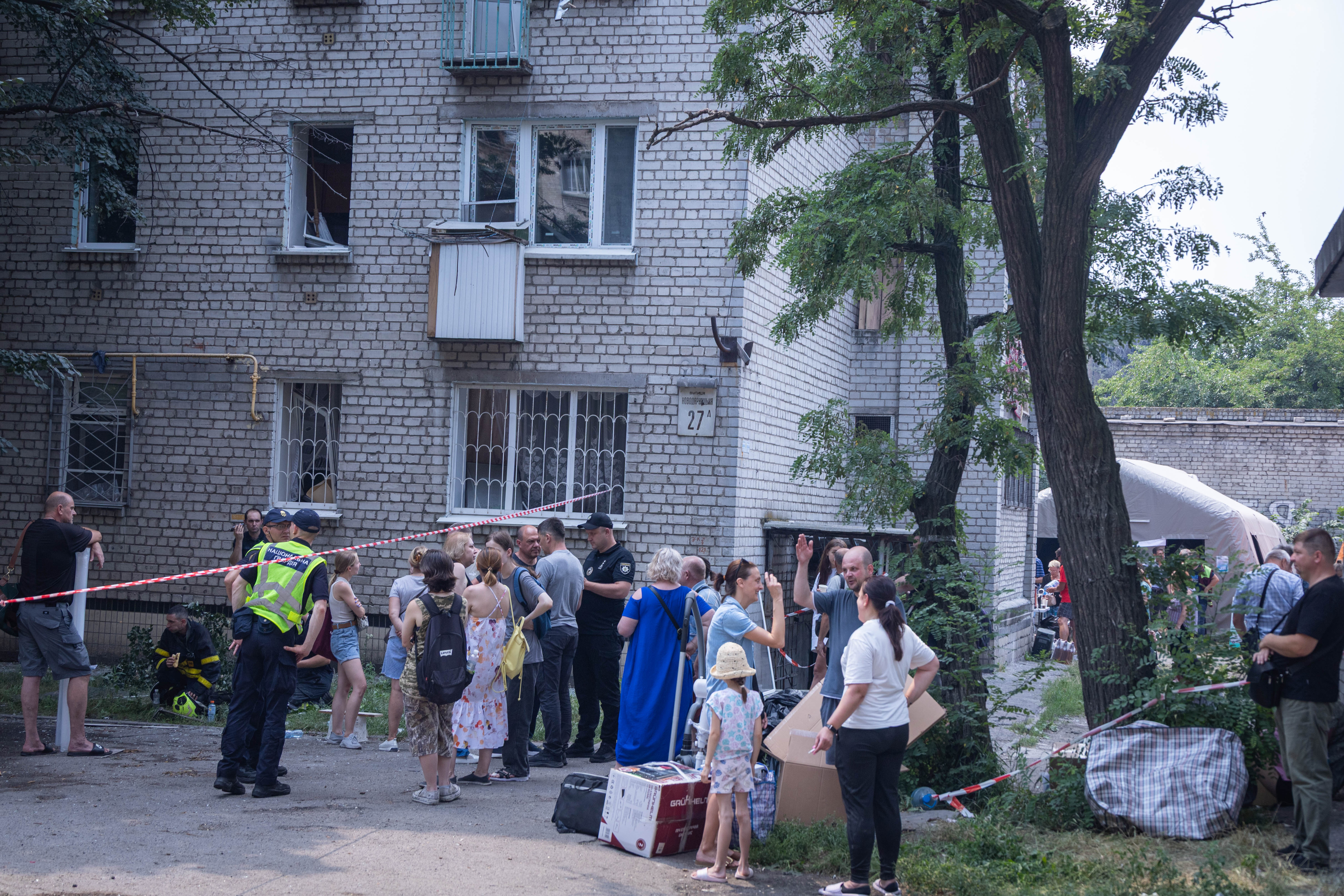
Volunteers have come to help — Bravery to Rebuild, World Central Kitchen, the Union of Samaritans of Ukraine, and others.
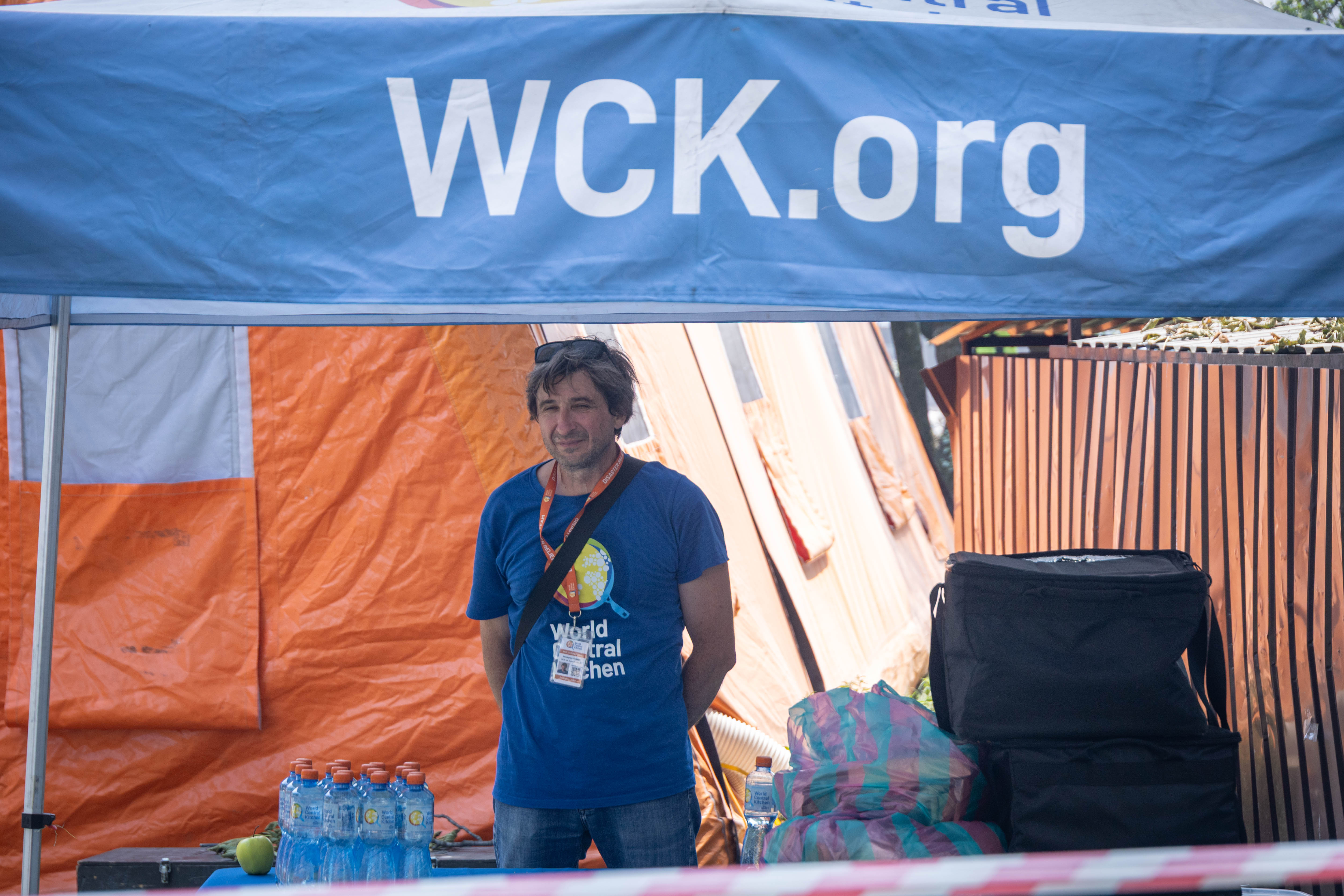
“We help people clean up premises after strikes if there is glass or various belongings scattered around. We help board up windows with OSB panels and plastic sheeting,” says Viktoriia, coordinator of the NGO Bravery to Rebuild. People are also offered a place to charge their devices, as well as water, energy drinks, food, and consultations on what steps to take next to obtain compensation and document the damage.
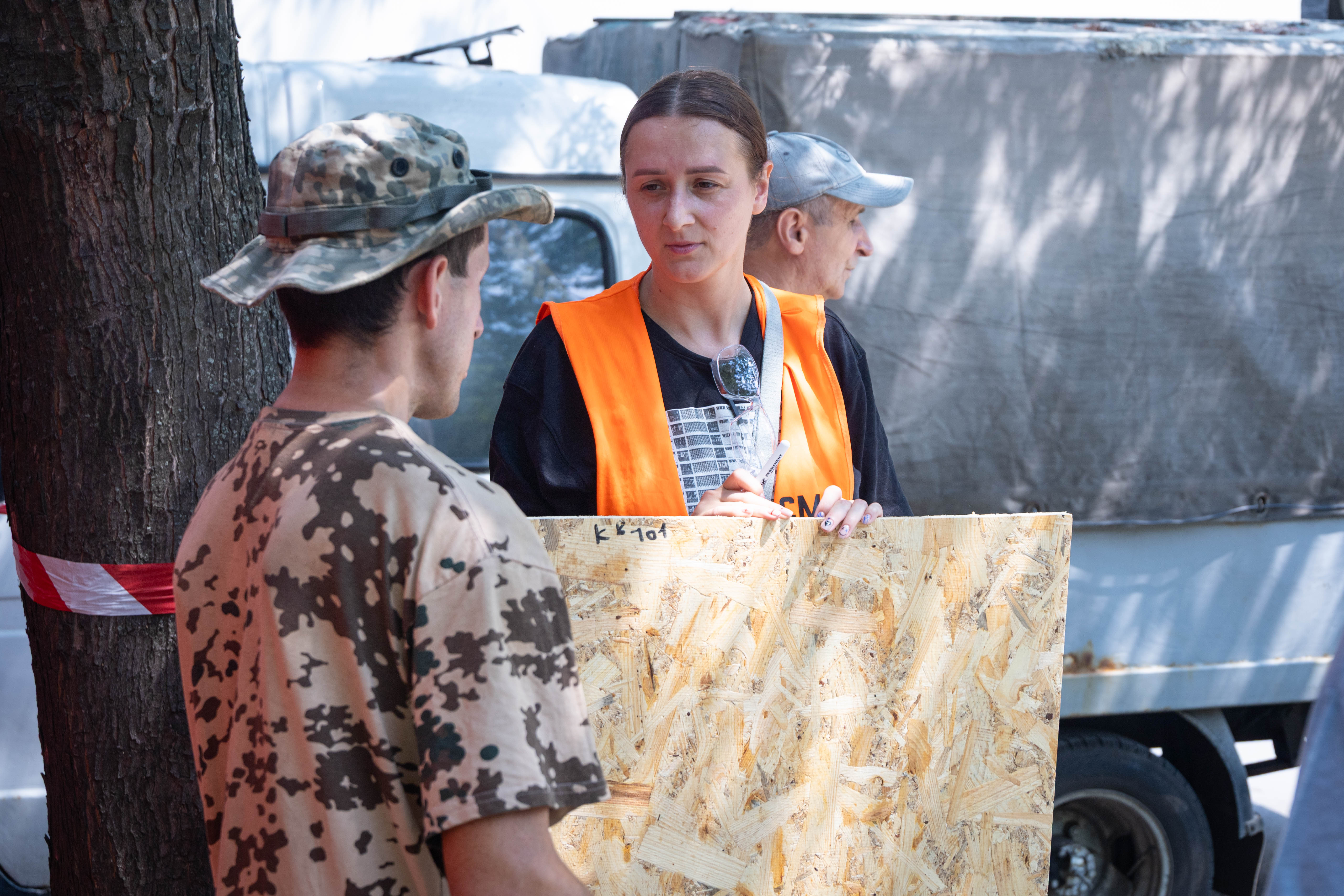
“We usually work for a day or two, sometimes three — depending on how difficult the situation is and how many buildings have been damaged or destroyed,” the coordinator explains. “People are under stress, but the adrenaline keeps them going. At least those who have come to us for help.”
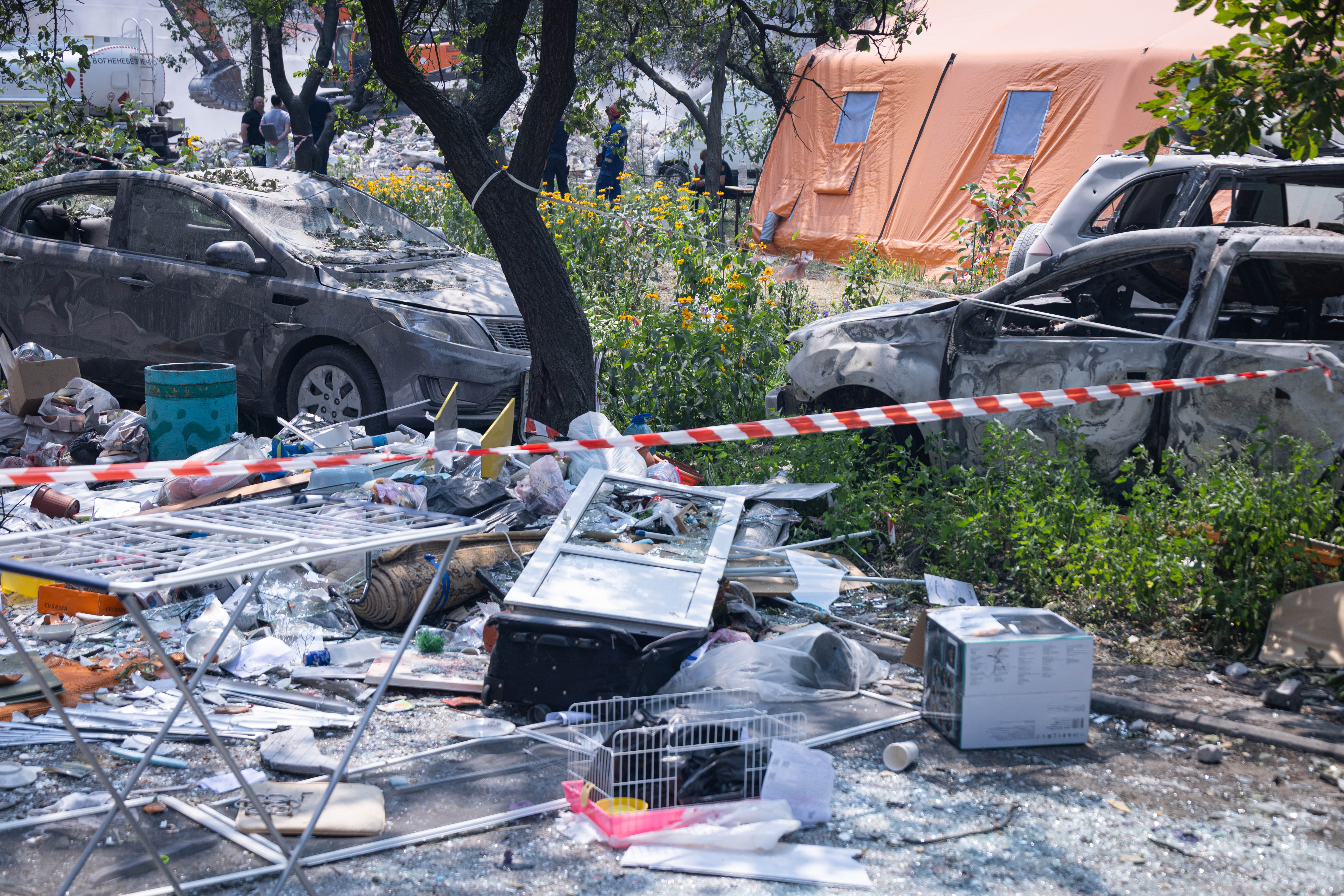
Generators hum — there is no electricity in the district. Their noise blends with the sound of a saw cutting OSB panels and the rumble of heavy machinery. Among the damaged belongings is a cage. It is unknown who lived in it and whether they survived.
Nearby, in one of the damaged buildings, a café is open. People come in to rest. When asked whether the premises were damaged, the girls behind the counter say that, fortunately, they were not — only a mirror was broken.
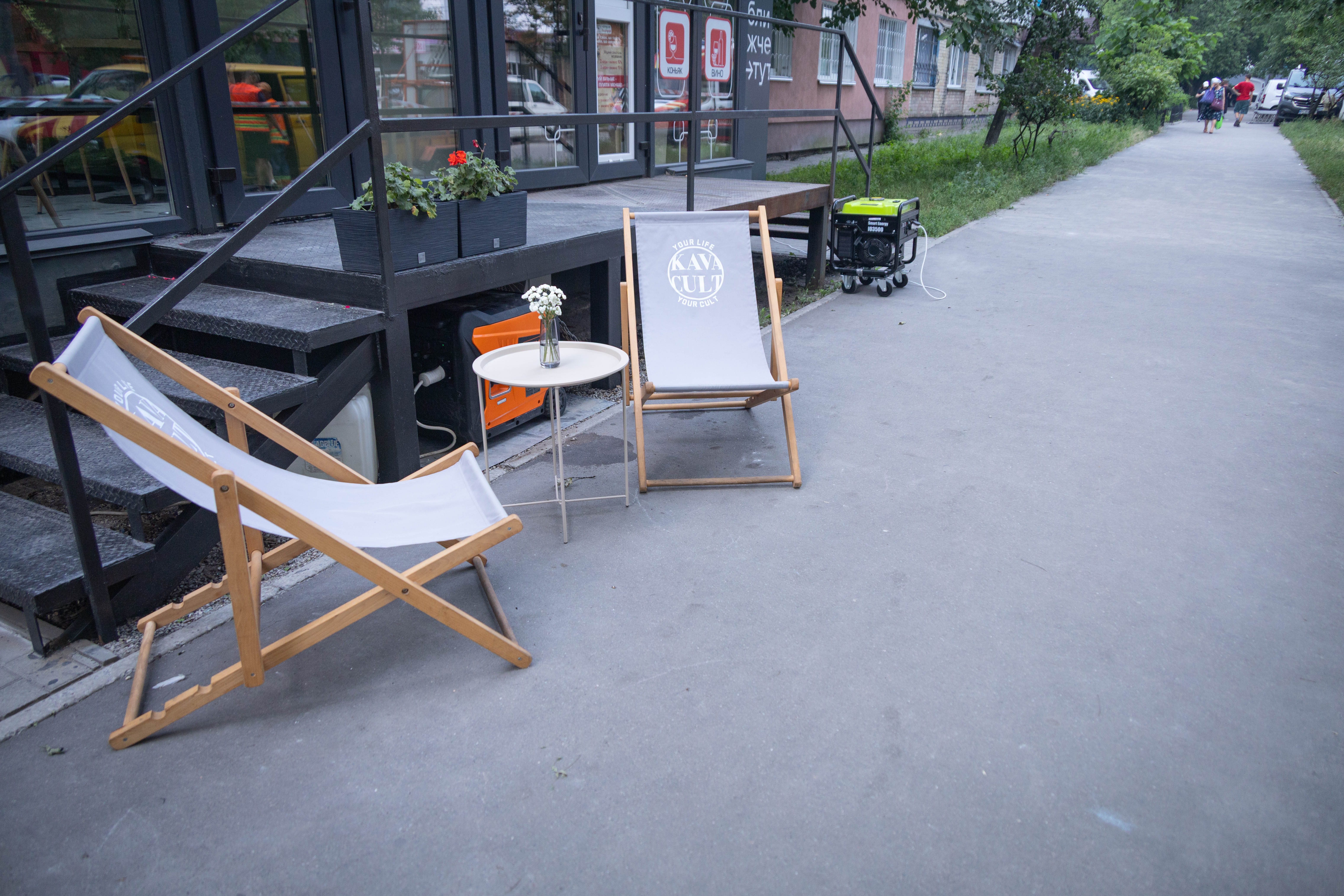
“The girls just didn’t see it,” the owner objects. He adds that the blast tore out the door and the sink. They fixed everything quickly because they needed to keep working. According to him, people mostly come here to charge their devices, and one man even brought an EcoFlow power station. They did not turn him away, even though the café itself is running on a generator. “Because we have a generator, and they don’t,” the owner explains simply.