“Donbas Was Never Truly Soviet” — Hiroaki Kuromiya
One of the main areas of research of the American historian Hiroaki Kuromiya is the modern history of Ukraine. In particular, he has focused on the period of Stalin’s Great Terror, the Holodomor, and the special place of Donbas as a region that was always problematic for Soviet power. Kuromiya became interested in Donbas in the late 1980s. He spent about eight years working in the archives of Donetsk, Luhansk, and other cities in the region. He later published the books Freedom and Terror in the Donbas: A Ukrainian-Russian Borderland, 1870s–1990s and Understanding Donbas. The scholar argues that Donbas was never truly Soviet; rather, it was Ukrainian in character. He sees in the region the features of a traditional Cossack worldview: a desire for freedom, autonomy, and independence from central power. In some of its cities, Russians may have formed a majority, but overall Donbas was ethnically Ukrainian. For that reason, Kuromiya challenges the widespread notion of Donbas as a Russified region and a stronghold of pro-Russian sentiment. From a historical point of view, this is not the case, not even as of 2014, the scholar says.
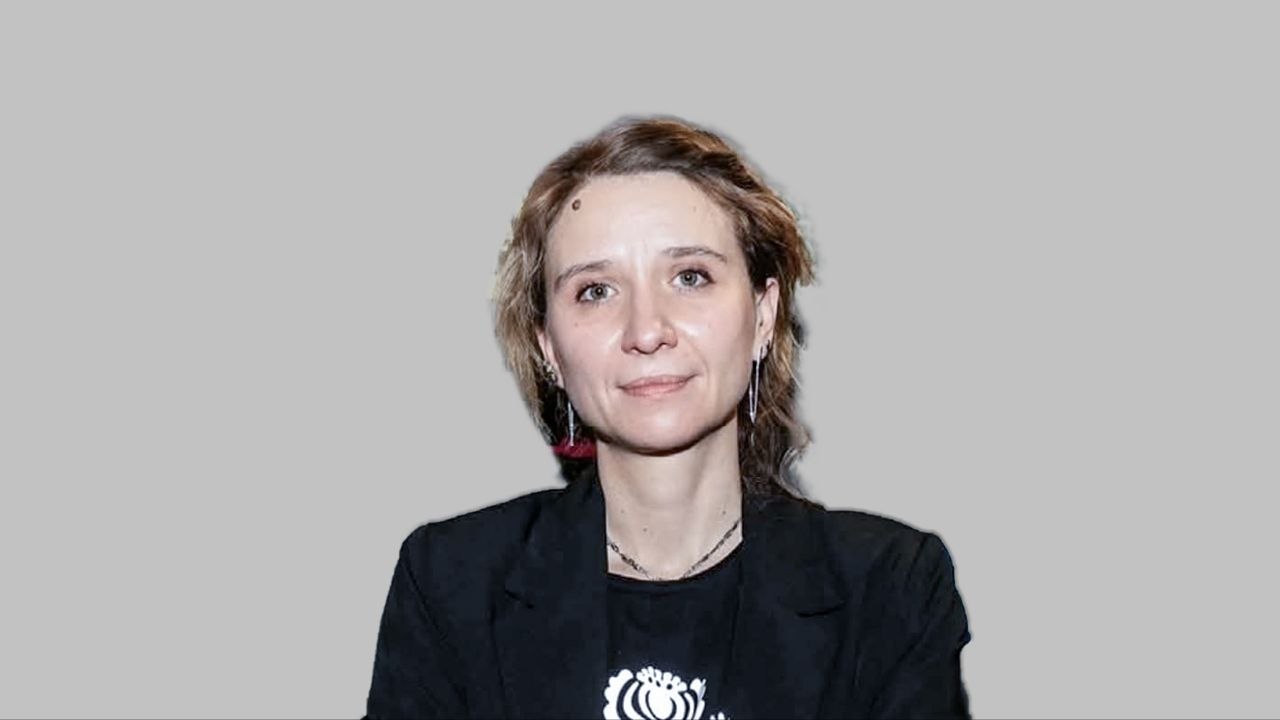
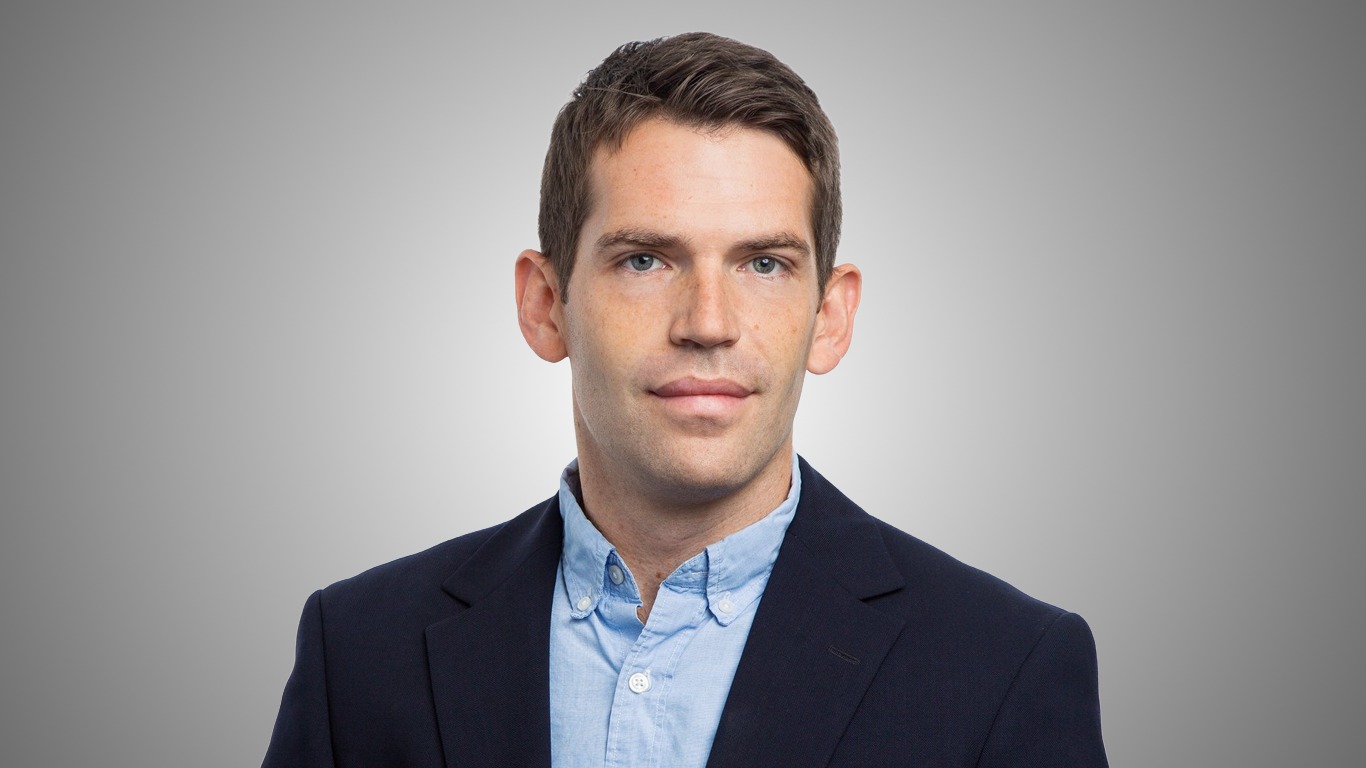
In the podcast When Everything Matters, journalist Nataliya Gumenyuk speaks with Hiroaki Kuromiya about the history of Donbas, its essence and relationship with Russia, persecuted Koreans and Japanese, the brutality of Stalin’s actions in East Asia, and the imperial competition between Moscow and Beijing.


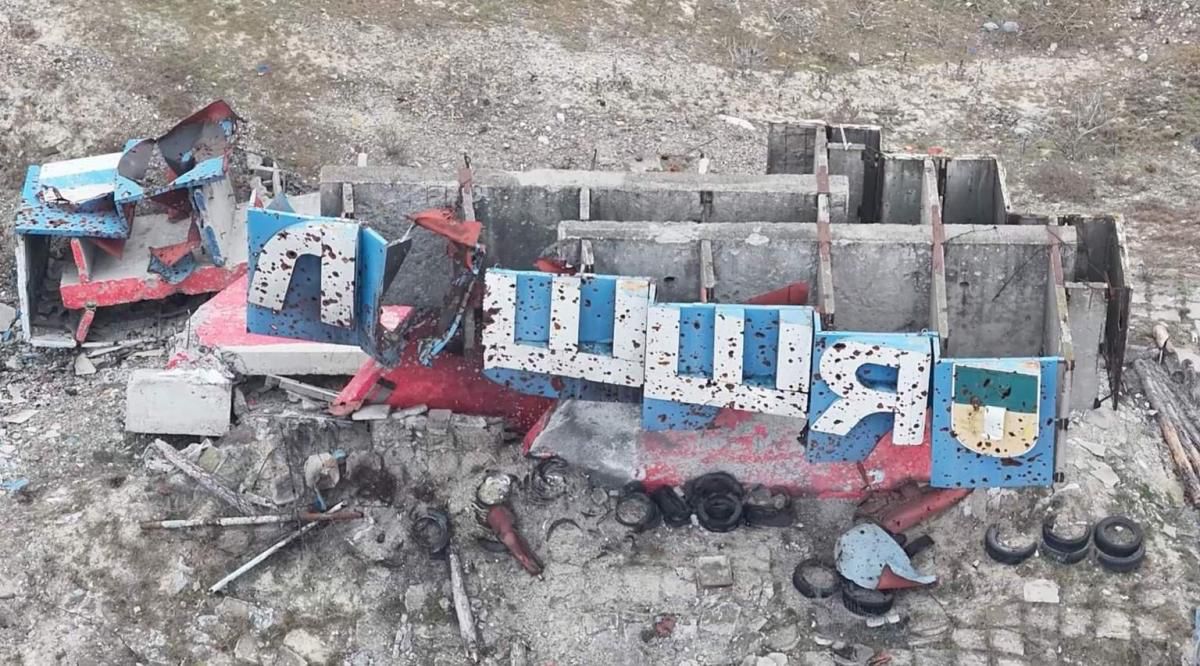
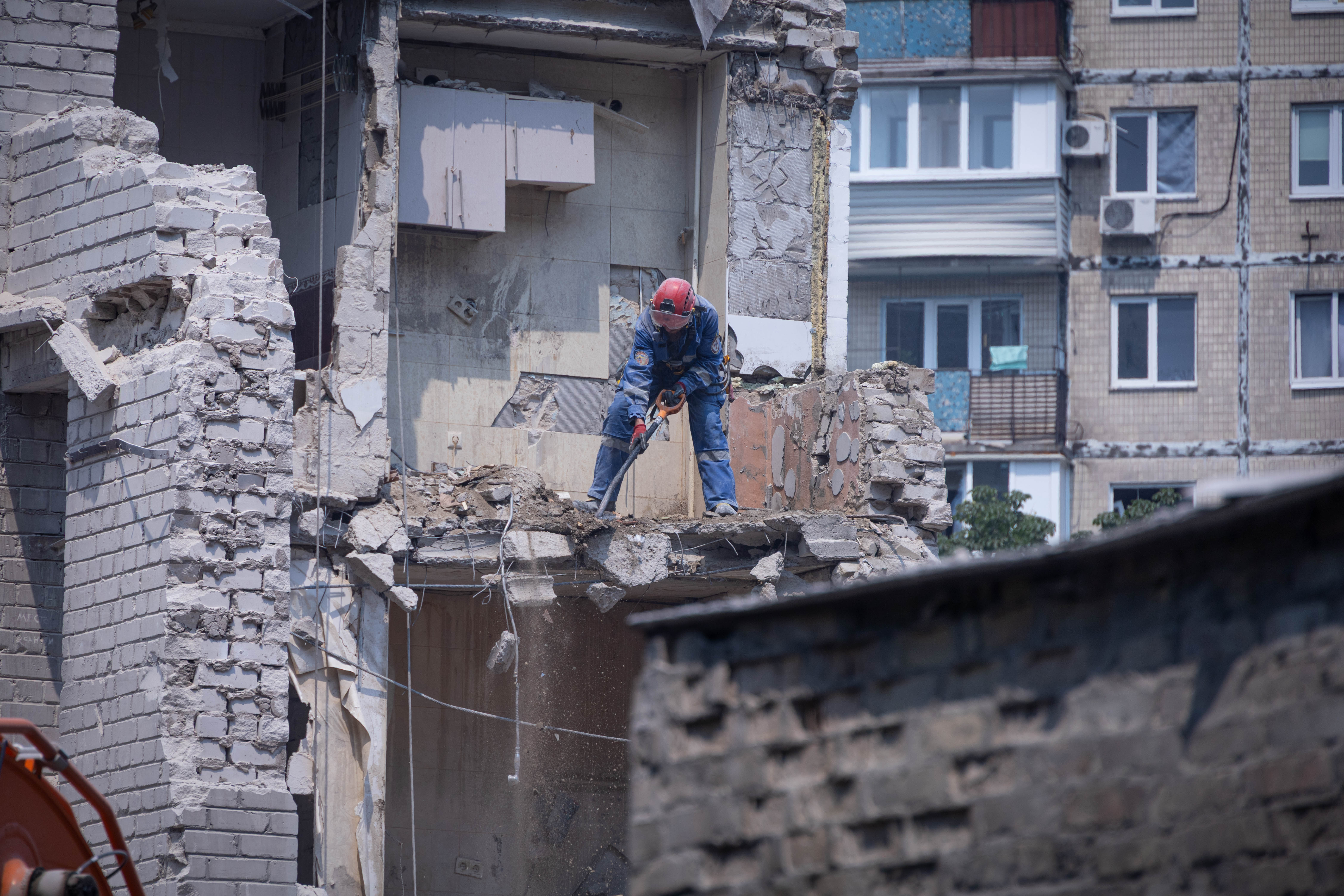
Professor Kuromiya, I have been looking forward to this conversation for a long time. For more than 12 years now, we have been debating the fate of Donbas, and today’s discussions about “peace negotiations” concern the future of eastern Ukraine. I never tire of repeating that your book Freedom and Terror in the Donbas remains the best history of this region. Today, against the backdrop of occupation, we are witnessing the unprecedented destruction of the industrial heritage that Donbas was so proud of in the twentieth century. The mines and factories that formed the foundation of its identity are turning into ruins and dust. No other region was ever so dependent on the very presence of industry as this one. But that era has come to an end. How would you describe the history of Donbas today? Do you believe that the chapter of the “industrial heartland” has now been definitively closed? How would you explain to your students what this region was?
I would say that Donbas is not simply an administrative unit but, above all, an industrial center of a great industrial age. Yet that period began to fade even before 2014, as the whole world was undergoing a transition to post-industrial development. Donbas’s coal industry had been declining for decades. The war that began in 2014 merely put a tragic full stop to that era. One could argue that the history of Donbas as we knew it began with industrialization and ended with the Russian invasion. This century-long industrial development was a foundation for both Ukrainian and Soviet history. But after 1991, the situation became critical. Donbas had always been a magnet for people, a place of work and opportunity. As the factories declined, the region lost this core function. A massive outflow of people from Donetsk and Luhansk oblasts began. So the period from the 1990s to 2014 became a kind of epilogue to the old Donbas. The war merely completed the destruction of something that had already been heading toward decline. Now its industrial basis has effectively been destroyed, and it is extremely difficult to imagine the future of the region in its former shape. It will be an entirely different story.
When you first came to the Soviet Union, and later to Ukraine, what exactly drew you to Donbas? Today, through the lens of war, that interest seems obvious. But at that time the region was not at the center of historians’ attention. Why did you choose it as the subject of your fundamental research?
I first went there in October 1989, shortly after the large-scale miners’ strike movement. Earlier, when I was a trainee in Moscow, I did not have enough freedom of movement, but I had always wanted to see this land with my own eyes. Donbas interested me because during my research on the Stalin era, it kept emerging as a problematic region — a center of tension and a source of difficulties for the Kremlin. Stalin was forced to intervene personally in Donbas affairs more often than in any other region: coal or steel output failed to meet targets, or unexpected political disruptions would arise. From the very beginning of the Soviet era until 1991, the region was always crackling with tension. So I became interested in studying this troubled region — one of the most difficult in the Soviet Union — and understanding what it really was. I do not regret it.
Younger generations often perceive Donbas only as a war zone. At the same time, largely under the influence of Russian propaganda, an image of Donbas as a “Soviet bastion,” a place supposedly dominated by pro-Soviet views, took shape from the early 2000s onward. Yet your research shows that Donbas was “problematic” for the center long before the Bolsheviks and remained so throughout the entire Soviet period. What exactly made this region so disloyal to Moscow? Is our current image of Donbas perhaps nothing more than the product of political manipulation from the Yanukovych era?
Donbas was never truly Soviet. That is precisely why it remained a constant headache for the Kremlin from 1917 onward. The loyalty of its inhabitants never truly belonged to the Communist Party. For decades, Donbas functioned as a refuge: people fled there from famine, political persecution, religious pressure, or poverty. For the center, this region was always a suspicious “nest” of people accustomed to relying on themselves rather than on the state. It is no coincidence that during the Great Terror, Donbas suffered some of the harshest repression. On the other hand, Donbas constantly needed labor — people with great physical strength. For that reason, the authorities often sent there “problematic” categories of the population: former criminals, Ukrainian nationalists sent to camps who could not return, say, to Western Ukraine. Many of them were directed to work precisely there. So, from Moscow’s point of view, Donbas was never fully Soviet. It was rather a kind of enclave where the toughest and most freedom-loving survived.
Moscow praised Donbas in words as a “forge of cadres” and a model proletarian land, but behind that façade lay a completely different character. Let us not forget that this very “Soviet bastion” produced outstanding Ukrainian dissidents: Vasyl Stus, Ivan Dziuba, Oleksa Tykhyi, Ivan Svitlychnyi. It was here that, ten years before Poland’s Solidarity, Volodymyr Klebanov’s first free trade union movement emerged. Yes, Moscow tried to “buy” miners’ loyalty with high wages and better provision than even in Moscow itself. But this was not love for the regime; it was a pragmatic contract. As soon as people realized in 1989 that the USSR was bankrupt, they rose up in protest immediately. And they chose their future not with Russia, but in independent Ukraine. At its core, Donbas is a story about the search for freedom, not loyalty to empire. In that sense, Donbas truly represents something non-Soviet, non-Russian, and much more Ukrainian.
Given the current occupation, how would you describe the historical connection between Donbas and Russia, particularly with Rostov oblast? Today, after occupying Donbas and annexing Donetsk and Luhansk oblasts, Moscow is trying to emphasize their closeness to Rostov. They are effectively building a myth that this is supposedly one and the same territory, that it has always been so. What would you say in response to that? Because this is exactly what they are trying to play on now.
Indeed, industrial ties between Donbas and Rostov oblast have existed for a long time. Even the very name “Donbas” — the Donets Basin — geographically included parts of what is now Russia, including the city of Shakhty. Historically, there was a certain territorial ambiguity here. Back in the eighteenth century, Catherine II transferred part of these lands to the Don Host Region. Later, in 1924, large territories that had been part of Soviet Ukraine were handed over to Rostov oblast. So the economic and family ties were extremely close. But close ties do not mean political loyalty. Having relatives across the border or sharing an industrial base did not make the people of Donbas pro-Russian or oriented toward Rostov. Opinion polls in 2014 showed this clearly: the absolute majority of the population wanted to remain in Ukraine. Yes, people wanted freedom of movement because they had families on both sides of the border, but there are no grounds whatsoever to claim that Donbas wanted to become part of Russia or supported Russian intervention. Proximity does not necessarily mean consent to annexation.
And what is your view of the term “Donbas” itself? Today, especially among young people and intellectuals, one often hears that this name should be abandoned. It is associated with a Soviet identity, with a construct imposed from outside. People from Kramatorsk or Sloviansk say, “We are not Donbas; we have a different type of industry; we are Slobozhanshchyna.” Olena Stiazhkina even argues that the name “Donbas” has no right to exist. As a scholar, how would you define this term, and should we continue using it?
I understand this debate. Indeed, the name “Donbas” is not administrative — it is a geographic and economic abbreviation for the Donets Basin. The problem is that this name for the region has existed for more than a century, and we cannot simply erase it from history. In practice, for decades it referred to two oblasts — Donetsk and Luhansk. So for describing the history, at least up to 2014, I do not see a problem with using the term “Donbas.” It is not a very precise, strictly defined term, but it describes a region of coal mining, metallurgy, and industry. It was widely used both by local people and in world scholarship. At the same time, in the contemporary context, when we want to emphasize the subjectivity of each community and move away from Soviet clichés, using the names “Donetsk oblast” and “Luhansk oblast” is much more accurate. I do not object to abandoning the word “Donbas” in public discourse, but as a historian I continue to use it to describe that specific industrial cluster that existed in the past. It is extremely difficult to erase it entirely from the past, because it was part of reality for more than a hundred years.
How can we preserve the history of these cities? Mariupol is too large to disappear, despite the tragedy and occupation. Tens of thousands of people were killed there; it is one of the most tragic chapters of Russia’s war. The city is partly destroyed, but it is too large to be completely erased. Sievierodonetsk is partly intact. But Bakhmut, Avdiivka, Marinka, Soledar — they are effectively gone. I constantly meet people from these cities, and for them this is a painful question: how do you remember a home that no longer physically exists? How, in your view, can we preserve this in memory? Perhaps this is one of the last chances to speak with people who lived there. Perhaps it is our last chance to speak with those who walked these streets fifty years ago, because in twenty or thirty years they will no longer be with us. Those who remember them not as war zones.
In fact, we are in a relatively advantageous position compared to historians of past centuries. Today we have a colossal amount of information: social media, digital archives, gigabytes of media materials. Of course, this matters, because people lived there, they grew up there. The testimonies of those people, their memories, their recollections — all of this can, in one way or another, be preserved. We do not know what the future of these smaller cities will be, but their remnants still exist. In history, many cities have appeared and disappeared, and some of the smaller cities of Donbas may, unfortunately, meet the same fate. But we have every opportunity to preserve their memory. The internet is already overflowing with facts, yet we need something more — living human memories, texts, and artifacts created by the residents themselves. It is important to record not only coordinates on a map, but also what these cities breathed with, how people grew up there. The future of these ruins is unknown, but the history of their lives can be preserved if we manage to gather these testimonies now.
I am troubled by how quickly, under occupation, a different kind of society can be formed. If a new generation is deliberately raised in a чужa ideology, within a decade we will have an environment that will be extremely difficult to reintegrate. Russia’s campaign of rewriting the past is extraordinarily aggressive. Putin openly says that wars are won by history teachers. It is entirely possible that new generations formed in such conditions will have a completely different understanding of the 1980s, the 1990s, and even the Soviet period than you and I do. Do you think this is really so: that if a new generation is formed under such conditions, it will have a fundamentally different understanding of the region, its identity, and its past?
That is entirely possible. The situation is critical, because Russian education is effectively turning into indoctrination: they are erasing the real history of Donbas and rewriting it to suit their own needs. So yes, this is a serious problem. At the same time, the same thing happened in the Soviet period — then too they tried to suppress inconvenient facts and impose a Bolshevik, Moscow-centered vision of particular territories. But that did not destroy everything. People remembered, wrote things down, and concealed testimonies that later became accessible. Today we have an even greater advantage — an enormous amount of information on the internet. So I am not a pessimist. I believe that attempts to rewrite history will not be as successful as the aggressor hopes. Our task as historians is to make every effort to preserve reality. It is not an easy struggle, but I remain hopeful.
In your view, what key storylines define the history of Donbas and eastern Ukraine after 1991, aside from the miners’ protests of the late 1980s? What was the history of Donbas as part of independent Ukraine up to 2014? If we bracket Yanukovych himself, what was Donbas really for independent Ukraine before 2014? How did its political return and integration into the body of the state take place?
Here we see a real paradox. Historically, Donbas always resisted the metropolis, seeking to be free from interference by any center — whether Moscow or Kyiv. Yet in the Yanukovych era, the vector changed: Donbas elites — politicians, influential groups — instead of seeking autonomy, began to seek control over Kyiv itself. In a sense, Donbas wanted to become the center of Ukraine. This looked like a paradoxical form of integration into Ukrainian political life. Of course, Putin stood behind this, trying to use the region as an instrument to seize the whole country. But for Donbas actors themselves, this was a radical change of strategy: from fleeing the center to trying to become that center themselves. This is a fundamentally new stage in the region’s centuries-long history.
How would you describe the identity of this region during the period of independent Ukraine? We know about the miners, but it was far more eclectic than that. There was Mariupol as a port, there was complex industry — metallurgy, chemicals — where engineers and highly educated people were needed. Today, during the war, we understand even more acutely the value of specialists in these complex sectors. These were some of the largest cities in the country: opera, ballet, a strong sports culture. At the same time, there were villages where people continued speaking Ukrainian. For me, this is a vast, densely populated space where urban development effectively merges into one continuous urban fabric. Even small towns have populations of 30,000 to 50,000. So how would you describe this region beyond the stereotype of miners, important though they undoubtedly remain?
This is truly a vast region. Its identity may not be as sharply defined as in western Ukraine, but to me one thing is obvious: people in Luhansk and Donetsk oblasts understood that they lived in Ukraine, not in Russia. Ukrainians made up the majority of the population of these two oblasts. In some cities Russians may have predominated, but overall Donbas was ethnically Ukrainian. As many have noted, Ukrainian culture often dominated even in the metropolises. People might speak Russian, but they sang in Ukrainian. And song is about emotion, and that emotion was Ukrainian, not Russian. When I first visited Donetsk in 1989, the archive staff asked me to speak with them. I spoke Russian, because my Ukrainian was not good enough at the time. But at the end they gave me a copy of Shevchenko’s Kobzar, published in Kyiv in 1988. It was a very beautiful edition. Why? Because they understood that Donbas is part of Ukraine regardless of how Russified the language might be. In that sense, the responsibility lies with Lenin. Putin may perhaps be right when he blames Lenin. It was Lenin who insisted that the industrial heart of eastern Ukraine should belong to Ukraine. In 1918 there was a movement to create the Donetsk-Kryvyi Rih Republic, but Lenin forbade it. His position was clear: depriving Ukraine of this industrial region would be harmful to it. This was decisive: from 1920 to 1991 these territories were part of the Ukrainian SSR. People lived in Ukraine for seventy years. Whatever the differences between the regions, they understood that their home was here, not in Russia.
And if we move away from strictly ethnic differences and look at the socio-political dimension, what was this region really? It was extraordinarily multicultural: Armenians, Azerbaijanis, people from all the post-Soviet republics lived there. And it was not only miners. How can Donbas be historically defined beyond the cliché of “industrial”? After all, of other parts of Ukraine we say “agrarian” or “university centers”; we speak of Odesa separately. So what was this complex space in its essence?
You are right, it is an extraordinarily complex region. Mariupol, with its own specificity, traditionally did not belong to the coal-mining Donbas. Starobilsk in the north of Luhansk oblast is really Slobozhanshchyna. The ethnic and religious diversity there was striking: not only Orthodoxy, but also strong Protestant communities, Jews, Muslims. When I was in Donetsk in 1989, I was assisted by a journalist from Vecherny Donetsk who turned out to be ethnically Korean. I do not know how his family ended up there, but this diversity struck me. So yes, Donbas cannot be characterized in a single word, even though its image was often reduced to the stereotypical figure of the sturdy miner who supplies the country with coal. In reality, the region was much more complex. At the same time, as I have already said, after Lenin’s decision a clear sense began to form: this land was part of Ukraine. Before 1917, Ukraine did not exist as a comparable administrative unit, but from the creation of the Ukrainian SSR until 1991, the situation remained unchanged. And from 1991 onward, Ukraine became independent. Despite all the multiculturalism and the difficulty of definition, people understood that they lived in Ukraine. I want to stress this, because there is a false perception — both abroad and in Ukraine itself — that Donbas was not fully Ukrainian, but merely a Russified center of pro-Russian sentiment. From a historical point of view, this is not true, even as of 2014.
How would you respond to those who, in today’s debates, try to impose on Ukraine the idea of “giving Donbas away” to Russia?
This is an absolutely unacceptable option. Even if Ukraine withdraws its troops from Donetsk or Luhansk oblasts, that guarantees neither peace nor development. Under Russian occupation, this region will most likely simply not be able to exist. I sincerely hope that Ukraine will not agree to such a compromise. Yes, a ceasefire along the current front line may be possible, but without any legal recognition whatsoever of Russia’s right to Crimea or Donbas. To recognize that would mean rewarding the aggressor. I recall 1940, when Stalin occupied the Baltic states. At that time, the United States recognized the situation de facto, but never de jure. That policy of non-recognition lasted for decades, and in the end it worked. The West and Ukraine must under no circumstances recognize Russia’s de jure right to the occupied territories, including those seized in 2014–2015. That would be yet another catastrophic mistake by the West. I do not understand why Washington insists on such steps: in effect, this means backing Moscow’s demands. Zelensky is right: Ukrainians will not agree to such a deal.
What lesson should we draw from the division of Korea? This example is often presented as a positive one, pointing to prosperous and successful South Korea. But I find it hard to accept. Speaking with Koreans, I understand that it is an unhealed wound. South Korean politics has lived for decades in the shadow of threat, while in the north 25 million people have already spent almost 80 years living in horrific conditions. Millions have paid for this “stability” with their lives. This is not a solution, but the preservation of a vast concentration camp that poses a danger to the whole world. To me, such a “freeze” looks deeply alarming. What is your conclusion as a historian from this experience of a divided country? After all, we are speaking of a country that, despite internal differences, remained whole and united, but was ultimately divided.
I completely agree. When people say, “Look at the prosperity of South Korea,” they forget the price that was paid for it. There are countless family tragedies: people cannot see their relatives, many never managed to see them again and died. This is an immense number of tragedies, the scale of which we do not fully grasp. It is a wound that does not heal. Therefore, dividing Donbas will solve nothing, because Putin wants not a part but the whole region. The Korean War supposedly ended in 1953, but the conflict itself never disappeared. But Ukraine is not Korea, and Russia is not a partner for stability. A ceasefire without ironclad security guarantees will only give the aggressor a pause, after which it will demand the rest of Donbas and further concessions. This would be a tragedy also because I do not believe in Russia’s sincerity when it comes to rebuilding the region. One only has to look at the Russian hinterland, which is in decline while only Moscow and St. Petersburg prosper. It is from these impoverished areas that Putin recruits soldiers. Moscow has no interest in rebuilding Donbas. So no, such a “compromise” is not a solution.
Your research is devoted to a large extent to the Great Terror in Ukraine. But there is a layer of history that we in Europe barely comprehend — Stalin’s actions in Asia during and after the Second World War. We do not know the true scale of that brutality and manipulation simply because it happened far away. Could you explain how Stalin constructed the history of East Asia?
A few years ago, I published a book called Stalin, Japan, and the Struggle for Supremacy over China. It covers events roughly up to 1945 and seeks to show that the history of East Asia was to a great extent distorted, manipulated, and constructed by Stalin, and then imposed on that region. Unfortunately, the Americans also played a role in this by accepting the Soviet version of events during the Tokyo Trial in the late 1940s. Because the international community paid too little attention to Asia, Stalin gained room for enormous maneuver. He falsified events, carried out secret operations under the guise of acting in the interests of China or Korea, and imposed his narrative on the world. This method is called “reflexive control” — a kind of art of political manipulation that can be traced back for more than a century. It was used in different places, including in Asia — in China and North Korea, where these approaches are still relied on to a large extent. This led to serious distortions of history. Many people are interested in preserving the Soviet version because it allows them to control the historical narrative. And that is regrettable. Even specialists, including in Japan and South Korea, know very little about this. What is called “hybrid war” in Ukraine today was practiced in Asia for decades. It is a disguised war in which Moscow attributes its own actions to others. In Europe, for example in Poland, this was more difficult, because there people understood the Kremlin’s methods well. In Asia, however, it was much easier, and these distortions still shape regional politics. I tried to correct this situation in my work, but Stalin’s manipulations have become so deeply entrenched that even specialists in Japan or Korea often continue to believe Soviet myths.
And what are the key elements of this Stalinist version? What exactly were the myths he imposed on the world, and what is the real narrative if our goal is not simply to debunk but to explain? What do we need to know about these falsifications in order not to repeat them today?
Let me give one vivid example. I am not trying to defend Japan of that era, but there is a document — the so-called “Tanaka Memorial.” It supposedly described Japan’s plans to conquer the whole world. Today it is well known that this is a forged document. Who exactly fabricated it remains a matter of debate. Some point to China, but according to my research, it was created in Moscow.
The biggest problem is that this forgery is still treated as authentic in various parts of the world, including Ukraine and Poland. I was shocked when I read a work by a Polish historian — a specialist in Soviet disinformation — who cited this memorandum as genuine. I heard the same thing from a Ukrainian Japan specialist on the radio. It is striking: people repeat what they absorbed from Soviet textbooks without even suspecting manipulation. And there are countless such examples, from interpretations of the events of 1931 in Manchuria to the Japanese invasion of China in 1937. Moscow and Beijing created an entire network of myths that allowed Stalin to conceal his own expansion while portraying only others as aggressors. The real narrative is far more complex, but it requires us to abandon the convenient Soviet frameworks that shaped our understanding of Asia for decades.
The title of your book speaks of the struggle for supremacy over China. How do you assess the transformation of relations between Moscow and Beijing today? Once the USSR was the “older brother,” then there was Washington’s strategy of splitting them apart, which some people around Trump want to revive even now. Where are we in this evolution today? Is Moscow trying to recreate an old continuity, or are we seeing something fundamentally different?
Historically, Sino-Soviet relations were never good. Mao Zedong constantly felt resentment because Stalin did not respect him. There were even military clashes between them. This mutual distrust has very deep roots, and it has not disappeared. China does not really trust Moscow, while Russia openly fears China because of its colossal military and economic power. In the Kremlin, there is a real fear of the “quiet expansion” of the Chinese into the Far East and Siberia. But now they find themselves in a situation of practical interdependence. If Beijing wants to expand its influence, particularly with regard to Taiwan, it needs Russian support. This is a situational alliance of two regimes united solely by their struggle against the liberal-democratic world order led by the United States. Russia fears its economic dependence on Beijing, and China remembers very well all the historical slights coming from Moscow. So what we see is a paradoxical combination of acute need for one another and deep, almost genetic distrust.
What could really drive Moscow and Beijing apart? It seems that despite all the distrust, their rapprochement is only growing stronger. Is there a limit to this practical dependence, and does the West have a strategy to shake this monolith?
I am not entirely sure. Yes, for practical reasons they depend on one another. But whether this historical distrust will outweigh their practical need for cooperation and alliance — I do not know. If the West truly wants to split them apart, it would require an extraordinarily subtle strategy, and I do not see one at the moment. Their interests converge only in rejecting the liberal-democratic order. In everything else, they are competitors. If China grows stronger, Russia automatically loses room for maneuver. Beijing seeks to dominate in Asia, India, and Africa — areas where Russia has traditionally wanted to see its own influence. The expansion of one inevitably limits the freedom of the other. This is an alliance of two predators in a forest too small for both: they may hunt big prey together, but they will never feel safe beside one another.
If we set aside Mao’s personal resentment at being treated as the “younger brother,” what lies at the foundation of this distrust? What historical processes laid the groundwork for this split?
First and foremost, there are territorial disputes, which in the past even led to local armed clashes. Although these issues are formally settled now, they remain competitors for global influence — not only in Asia but also in Africa and Latin America. What we are observing is classic imperial competition. The distrust is fed both by historical memory and by the fact that their strategic interests objectively do not coincide. Between China and Russia there is a constant clash of geopolitical ambitions: each wants to be the sole leader in the same regions.
In this context, people often mention Kissinger’s strategy: the desire of the United States to improve relations with Moscow in order to focus on China as the main rival. Do you see today — in conditions radically different from those of the 1970s — any real possibility of splitting this alliance and building cooperation between the White House and the Kremlin?
I am not sure. Russia is economically very weak. Yes, it may be powerful in a military sense, but the United States has very little to gain from it as a partner. With China, things are different: the US is critically dependent on Chinese consumer goods, the result of decades of relocating production to China. So China is a much more serious competitor in matters of global governance. Russia is certainly an enemy of the liberal order, but it will be extremely difficult for Washington to sever its ties with Beijing. I am not sure that the current administration even has such a strategy. As for Trump, despite his harsh rhetoric on China, it is not clear that he really seeks direct confrontation. It may be that in Washington there is, in some circles, a temptation toward another logic: if the three powers — the United States, China, and Russia — can come to an understanding, they will control the world. In such a model, Europe moves to the sidelines, and the three giants simply divide spheres of influence. Of course, I am simplifying somewhat, but echoes of this vision of a “world of three” can be clearly heard in contemporary discussions.
I would like to return to your book The Voices of the Dead: Stalin’s Great Terror in Ukraine, where you mention Japanese and Koreans killed in Kyiv in 1937. Who were these people? Today in Ukraine we are trying to make sense of our ethnic diversity, including the history of Ukrainian Koreans. Many of their families are now divided by the occupation of Kherson oblast. These people often arrived here from Central and East Asia — particularly after the return of the Crimean Tatars — in search of a better life. Their younger generation often does not know its own history, because their grandparents simply never told it. We want to restore these names so that these communities may have a voice. Who were the ancestors of these people, and what were the waves of their migration to Ukraine?
As far as I know, there is no large Japanese community in Ukraine, but the fate of certain individuals was tragic. As for Koreans, this is a large-scale story. Once in Moscow I met a Korean waitress from the North Caucasus who did not know how her family had ended up there. This is a typical situation. Most Koreans in the territory of the former USSR come from the Far East. They moved en masse from Korea to Primorye after 1905, fleeing Japanese colonization. Because they physically resembled the Japanese, Stalin saw them as a “potential threat.” That is why in 1937–1938 they were totally deported from the Far East to Central Asia — to Uzbekistan and Kazakhstan. A whole generation grew up there. In the post-Stalin period, they began to look for new opportunities and found them in Ukraine, particularly in Kherson oblast. I heard an interview on Ukrainian radio with a representative of the Korean community: his relatives had moved from Uzbekistan, he grew up in Ukraine, and he speaks Ukrainian without an accent. But the fact that many people do not know their family roots is a consequence of deportation. Almost all of them originally came from Russia’s Primorye region, from which they were torn away by force. Recovering these testimonies is an extremely important process for understanding the true history of Ukraine.
You mentioned the particular case of people who lost their lives and became victims of Soviet repression in the 1930s, including members of these communities.
When I worked in Ukrainian archives, I came across Korean and Chinese names among the repressed. I became very interested in how exactly these people had ended up in Ukraine, but I was never able to fully trace the path of their arrival there. The very fact that they were not locals made them “suspect” in the eyes of the system. This applied especially to Koreans, since Korea was under Japanese rule at the time. Even if they were convinced communists, they were still regarded as potential Japanese spies — especially those who taught Japanese. The Chinese met a similar fate. I read the memoirs of a person who lived in Kyiv in 1937–1938: she recalled how, in the summer of 1937, all the Chinese pupils at her school suddenly disappeared — they were either arrested or deported. After the Second World War, another layer of this story emerged — Japanese prisoners of war who were used as labor on the mines and factories of Donbas. There is even a separate serious study of that period; I have a copy of that book. In this context, the question of migration and forced displacement is extremely important and difficult to study.
In closing, I would like to ask you for a short message. Let us imagine that young people from Avdiivka, Marinka, Bakhmut, Luhansk, Starobilsk, and Mariupol are listening to us. Perhaps they remember very little by now; perhaps the war has scattered them all over the world. What would you say to them not only as a historian, but as a human being? What should they carry with them into the future?
First of all, do not despair. I often give the example of Poland, which lost its independence for more than a hundred years, but in the end reunited and became free again. It was a very long path, but it ended in victory. In that sense, I agree with Olena Stiazhkina, who recalls the Jewish tradition: for centuries people repeated, “Next year in Jerusalem,” nurturing the hope of return. So I want to say to these young people: “Let us hope that we will meet in Donetsk, Luhansk, Avdiivka, Horlivka, and other cities of Donbas next year.” If not literally next year, then certainly in the future. We will meet there again. I sincerely hope that this will happen in my lifetime.
Thank you, Professor.
This publication was prepared with the support of the Partnership Fund for a Resilient Ukraine (PFRU). The contents of this publication are the sole responsibility of the Public Interest Journalism Lab and do not necessarily reflect the views of the Programme and/or its financial partners.