“The First Step Toward Europe Is to Become Stronger Than Russia” — Professor Masala
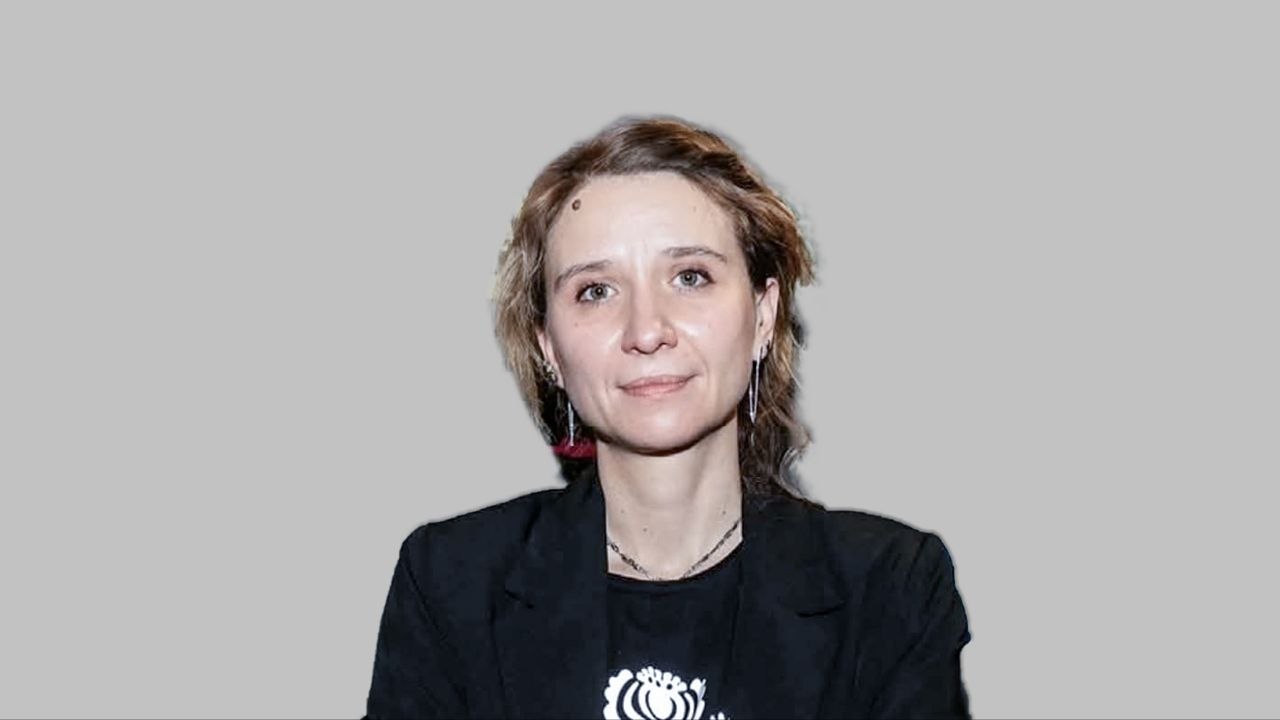
Carlo Masala’s book If Russia Wins: A Scenario has become a bestseller. In it, the professor of international politics at the Bundeswehr University in Munich describes a hypothetical sequence of events in Europe in the event of a Russian war against NATO countries. He analyzed vulnerable points on the Alliance’s map and identified several such flashpoints. He chose Narva — Estonia’s third-largest city, located on the Russian border and home to a large Russian-speaking population — as the place where the conflict begins. In his scenario, several brigades of the Russian army seize this Estonian city. Masala came up with the idea for the book in 2024. That was when intelligence services in various European countries disclosed assessments that Russia could be ready to attack a NATO country by 2029. The author believes the very framing of the discussion about whether the Kremlin is capable of attacking the North Atlantic Alliance is misguided. In his view, the first question should be about Russia’s broader political goal. And that goal is the destruction of NATO. A limited attack on a border city with a Russian minority could help achieve it. In Masala’s book, the members of the Alliance face a choice: whether to be drawn into a major war with a nuclear-armed state or sacrifice a small eastern city. In the end, NATO fails to reach agreement on the issue. Masala still does not see unity within the Alliance when it comes to a possible confrontation with Russia. Moscow understands this too. That is why the hypothetical scenario could become a real one.
In the podcast When Everything Matters, journalist Nataliya Gumenyuk speaks with Carlo Masala about his book, the American-Israeli operation against Iran, and why Europe was pushed aside; what Europe lacks most in military terms; how Ukraine can help; what Russia’s psychological weapon consists of; and what false signals NATO is sending to the Kremlin.


Professor Masala, I’m glad to have the opportunity to speak with you. It seems logical to begin with the American-Israeli military strike on Iran. As an expert in international security, could you explain what exactly makes this operation unique? In scale, it resembles the invasion of Iraq, yet the strike on Iran came relatively suddenly. Is what makes it distinctive the fact that we are living in a time when the world order has been destroyed and one state can simply kill the leader of another? Or is this just another war in the Middle East, something the world has already grown used to? What, in your view, sets this event apart?
Actually, I would not say that the operation in Iran became possible only because of recent changes in the world order. We have seen similar campaigns more than once. But the scale — or rather the dimension — of this operation is indeed new. Since the Iraq War in 2003, this is the largest U.S. force deployment. The United States has never before redeployed such a number of air force and naval units to another region. In that sense, this event is truly unique over the past twenty years. Of course, it was a consequence of the October 7 attacks. I would not call it logical, but I would call it inevitable. Those attacks changed Israel’s strategic calculations. Israel is now firmly determined to reshape the situation in the region in its favor. Whether this will bring positive results remains to be seen. But in my view, it is precisely this determination that makes the current campaign unique.
I was struck by a comment from Italian Prime Minister Giorgia Meloni. She said that the current events became possible, in part, because we already live in a world where Russia has attacked Ukraine. And I remembered 2003–2004: I was still a young reporter then, but I remember how long the preparation lasted. The United States tried to persuade France to join the operation in Iraq, and presented evidence that Saddam Hussein allegedly possessed chemical weapons, which later turned out to be false. But at the time, the process of legitimization itself mattered. Do you think we have really crossed a line beyond which the invasion of one country by a stronger state has become the new normal?
Yes, gradually it is becoming the norm, because more and more actors are behaving this way. The principle of international law — namely Article 2 of the UN Charter, which prohibits war and allows only self-defense or the use of force under a Security Council mandate — has effectively been destroyed. Now any state that sees itself as powerful can use armed force to advance its own political goals. In that sense, we are indeed entering a new era. Previously, only the United States could afford to behave this way because of its enormous military superiority. But Russia has been acting like this since around 2008. China has not done so yet, but reserves the right to take similar steps. So the three biggest powers in the international system — although I would call Russia more of a regional than a global power — are increasingly relying on force. But what is even more interesting is how U.S. strategy has changed. In the past, the United States always sought to build a broad international coalition in order to lend legitimacy to its actions. In the war against Saddam, it was not about needing allies, but about wanting them on its side for legitimacy. Now the United States is not even looking for partners. It relies exclusively on its own resources and capabilities, without even trying to secure international approval.
If we are talking about the course of the military operation in Iran, does it demonstrate the unquestionable superiority of the United States and Israel? I mean their ability to track a country’s leader anywhere. The essence of modern warfare seems to lie in possessing intelligence from which there is no hiding place, even if a person is actively in hiding. Does this show that their power is now so great that safe places have effectively disappeared?
I would say this is a combination of different factors. As for intelligence, Israel certainly has enormous capabilities. We have seen this since October 7: Israeli intelligence services have penetrated the structures of neighboring countries, especially Iran, so deeply that they know the whereabouts of the people they need almost minute by minute. That makes targeted strikes much easier. This applies to the United States to a lesser degree, at least in this region. But what is striking about the actions of both countries in the first four days of the war in Iran is how quickly they achieved full air superiority. Let us also not forget that Iran received Russian S-400 air defense systems, which are considered modern and dangerous. And yet during the twelve-day war of 2025 and during the current events, they effectively failed to function. We see no reports at all of American or Israeli aircraft being shot down over Iranian territory. In essence, this demonstrates just how great the advantage of the United States and Israel is when it comes to control of the airspace. The first task is to neutralize air defense systems, because S-400s pose a serious threat to aviation. The Iranians were unable to use their air defenses effectively. Perhaps they were suppressed by electronic warfare, or perhaps the Israelis gained direct access to the electronic systems of these complexes. We do not know the details, but the fact remains: Iranian air defense was taken out in the very first seconds. That is truly impressive.
Ukrainians are not looking at this war as outside observers. We are closely analyzing the military side of events, because we know very well what Shaheds are, what missiles are being used, and what brings them down. For us, this is not just about abstract aircraft sorties or missile strikes. We are trying to understand how capable other Middle Eastern countries are of defending themselves. How much real strength does Iran have when fighting directly on its own territory? Are Shaheds really such an effective weapon? What new lessons can we draw from this war in terms of military capabilities, apart from the drones we are already familiar with?
We are not really observing anything fundamentally new. Iran is responding with the arsenal it has — namely ballistic missiles and drones. But if you look at the numbers, the picture is more interesting: from day one until now, the number of ballistic missiles and Shaheds Iran has been using has been decreasing. For now, it is hard to say whether that reflects depleted stockpiles or the result of successful U.S. and Israeli strikes on underground storage facilities and launch sites. But there is one thing we do see — and here I would compare it with Ukraine. Drones are proving more dangerous than ballistic missiles. Although a single drone causes less damage than a missile, collectively they are capable of causing far greater destruction. Air defense systems in most Gulf countries were able to intercept almost all ballistic missiles, but drones are more difficult because they are harder to detect and shoot down. Most of the recorded damage has come specifically from unmanned systems.
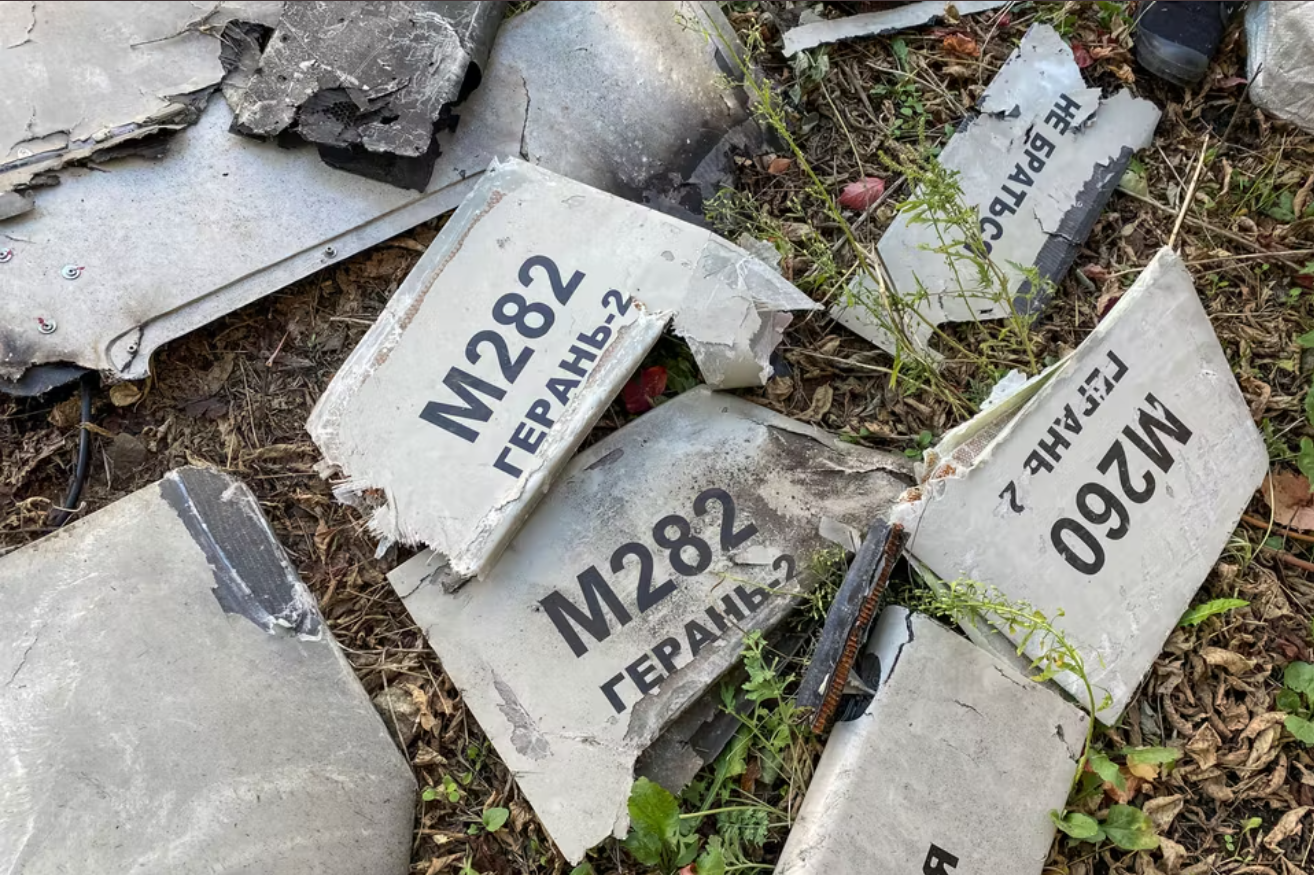
This shows that the nature of war is changing. We already see this when we observe the war Russia is waging against Ukraine. Drones, even though they carry smaller warheads, can in practice be more effective than ballistic missiles, especially when a strong air defense system is operating against them.
I am currently working on a book about the drone war. And during the massive attacks this winter, I was refining a chapter about countering Shaheds, because Ukrainians seem to have found effective solutions against them. In that context, I’m curious: what new things did you see in the actions of the United States and Israel? We understand that the defensive capabilities of Arab states are somewhat lagging behind, but is there anything fundamentally new in the American arsenal? Or do current events simply confirm that the means they already have are effective enough as they are?
There are now reports about a so-called upgraded missile, the “Black Tomahawk.” We have seen several images: it is likely a cruise missile using stealth technology. If confirmed, it could become the first cruise missile that is almost impossible to detect by radar. Still, we do not have official proof yet. There are only photographs of a black-colored Tomahawk launched from a frigate, and that has fueled the discussion about its invisibility. In effect, this is the only potentially new technical element we are observing. But what is truly striking is something else — and we already saw this during the twelve-day war that Israel fought against Iran last year — namely how central intelligence gathering is to the entire operation. The level of precision with which Israel and the United States were able, over the first four days, to strike specific targets is astonishing. This is not simply a matter of precision weaponry, but the result of an enormous volume of data collected in advance. They have exact coordinates, they know the movement routes of the leadership, and they strike in real time. Think of the recent case when a meeting of about 88 people took place to choose a new ayatollah. The Israelis learned about it, and within seconds the building was destroyed. This is an extraordinary combination of human intelligence, signals intelligence, and the so-called sensor-to-shooter chain, where information gathered is instantly turned into an accurate strike.
Professor, I found your thoughts on Russia’s war against Ukraine and on the differences in U.S. and European military capabilities extremely interesting. That was back when statements were coming out of Washington about things like threatening to buy Greenland. At the time, you said the frame of the discussion should be changed: right now we are debating how the European Union should replace the United States, and that is too expensive. Instead, Europeans only need to become stronger than Russia, which is entirely realistic. In light of this operation against Iran, how do you now assess the place of European defense? Should Europeans stay on the sidelines? We see Donald Trump criticizing partners for not allowing the use of air bases. This campaign reveals something in NATO’s security concept. So is it really enough for Europe simply to be stronger than Russia?
If Europe were stronger than Russia, it could also play a meaningful role in a war with Iran. But at the moment, we are still not stronger than Russia — we still have serious gaps. And if Russia were to attack Europe and the United States did not come to help, the Russians would have a significant advantage. The war with Iran shows that Europe has effectively been pushed aside. That is evident even in how we learned about the attack: no one in Washington called European leaders, and some received a call only from Tel Aviv. Twenty years ago, Washington would have warned Berlin, Paris, or London in advance about preparations for a strike. Today, no one in Washington picks up the phone to call Berlin, Paris, or London and say: “Listen, we are about to launch a major campaign against Iran. We are just informing you so that you can prepare. There is a risk that Iranian sleeper cells in Europe could be activated and carry out terrorist attacks on European territory.” We got the warning from Israel, not from Washington — and that is a fundamental change. Washington no longer sees us as partners in a potential military campaign. Not even as partners who might not fight shoulder to shoulder with the United States and Israel, but could perform support functions — for example, providing logistics or medical treatment if American service members were wounded. In other words, we are no longer seen as partners even in that kind of coalition war. The second important point concerns the statement by the so-called E3: the United Kingdom, France, and Germany. All three countries said they were ready to support the American-Israeli campaign through defensive measures. In the American news, this was mistakenly interpreted as a willingness to enter the war. But as soon as the statement was published, German Foreign Minister Johann Wadephul was asked what that meant in practice. He replied that everyone could interpret defensive measures in their own way, and then said directly: “We are definitely not going to enter the war.” This shows how helpless our position is. Right now, France and Britain are acting on the basis of bilateral agreements with some Gulf countries in order to protect their bases in the region and on Cyprus. In practice, no one asked us to join. And that is fundamentally different from what we have known about transatlantic relations since the 1950s. In the past, Washington always called on Europeans to take part. Now it does not even ask what they think.
So what does it mean in practice for Europe to become stronger than Russia? At the very least, it seems that Europe is talking far more about its own defense now than it was two years ago. It feels to me as though something is beginning to change.
In fact, I have already said in several interviews that, in my view, the discussion in Europe is moving in the wrong direction. When we discuss rearmament, we constantly refer to the incredible military power of the United States. It sounds as though some politicians want Europe eventually to become as strong as the United States. I think that is the wrong way to frame the issue. The greatest threat to Europeans right now is Russia. So the starting point should not be the desire to match the United States, but the ambition to become stronger than Russia. The main task for the coming years is to deter Russian aggression. That does not require the full military power of the United States — it can be achieved with much more modest resources. In the long term, Europe can certainly set itself the goal of becoming as strong as the United States. But if you define that as the main objective from the outset, then it is obvious that this would be a process lasting, say, fifteen years. We do not have that kind of time. We need to be potentially ready within about four years to defend European territory against a possible Russian invasion. To do that, we should begin by developing deep-strike capabilities, building a strong air defense system, and focusing on electronic warfare. These are precisely the things that would put us in a position where we could deter Russia. If the worst-case scenario did happen and Russia launched a military campaign against one or several European countries, we would even be capable of winning that war. We need to become better than the Russians, not orient ourselves exclusively toward the United States.
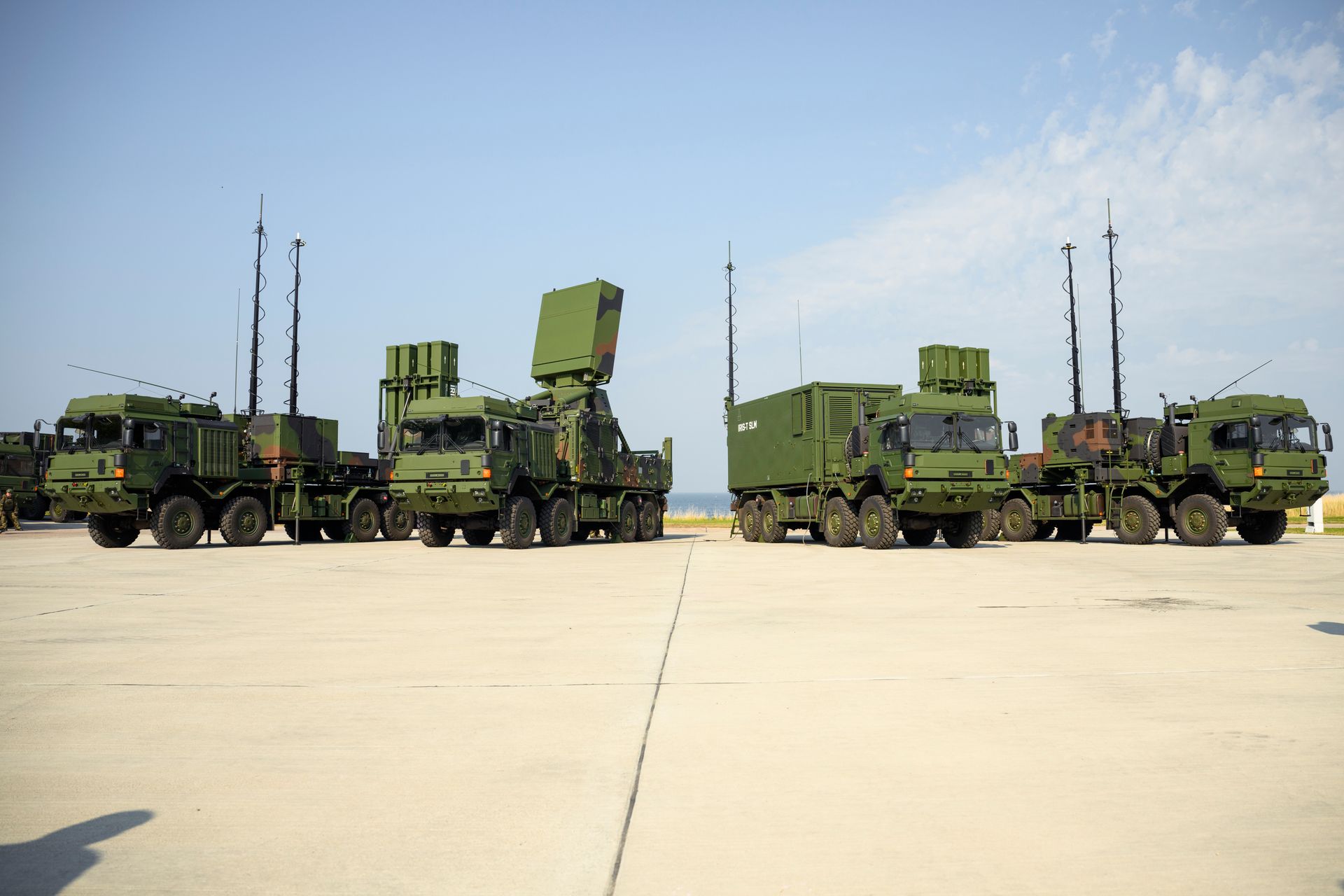
American power is so vast that it would take us two decades, and far more money than is being allocated today, to reach that level. And the second point is this: I would say that there may actually be less talk about European defense now. At the same time, there has been more concrete action, if you look at the kinds of weapons countries are buying and how quickly cooperation is developing among two, three, four, or five European states for the joint production or procurement of particular weapons systems.
I would like to talk about that in more detail. It has now been more than a year since the change of administration in the White House. In conversations with people in different European capitals, I tried to understand what exactly Europe simply cannot replace. There are critical things: intelligence, air defense, and the so-called “kill switch” — the ability to remotely block or limit a system. There is also the issue of licensing: Europe cannot produce systems like Patriot on its own. President Zelensky’s recent comment that the United States still has not granted the relevant permissions to manufacture these systems is telling. So the question arises: apparently it is not only about money, and not only about spending, say, 5% of GDP on defense. There is also political control. The United States demands that Europe spend more, while at the same time wanting to preserve political control over these capabilities. How do you see this problem being solved? Will it take a long time, and are people in Europe beginning to realize that the absence of specific technologies is becoming more and more urgent?
The most important thing we lack, and what is critically necessary for Europe, is everything related to the collection of data about the enemy, particularly by means of satellites. If you do not have such data, European forces on the battlefield will effectively be blind and deaf. That is the key element. As for Patriot systems, there are alternatives. Here I come back again to my point: we simply need to be stronger than Russia. Patriot is a very good system. But do we really need a weapon that gives us, say, 100% capability? Perhaps 80% is enough. There are Spanish and Italian air defense systems, for example, and the Ukrainians already have them. They are quite effective. There is also the IRIS-T system, which is also very high-quality. So alternatives to the American Patriot do exist. The problem is that Patriot is already available on the market and is often cheaper to buy than, for example, IRIS-T. That is precisely why many European countries ultimately choose the American system.
Why is it cheaper?
Because it is an older system produced on a much larger scale. For example, as far as I know, around ten IRIS-T batteries are produced per year. Patriot is manufactured in much greater quantities because it is sold all over the world. But the alternatives still exist. So I would say that the genuinely difficult problem for Europe is ISR — intelligence, surveillance, and satellite data. In everything else, we have European equivalents and can manage on our own. And this brings me back to my main question: what exactly will make us stronger than Russia? That is what we should focus on. Of course, if the goal is to have systems that fully match the level of American technology, then yes, there is a problem, because many of them are produced only in the United States, and the United States has to agree to sell them. In that sense, you are absolutely right: the United States has always had a somewhat contradictory attitude toward Europe. On the one hand, it wants Europe to do more for its own defense. But the moment Europeans begin doing so, the United States wants to preserve control over that development. Now this even applies to arms procurement: in practice, the United States insists that Europeans keep buying American systems. However, the problem is not so much the so-called remote shutoff. I would say the main difficulty lies in data integration — their fusion and processing — as well as software updates. That is where our dependence on the United States comes in. For example, if you buy an F-35 aircraft, it does not have a “kill switch” — it can fly and use weapons on its own. But in order to operate with maximum precision, it needs software updates from the United States. At any moment, the United States can say: “No, you will not get the updates.” In that case, the F-35 would still be able to carry out missions, but much less precisely. That is where our real dependence lies.
So this whole story about the so-called “remote shutoff” is more of a myth? It is simply exaggerated?
“Remote shutoff” is a myth. The real problem lies in the contracts. They stipulate that both spare parts and software are supplied exclusively from the United States. A perhaps imperfect, but very illustrative comparison can be drawn here. If you look at the drone war in Ukraine, defense systems require regular software updates in order to counter new modifications of enemy weapons. If you are using software that is, say, a year old, then your defense system will effectively no longer be able to shoot down drones — it is outdated. If that software is supplied from the United States, and the United States suddenly says, “No, you won’t get it,” then you are in a genuinely difficult position.
Here I would like to come back to the way Ukraine is fighting this war. Ukrainians have developed unique solutions against Shaheds. As I understand it, the main problem here is radar. The interceptor drones themselves are a fairly simple solution, but in order to effectively cover the sky, additional radars and coordination between them are critically necessary. How do you now assess Ukraine’s place in this context? Without excessive praise, but taking into account what we are seeing, particularly the gaps in the air defense systems of the Gulf countries. Ukraine is bringing an entirely new experience to the battlefield.
Recently, President Zelensky offered Gulf countries the help of Ukrainian specialists in protecting against drones, and this points us to a broader idea. For four years, Europe trained Ukrainian soldiers, but now the situation has changed: today, European armies — and even the Americans — have things to learn from Ukraine. There are two reasons for that. First, the cycle of technological innovation and methods of countering the enemy is moving extremely fast right now, and the Ukrainians are handling it brilliantly. So that is the first point: Ukrainians can teach other armies how to keep pace with the enemy’s technological innovations and how to counter them. Second, the Ukrainian army is the only one in Europe that has real combat experience in a large interstate war.
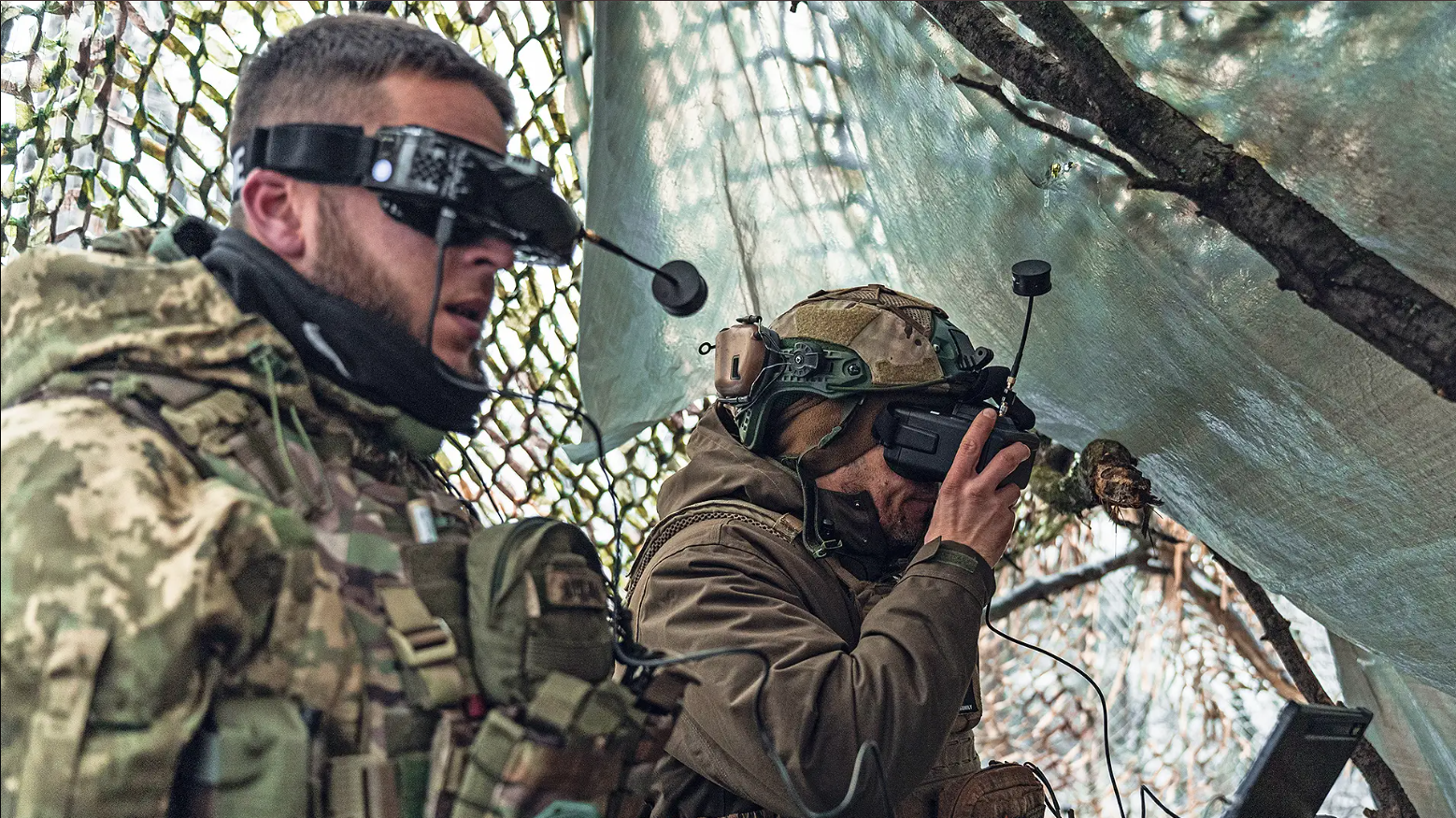
So my proposal is this. Of course, not now, because every fighter is needed at the front, but after the war I would integrate Ukrainian units into European military structures. I would create joint units — bilateral or trilateral — in which Ukraine would be a full participant. In my view, from tactics and doctrine to strategic adaptation — that is, the ability to change during combat — we can learn more from Ukrainians than they can from us. Frankly speaking, we have been, and still are, more technologically advanced than the Armed Forces of Ukraine. But everything related to our doctrine and tactics is based to a large extent on theory. Since the Second World War, we have not in fact fought full-scale wars of this type. Ukrainians, by contrast, can teach us a great deal about how to prepare for a major interstate war and how to fight one.
Recently I had a conversation with a very knowledgeable military analyst, former Ukrainian defense minister Andriy Zagorodnyuk. He explained one thing quite simply: today we can no longer talk about air superiority as something one-dimensional. There are now different air domains, and some of them we do not even see, especially the lower level where drones operate. That is, essentially, what drone warfare has changed. You argue that Europe will not have enough money to reach the same level of military superiority as the United States. But what Ukraine is doing does not necessarily mean inventing something fundamentally new. Rather, it is about creating cheaper but extremely effective alternatives.
That is exactly what I mean when I talk about 100% systems and 80% systems. Our armed forces are used to always procuring or developing 100% solutions — universal systems that are supposed to work for everything. What we see in Ukraine is different: yes, you may need a certain number of 100% systems, but at the same time you need many 80% systems — not perfect ones, but ones that do the job. There is another element we are also not used to — disposable systems. They perform their function at a certain moment, then they cease to work, they are simply written off, and the next ones are used.
How can this be integrated into the development of European defense? Drones are only a small part of the overall picture. So how realistic is it to establish joint production with Ukraine in the near future? After all, this is not simply about buying a million drones or interceptors.
Bilateral cooperation between European arms manufacturers and Ukrainian defense companies is growing. These partnerships are not being created only because of the current war — they are designed for long-term cooperation. So this process is already underway. And naturally, it is developing most actively in the area of drones and drone production. Cynical as it may sound, real battlefield testing of products and verification of their effectiveness happens during war.
Let us talk about your bestselling book If Russia Wins: A Scenario, which describes an attack on Estonia’s Narva. When exactly did you write it? The book portrays a certain paralysis of the West — Europe, the United States, Brussels. What was the context in which it was written, and do you see changes since then?
The idea emerged in the summer of 2024 as a result of a Europe-wide discussion. At the beginning of 2024, European intelligence services reported that, given the pace of Russia’s military-industrial complex and its plans to expand the army, Russia could become capable of attacking a NATO country by 2029. After that, of course, there was a lot of criticism. Critics said: “Russia is not so crazy as to attack a NATO country, because then it would find itself at war with the entire Alliance, and even the Russians do not know whether they could win such a war.” Others said: “Look at Ukraine — how slowly the Russian army is advancing. Do you really think it is capable of launching a full-scale attack on a NATO country?” So I began to think that perhaps we are framing the question incorrectly — whether Russia is capable of attacking a NATO country. Russia’s political goal is to destroy NATO. They understand that if NATO disappears, they will have an opportunity to dominate a large part of Europe — politically and economically. And how can NATO be destroyed without risking a full-scale war with the entire Alliance? Using Churchill’s term “soft underbellies,” I analyzed border towns in Norway, Estonia, and Latvia where there are Russian-speaking minorities. That gives the Kremlin a convenient pretext for intervention — “protecting the oppressed” — the same justification we saw in Donbas in 2014. So I modeled a scenario of a limited attack on such a town. Russia immediately declares that it is protecting the minority and has no intention of going any further. And that is where the challenge for NATO arises: is the Alliance ready to risk a major conventional war with a nuclear dimension for the sake of one small city in the east? Then events begin to unfold one after another. In the end — and now I will spoil it a little, though I hope people will still buy the book — there is no consensus inside NATO. If there is no agreement about invoking Article 5 in the event of an attack on Alliance territory, then NATO effectively ceases to exist. And that would be a huge victory for Russia. Because that is exactly what the Soviet Union always wanted but never managed to achieve. Russia has every chance of succeeding.
How would you describe the state of NATO now, especially in light of the current position of the United States?
I would make two remarks. One concerns a question you did not ask, and the other concerns your question directly. First, in my scenario Russia gets what it wants in Ukraine. Right now, we are at a stage when the United States is effectively ready to allow that. If you recall the 28-point plan presented in January, it turns out that Washington is forcing Ukraine into capitulation. Period.
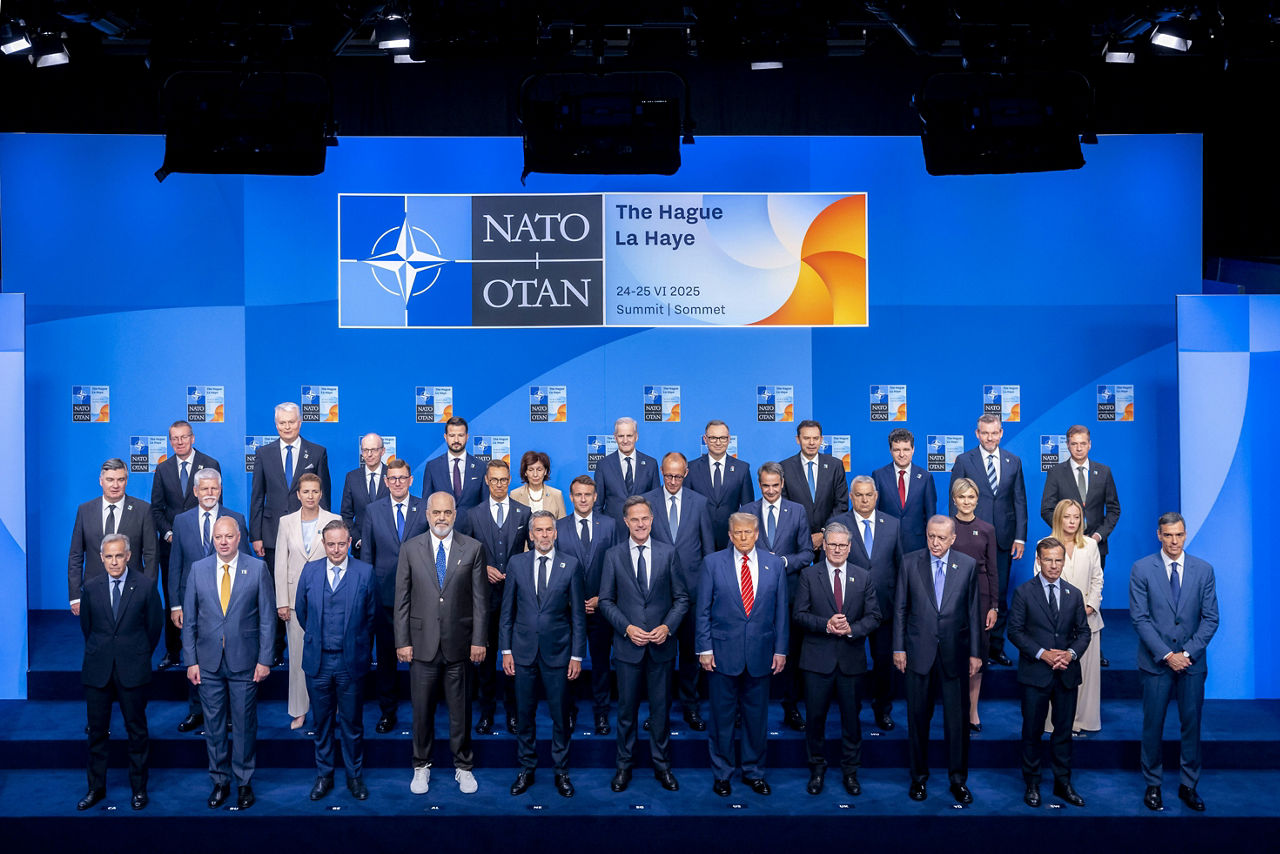
Second, as for your question: I still do not see unity in NATO. The smaller a Russian provocation is, the less solidarity there will be inside the Alliance. Lately, we have sent the Kremlin two deeply misleading signals. The first signal concerns Greenland. How convincing is Article 5 if a key NATO member threatens another with the use of force in order to take part of its territory? That sends Moscow a message: the Alliance is not united, and its guarantees are not worth the paper they are written on. The second signal is the discussion about European deterrence forces in Ukraine. Despite statements about “shared security,” only France and the United Kingdom are ready to deploy their troops. Others say that “it is too early to talk about it,” or propose defending Ukraine remotely — from Poland or the Baltics. For the Kremlin, these are very simple messages: if something goes wrong, the West is not ready for a direct confrontation on Ukrainian soil. If, after a ceasefire, Russia dares to attack Ukraine again, then you are not ready to meet Russian forces in Ukraine itself. How convincing is that signal for the Baltic states? The mere fact of signing the Washington Treaty in 1949 — or in our case, as Germans, in 1955 — does not automatically make security guarantees effective.
I do not want to spoil too much, because I hope there will soon be a Ukrainian translation of your book. But it contains moments that make one angry, and moments that make one laugh — for example, the surnames of the new Russian president in the book, Obmanshchikov, and another character, Palachov. I hope European readers catch that subtext?
Honestly, no. I have received many reviews, and no one even mentioned that these surnames are meaningful. So during book presentations I always have to explain to people why I chose exactly those names.
So they simply did not get the point. By the way, how did you decide to use those particular surnames?
I wanted to use surnames that meant something — so-called “speaking names.” So I started consulting friends who speak Russian and asked them: what would “deceiver” or “someone who deceives” be in Russian? They suggested the surname Obmanshchikov.
It sounds absurd: when “Mr. Obmanshchikov” calls a world leader and that leader believes him, the contrast is almost comic. But as a Ukrainian, what especially worries me is the tactic of escalation. It seems to be Russia’s most successful instrument, one the West constantly falls for without realizing the trap. How do you assess this tactic of escalation in the current negotiations?
The threat of nuclear weapons is Russia’s most powerful psychological weapon. When they use it, a large part of European societies begins to panic, and the Kremlin skillfully exploits that to restrain governments from taking decisive action. My position is clear: we must not forget that Russia has a nuclear arsenal, but we must look at the concrete situation. Any escalation to the nuclear level is meant to gain something. But throughout the war there has not been a single moment when Russia could actually gain anything in political or military terms by using nuclear weapons. Instead, they are playing on collective psychology. It is enough simply to remind people of missiles capable of striking European capitals, and people are instantly frightened. For example, during the debate in Germany about delivering Taurus missiles, the Russians said they knew the coordinates of the manufacturing plant near Munich. The public reaction became irrational: the discussion shifted from providing assistance to how to respond to these threats. That is precisely the point.
That creates a kind of schizophrenia. Your entire book is, among other things, about how Europeans do not believe they could be attacked — they simply deny it. I can understand them, because I myself went through that denial: I did not believe Crimea would be occupied, I did not believe a full-scale invasion would begin. I know that feeling very well. But at the same time, it is strange that they are afraid of something far less likely — a nuclear strike.
Yes, absolutely. Because people do not understand the logic and function of nuclear weapons. Nobody explains it to them. That is the problem.
Are we capable of explaining this to them?
You are absolutely capable of explaining it. That is precisely what I am trying to convey: nuclear weapons are used only when there is an expectation of gaining an advantage. But in the context of the war against Ukraine and the broader international situation, this would be a catastrophe for Russia. They have no real incentive for such a step. They would gain nothing on the battlefield. What is more, radioactive fallout, depending on the wind, could also harm Russia itself. The Kremlin could also lose the support of key partners — China and India — if it used tactical nuclear weapons. In addition, the Biden administration clearly warned them about the devastating consequences of such a step. General Mark Milley directly explained to Gerasimov what exactly was meant by that response. So there is no incentive for it. But people need all this explained to them, because they are still captive to Cold War fears: the moment the words “nuclear weapons” are mentioned, an irrational feeling of the end of the world immediately arises.
We all watched Stanley Kubrick’s films. Some of the images from them are so powerful.
And the disaster film The Day After. It was an extremely popular film in the 1980s.
It is interesting how Fiona Hill (an Anglo-American political scientist, PhD, and Brookings Institution expert — ed.) explained the influence of The Day After on Trump’s worldview — he is literally obsessed with that film. But in Ukraine there is now a kind of black humor: the United States does not attack Russia because it is a nuclear power, yet attacks Iran because its nuclear weapons are supposedly only just emerging. In that context, how do you see the role of the United States in the war against Iran? And will it really be a short one? I look at this from two angles. First, I remember my visit to Washington after Trump’s election. I had a goal — to interview experts close to the MAGA movement. It was extremely interesting: their position on making concessions over Ukraine was based on the idea of isolationism promoted by J.D. Vance, Tulsi Gabbard, and others. Many of them are veterans who went through the horrors of Iraq and the failure in Afghanistan. Their main argument was war fatigue and an unwillingness to be drawn into foreign conflicts. This was presented as the most rational and pragmatic explanation of Trump’s foreign policy. But now I truly do not understand it. And here is my second question. Iran is not Venezuela — it is a strong country despite its weak economy. Simply “cutting off the head” of the regime does not mean changing it. Frankly speaking, the United States has never been successful in trying to preserve stability in countries after actions like this. It has never really worked.
If you listen carefully to Trump, it becomes obvious that he is moving away from the idea of direct regime change. In his first speech, he stressed the destruction of Iran’s nuclear and ballistic programs, as well as the creation of conditions in which Iranians themselves would take power. But now he is retreating from that last point. Statements are appearing that the United States is ready to work with whoever leads Iran — even representatives of the current regime. The problem is that Israel wants regime change, and because of that, a split has emerged within the MAGA movement. The hawks in the administration have effectively pushed the isolationists aside. The only thing that remains unchanged for Trump is his unwillingness to get dragged into an “endless war.” So I do not believe in the deployment of ground troops. Most likely, he is considering a different scenario: arming the Kurds for an internal seizure of power, while providing them with air support and using special forces. The United States will do everything possible from the outside and selectively inside the country, but I do not see any readiness for a full-scale invasion and occupation along the lines of George Bush in 2003.
Still, I will dare to ask this question of an author whose book title contains the word “Scenario.” How do you see the further development of events for the Gulf countries, Russia, and China? The death of Khamenei and the strikes on Tehran are already outlining a certain direction — where is all this heading?
The good news for the region is that whatever happens in Tehran, Iran is effectively dropping out of the ranks of the most influential players. Even if the clerical regime survives, the country will be seriously weakened for a long time and will no longer be able to play the role in the Middle East that it played in recent decades. The second positive point is that, on the global level, Russia’s influence is also shrinking sharply. It has lost positions in Venezuela, is effectively being pushed out of Syria, and is now losing yet another key strategic partner — Iran. For Putin, this is a serious defeat that causes genuine irritation. But there is also bad news — there is little comfort in all this for Ukraine and Europe. They remain the last and most important battlefield for the Kremlin. From Russia’s point of view, this is the decisive direction. So I expect Russia only to intensify the pressure in Ukraine and become even more aggressive and reckless in its hybrid war against European countries. In other words, Russia’s global weakening does not automatically mean any easing of the situation for us.
Finally, how do you see the role of your government and Chancellor Merz? Is Germany really changing, considering that it is the largest economy and one of the strongest countries in Europe?
Germany is changing, trying to implement a dual strategy: to keep the United States engaged in European security while at the same time pushing Europe toward greater strategic autonomy. But in my view, Berlin has not yet fully grasped the main point: the future of European defense, sovereignty, and Ukraine itself depends to a great extent on us. Germany is the only country that currently has both the necessary financial resources and the prospect of a stable government for the next three years. France has elections in a year, and Keir Starmer’s future in the United Kingdom looks uncertain — both countries could be drawn into political upheaval. So Germany has to accept the fact that it will have to take on the leading role. So far, Berlin is avoiding this, because it runs counter to our political culture. We have always tried to be leaders “from behind,” without stepping onto the front stage. That paradigm has to change — we need to learn to assume leadership openly.
Thank you very much, Professor.
Thank you very much for your interest.