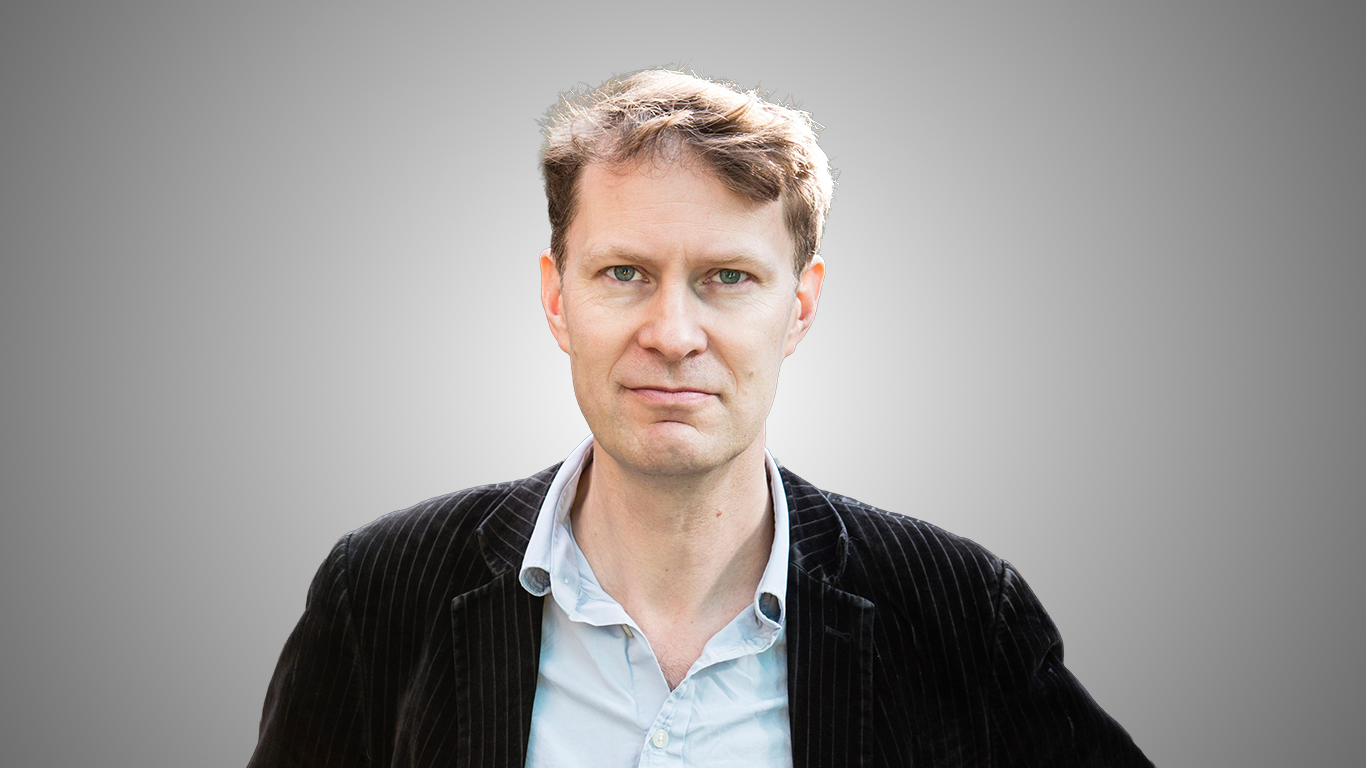
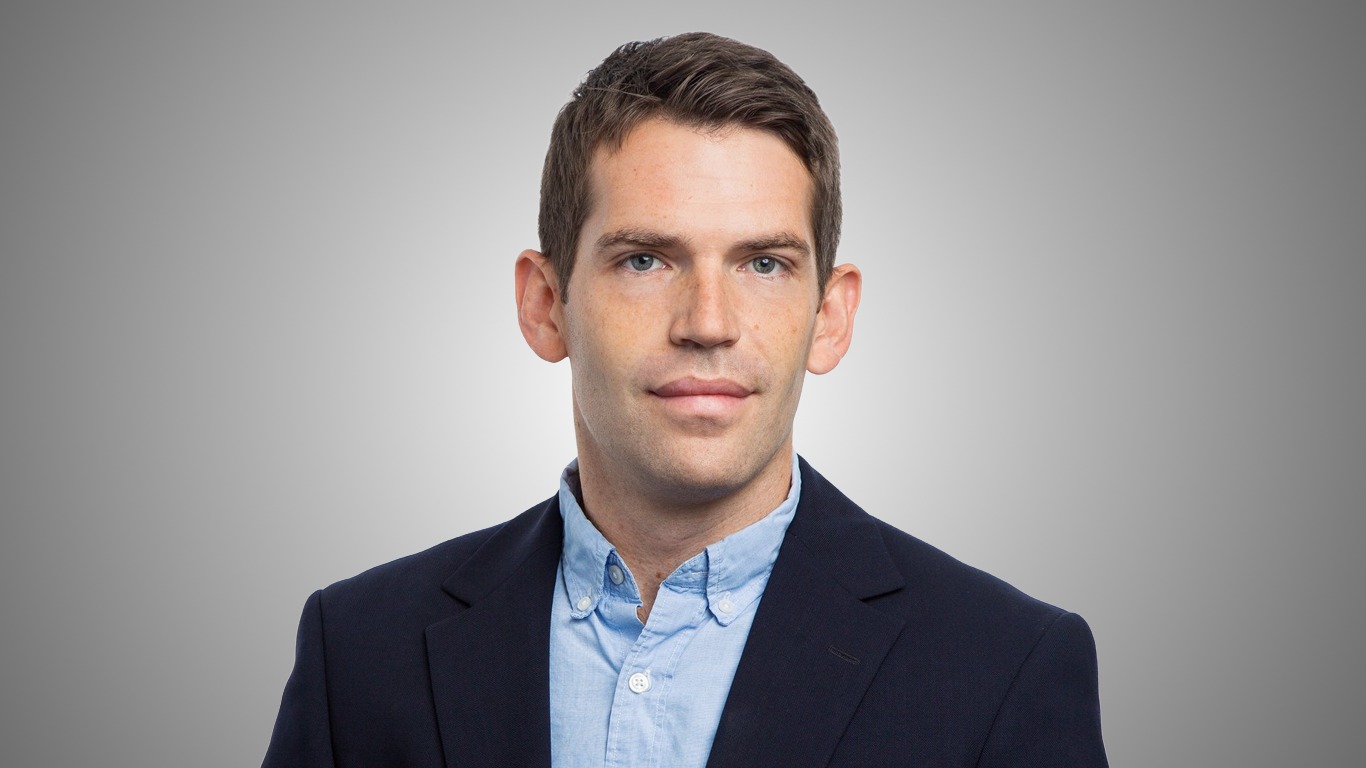
«It Will Take Years to Identify All Russian Agents in Hungarian State Structures» — Szabolcs Panyi
Journalist Szabolcs Panyi has returned to Hungary. He was forced to leave the country after facing threats from Viktor Orbán’s government to initiate criminal proceedings against him, alleging he was a spy. Panyi has spent years reporting on Russian influence in Hungary. Since 2023, he has focused on the activities of Hungary’s Foreign Minister, Péter Szijjártó, who effectively acted as a Russian agent. During the election campaign, after the publication of conversations between Szijjártó and Russian Foreign Minister Sergey Lavrov, it became clear that the Hungarian official had regularly reported on the course of EU meetings, consulted on steps to slow down Ukraine’s accession to the European Union, and discussed lifting sanctions on influential Russians. This caused a major public outcry in Hungary, particularly among young people. They were outraged to learn that despite Hungary’s membership in the EU and NATO, the country had effectively remained a vassal of Putin’s Russia due to Orbán’s foreign policy. This became a key factor in mobilizing young voters to turn out. Voter turnout reached a record high since 1990, with nearly 80% of Hungarians exercising their right to vote. According to Szabolcs Panyi, Viktor Orbán did not simply lose the election—his entire regime effectively collapsed. However, Hungarians still have yet to discover the extent of Russia’s involvement in maintaining Orbán’s grip on power.
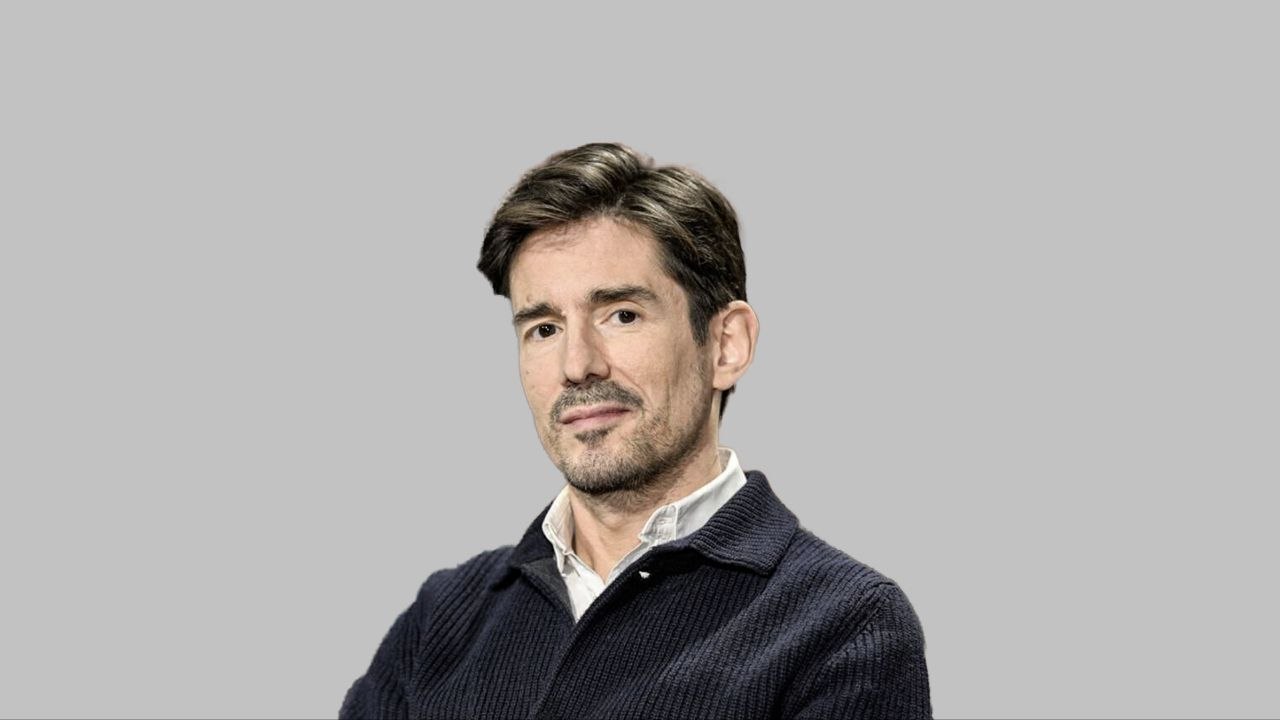
In the podcast «When Everything Matters» journalist Angelina Kariakina speaks with Szabolcs Panyi about why Orbán pivoted toward the Kremlin, Hungary as a logistical hub for Russian intelligence, the demonization of Volodymyr Zelenskyy and Ukraine, the reasons behind the collapse of Orbán’s regime, and the future of Hungary’s now-former top officials.


Szabolcs, thank you for finding the time. I can imagine your schedule, so I’m grateful that you joined us. How do you perceive this large-scale change in Hungary and what contributed to Orbán's defeat? How did this even become possible?
For me, it's like waking up after a 16-year nightmare. You suddenly see a new government forming, to which respected experts are being gathered, rather than corrupt politicians. So it really feels like a cultural change—Hungary's return to Western civilization. And frankly speaking, what Hungarians went through, especially in recent years, was similar to living under Yanukovych: all these very corrupt oligarchic elites, constant scandals around members of the government who embezzle state funds. All of this happens openly, but nothing changes, and none of them are held accountable for it. Instead, journalists and the opposition faced pressure when they exposed the corruption of those in power. We don't expect Orbán to flee to Moscow—perhaps he will go with his family to the USA—but a sense of normalcy has finally appeared in the country. I told friends that I don't even know how to find my place in this new, «normal» Hungary, because I'm used to living under surveillance, under pressure, under constant attacks from state propaganda. I don't even know how to function in a normal society. So I will have to adapt.
How long have you been away from Hungary?
A smear campaign was launched against me. It started in March when I released data on Russia's interference in the Hungarian elections. It was about the fact that the deputy head of Putin's administration, Sergey Kiriyenko, was tasked with conducting an operationsimilar to the one in Moldova: a group of three social media manipulators connected with the GRU was sent to the Russian embassy in Hungary. In response, the Hungarian government denied my data and accused me of working for foreign intelligence services. These accusations resembled the 2016 events in the USA. Then the far-right invented the term «Russiagate" to present the exposure of Russian interference as a fake conspiracy theory against Trump. Hungarian propaganda acted the same way: my investigations were called a fiction intended to undermine Orbán's «inevitable» victory. But later, a secret audio recording of my conversation with a source was released, where we discussed the numbers from which Foreign Minister Péter Szijjártó calls Lavrov. I was trying to find out if he had hidden communication channels that even his subordinates did not know about. Of course, I had been under surveillance for a long time. Even five years ago, I was monitored using the Pegasus spy software. Orbán's government understood the danger of my investigations, as I exposed how Szijjártó passes sensitive EU information to Lavrov and lobbies for the removal of sanctions from Russian oligarchs and banks. Therefore, they took a preventive step: they released an edited fragment of my conversation to call me a «Ukrainian spy», although Ukraine was not even mentioned there. At a government press conference, they announced criminal proceedings, Orbán personally wrote on social media that I am a spy, and Szijjártó stated that I was allegedly helping foreign special services monitor him. This was complete nonsense. In fact, since 2023, I had been researching in detail how Szijjártó acts in Russia's interests. I had transcripts of his conversations with Lavrov, some of which I have already published. The government's strategy was simple: to convince everyone that it is not a journalist exposing an agent of influence in the government, but a «Ukrainian agent» spreading lies. However, this only fueled interest in my materials. Due to security risks, I had to leave the country. I worked in Warsaw at the «Reporters Foundation» — a Polish non-profit organization specializing in investigations for VSquare.org and Frontstory.pl. That's where I finished the work on these topics.
And what is the status of these criminal cases that they tried to open against you now? Is this still a current problem?
A few days ago, I returned to Hungary. These threats regarding criminal proceedings are complete nonsense. The Orbán government used judicial harassment as a communication tool, simply leaking statements to the mediamedia that someone is a criminal or a spy, and that a case is allegedly being opened against them. However, nothing happens afterward, as these accusations have no basis. But the main thing for them was something else: to emphasize in the final weeks of the election campaign that I was supposedly a spy, not a journalist. The prosecutor's office handed over the materials to the police, who stated that they were taking 30 days for consideration to decide whether to open proceedings. In fact, they were just waiting out the elections to see who would win. No real investigation will take place. The risk lay elsewhere. Orbán still had a very effective propaganda machine. My face, my name, and these accusations—that I am a traitor, a spy—were literally everywhere. From the experience of other journalists, I know that the real threat is psychologically unstable people who feel they must «restore justice» and commit violence against the so-called «enemy of the state» —someone might pull a knife, someone a weapon, and someone just commit aggressive actions—and this was a real threat. I also had to assess the risks from the other side, because what I was investigating was very sensitive for the Russians.
This was my next question. As you noted, the Russians are virtually everywhere. So, how do you assess the threat to yourself from their side?
Yes, especially in Budapest. As it turned out in the final weeks of the campaign, the special services and counterintelligence were too busy monitoring the opposition and journalists. They effectively had no time to counteract the Russians, and they weren't given such tasks anyway. As a result, the Orbán government turned Hungary into a sort of logistics hub for Russian intelligence and spy activities in the entire region. I understood that this was not the safest environment. Besides, as far as I know, it hasn't happened before that a figure of Sergey Lavrov's level appeared in leaks—we took the investigation to a new level. Of course, I couldn't count on protection from the Orbán government if the Russians started putting pressure on me. Therefore, I published my investigations from Warsaw. But it is important to emphasize: the investigation into the connections between Szijjártó and Lavrov was a true team effort, the result of cooperation with colleagues from many countries.
What contribution did your personal and team investigations make to Orbán's defeat? How do you assess your influence on the political field of the region?
For over ten years, every Hungarian investigative reporter (and there are no more than a dozen of us) felt strong disappointment because our materials had no consequences. Four years ago, I exposed that before the previous elections, Russians had been hacking the Hungarian Ministry of Foreign Affairs for many years, and the Orbán government either could not or did not want to counteract these cyberattacks and eliminate their consequences. Despite this, in those elections, Orbán again received a constitutional majority. Therefore, the current result is the summary of all our work over 16 years. It's like in the board game «Jenga»: you build a tower, it gets taller, and at a certain moment it simply collapses. In recent years it was already wobbling, and the release of the Szijjártó-Lavrov conversations became that very «cherry on the cake». In the final weeks before the elections, we heard young people chanting: «Russians, out!» (Ruszkik haza). This was also the slogan of the 1956 revolution. There are famous graffiti on the walls of war-torn Hungary after the Soviet invasion: «Russians, out». But now we heard it from the mouths of twenty-year-old young people. Two days before the vote, 100,000 people gathered on Heroes' Square, mostly young people, who again shouted these words. Therefore, yes, probably I also played a role in uncovering the theme of Russian influence. The opposition would likely have won without this, but these facts specifically mobilized the youth. They were outraged that Hungary, despite membership in the EU and NATO, remains a vassal of Putin. This resulted in a record turnout of 80%—young people finally realized that these elections decide their future.
Yes, it was impressive and became a real «cherry on the cake» . Let's get to specifics. When I read your investigations and listen to the conversations between Szijjártó and Lavrov, the question arises: what exactly determines the loyalty of part of the Hungarian politicians to the RF? Is it ideology, shared values, or something more? What exactly caused Orbán's complete U-turn toward the Kremlin?
I am currently working on a book that is due out in October. It is specifically about Russian influence and the work of their intelligence in Hungary, and not just during the Orbán era. I don't want to reveal all the conclusions in advance, but I have already published some things. Russia uses the same methods everywhere—there is nothing specifically Hungarian here. It's kompromat, corruption, financial incentives, pressure, blackmail—the same toolkit is applied from Azerbaijan to Bulgaria and Hungary. And, of course, the intelligence arsenal is actively used at all stages. In our case, the situation was specific because our democratic transition was very soft: the former communist special services, including counterintelligence, were not disbanded. Many people who studied in Moscow—at the Felix Dzerzhinsky KGB Academy—who had connections there, were friends with KGB officers, sometimes even had Russian wives—continued to serve Hungarian democracy. This continued even after the country joined NATO and the EU, up until the end of the 2000s, and in some places even into the 2010s. I still know people who remain active, although they started back in the 70s and 80s. And this also applies to politics: in the 90s, our former communist party, renamed the Socialist party, effectively just reconfigured its ties with Russia. Back then, Hungary became a refuge for Semion Mogilevich—a well-known mafioso connected to the KGB. He lived here until 2000 and promoted the interests of the Russian state in Hungarian politics and economy. And already in the 2000s, after the defeat of the first government of Viktor Orbán—which, by the way, was the only anti-Russian, anti-Soviet government in recent decades—we saw how the former socialist government began to grow closer to Vladimir Putin and Russia. It was then that not KGB structures, but FSB networks and their operatives returned to Hungary. Oil and gas deals, as well as other business projects, were used as tools for corrupting Hungarian elites. I have already published part of the research on the role of Vyacheslav Ushakov, then deputy director of the FSB. He was a key figure in the creation of the Fifth Service of the FSB, which was engaged in intelligence activities against the so-called «near abroad» . The last head of this unit was Sergey Beseda, who was responsible for operations against Ukraine. Ushakov himself was appointed the Kremlin's representative in Hungary, and at the same time he remained one of the leaders of the FSB. It was he who was actually engaged in penetrating the Hungarian government in the 2000s. As I found out, while still in the opposition, Viktor Orbán and his entourage began to establish contacts with Ushakov. The Russians realized that Orbán's time was coming, and Orbán himself also realized that if his attitude toward Russia changed, significant business opportunities would open up for him. All this led to a certain compromise and to a personal meeting with Vladimir Putin in 2009 in Saint Petersburg. Since then, Orbán effectively changed course: the former pro-American, pro-Western, pro-Republican politician turned into a pro-Russian asset of the Kremlin, who over the years became more and more pro-Russian and eventually ended up in the role of a kind of «Trojan horse» of the Kremlin. Now all this is ending in effectively a political collapse
Maybe I am oversimplifying, but is it primarily about money?
It's about both money and political support. It is no coincidence that for the last five years, Orbán's propaganda copied Russian narratives—a significant part of the «know-how» was borrowed from Putin. Perhaps now we will get access to some of the documents and archives regarding what happened over the last 16 years. But I think we still cannot imagine how deeply Russia was involved in keeping Orbán in power. For example, there are rumors that Hungary was allowed to delay payment for gas, oil, and nuclear fuel. In times when the economy was not growing, this allowed Orbán's government to redirect funds to populist social measures to artificially maintain ratings. The question is also how deep this corruption was: whether it concerns only the top, or whether the system is so eroded that even counterintelligence and the police are compromised. I fear that it will take years to clean the state of integrated agents of the RF.
And how did it happen that Zelenskyy ended up in the role of Orbán's main opponent in this election campaign? To what extent was this provoked by Russia, and to what extent by the personal relations of the leaders?
So far, we don't have access to documents that could prove a conspiracy, as formally Orbán's government is still in power. However, the election results showed that the demonization of Zelenskyy did not find resonance in Hungarian society. Orbán is a pragmatic politician, and he should have understood that creating a new «bogeyman» out of the president of Ukraine like Soros doesn't work. It makes no logical sense. If you look for logic, there is only one: it completely corresponds to the interests of Russia. It only makes sense for Russian political technologists who convinced their Hungarian colleagues to simply copy the Kremlin's arguments. So again, we don't have direct evidence yet. But if we proceed from logic and rational analysis, the only explanation for these campaigns is that they were inspired and directed by the Kremlin.
But this time Orbán was supported not only by Russia, but also by representatives of the USA. Why did visits from high-ranking officials like JD Vance not work?
They had no effect. Foreign policy is not the issue that really worries voters unless it touches their well-being or security. Orbán tried to present Ukraine as a direct threat, talking about «staged attacks», but no one really believed it. As for the Trump administration, JD Vance is currently quite unpopular in Europe, and in Hungary his level of recognition is generally tiny, especially among Orbán's older and less educated electorate. This bet had the opposite effect: a week before the elections, while his opponent Péter Magyar was actively traveling through the regions, Orbán was forced to stay in Budapest to conduct social conversations with Vance. Besides, the USA did not interfere in the campaign as aggressively as Russia. Orbán's main goal was to bring Trump himself to Budapest, but that was unrealistic. And Trump doesn't like long flights, was busy with the war with Iran, and most importantly, he doesn't want to be associated with those who lose. The White House saw the sociology and realized that Orbán would suffer defeat, so they limited themselves to only formal support on social media
In your opinion, what are the chances now that Orbán will bear criminal responsibility? Politically, we see that he lost the elections. But will the new Hungarian government take steps in this direction?
Formally, Orbán's government is still in power, but we already see that the so-called independent institutions, which previously were under the tight manual control of the government, suddenly started acting much more independently. Recently, two people connected with Viktor Orbán's brother were detained, who were involved in visa machinations—they effectively facilitated obtaining visas for labor migrants from the Middle and Far East. That is, it is already visible that justice is gradually getting closer and closer to Orbán's family. The problem is that key figures in Orbán's family who managed the business empire—daughter Ráhel and son-in-law István Tiborcz—moved to the USA last year. It is expected that Orbán himself may stay there under the pretext of visiting grandchildren or the World Cup. I fully assume that the Trump administration may grant him citizenship on «honorary» grounds, which will make his extradition impossible or at least significantly more difficult. Therefore, I don't expect to see the Orbán family behind bars. At the same time, we already see that some other oligarchs and close persons are moving their fortunes to the Middle East and Asia, moving there—to countries like the UAE, Dubai, where there are no extradition agreements. There are also people with dual Hungarian-Israeli citizenship. Israel is extremely reluctant to extradite its own citizens. So there are certain mechanisms and routes that allow the most corrupt representatives of the Orbán regime to effectively secure themselves from arrest. But this will not prevent the new Hungarian government from starting an investigation. Viktor Orbán did not just lose the elections—effectively his entire regime collapsed. With a constitutional majority, the new government has carte blanche. Former medium-level Orbán loyalists are already starting to cooperate with the investigation, saving their own freedom. The only question is whether it will be possible to legally link the corruption schemes with Orbán himself and his family. After all, mafia structures usually work like this: the «godfather» gives verbal instructions, leaving no papers. Although new ministers are already openly talking about the inevitability of investigations, proving Orbán's personal guilt will be extremely difficult.
Anne Applebaum, in her piece for The Atlantic, called Orbán's defeat a signal to other democracies that autocracy is not inevitable. But what exactly became decisive for the Hungarian voter? Your investigations mobilized the youth, but what worked for others, including Orbán's supporters?
The economy—that is the main factor: record inflation and lack of growth during recent years. People felt that they were living worse than four years ago. The EU froze funds for Hungary from the recovery fund and cohesion funds due to corruption and violation of the principles of the rule of law. At the same time, exposures of the colossal fortunes of the Orbán family and his closest entourage appeared—a luxurious lifestyle, trips, private jets, superyachts. When your well-being falls, and zebras walk around the prime minister's estate—you realize that this government is not working for you. In addition, 16 years is a very long term; any power over such a period decomposes. Internal conflicts, arrogance, and systemic corruption appeared. In this context, independent media that highlighted these problems—economic decline and corruption through investigative journalism—had a significantly greater impact than before. I think this became the main foundation. However, a political leader was also needed. Péter Magyar offered a positive alternative: uniting the country, overcoming divisions, and returning to Western unions. Orbán's propaganda, on the contrary, offered nothing but intimidation with a Third World War. Voters simply got tired of living in an atmosphere of invented fear, while the country's real problems had not been solved for years.
You said that you are now trying, so to speak, to find your place in the new Hungary. How irreversible are the changes that the Orbán regime caused to civil society, media, and institutions? How do you see their recovery?
There is still a long period of healing ahead. I think we all have a certain PTSD after these 16 years. Civil society and journalism are in a difficult state due to the colossal pressure we experienced, so the return to normalcy will be gradual. As part of the EU, we have partners abroad who can help us with their experience and advice. Over the last five years, Hungary was unsuitable for investment, because Orbán's people controlled most sectors, and no one risked investing funds without government approval. Therefore, now we are returning to a full-fledged market economy, where new investments, foreign investors, and new ideas can appear. But this certainly takes time. As for my work, I plan to focus more on Russian influence in the Central European region. The next battlefield will be Slovakia, where elections will be held next year. Robert Fico and his left-populist nationalist government have close ties with the Kremlin, and my expertise will be relevant there. We have already seen the election results in Bulgaria. There is also uncertainty in Slovenia, where Orbán's ally Janez Janša may return to power. In the Czech Republic, pressure is being exerted on the media—there are also pro-Russian far-right forces in power there. The struggle is not over. Orbán's defeat is a powerful signal, but it doesn't mean that pro-Russian forces are retreating on a global scale.
What will happen to the main figures of your investigations, particularly those who were involved in media campaigns of smear and disinformation campaigns in Hungary? Is the new government capable of really cleaning the system of «sleeper agents»?
Since the regime collapsed, they no longer need the propaganda machine. They are already firing people and closing media, and this will continue for a few more months. However, it is critical to reveal Russia's role in these processes over the last 16 years. The criminal dimension of this propaganda is obvious: from illegal surveillance and leaks of conversations to the embezzlement of state funds with which this machine was financed. But other crimes are even more serious. First, this propaganda was financed from state funds, and a significant part of the money was simply stolen. Second, it's about treason, because Russia was deeply involved in these propaganda operations. We know that Russian diplomats met with Hungarian propagandists and handed them envelopes with money or materials for publication. Such connections must be investigated. This is necessary to prevent a repetition of the past. We cannot build a democracy by allowing people who worked for Moscow for a second time to simply flip-flop and stay in politics. We already made such a mistake in 1990, and a second time it will be fatal. Justice must be fair and independent, and it must happen. We cannot simply think that everything is over and that we were lucky to defeat Orbán and now we can forget about the past. For this will be a signal to all Kremlin agents that there is no punishment for cooperation with Russia and no legal risks. Therefore, this path should definitely be avoided.
Although our podcast has an international audience, we remain a Ukrainian project. What do you expect from the foreign policy of the new Hungarian government regarding Ukraine? Will there be real changes beyond rhetoric?
I think at the level of rhetoric Magyar will be cautious at first. The demonization of Ukraine for years was Orbán's key message, and many people are still under the influence of this propaganda. In order not to alienate part of the voters, in the first years Magyar will likely avoid loud symbolic gestures or openly complimentary stance toward Ukraine. However, it is much more important that Hungary simply stops casting vetoes. I expect that the country will return to the general European line regarding support for Ukraine and stop blocking financial support or negotiations on Ukraine's entry into the EU. A key reference point for Magyar is good relations and an alliance with Poland. A similar situation was already with Poland: because of the policy of the previous government, financing was frozen, but Tusk's government was able to quite quickly restore access to these funds. So now the Poles will contribute to the new Hungarian government doing the same. Since Poland and the current Polish government play one of the key roles in supporting Ukraine, likely Hungary's foreign policy will be significantly more aligned specifically with the Polish one. The risk lies in the fact that in the next elections in Poland, a completely different government may come to power—right-wing forces may come who take a more anti-Ukrainian position, but while the Magyar-Tusk tandem is in effect, Hungary's course will remain mainstream.
My last question can be like a small continuation of our previous interview in 2021, when we talked half a year before the full-scale invasion—it was then that your phone was hacked using Pegasus. To what extent did this change your life? How did this story affect you personally and your work?
Since our last conversation, I've added some wrinkles, and not just because of age. It is sometimes very stressful, especially when you think about how to protect your sources, how to secure yourself from surveillance, so as not to compromise people and not put them in danger. The worst thing for an investigator is when you promise confidentiality, but because of a phone hack or bugging of a room, you cannot guarantee it for reasons beyond your control. Some of my sources had serious problems because of contacts with me, and for me this is a bitter realization. However, as in most such cases, smear campaigns or surveillance by the Orbán government eventually turned against him. Therefore, the fact that I went through this pressure and did not break, paradoxically increased my visibility and level of people's trust: now I have more supporters and sources than ever. People see me as a professional who will do everything so that the truth becomes public. Therefore, despite all the discomfort of being a target of the special services, all these trials only added to my determination to continue investigating the corruption and illegal actions of the former regime.