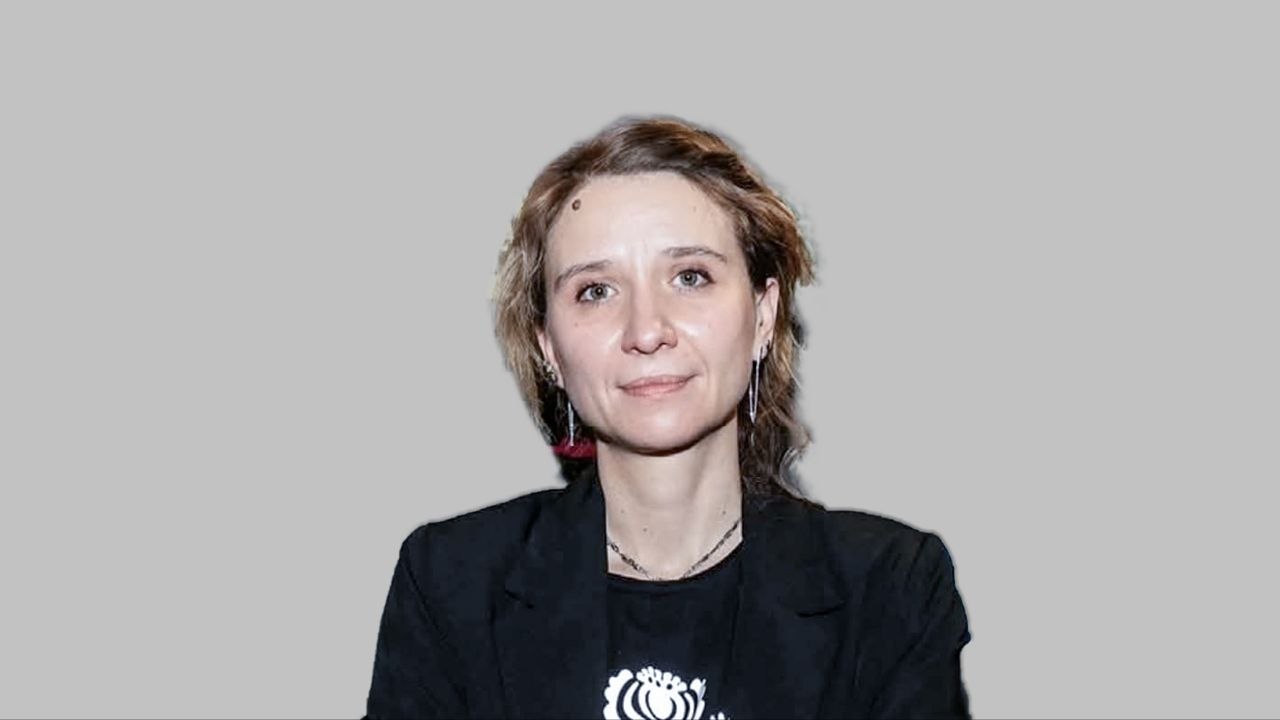
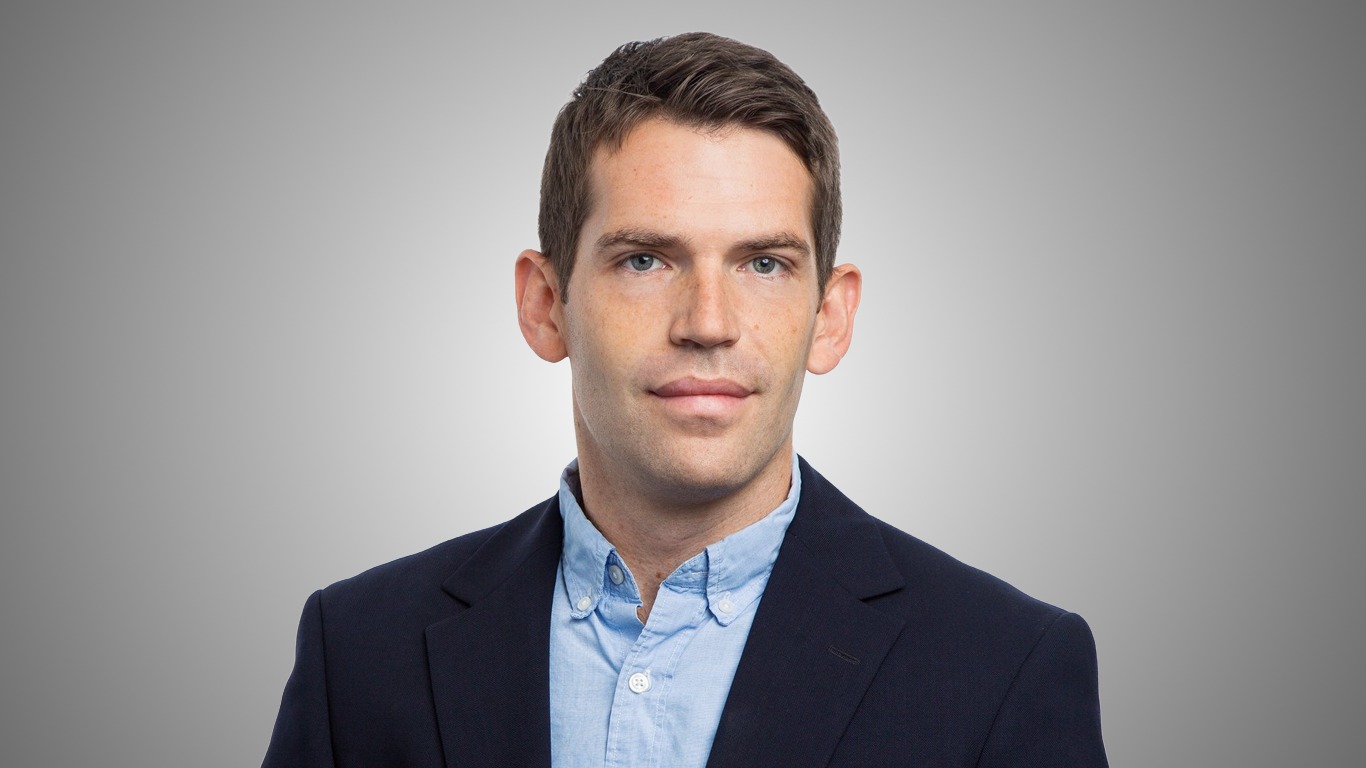
Kerry Whigham on sites of memory, spontaneous memorials, and the place of perpetrators in museums
American scholar Kerry Whigham studies how societies remember and engage with their past after crimes and violence, since this trauma continues to shape the present and the future. He conducted field research for his dissertation in Argentina, Germany, Poland, and the United States. Whigham argues that beautiful sites of memory alone are not enough. If they are aesthetically pleasing but empty, such memorials and sites of memory cannot be called successful. A key to success may be creating a memorial that becomes a center and a starting point for further community engagement. Whigham is also drawn to the thinking of James Young, one of the best-known scholars of memory spaces. Young insisted that we should move away from imagining such places as sites of collective memory built around one clear, agreed, shared version of the past. Instead, he proposes understanding them as spaces that hold a multiplicity of memories, perspectives, and ways of interpreting the past. For Whigham, then, what matters is not so much what a memory space looks like as the ongoing process of discussing and making sense of what and how a society remembers.
In the podcast When Everything Matters, journalist Nataliya Gumenyuk speaks with Kerry Whigham about spontaneous memorials, how to tell the stories of perpetrators, whether the views of all victims of mass atrocities should be taken into account, what distinguishes good memory spaces from bad ones, and how different countries work with sites of memory.


Kerry, I had been looking for a chance to have this conversation for a long time. But before we begin, could you briefly explain what exactly you focus on in your research?
That is more complicated than it seems, because I study many different things. In short, as a scholar I examine the different ways societies deal with the legacy of large-scale human rights violations and mass crimes after the violence itself has ended. In particular, I analyze the influence of civil society on political processes, and how states address the consequences of the past through mechanisms of transitional justice. A large part of my work is also devoted to collective memory. And this is not just about history, but about how the past shapes the present: how citizens understand themselves, their relationship to the state, and the interaction among different groups within society.
Your work Beyond Memory is based on the experience of more than 250 institutions in 56 countries. You have seen countless memorials, from grand architectural masterpieces that leave behind emptiness to tiny spaces that are overwhelming. So what makes a site of memory truly “good,” and what makes it unsuccessful? In the Ukrainian context, we more often speak about political violence and war. And I have visited incredible memorials designed by the best architects that still left a strange feeling of emptiness. At the same time, very small spaces sometimes made a stunning impression. So what is the secret of a successful memorial?
The answer depends on what we actually want from such a space of memory. My research focused on the role memory plays in preventing violence. In this context, people often quote the philosopher George Santayana: “Those who cannot remember the past are condemned to repeat it.” And that sounds like a moral imperative to remember. Yet we know that the past is not always an instrument of good. Memory in itself is just a neutral instrument among other neutral instruments. It can be used both for good and for evil. In my view, a “good” space of memory first and foremost affirms the values of human rights and human dignity, and recognizes the harm done to victimized groups. Above all, it is a space for grounding basic humanistic values. But what is key in creating a truly successful site of memory is not only its beauty, but how alive it is. We see many masterpiece memorials into which enormous sums have been poured, but if no one comes there, that is not success. I appreciate beautiful architecture, but it is far more important to create spaces that establish a connection with people. A successful memorial is not an endpoint, not something you “build and forget,” but the beginning of long-term engagement. It has to be dynamic, it has to involve survivor communities and the broader public, so that the values embedded in it truly take root in visitors and spread further through society.
I would ask you to give examples, because I’m thinking of my own experience. For instance, Freedom Park in Pretoria: it is beautiful and large-scale, but it is located far from the city and does not create the impact you expect. By contrast, the Museum of Memory and Human Rights in Santiago, Chile, is located by a metro hub, impossible to miss, aesthetic and alive. Could you give examples of successful spaces that truly work for the benefit of communities?
Freedom Park in South Africa is a very apt example. It was created after apartheid to tell the story of waves of colonial and political violence. Huge amounts of money were spent on it, but it is usually empty. Ordinary South Africans rarely go there, and many do not even know the memorial exists. A striking contrast is provided by the Voortrekker Monument, located on a neighboring hill, very close by. It is always full of people. That granite monument to the Afrikaners was built by Afrikaner nationalists, white South Africans of Dutch descent who supported apartheid for decades. Architecturally, it is grand. In terms of values, it is ugly, because it presents the history of colonialism as a project that supposedly brought “civilization” to Black and Indigenous South Africans. It is an example of a popular but ideologically harmful space.
If we are talking about successful and well-known projects, the Memorial to the Murdered Jews of Europe in Berlin, usually simply called the Holocaust Memorial, must be mentioned. It was designed by the American Jewish architect Peter Eisenman and opened in 2005. It fundamentally changed memorial architecture, and its symbolic importance is hard to overstate. In the capital of the country that organized and carried out violence against Europe’s Jews in the 1930s and 1940s, there stands a memorial to the victims of the Holocaust. Most people visit it only once in their lives, but the experience leaves a very strong impression.
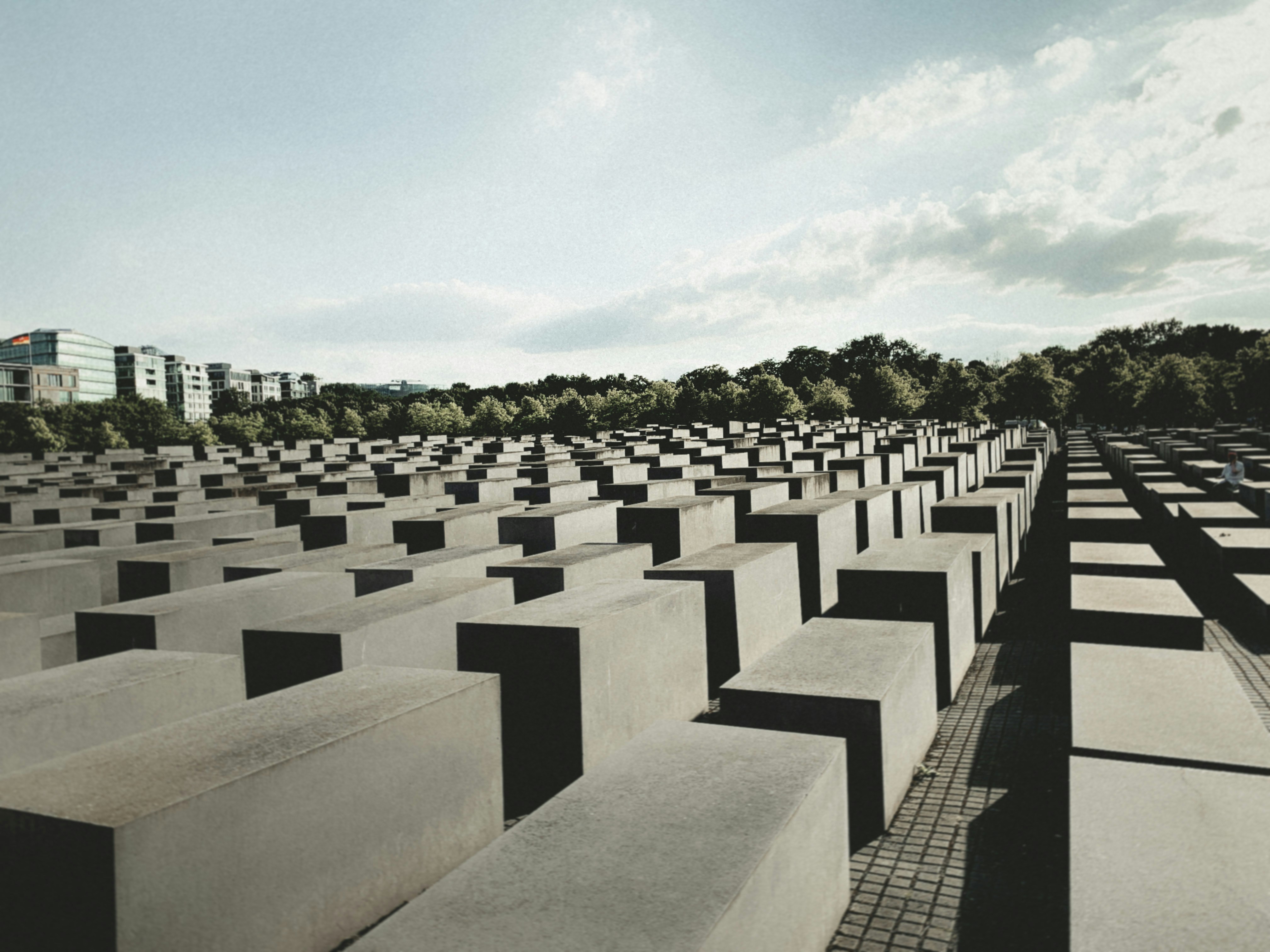
But there are also memorials with limited budgets that I consider among the most impressive precisely because of how they interact with local communities.
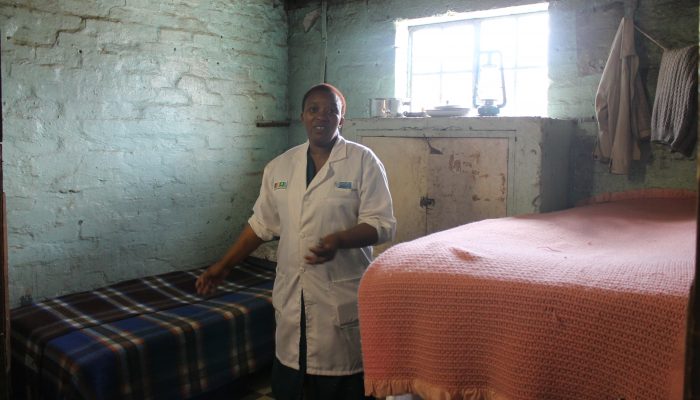
For example, there is the Lwandle Migrant Labour Museum. Lwandle is an informal settlement that only later became officially recognized. It has very little infrastructure. Many residents have no electricity, running water, or sewage. They live in poverty. Many have no stable income or employment. And yet right in the center of Lwandle there is a museum. It was created to tell the story of nonwhite migrant workers who came to work in factories and founded Lwandle. In this way, residents develop a sense of pride in the role those people played in shaping their lives. And the museum has evolved to respond to very concrete present-day needs in the community. Every day many people come there, for example, to use the printer, print out a résumé, and go to a job interview. Instead of turning them away or simply making money from this, the museum staff recognized a community need and began creating opportunities for professional development: helping residents write résumés, holding workshops and trainings on how to look for work, and how to build small businesses based on local crafts. They draw on the memory of workers in the past to create economic opportunities today.
Another place I love is AFAVIT in Colombia. It is a memorial park created by an association of relatives and loved ones of victims of the armed conflict in Colombia, specifically in the small town of Trujillo in the department of Valle del Cauca. The families did not create just a memorial with graves and stories of the dead, but a genuine community center, a space of vibrant collective life. People gather there every day, eat together, and spend time together. This space became especially important for young people, many of whom had previously been recruited into armed gangs. Local residents organized after-school music programs and other initiatives that gave children a sense of belonging and responsibility to their community. As a result, the number of those joining gangs noticeably decreased. People stay because this space of memory created a community for them. It is not a “wealthy” project, but it is beautiful because it gives life and energy to the present while preserving memory of the tragedies of the past.
Your words about local spaces reminded me of a trip I took to the Philippines. I was looking for museums dedicated to the crimes of the Marcos dictatorship, and instead I found a “shoe museum” with Imelda Marcos’s collection. It was a surreal experience: instead of condemning corruption, the staff proudly displayed hundreds of pairs of shoes bought with stolen money, with no critical context whatsoever. It was essentially a “museum of corruption” that people take pride in. By contrast, in Cagayan de Oro I visited a tiny museum tower. Literally four rooms, yet in fifteen minutes I understood more about the country than I had in all the time before that: the struggle against colonialism, the history of Indigenous peoples, and the women’s movement that rescued victims of sexual violence during the war. It proves that content and community engagement matter more than scale. But I want to ask a practical question. I have been to Syria twice — to Sednaya prison, and to the destroyed neighborhoods of Aleppo and Douma. The scale of the tragedy there is paralyzing. On the one hand, there is a desire to preserve memory: for example, one doctor wants to turn the ruins of the last hospital in eastern Aleppo into a museum. On the other hand, the city needs hospitals, so owners simply rebuild what was destroyed. In Douma, the tunnels where one of the most horrifying chemical attacks of our century took place are deteriorating because people have no resources to preserve them. We see similar processes in Bucha, where the state very quickly rebuilt Yablunska and Vokzalna streets. How do you find the line between the necessity of reconstruction and the duty to preserve memory? When the scale of destruction is enormous and resources are limited, where do you even begin in order not to lose evidence of crimes?
This is an incredibly difficult question, and there is no single answer. In societies that have experienced mass crimes, especially armed conflict, there are often almost no places left that have not in one way or another been touched by violence. Deciding what to preserve as a memory space and what to rebuild in order to move forward is a challenge that requires involving many different stakeholders and establishing a clear system of priorities, especially in a postwar period. At such moments, society faces countless urgent tasks that have to be considered at once, weighed against one another, and ranked in the recovery process. Some of these tasks are connected with what we call transitional justice: how to pursue truth-telling, criminal accountability, material and symbolic reparations, and institutional reform of structures involved in the violence. Memory fits into that framework in many different ways.
But there are also more basic processes: how to ensure society can function, how to provide people with what they need to live — water, electricity, food, medical care. Setting priorities always comes down to resources, and countries emerging from war usually do not have enough of them.
That means a significant part of the responsibility shifts to outside actors and to their willingness to get involved. Today we are seeing an alarming trend: the circle of international donors has narrowed dramatically. For example, the United States has effectively ceased to be a key source of funding for development programs, and the devastating consequences of that will be felt for decades. In Syria’s case, the world is now trying to understand how to build relations with the new leadership. Clearly, Assad’s previous regime was filled with people implicated in mass crimes and atrocities. But the new government also includes people who took part in similar crimes. So a difficult dilemma arises: how do you ensure accountability for crimes while at the same time giving the country a chance to develop? These are enormous questions that international donors and societies themselves are grappling with right now. So there simply is no easy answer.
In that case, I would like to return to the most basic questions: what exactly is so important that it must be preserved? In Aleppo, I spent hours debating this with two well-known activists. There is a painful paradox there: the eastern part of the city lies in ruins, while the western part remains untouched. And this divide is not only political, but ethical. When I asked them what they needed for reconstruction, they answered: “Recognition.” They want residents of the western part to acknowledge that until the eastern city is rebuilt, there can be no peace, because silent consent to atrocities was a form of complicity. What is interesting is that they are not asking for billion-dollar projects. Their initiatives are things like named chairs at the university in honor of victims of the regime. Or what I call “a wound in the road” — the idea that sometimes it is enough simply to mark a place, not to conceal a crater, but to cover it over as direct evidence of what happened there. When I asked whether they had a practical plan for implementing these initiatives, one Syrian activist told me she knew twelve people who had already written dissertations specifically about rebuilding Aleppo. And I am interested in understanding to what extent this kind of authentic experience from affected societies is actually absorbed by Western institutions. We are used to learning from the examples of major Holocaust museums in Berlin or Washington. But within affected communities, people are searching for other, less conventional paths. Does the “big” museum world recognize this grassroots work? Or will we continue to invite experts from Washington to tell local communities how they should remember their own tragedy?
That is an extremely perceptive point. You highlighted one of the core problems of international funding: donors often bring with them a ready-made recipe book, a set of models they expect local societies to adopt in exchange for money. But your story about Aleppo offers an important lesson: lack of funding creates a vacuum that forces local activists to be creative. And that opens space for a genuine search for answers.
The hopeful element in your story is that it shifts the focus from “things” to “purpose.” Usually we become fixated on the object: “we must preserve this building” or “restore this space.” But we rarely ask ourselves why. What exactly are we trying to achieve through this preservation? Your conversation with Syrians points to the essence: the basic need is recognition. Recognition of the harm that was done and of the fact of what happened there. If we begin with that need, rather than with the form of its realization, dozens of alternative paths open up. That is where the conversation truly begins. At that point, a much broader space opens up for dialogue and for consultation with many different groups in order to decide together what forms might achieve that goal. When we fix the end result in advance, for example by saying, “there must be a museum here,” we close the door to other options. But if we begin with an awareness of the needs — for recognition, restoration, and reparation — a real dialogue with the community becomes possible. That is a far more productive path for working with memory than imposing ready-made solutions from above.
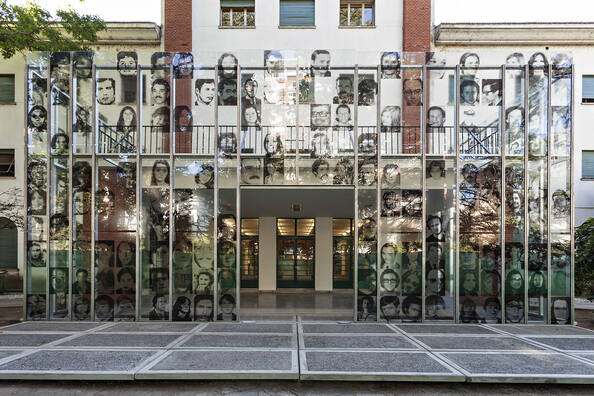
I would like to move to the question of belonging. While working on our universal jurisdiction case in Argentina, I saw a striking contrast at ESMA (Spanish: Escuela Superior de Mecánica de la Armada — the former Navy School of Mechanics in Buenos Aires, which during the military dictatorship from 1976 to 1983 became the largest secret center for illegal detention, torture, and killing — ed.). One relative of the dead said: “I won’t come here, this place belongs to politicians now, it is not mine.” Another person — a former prisoner — fought for the right to speak in “his” cell, where he had once been held. It made me think: who do such spaces really belong to, especially when we are talking about places where people were imprisoned? Usually by inclusivity we mean representation of women or of different social or ethnic groups. But there is another level — inclusivity within the affected themselves. In Ukraine, we see this in Mariupol: one brigade is actively building a memorial to its own soldiers, while relatives of the dead from other units, or civilians, feel excluded. This is not competition. It is the difficulty of working with an audience in which each person carries deep trauma and specific expectations. We approach victims with unquestioned respect, but how do you practically work with their often conflicting views and expectations? What are the best practices in such situations, so that a space of memory does not become a place where tragedy is privatized? How can this be handled?
This is truly a multidimensional question. At its core lies a fundamental choice: who is memory for, and to whom does this space belong? There are two key points here.
First, inclusivity does not mean that every person will ultimately find the memorial ideal. In a democratic process, it never happens that everyone is happy in the end. What matters is that the stakeholders themselves feel the decision-making process was fair, that their voices were heard, and that their positions were taken into account. Then, even if you are not fully satisfied with the result, you still retain a sense of belonging to something larger.
Second, you should not put all your eggs in one basket. It is impossible to reduce a complex tragedy to a single memorial that would satisfy everyone. Your question underlines that society needs different approaches and formats. One group needs a quiet space for prayer, another a political platform, a third an educational center. Only through this plurality of forms can we truly respond to the deep need for recognition felt by such different groups of victims.
Could you give examples of how, in different countries, victims, survivors, and members of their families were involved in creating memorials or spaces of memory? How did this work in practice?
ESMA in Argentina is perhaps the most powerful illustration of this painful search. A former torture center where more than five thousand people suffered, it remained in military hands for years. When in the 2000s the state finally decided to turn it into a space of memory, a split emerged. Only then did the national government finally place it under civilian control and decide to transform it into a site of memory. But there was no consensus whatsoever as to what exactly that space should be.
In fact, an entire book is devoted to this subject. The well-known artist Marcelo Brodsky wrote a book called Memory in the Making, which gathers dozens of sharply divergent visions for the future of the site. I spoke a great deal with Alejandra Naftal, who herself endured the horrors of ESMA and became the first director of the memorial. Alejandra was at the forefront of shaping the official concept of the space — at the center of the debate over what it should look like. She held countless conversations with people who had survived imprisonment at ESMA, as well as with the families of those who lost loved ones there.
The main conflict unfolded between two positions. According to her, there was a large group of people who insisted that it had to be a painful space — a place people would enter and feel imprisoned, as if the space itself were tormenting them. At the same time, there was another, equally sizable group that insisted the space could not be designed in a way that reproduced the same forms of violence that society was trying to understand, remember, and overcome in a process of healing and recovery. In the end, the second position prevailed. But even today, with the arrival of a new government in Argentina that criticizes previous approaches to the past, the issue is not closed. The tension remains — there is still no consensus. And that is normal. There is simply no single right or final answer. The essence of memory is not to build the perfect wall once and for all, but to keep the conversation alive by involving as many voices as possible. Memory is precisely this ongoing process of rethinking.
And that brings us to another subject you often address in your writing: how do we remember perpetrators? There are well-known examples such as the Topography of Terror in Berlin, where the focus is on those who committed crimes. I remember a conversation with María Sepúlveda, founder of the Museum of Memory and Human Rights in Chile. I asked her whether Pinochet supporters — especially the families of those killed by protesters — wanted to be represented in the exhibition. Her answer struck me: she said those families themselves did not want to be mentioned in that museum. That was unexpected. So how should we tell the story of perpetrators? After all, telling their story does not mean honoring them.
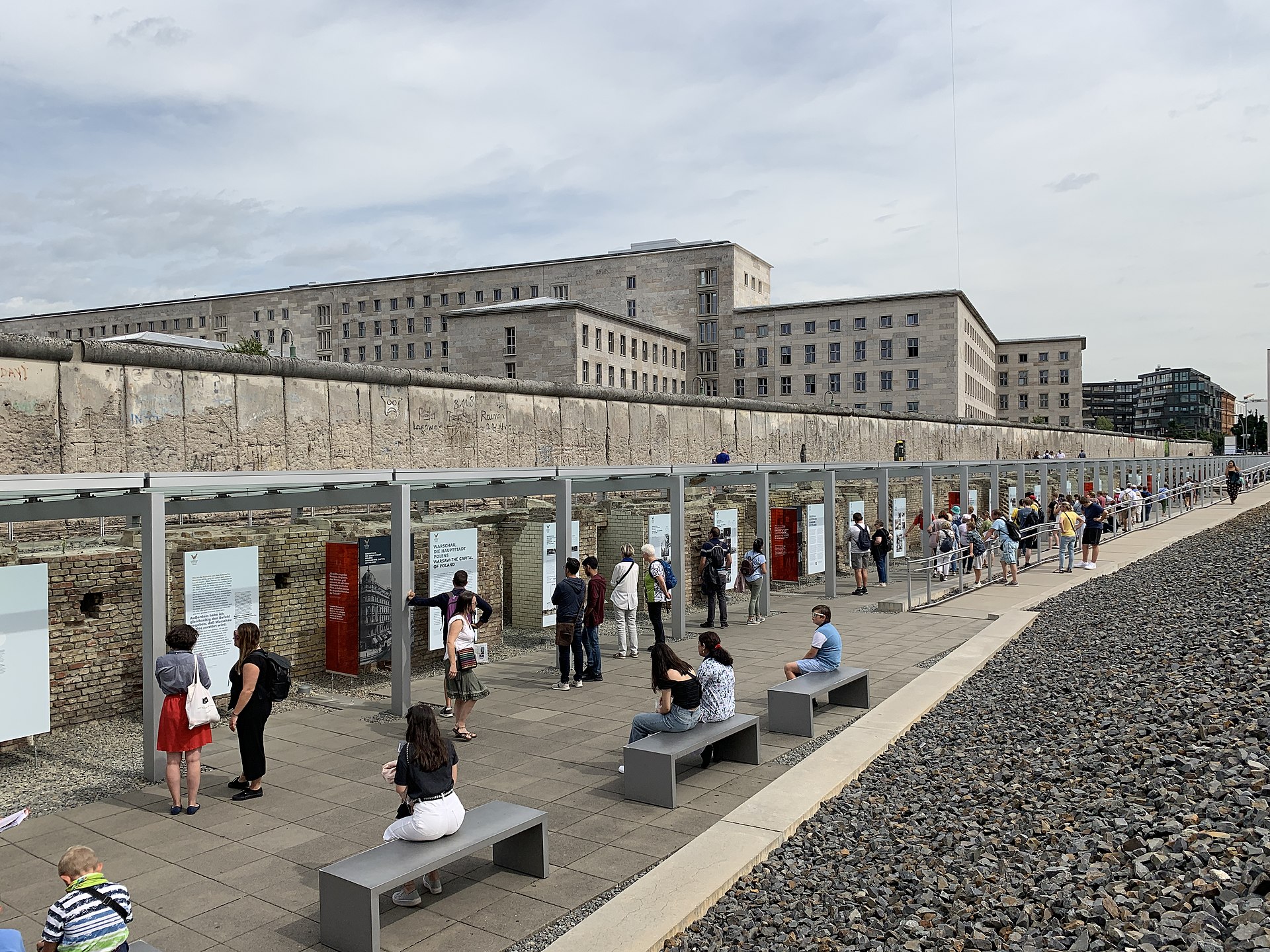
This is one of the key principles I stand for. Of course, such spaces should honor victims. But we do them a disservice if we do not use the museum as a tool to understand the very mechanism of violence. We have to talk about how society allowed catastrophe to happen. And that means working with the image of perpetrators not as “monsters,” but as ordinary people who, under certain conditions, began to see others as “subhuman.” Humanizing both the victim and the perpetrator places a mirror before the visitor: who would I have been? What choice would I have made in those circumstances?
Last week, I visited the newly renovated Resistance Museum in Amsterdam. It used to be devoted exclusively to glorifying Dutch resistance during the Holocaust. But the new exhibition caused a wave of controversy because it shifted the focus. Many people said they did not like this “new” museum because it no longer concentrates only on heroes. Now, alongside heroes, there are stories of collaborators and “bystanders” — the huge majority who chose to lie low in order to protect themselves and their families. The museum presents this through individual lives, showing that every position is the result of a specific human choice. This approach does not draw a sharp line between a “museum for victims” and a “museum about perpetrators.” It is a museum about people making decisions at the epicenter of genocide. And every visitor inevitably asks: what story would such a museum tell about me?
The theme of personal choice naturally brings us to interactivity. Today this word is often used as a fashionable slogan, and sometimes abused — we remember the heated debates around the concepts proposed for Babyn Yar. You have written a great deal about engaging young people through VR, 3D, and digital solutions. But where is the line? How do we avoid turning tragedy into an attraction, and how do you distinguish meaningful interactivity from inappropriate interactivity?
I think the term “interactivity” has today largely become a fashionable buzzword, and what people usually mean by it is the use of high technology — touchscreens where visitors can press buttons and feel that they are charting their own path through the museum. And I think: yes, that can be pleasant, and sometimes it really works well. But interactivity for the sake of interactivity is pointless. The real goal is to engage a person in such a way that they begin to think critically about their own relationship to history. There are museums that use not a single projector, yet through texts and photographs they make the visitor stop, freeze, and reflect. At the same time, we are seeing a boom in “Instagrammable” places that call themselves museums, but in fact exist only so that a person can fit themselves into the square frame of a screen. Such spaces do not build a relationship with history — they merely reproduce an image. Technology by itself guarantees nothing. Before installing a screen, you have to answer the most basic questions: what thoughts should a visitor leave this room with? What values do we want to strengthen? If VR goggles help achieve that goal, wonderful. If not, they merely distract from the essence. Interactivity must be an instrument of meaning, not just technological noise.
Do you believe in virtual museums? I hear more and more often: “We need to build a website, we need a virtual format.” But in practice, I see countless dead projects that no one visits. Except perhaps for places people physically cannot reach, like North Korea. There is something unique about physical space that is hard to replace with pixels. Even within our team, during strategic sessions, whenever the choice arose between going online or meeting in a real building, the answer was always obvious. Are virtual museums really the way forward, or is physical space fundamentally irreplaceable?
Virtual museums became especially popular during the pandemic, when major institutions were trying somehow to sustain their work. And the idea that virtual spaces can potentially be accessible to everyone is an understandable argument. At the same time, I have serious doubts about the quality of that experience. Viewing a museum in a browser is a fundamentally different experience from being in a physical space. A physical place demands your full, focused attention. The internet, by contrast, has trained us — and especially younger generations — to process an endless stream of information in fragments. Spaces of memory are created for contemplation and reflection, and the web is not the best environment for that.
That said, I do not think they are useless. If it is the only available option, then fine — we should make the most of what the virtual environment allows. But in my opinion, the goal should not be to literally create a virtual “walk-through” of the same route people would take in a physical building. Rather, the virtual format and its tools should be used to create something different, something distinct from the physical experience, because these are qualitatively different environments and different ways of engaging with the past.
Right now, I am consulting for the African Union on the creation of a memorial in Addis Ababa. Africa is fifty-four countries, and not everyone will be able to travel there physically. At that scale, a virtual space makes sense as a supplement. Will it be as successful as a physical one? Probably not. But we should do everything possible to make it as effective as it can be within its own limits.
Let us return to public spaces in the context of an ongoing war, where crimes are happening every day. I am increasingly concerned about the risk of retraumatization. I was told about a memorial in a small town in Ukraine located next to a large supermarket — and there are many such memorials to fallen soldiers. In practice, for a child this means seeing their dead father every time they go shopping. Another example is how to memorialize tragedies on the railway. Kramatorsk station is the site of one of the bloodiest attacks, but at the same time it is a place of meetings, love, and hope for soldiers and their families. Passengers passing through the station are often in a vulnerable state, searching for safety. Do we really have the right to force them to confront traumatic reminders in the middle of the station every day? Perhaps such places should be set slightly apart, like the memorial to railway workers in London? What basic rules of dignity should apply in spaces where people do not arrive by choice, but on errands or out of necessity?
That is an important observation. It brings us back once again to the question: what are we trying to achieve? If you place a memorial in the very center of people’s daily route, it can have a retraumatizing effect. An alternative is to create a space that is somewhat removed — a place people know about and can come to intentionally, seeking quiet and reflection. This approach was already common after the First World War. Local communities created plaques or sculptures within towns, but not necessarily in places where they would constantly intrude on people’s view. These were places one could come to when there was an inner need to honor memory. They fulfilled the function of public recognition of tragedy, but they did not “assault” the attention of passersby. Again, there is no single correct answer. This is something each community has to talk through together: how to remember in a way that gives strength rather than becoming an additional burden for those trying to survive.
So this became a kind of tradition, a deliberate decision to move war memorials away from central parts of cities?
Yes. Some communities deliberately kept memorials in the city center, seeing that as essential to their identity — as a statement of who they are and what they had been through. Others chose parks or more remote areas so that people could come only when they felt an inner need. That is why memorials so often appeared in cemeteries — places that by their very nature are already spaces of commemoration. These were different decisions made by different communities, each trying to find its own “right place” for memory.
You mentioned city centers, and I immediately thought of the Maidan in Kyiv. Right now it is a space resembling a micro-cemetery, with thousands of small flags — one for each fallen soldier. Prince Harry called it the most moving place he had ever seen. Its power lies in its complete authenticity, because it was created by people, not by the state. This is spontaneous memory that has grown across the square ever since the Revolution of Dignity. But at the same time, it is a cemetery on the country’s main square, and it keeps growing. What do we do with spaces like this that emerge on their own?
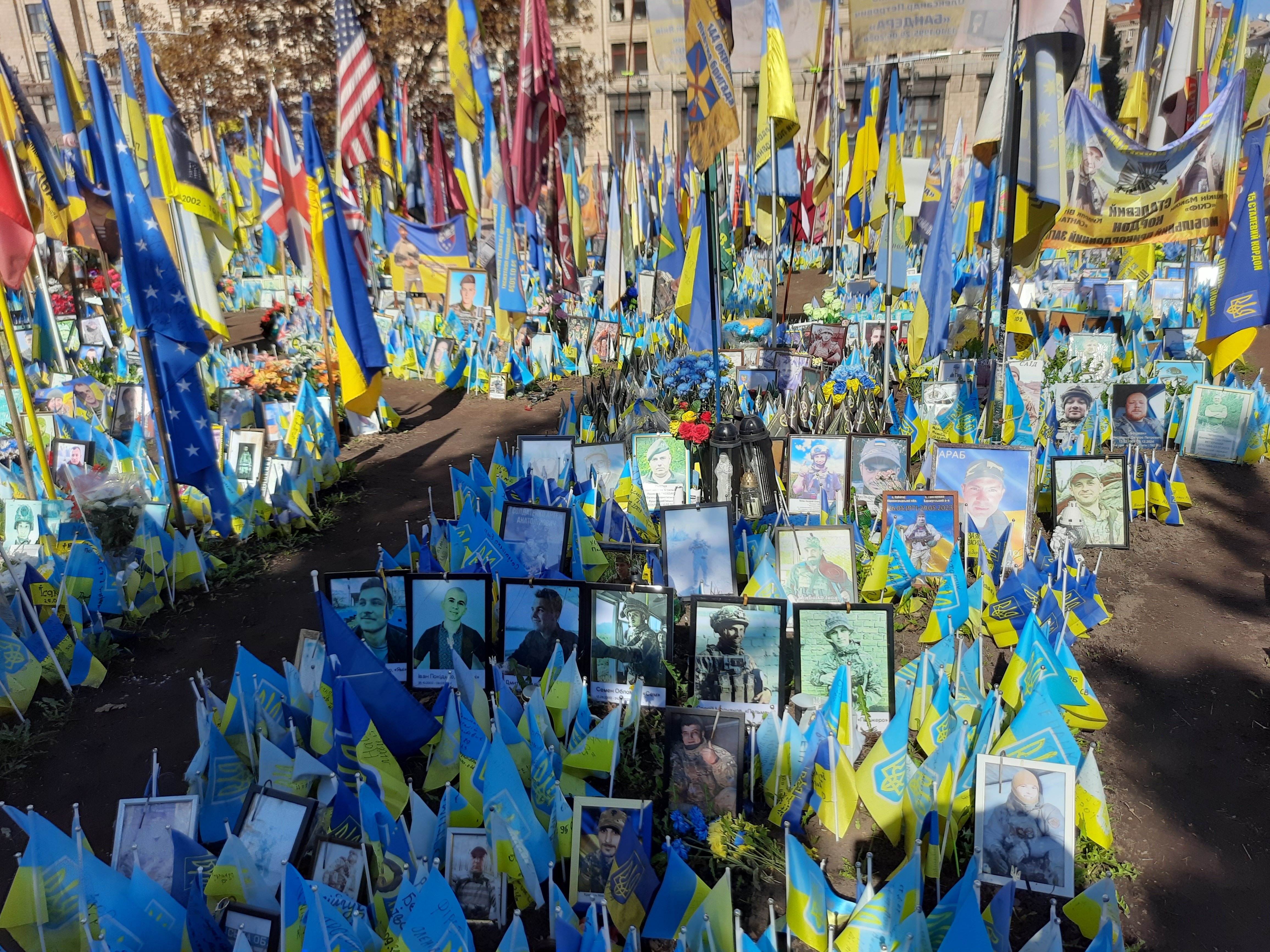
Such spaces are tremendously important. Scholar Jack Santino calls them “spontaneous memorials.” They emerge instantly, in the very moment of violence or immediately afterward, as a community’s attempt to make sense of what has happened. I live in New York, and I remember well how after September 11 the whole city was covered with photographs and drawings of the dead. These handmade memorials remained in the streets for a very long time, because they helped all of us survive and process the tragedy. But there came a moment when we realized: we cannot leave it in that form forever if we want to move forward. In New York, those objects were carefully collected and preserved. Later they became part of the official September 11 Museum. That is one possible scenario: when the time comes, these elements of popular memory are removed from open public space and transferred into a new museum context. This preserves their sincerity while also allowing the city to keep living.
My final question concerns an experience we have not had before, but which will become an enormous challenge for Ukraine. I mean the missing. We know there will be thousands of them. I have seen widows coming to improvised photographs in public spaces simply because they have nowhere else to go — they have no grave where they can honor their loved one. At the same time, many families refuse to acknowledge death until the very last moment, because hope dies last. Are there truly successful examples in the world of memorialization for those whose fate remains unknown?

Yes, there are. Argentina is a country where “disappearance” itself was the main instrument of violence. People were taken from their homes or from the streets, and most of their remains have still not been found. Legally, they are not recognized as dead. They are disappeared. So in terms of memory, Argentina worked with this in two different ways.
The first is the Parque de la Memoria in Buenos Aires. It is a large collective monument where the names of all the disappeared are engraved, along with their age at the time of disappearance, the date they were last seen, and the year they disappeared. It is a place of collective recognition of loss.
The second approach is what I call “insertions of memory.” The best-known example is the European Stolpersteine, or “stumbling stones,” by Gunter Demnig. He began creating small plaques at the last chosen place of residence of victims of Nazi crimes. Each small gold plaque is set into the pavement outside a former home and includes the person’s name, date of birth, date of deportation, and, if known, date of death. Today there are already more than ninety thousand such plaques in more than twenty-five countries across Europe. They form a kind of map of memory, where each marker is dedicated to one specific person and fixes the place where they lived, the space of their life.
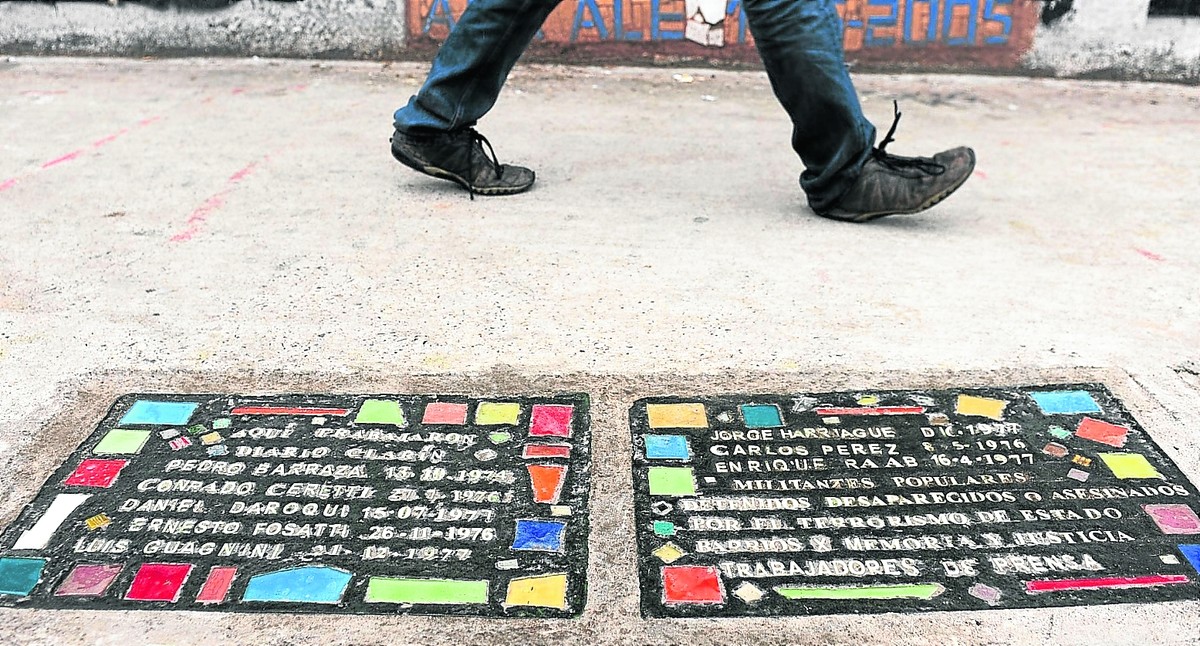
In Argentina they do something similar and call them “memory tiles.” These are memorial tiles placed in the street. Entire communities and families gather to create beautiful, bright mosaic compositions. They are installed in front of the house where the disappeared person lived, or by the school where they studied, or by the place where they worked. These tiles do not mark death. They mark the life of a specific person. They say: “Here lived someone who is still considered missing.” Of course, for many people this becomes a place of mourning, and for those who still hold on to hope that the person will return, such a gesture can be painful. But these initiatives, born from civil society rather than from the state, have proven deeply meaningful. They give a family a point in space where they can bring their grief, even if no grave exists.
This publication was prepared with the support of the Partnership Fund for a Resilient Ukraine (PFRU). The contents of this publication are the sole responsibility of the Public Interest Journalism Lab and do not necessarily reflect the views of the Programme and/or its financial partners.