“This brought us even closer together.” How Kyivans survived the “black winter” under Russian bombardment — and are preparing for the next one
Russia attacked Ukraine’s energy system more than 4,500 times in 2025. But in 2026, it waited for unprecedented cold snaps to launch its strikes: in January and February, temperatures in Ukrainian cities dropped to −20 to −26°C. As a result of massive attacks involving strike drones, ballistic missiles and cruise missiles, combined heat and power plants supplying millions of people in Ukrainian cities with heat and electricity were partially or completely destroyed. A state of emergency has been declared in the energy sector. In Kyiv, Ukraine’s capital, all three CHP plants have been damaged, and one of them has been completely put out of operation. In January and February, as many as 1 to 1.5 million people in Kyiv were left without heat. Restoring Ukraine’s energy infrastructure could take years. Yet Russia’s attacks, which had no direct impact on the fighting, were aimed at undermining civilian morale. They were also accompanied by coordinated bot attacks on social media that blamed the power outages on the Ukrainian authorities, citing “corruption” and the “inefficient” use of international aid.
How Kyiv fought for heat and electricity under constant Russian shelling — and what is already crucial to preparing for the next winter — is the focus of this report by the Public Interest Journalism Lab.




“When I’m cold, I dream that I’m being killed”
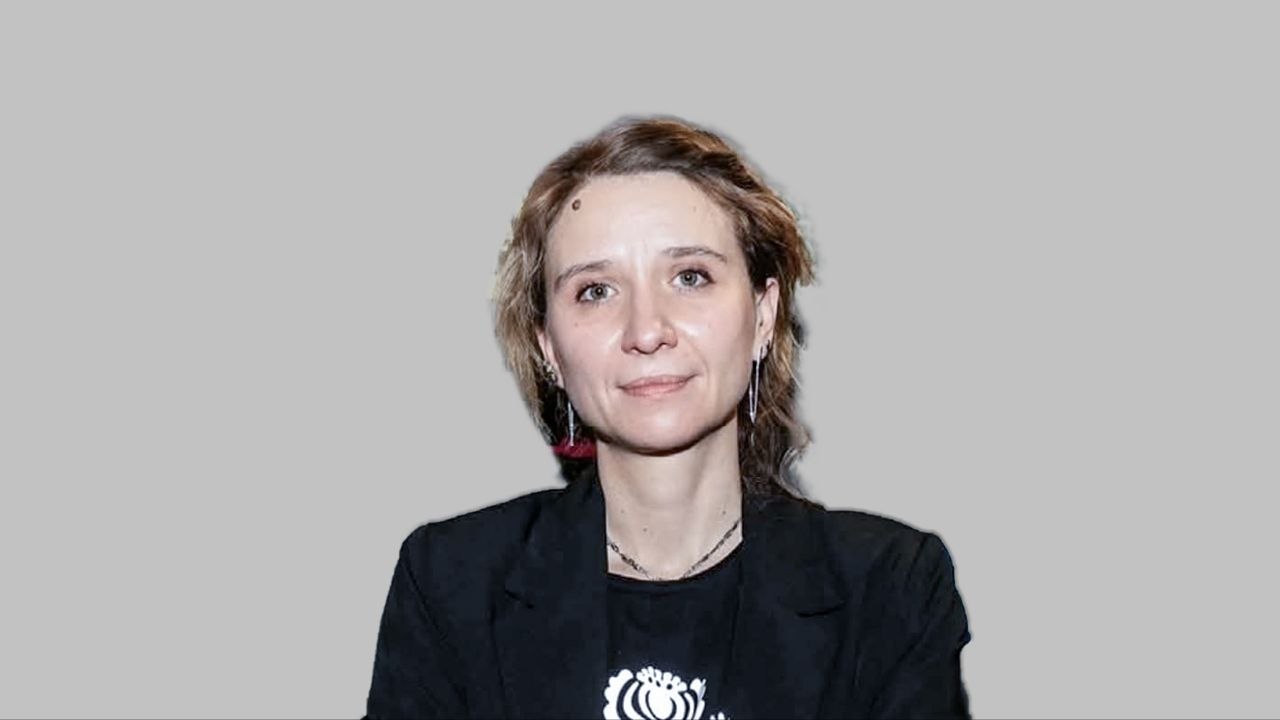
Forty-year-old artist Yulia Po kept warm at home with bottles of hot water, and whenever the power came back on, with an electric blanket and a space heater. There will be no more heating in her building this season. Yulia lives on Kyiv’s left bank, where CHP plants have suffered the heaviest Russian strikes.
Every window and door in Yulia’s apartment — and even part of the walls — has been covered with bubble wrap. Her plants are wrapped in it too.
Yulia is from Crimea, occupied by Russia in 2014. She laughs that, having been born in a warm place, she has always been especially sensitive to the cold.
“You can’t relax — you constantly have to keep moving or wrap yourself in layers, which makes even basic household tasks, like washing the dishes, uncomfortable,” she says, describing life in the cold.
There is no heating at Yulia’s workplace either. At home, neither work nor any creative activity is possible — her hands go numb from the cold. “Even minimal work on the computer is impossible,” she says. “First of all, it’s ice-cold. All the cables freeze and go stiff. My kettle cracked from the cold.”
Yulia cooks on a camping stove and heats water in a pot. The freezing temperatures burst pipes in the apartments and the stairwell.
“One night I thought, I’ll try sleeping without the bottles, and literally 30 minutes later I woke up from a dream that I was being killed. That always happens when I’m cold,” Yulia says. “Every day I understood that I just had to endure it and that it would get warmer soon. But I don’t feel any euphoria like, ‘Oh, finally, spring.’” By spring, the weather had warmed up and the blackout schedules had stabilized, yet she still has to keep heating the apartment and boiling water.
She has no plans to move, however, because no one knows what the situation will look like next year. Yulia is convinced that the Russians “will keep shelling other CHP plants. So there is no guarantee that an apartment you rent in another part of the city won’t also be left without heating.”
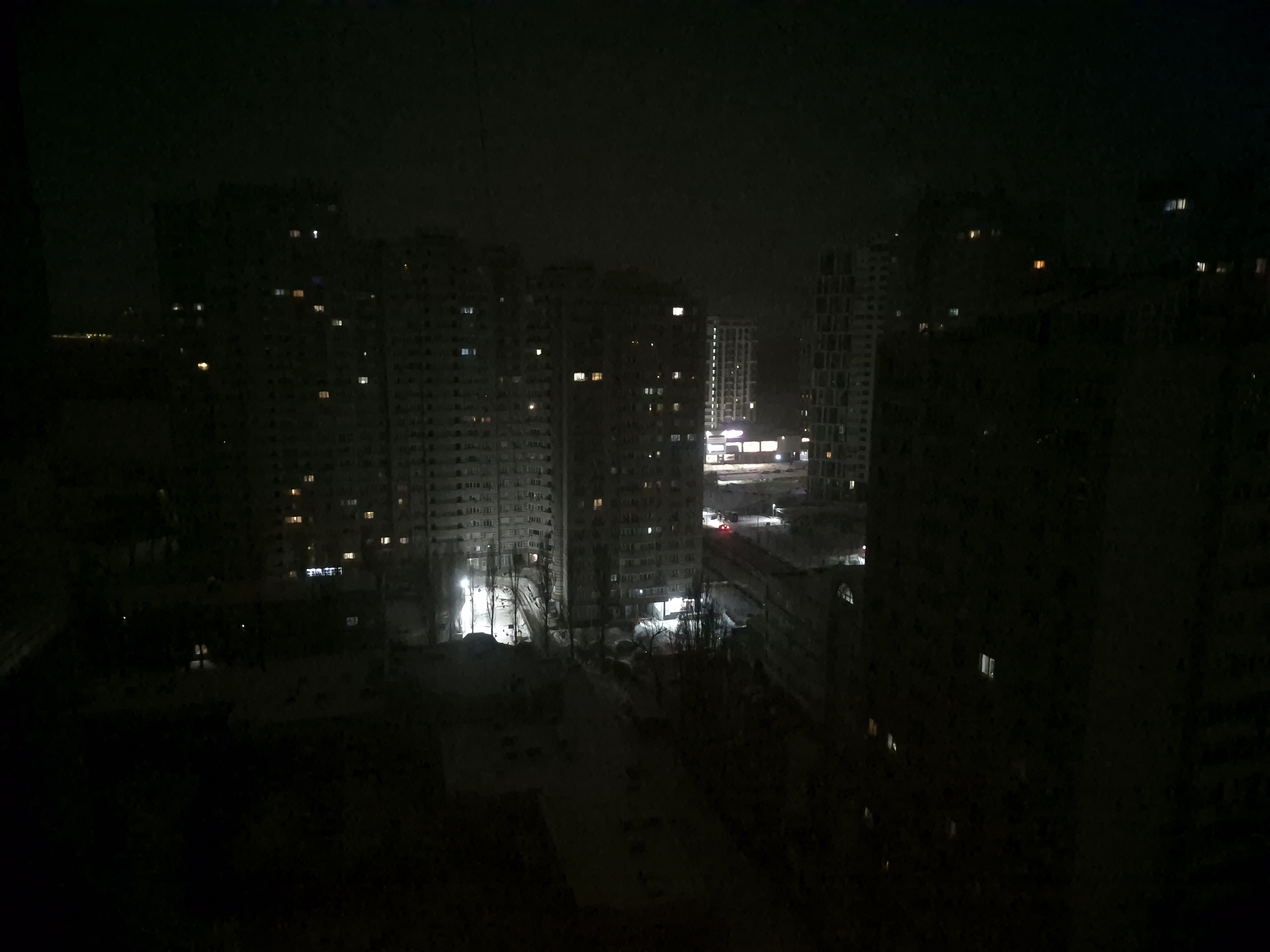
There are hundreds of thousands of people like Yulia in Kyiv. On some days in January and February, between 1 and 1.5 million people in the city were left without heat. The worst situation is on the city’s left bank.
Kyiv, a city of more than 3.5 million people whose population has grown significantly during the war because of the large number of displaced people from other parts of Ukraine, is divided into two banks by the Dnipro River. The city centre and government quarter are on the right bank. The left bank — home to almost one million people — is densely built up with large high-rise residential districts. It is here that the greatest number of buildings are now without heating.
Over the four years of the full-scale invasion, Russian forces attacked the Darnytska CHP plant — which supplies most of this district with heat and part of its electricity — 13 times with missiles and drones, nine of those attacks in the past six months alone. On February 3, the Darnytska CHP plant was completely knocked out of operation after Russia struck it with five ballistic missiles. The plant had supplied heat to almost half a million people — roughly the entire population of Chișinău, Bratislava or Zurich.

Darnytska CHP and the “miracle” of the power engineers
“These were not just ballistic missiles, but ballistic missiles packed with shrapnel, which makes any restoration work even more difficult,” Ukraine’s Deputy Prime Minister for Restoration, Oleksii Kuleba, told journalists and foreign diplomats the day after the strike. Pointing to the Darnytska CHP plant’s boilers ripped apart by missiles, the collapsed buildings, and the pipes thickly coated in ice, he stressed: “It is hard to imagine how this heap of metal and brick could ever again become a functioning heating plant. The target was the only thing here that was still operational — the equipment supplying heat to residents. Everyone understood perfectly well that nighttime temperatures were minus 25 degrees, so the ballistic missiles were aimed precisely at the heating boilers. Russian terrorists are using extreme cold as a weapon.”
Kuleba said that restoring heat for Kyiv residents would take a genuine miracle. And even if such a miracle happened, backup power would still be needed to cope with constant emergency situations.
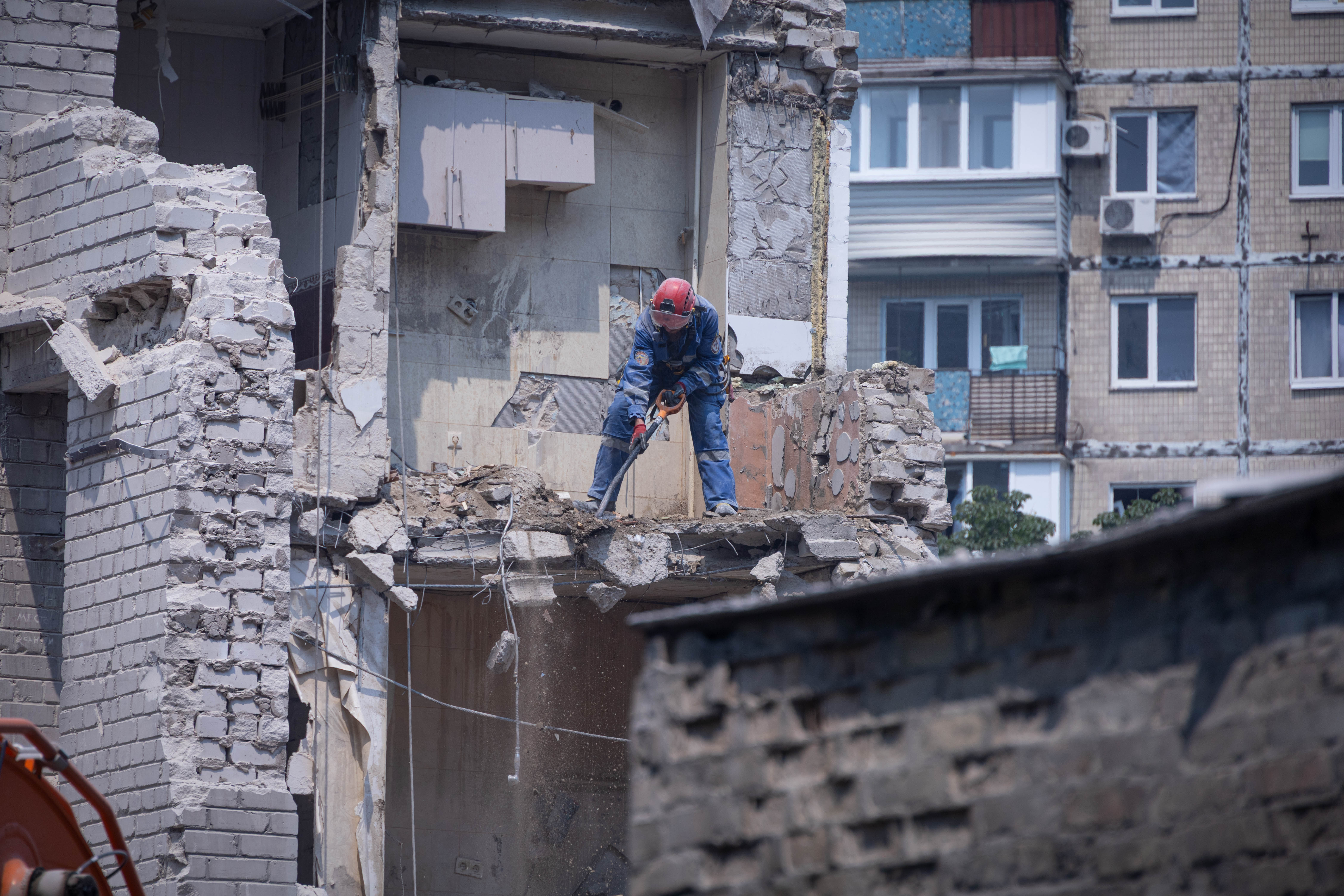
Yet Ukraine’s power engineers had already worked a real “miracle” for Kyivans. Maksym Tymchenko, CEO of DTEK, one of Ukraine’s key energy companies, said that after some of the strikes the situation looked catastrophic: nearly 80% of electricity generation had been lost. The astonishing ability of his crews to rapidly repair critical damage, improvise engineering solutions using ruined equipment, and work for hours on end in abnormally severe cold — or even under water — amazed him and bought the country the vital few weeks it needed to hold on until the spring thaw.
“It was their character, their spirit, their willingness to suffer but not give in that enabled us to hold on,” Tymchenko says.
“Worse than the Nazis”
The elderly, bedridden patients, and people with small children suffered most from the lack of heat and electricity.
At 83, Vira Havrylova still has a reserve of optimism. She lives with her granddaughter. Last year they renovated their apartment. “Just to spite those scumbags!” says Vira, who is ethnically Russian, referring to Russians.
In February, the temperature inside their home stayed at 8–10 degrees Celsius. Water in the pipes froze solid and burst them. The building lost running water. A gas stove, warm clothes, and cats helped them get through it.
Vira worried most about her 77-year-old sister and her sister’s 80-year-old bedridden husband. He had diabetes, had undergone an amputation, and his kidneys were failing. “His dressings had to be changed constantly, and he had to be connected to medical devices — we bought batteries for that, but even they were not always enough. He suffered terribly as he died.”
Vira says the whole family helped her sister — cooking food, bringing it over, and supporting them however they could. “We were already a close family, but this brought us even closer together.”
Whenever the electricity came back, even for a very short time, she would say out loud: “Thank you, boys! Even in the freezing cold and under bombardment, the power workers were still doing something to make life easier for us.”
Vira and her granddaughter were lucky: heat was restored to their building. More than a thousand others remain cold and are unlikely to be heated again this season. Vira greets the arrival of spring cautiously: “What helped us endure? Probably hatred. And also — I was born in 1943, during the Second World War. The postwar years were very hard. Perhaps I still carry some courage from those days in my soul.”
She is saving the warm shoes, socks, and thermal underwear her children bought her for next season. She sees no other way to prepare.
Ninety-year-old Anatolii Maksymenko spent the winter without heat on the ninth floor of an apartment building. Climbing the stairs with no lift was the hardest part for him. There is no gas in the building, so whenever electricity came on at night, he would wake up to cook enough food for the next day. An air conditioner and thermal underwear helped a little. Even so, he became seriously ill after having to wash in cold water.
“I did not expect it. I could not believe the Russians were capable of this. They behave worse than the Nazis,” says the 90-year-old, who remembers them well. His native village in the Sumy region was occupied by the Germans from 1941 to 1943.
Anatolii’s eldest son, who lives outside the city in a private house, persuaded his father to move in with him. But as soon as the weather turned milder, the old man moved back home.
The destruction of energy infrastructure as a crime against humanity
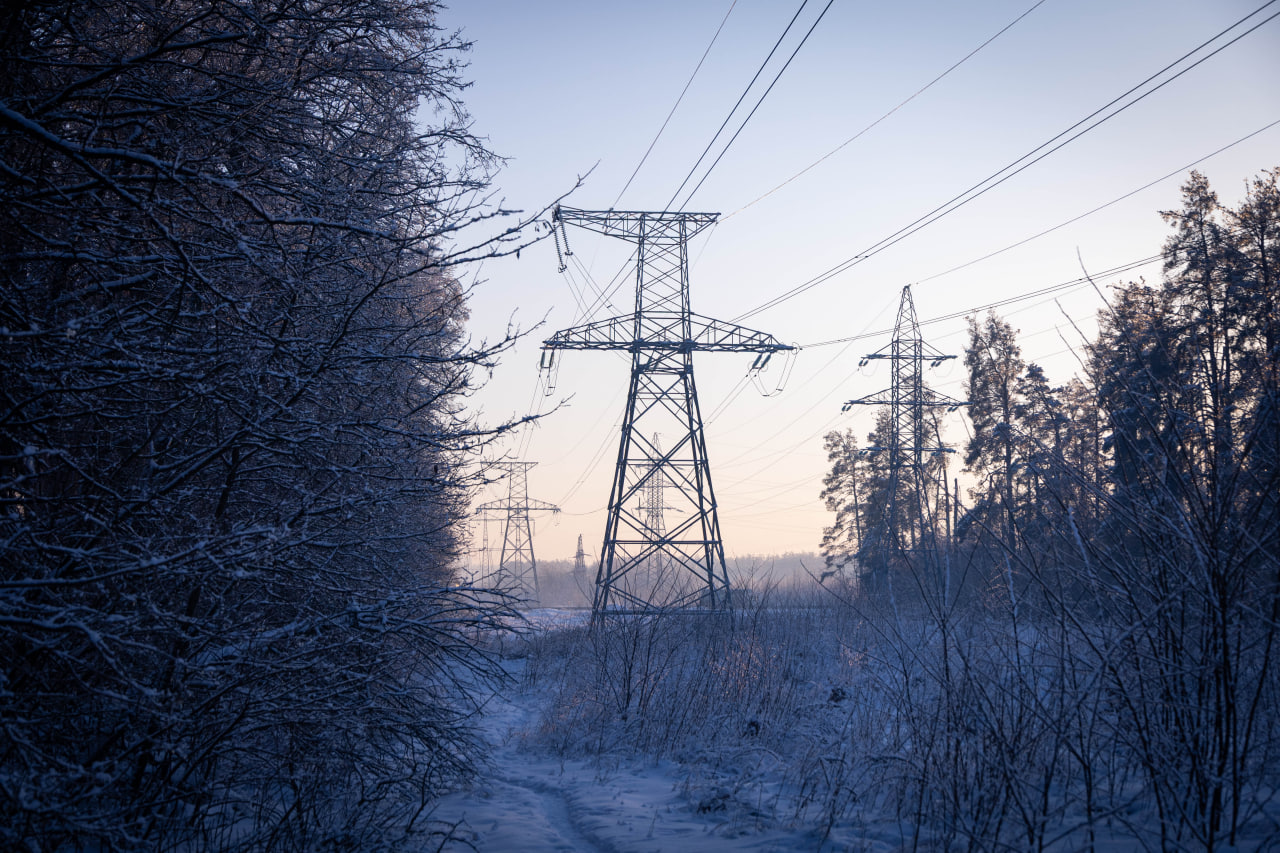
“Attacks on infrastructure are, in most cases, attacks on civilian objects. This is prohibited under international humanitarian law, and violations of these prohibitions are already being investigated by the International Criminal Court,” emphasizes lawyer and international humanitarian law expert Hanna Mykytenko.
In February, Ukraine submitted materials to the International Criminal Court concerning Russia’s strikes on Ukraine’s energy infrastructure. According to Ukraine’s Prosecutor General, Ruslan Kravchenko, the intensity of these attacks exceeded all previous periods of mass strikes over the entire four years of the full-scale invasion combined. The entire technological chain of the energy system was hit — from generation to high-voltage transmission and distribution. Thermal power plants, hydroelectric power plants, combined heat and power plants, and distribution grids were damaged. Eleven civilians were killed and 68 were injured.
These actions could not and did not provide Russia with any military advantage. Their purpose was to terrorize the population and create conditions unfit for life, the prosecutor general stressed, describing them as “a widespread and systematic attack bearing the hallmarks of crimes against humanity.”
The International Criminal Court has been informed about the chronology of the attacks, their consequences, the Russian units potentially involved, and members of Russia’s military and political leadership who may have issued the orders.
The international humanitarian law expert notes that the current investigation concerns war crimes, including attacks on civilian objects and the infliction of excessive incidental harm on civilians or damage to civilian infrastructure, as well as the crime against humanity in the form of other inhumane acts. Overall, this forms part of an investigation opened back in 2024 into the first systematic strikes on energy facilities. The ICC has issued several arrest warrants, including for former Russian Defense Minister Sergei Shoigu and Chief of the Russian General Staff Valery Gerasimov. So far, however, no one has been arrested.
The best help is air defence
According to Ukrainian officials, restoring the Darnytska combined heat and power plant in Kyiv will require more than half a billion dollars and at least two to three years. The site has been visited by numerous international delegations: NATO Secretary General Mark Rutte, European Commission President Ursula von der Leyen, European Council President António Costa, Finnish President Alexander Stubb, the prime ministers of several European states, and dozens of diplomats.
A number of Ukraine’s European partners have announced fundraising efforts and deliveries of energy equipment — primarily generators. In Sweden, just two days after the strike on the Darnytska CHP plant, a five-minute television appeal raised €400,000 for Ukraine’s energy sector. The European Union has developed a new €920 million assistance plan for Ukraine for next winter. Programs to build protective shelters for energy facilities are also ongoing, with partner support. But facilities like the Darnytska CHP plant are difficult to hide under concrete.
The best “shelter” is effective air defence.
Russia strikes Ukrainian cities with various types of cruise and ballistic missiles, as well as waves of drones. Only the U.S.-made Patriot air defence systems are capable of intercepting Russian ballistic missiles such as the Iskander, Kinzhal, S-300, S-400, and the North Korean KN-23, which Russia used extensively over the winter. This was explained by Anton Muraveinyk, an analyst at Come Back Alive, one of the largest charitable foundations supporting the Ukrainian army. European SAMP/T systems can also intercept ballistic missiles, but there are far fewer of them in the world, as well as far fewer interceptor missiles for them, due to limited production capacity.
Patriot is one of the most sought-after air defence systems in the world, but its batteries cost millions of dollars. After Donald Trump returned to power in the United States, the U.S. stopped supplying these systems to Ukraine. European partners have been purchasing them for Ukraine instead. Even so, despite years of requests, the number available to Ukraine remains limited. For example, President Volodymyr Zelenskyy noted that in response to Iranian attacks, Gulf countries fired more than 800 Patriot missiles in just the first days alone. By contrast, according to Zelenskyy’s adviser Dmytro Lytvyn in comments to The New York Times, Ukraine received 600 such missiles over the entire four years of the full-scale invasion.
Russian Iskander missiles also cost millions of dollars. In recent years, Moscow has scaled up its own production of long-range Shahed-type drones originally developed by Iran. According to various estimates, they cost between $20,000 and $30,000 each. The missiles and Shaheds are accompanied by dozens of decoy drones designed to exhaust air defence systems. In a single night, Ukrainian forces may have to repel several hundred incoming attacks.
Anton Muraveinyk stresses that the absence of functioning air defence would have meant total catastrophe for large cities. “We really were on the edge, and the fact that we held out was the result of a combination of factors: in some places the Russians ran out of time, in others they lacked strike capabilities, and in yet others international partners provided us with additional interceptor missiles just in time,” the Come Back Alive analyst explained.
Ukraine began preparing for simultaneous attacks by hundreds of Shaheds as early as spring 2025, launching efforts to develop and manufacture interceptor drones, which began to be used in the summer. Since late autumn 2025, low-cost interceptors priced at between $1,100 and $1,500 have been deployed on a mass scale, repelling a significant share of the attacks.
“The Russians are ramping up drone production — and we are ramping up the means to counter them. This requires both investment in the technologies themselves and stronger training capacity, including the development of training centers. In Ukraine, this area is developing well,” Muraveinyk explained, warning that the end of winter will not significantly change Russian tactics. “It is important not to forget about summer. If it is hot, strikes on critical infrastructure will continue. There is a high probability that the water supply systems of major cities and water treatment facilities could come under attack. In addition to causing heavy civilian losses, this could also render Ukrainian cities unfit for life.”
At the same time, beyond air defence, tougher sanctions against Russia are also needed, so that it cannot continue scaling up Shahed production or gain access to foreign-made components, which it still obtains through sanctions evasion schemes.

“Black Winter”: the energy sector at the centre of a disinformation campaign
The peak of Russia’s attacks on Ukraine’s energy infrastructure coincided with unusually intense activity by automated networks — bots, fake accounts, and the like — around the issue of energy. Thousands of fake accounts posted or flooded the comments under real posts on Facebook, Threads, TikTok, X, and Telegram, competing to blame the Ukrainian authorities for the power outages, the ineffective use of international aid, and corruption. AI-generated videos were also spread on a large scale. Analysts at the Center for Countering Disinformation, which operates under Ukraine’s National Security and Defense Council and studies Russian information and psychological operations, called the campaign “Black Winter.”
“The aim of the campaign was to shift responsibility for the consequences of the strikes on energy infrastructure onto the Ukrainian authorities,” explained CCD analyst Anait Khoperiia. According to her, the narratives being pushed were not limited to claims that the Ukrainian government had lost control or was misusing funds. They also included allegations of irrational and unfair electricity distribution by DTEK, one of the country’s largest energy companies — as if it were DTEK, rather than Russian strikes, that was depriving people of power. “We also saw active attempts to polarize Ukrainian society by pitting regions against one another — suggesting that some parts of the country, particularly in the west, had no problems with electricity or heating while the rest were suffering,” Khoperiia added.
Alongside claims about stolen international aid and electricity allegedly being sold abroad, the Ukrainian anti-corruption agencies’ “Midas” operation was repeatedly invoked. In November 2025, Ukrainian society was shaken by an investigation by the National Anti-Corruption Bureau into senior officials that exposed a large-scale corruption scheme in the energy sector, including at the state-owned company Energoatom. According to investigators, those involved in the scheme — among them government officials and people close to President Volodymyr Zelenskyy — may have profited from contracts, including those related to shelters for energy facilities.
The scandal led to several high-profile dismissals in the government, including Energy Minister Svitlana Hrynchuk and Justice Minister Herman Halushchenko (predecessor of Svitlana Hrynchuk as Energy Minister). Several suspects were formally notified of suspicion, and their cases are now before the courts. President Zelenskyy also dismissed the most influential political figure on his team, Presidential Office head Andriy Yermak. In Anait Khoperiia’s view, this partly explains why Russian manipulation around corruption failed to destabilize Ukraine’s domestic political situation.
“Partly, an important role was played by the authorities’ response to this corruption scandal, and partly by the negotiation process around a peace agreement. People prioritized the negotiations,” Khoperiia reflects.
In December 2025, shortly after the corruption scandal surrounding the energy sector, a poll by the Kyiv International Institute of Sociology showed that 31% of respondents blamed the Ukrainian authorities for the lack of electricity, while 54% held Russia responsible.
At the end of January, after a massive new wave of Russian attacks, KIIS surveyed Ukrainians again, this time asking why Russia was targeting Ukraine’s energy system at all. Respondents were offered three options, two of which reflected Russian narratives: that the strikes were retaliation for Ukraine’s own attacks — meaning Ukraine itself was to blame — or that Russia was “only striking military targets.” An overwhelming majority, 88%, said that Russia was carrying out these attacks in order to leave Ukrainians without electricity and heat and force them into capitulation.
Sociologists link these findings — as well as the high level of support for President Zelenskyy, which stood at 59% before the scandal and 61% afterward, according to KIIS — to the new rounds of negotiations between Russia, Ukraine, and the United States, in which Russia has demanded that Ukraine, if not capitulate outright, then surrender part of its territory, including areas it still controls.
By using weapons, freezing temperatures, and disinformation campaigns, the Kremlin has once again shown that it is waging war first and foremost against civilians for political ends. And yet, having lived through the hardest winter of the war, most Ukrainians remain firmly opposed to any territorial concessions to Russia.