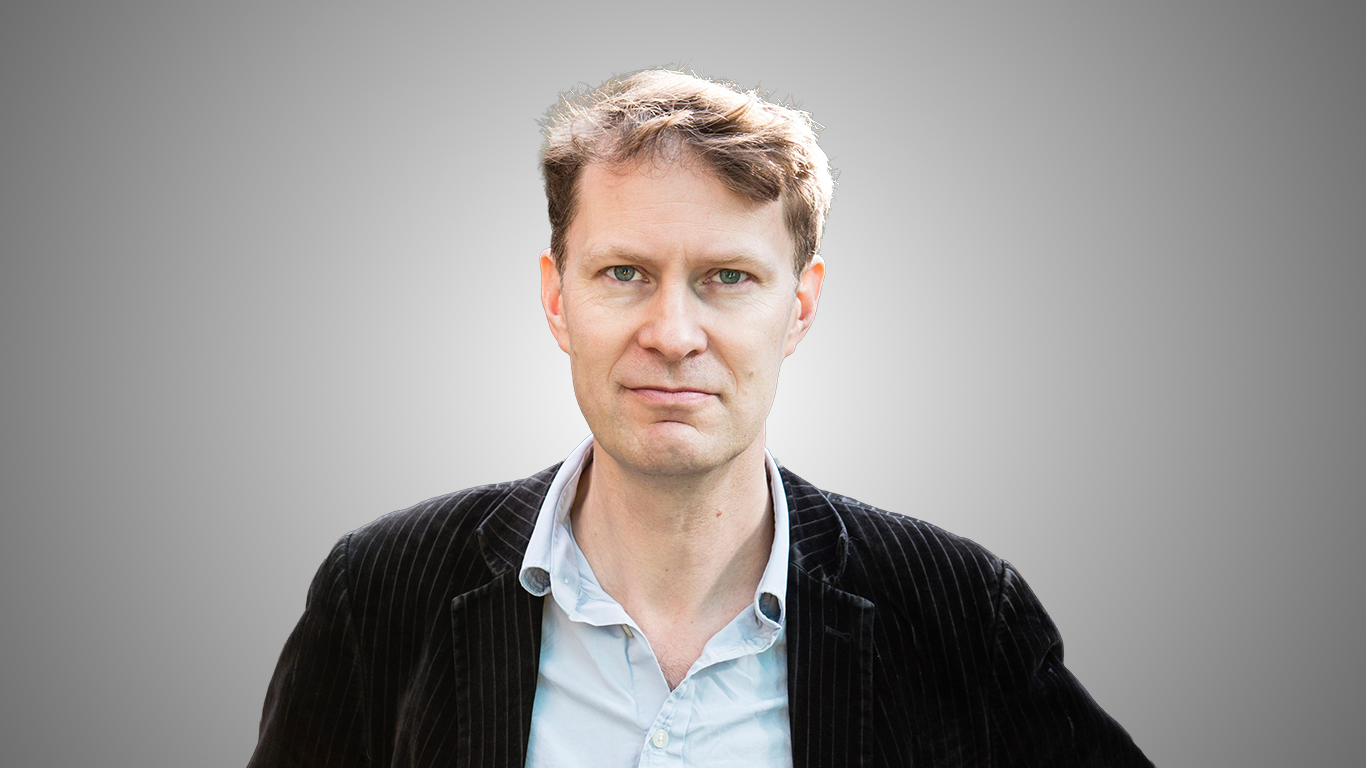
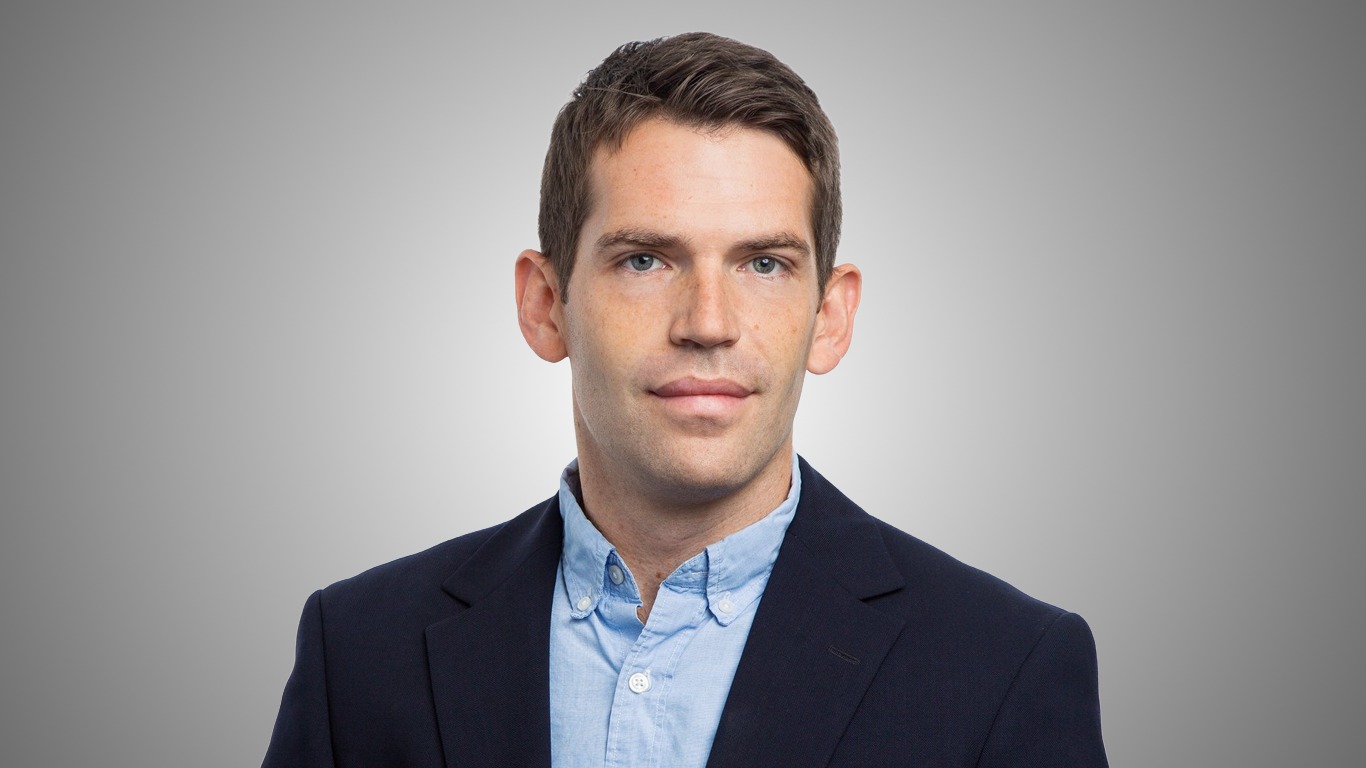
“Russia should not be viewed as a state, but rather as an organized criminal clan” — Jeffrey Trimble
Jeffrey Trimble has worked for more than 35 years as an international journalist, editor, and media manager. He specializes in international broadcasting, strategic planning, and countering disinformation. Trimble is fluent in Russian; his workplaces include a stint as head of the Moscow bureau of U.S. News & World Report during perestroika, five years before the collapse of the USSR. For instance, he was in Moscow in 1987 when Donald Trump visited the Soviet Union for the first time. The current U.S. president wanted to do business in the USSR. After returning from that trip, Trump openly stated that NATO was a problem. That is why his current anti-NATO rhetoric does not surprise Trimble. He has almost no optimism about Russia and its trajectory.
He believes that after the collapse of the Soviet Union, everyone witnessed a peculiar synergy between the KGB, the remnants of the Communist Party, and organized crime. This interaction ultimately produced modern Russia. That is why, in conversations with friends, the journalist advises perceiving Russia not as a separate state, but rather as an organized criminal clan. Yet American diplomacy continues to see Russia as a center of power that is easier to deal with, so as not to immerse itself in the specifics of history and the complex developmental paths of other countries around it.
This way of thinking also affects how the United States tries to influence situations connected to Russia’s war against Ukraine. However, Trimble offers reassurance: polling in the United States shows that most Americans support Ukraine and assistance to it. “I’m glad to say that when I look out the window here in St. Louis, Missouri, I see snow. But I also see Ukrainian flags not only in my own yard, but in the yards of my neighbors too.”
In the podcast “When Everything Matters,” journalist Nataliya Gumenyuk speaks with Jeffrey Trimble about processes in contemporary Russia, his work in the Soviet Union, the Budapest Memorandum, the formation of a different view of Ukraine in the world, the Epstein case, and the Trump administration’s attempts to turn U.S. international broadcasting into a mouthpiece of propaganda.




Jeffrey, it makes sense to start with your experience as Deputy CEO of the U.S. Agency for Global Media (USAGM). You were responsible for the strategic management of U.S. international broadcasting, including Voice of America and Radio Liberty. That was when we met. Long before that, you also worked as Program Director of Radio Free Europe/Radio Liberty. Two years ago, I could not have imagined we would be discussing a topic like this. But a year has passed since U.S. international broadcasting began operating in a drastically reduced format due to complex legal proceedings. The projects formally exist, but it is no longer the scale it used to be. You have been following these developments closely. What, in your view, has changed over this year? How do you assess the situation, given your many years of experience in this structure?
It is unquestionably painful for me to watch an institution that, for 80 years, disseminated American values and high-quality news around the world be almost dismantled. Although operations have not stopped entirely, they have been drastically cut.
It all began in March 2025 with the appointment of Kari Lake, a fervent political supporter of President Trump, as the director of Voice of America. She came in with promises of reform, but within a month she announced her intention to shut down U.S. international broadcasting completely. Broadcasters were accused of bias and “left-wing radicalism” without any analysis of content or evidence.
In the case of Voice of America, the plan essentially worked: its broadcasting was practically halted. Because it is a federal government agency, the president’s decision to close it has direct force. However, due to lawsuits filed by employees, debates are still ongoing about whether the executive branch exceeded its authority vis-à-vis Congress.
With Radio Free Europe/Radio Liberty, the situation is more complicated. It is not a federal agency but a private company that receives grants from Congress. Thanks to that status, Radio Liberty, as well as the Middle East Broadcasting Networks and Radio Free Asia, managed to stay on air, although they are operating with reduced resources.
At present, Voice of America has preserved only minimal broadcasting in “strategic languages” that Kari Lake deemed legally mandatory: Dari and Pashto for Afghanistan, Persian for Iran, and Mandarin for China. All other language services have been shut down completely.
Indeed, as you noted, Voice of America employees filed a lawsuit. In it, they argue that Lake did not have the legal right to take such actions given the complex legal issues related to Congress’s powers. The case is still under review. So employees are still being paid; they formally remain on staff, but they cannot do their work and their programs are not on air. Probably the most important thing here is that over the past few months Kari Lake—trained as a journalist and a candidate who has lost twice (she ran for the U.S. Senate from Arizona and has political ambitions)—has changed her tone. She moved from plans to liquidate the broadcaster to the idea of turning international broadcasting into a propaganda mouthpiece for the Trump administration. In the services that remain, she is already pushing extremely biased content that does not present different points of view. It seems she is trying to introduce the same model in other networks as well, though so far she has not succeeded.
Back in 2020, a colleague of mine who moved from Hromadske to Voice of America noticed something strange. Reports about farmers in Iowa who passionately supported Trump produced a strong association for her with Soviet segments about agricultural workers declaring their love for the Party. Having experience working in Moscow, she instantly recognized those propaganda templates. Today, something is happening in the United States that is hard to believe: state propaganda is being introduced at the level of editorial policy, and influential outlets are easily surrendering their positions. We are seeing a crisis at The Washington Post and the appearance of openly promotional, complimentary pieces about the Trump family on major platforms. Previously we viewed control over media as exclusively a Soviet legacy and hoped that new generations would leave it in the past. But now the United States—a country with the strongest traditions of free speech—is demonstrating a rapid transition to open propaganda. I do not want to use the rhetoric of “you have the same thing as we do,” but I am genuinely stunned: do democratic traditions really have no immunity against such processes? How do you assess the resistance of the U.S. media community? Does it seem to you that the reaction to these threats is too slow and not tough enough?
Before World War II, media in the United States were extremely partisan, following the European tradition: by choosing a newspaper, you could easily determine a reader’s political views. Then came a period of conscious efforts to make the media balanced and objective. However, over the last twenty years we have observed a reverse process: the use of tools of authoritarian regimes to pressure independent press.
The best example here is Viktor Orbán’s strategy in Hungary. It consists of “capturing” the media through business structures loyal to the leader. In the United States we see similar trends: Trump allies, such as Sinclair Broadcasting or the Ellison family, are buying media assets and imposing their will on them.
To this are added exhausting lawsuits against The New York Times, The Wall Street Journal, or the BBC—an outright form of intimidation. We also see direct threats against journalists. If you look at data from Reporters Without Borders and the Committee to Protect Journalists, working as a journalist in the United States is now more dangerous than before because of existing threats.
Even state bodies, including the Federal Communications Commission, are beginning to pressure broadcasters over allegedly “biased content.” At the same time, the digital age is blurring the very concept of journalism. Today, 20% of Americans name TikTok as their primary source of news: when anyone with internet access becomes a “source,” the concept of journalistic standards collapses. As a result, amid information chaos and pressure, many people simply “switch off” from the news, considering it too depressing.
It is hard for me to wrap my head around this—this situation increasingly resembles Russia. I can find no excuses for American oligarchs. If Ukrainian media owners often acted amid an unstable economy, I expected much greater resilience from American billionaires. After all, they possess colossal resources. Often it is small media outlets that resist fiercely, while giants surrender. This raises a logical question: why?
You can understand fear for one’s business, but when we are talking about someone like Jeff Bezos, who has been the richest person in the world, the thought arises: “You are already the richest! Why do you need to bribe the president?” And that is exactly what shocks me—why do people who have so much power and are so rich still behave this way?
I understand they may lose something, for example, part of their government contracts—Elon Musk is a vivid example here, as his empire is critically dependent on government orders. But even that does not explain everything, because these figures are so large that they should be architects of the system, not its hostages.
Bezos and Musk are illustrative examples. Bezos’s wealth is to a significant extent tied to contracts with the U.S. government. In particular, Amazon Web Services (AWS) provides services to federal agencies worth hundreds of millions of dollars, including Immigration and Customs Enforcement (ICE), which has recently conducted large-scale raids across the country. It is precisely these contracts that give Trump a colossal lever of influence over the richest person in the world.
But beyond economic pressure, the state has an additional arsenal of tools: tax investigations, legislative changes, and licensing restrictions. Even oligarchs find it extremely difficult to resist a president who has the power to make their lives unbearable.
I would add one more point, broadly about the media. It concerns one of the president’s informal advisers who was far more public and prominent during Trump’s first administration. That is Steve Bannon, now a well-known conservative podcaster and influencer. Even during Trump’s first administration, Bannon’s words to members of the Republican Party were often quoted. He claimed that the enemy is not the Democrats and not the Democratic Party. The enemy is the press, the media. Therefore, the media must be broken. As a result, we have obtained not only an aggressive right-wing media environment but also a total undermining of trust in the institution of journalism as such.
Today even outlets at the level of The New York Times, which adhere to high standards, have far less public trust than they did twenty years ago. This is the result of a deliberate strategy of destroying faith in facts.
By the way, how are outlets like Fox News doing now? During Trump’s first term they supported him fully, yet they still remained a classic media outlet that in 2020 acknowledged his defeat, which greatly angered the ex-president. How do they cover the situation today, especially given the protests and the killings in Minneapolis?
Fox News is losing viewers because of a more traditional way of presenting news—a trend that has affected most classic media. As a result, the channel’s audience is noticeably aging.
Younger conservatives or people with more right-wing views are increasingly following not Fox News but influencers or, so to speak, sharper commentators and media platforms. For many, the channel now looks too restrained and cautious compared with new right-wing media that are aggressively pulling away the audience.
At the same time, Fox News journalists often provide quite professional and credible coverage of international events or national security issues. By contrast, the truly hardline conservative position is most evident in commentary and talk shows. Their popularity has grown over the last ten years across all cable news channels. There, people with strong personal views increasingly share their own opinions rather than the results of journalistic work with facts.
You currently live in Missouri, and before that you lived in Ohio—this is the Midwest, the “heart” of America and rather “red” states. Given the events in Minneapolis, where the situation spun out of control: are the United States truly so polarized that people live in two parallel realities? Or are these still different viewpoints rather than a final rupture of society? What does this polarization look like on the ground? What are the moods among people around you? If New York or Minneapolis are in shock right now, what is happening in your region?
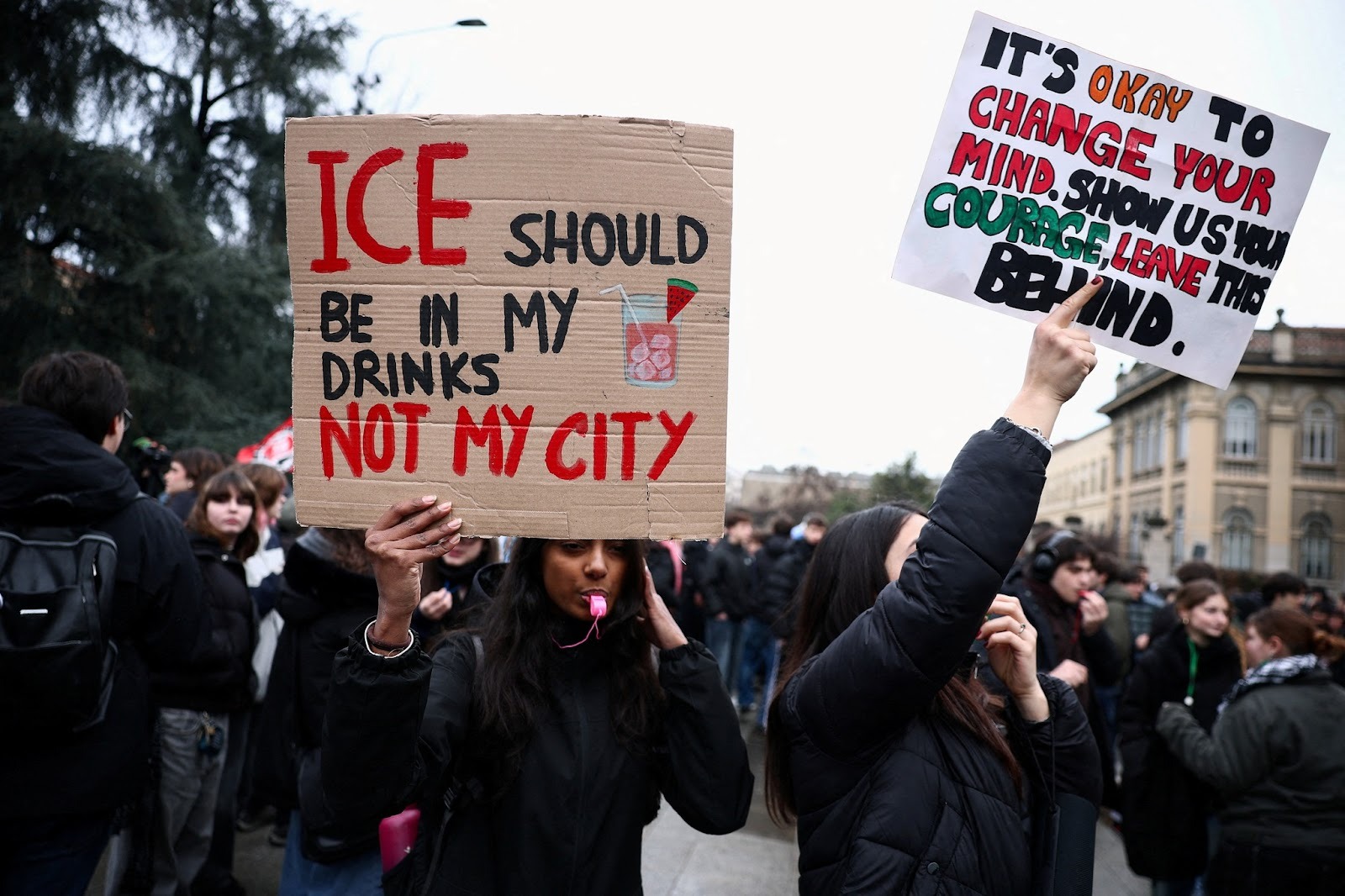
Today I would answer this differently than three weeks ago. Back then I would have said that the split in the country is only deepening, fueled by fragmentation of the media market: people consume only information that confirms their views, and a shared field of facts disappears completely. However, recent events have changed the picture. ICE’s harsh tactics toward undocumented immigrants and the killings in Minneapolis triggered a powerful backlash. According to polls, even many Trump supporters were shocked by this brutality. Now the boundary between his ardent supporters and opponents on these issues has become less clear than before.
But there is another important aspect. Here in the Midwest, in St. Louis, the political arguments that the media live by are not as strongly felt in everyday life. There are liberals, there are transgender people—and all of them walk in parks, go shopping, sit in cafés, live their lives without the tension and conflict that are depicted in the news.
In everyday life people are concerned with ordinary things: the cost of groceries, the ability to find and keep a job, the ability to afford buying housing, the ability to pay for health insurance and medical care. These household issues unite Americans regardless of their political preferences. Outside protest sites, real life looks much calmer than media narratives about “two parallel realities.”
Speaking from Kyiv, we inevitably draw parallels with what happened to Russia many years ago. We want to understand: who is this “loud minority” in the U.S.? Of course, the countries are different, but when Trump talks about buying Greenland, it is impossible not to recall Russia’s attempt to annex Crimea. Back then, most people also just lived their lives, but there was a certain group that gladly supported the idea: “We will take this part of someone else’s land.” And in moments like that, you start thinking whether these people are simply the audience of the Joe Rogan show, or whether something in American society has truly broken. That some things have become permissible: now one can openly talk about kidnapping and annexing someone else’s territories. Does this mean the U.S. is also experiencing its own “Putin moment,” a stage when the rules of the game change, and it is no longer only internal politics but decisions that concern other countries as well? Or is it not that on that scale—are the media simply focusing attention on it?
About 20–30% of the adult population of the United States will support Trump and his allies regardless of their actions. They see him as a voice against a system that, in their view, has worked for the benefit of others for decades.
These are people who lost their jobs due to deindustrialization, who believe that government support programs for migrants or ethnic minorities come at their expense. For them, Trump’s messages are a kind of “justice,” although in reality they only intensify the split.
What you describe as a “Putin moment” has parallels. Trump is destroying established norms and taboos, justifying violence and aggression, including against other states. His words about Greenland, as well as his admiration for “strong leaders” who disregard international law, are part of a broader trend.
But it is important to understand: although this “loud minority” is very visible, it is still a minority. Politically, Trump and his allies have a solid electoral base, but they do not constitute a majority of Americans. Yet they create the most noise, and naturally they are the ones you hear.
For me, it is fundamentally important that, despite all the rhetoric, U.S. state institutions still preserve a certain balance. The judicial system, local governments, certain branches of Congress—not everything is completely controlled by one political force. That distinguishes the U.S. from Russia, where the capture of state institutions was almost complete.
Here I cannot help mentioning the Jeffrey Epstein case. You have long followed how American elites build foreign policy. It seems that the lives of the people who make decisions are not just background but an important element of political processes. Politicians’ biographies, their personal relationships, their circles, even sexual practices—all of this, as we see, can be part of a political game. Is there really a system to this?
For most Americans, the revelations about Jeffrey Epstein are a set of horrific facts about sexual exploitation and abuse. But for those who follow politics closely, it is also a mirror of how the elite functions.
Epstein was not simply a criminal—a sexual predator. He was a node in a broad network connecting business, politics, show business, as well as people who sought access to power and money.
At first, this case was framed as purely partisan: Republicans and Democrats blamed each other, but new materials show that the list of names is much broader. It includes representatives of different political camps, different countries—an entire elite ecosystem, from finance to show business, regardless of party affiliation.
In my view, the most interesting thing is what becomes visible after the latest disclosures. It becomes clearer and clearer how much this story goes beyond domestic U.S. politics. In documents, in the flight logs, in guest lists, we see many foreign names—people connected to different countries, including those that traditionally use kompromat as a tool of influence.
Among the structures in one way or another touching this network of support around Epstein, Russia occupies a special place. For the Kremlin, this looked like an ideal KGB-style operation: to gather vulnerable elites at one “crossroads,” obtain exhaustive information, and, when needed, use it, sowing chaos and destabilization.
Epstein and his circle, including Ghislaine Maxwell (whose family had long appeared in suspicions about connections with intelligence services), became an ideal channel of access to very influential people.
A gradual understanding is emerging that the Epstein case is not only a story about one criminal or a series of terrifying episodes of violence. It is also a story about the vulnerability of elites who make world-level decisions and about how this vulnerability can be used, including by Russia, for long-term undermining of trust in institutions and democracy. The fact that this context is finally becoming a subject of discussion I see as a positive shift.
I absolutely agree—this is a classic KGB scheme using a “honey trap” and other methods to control people in power. But in this case we see not only a special operation, but also how the system itself allowed a person like Epstein to remain unpunished for decades. He was protected; he was swept “under the rug”; very influential people continued to take photos with him and cooperate with him. It is important for us to keep in focus: this is not just partisan confrontation or a successful Russian operation. This is first and foremost a story about the ethics of people who make decisions at a global level. There are too many famous names in this case, and it lasted too long to write it off as coincidence. Is this not evidence of a systemic crisis of ethics among those who hold the greatest power?
The way influential figures are falling from pedestals one after another really does look like a symptom of a deeper crisis of elites—not only in the United States but in democratic societies in general.
This brings me back again to Soviet studies and to the experience of people who once fled the system. I mean, in particular, Yuri Bezmenov, a defector from Soviet intelligence services who once worked in structures close to the KGB. He described in great detail how Soviet intelligence viewed the task of “decomposing” a free society.
According to Bezmenov, the destabilization of democracies happens in four stages. The first stage is demoralization: to make people confused, discouraged, and filled with a sense of powerlessness in the face of reality. The second stage is destabilization: to gradually introduce into the system elements that truly tear society from within—undermining trust in institutions, intensifying polarization, stimulating radical movements.
When society is already weakened and unbalanced, the third phase arrives—crisis. A moment of sharp aggravation is created, which in a sense pushes the system to the point of collapse. And the fourth stage is what the Soviet side called stabilization or normalization. This is about installing in the affected country a leadership that fully suits Moscow—formally “legitimate,” but in reality dependent and controlled from outside.
If you look at the Epstein case from this perspective, it fits perfectly into the logic of long-term “active measures.” A sexual abuser with access to elites, systemic impunity, a network of influence that nobody wanted to touch—all of this created ideal material for compromising and blackmail.
I am deeply convinced that Russia saw in this story an opportunity to collect a colossal volume of kompromat and use it for years to systematically undermine the United States.
Jeffrey, this is a perfect moment to tell the audience in more detail why you follow Russia so attentively and critically. You worked as a Moscow correspondent for a major American outlet back in the USSR— in a position that implied constant and meticulous attention from the special services. First, I will ask you briefly to remind us how your experience in Russia was formed. You saw it different: you first got there in the late 1970s, witnessed perestroika and the period of major changes, and later observed the strengthening of authoritarianism. How would you describe the path this country has taken and what it has come to today?
Over the past decade, I have had to radically reconsider my own notion of what Russia is. The country I studied as a philologist and saw as a correspondent during perestroika has, in effect, ceased to exist.
My perception was formed in the second half of the 1980s. At the time, it seemed that despite all the rigidity of the Soviet system, it was still evolving toward openness and political pluralism—at least at the level of public slogans. That period created the illusion of “another Russia,” a country that supposedly was ready to become part of the democratic world.
I remember the atmosphere of the late 1980s: foreign journalists worked in Moscow, new topics opened up, people spoke more boldly; you could go to Kyiv, Vilnius, Riga and see mass rallies for independence. The KGB watched, but often did not intervene as harshly as before.
Looking back today, I understand that it was more of a pause than a real transformation. Perestroika created the impression that Russia was moving toward the rule of law, but inside the system there was still an accumulation of power in the hands of the security services and people connected to the security apparatus.
After the collapse of the USSR, we witnessed a synergy between the KGB (in its new form, the FSB), the remnants of the party nomenklatura, and organized crime. This mix produced modern Russia—a state in which legal institutions exist more as scenery, while real power is concentrated in the hands of a clan where there is no clear boundary between politics, security services, and crime.
That is why I now tell friends: do not think of Russia as an “ordinary” state. Perceive it as an organized criminal “family,” a criminal clan that owns territory, nuclear weapons, and a seat on the UN Security Council.
Such a comparison explains the logic of decision-making far better than standard categories like “authoritarian state” or “empire.” In a mafia structure, the main thing is maintaining control and impunity. Everything else—ideology, propaganda, foreign policy—is only an instrument to achieve that goal.
Unfortunately, judging by what we have seen in recent years—from the war against Ukraine to repression inside Russia—I see almost no grounds for optimism about real reforms in that country in the near future.
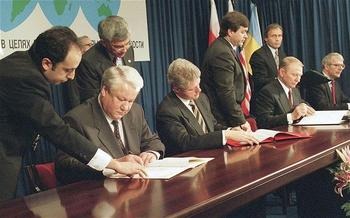
How do you explain the persistent pragmatism of American policy toward Russia? It seemed that after the collapse of the USSR, Moscow remained the priority partner for Washington, while former republics were often perceived as secondary players. While smaller countries, including Ukraine, spent years proving their right to agency, the U.S. built policy “through Moscow” again and again, as if the “decision-making center” were concentrated there. Yesterday I watched archival footage of Ukraine destroying its strategic arsenal under U.S. military supervision under the Budapest Memorandum. Now, when we see the real consequences of that step, it is impossible not to ask: is the current approach to Russia not a continuation of that logic? Although Trump’s actions now look like a radical deviation, are they not in fact another iteration of a long-standing tradition—when the interests of other countries are once again sacrificed to the “normalization” of relations with the Kremlin?
It is good that you used the word “deviation.” In fact, Trump’s behavior is not such a big break from the historical mainstream of American policy. It is rather a radicalized version of an old approach.
I will recall a telling moment. In early August 1991, two weeks before the coup attempt in Moscow, George H. W. Bush spoke in the Verkhovna Rada in Kyiv. In his speech, he warned Ukrainians about the danger of “suicidal nationalism.” That was a classic signal: “Do not rush toward independence, do not destabilize Gorbachev, we are interested in stability in Moscow.”
This speech is often cited as an example of how Washington related to the aspirations of the peoples of Eastern Europe and the post-Soviet space. Stability in Moscow and preserving the familiar channel of dialogue with a “great power” mattered more than the right of Ukrainians or Georgians to their own political agency.
If you look at Trump from that perspective, his actions are not an accident and not a personal whim. They are a radicalized manifestation of the same tradition: to negotiate with the “center” in Moscow, even when it means ignoring the interests of other states.
In other words, his policy is not a glitch in the system; it is simply another iteration of old thinking that has still not been fully overcome in Washington.
By the way, were you there then? Did you hear that speech?
At that time I was working as a correspondent in the region and remember the atmosphere very well. Even if you were not sitting in the hall, the tone and content of the speech quickly became obvious—to Ukrainians, to diplomats, and to journalists.
For many in the region, it was a cold shower: at the moment when different republics were fighting for independence, when the right to make their own decisions was at stake, the key ally—the United States—was effectively calling on them “not to hurry” and not to destabilize the situation.
This is a very telling episode: it shows how deeply rooted in Washington is the habit of thinking in categories of a “great power,” rather than recognizing a real multiplicity of actors.
Trump’s fascination with “great leaders” has been noticeable since the 1990s: let us recall his public statements about various authoritarian rulers, his admiration for the image of the “strongman.” Back then, it was perceived as the eccentricity of a billionaire who wanted to be in the same club with the most influential people in the world. Today, this fascination has become part of American foreign policy. Through this lens, how do you assess the prospects of a “deal” regarding Ukraine? Trump often turns complex geopolitical processes into a show, but for the Ukrainian government it is not a spectacle—it is a matter of survival. To what extent, in your view, does your experience with Soviet methods of influence and the history of U.S. relations with Moscow help you “read” this situation? Is there a risk that Ukraine will once again become a bargaining chip in elite deals?
What I can say with absolute certainty is that sending people to negotiations about Russia who do not have a deep understanding of its history, politics, and methods of action is a huge mistake.
If key decisions are driven by people who do not have real experience working with Russia, they become easy prey for manipulation. At the beginning of Trump’s presidency, we saw how people with long-standing personal or business ties to him ended up in his advisory circle, but they had no serious expertise on Russia. That created preconditions for very dangerous steps—from attempts at a “reset” on the Kremlin’s terms to ignoring the positions of allies.
At the same time, in recent months there have been signs of a positive shift. Secretary of State Marco Rubio, despite all the controversies around other decisions, has significant experience working in the Senate, in committees that dealt with foreign policy and security.
A team of people is forming around him who better understand how diplomacy works and what Russia is in reality, not in television segments. It seems to me that control over the most sensitive negotiations is gradually moving into more professional hands.
This does not guarantee ideal decisions, but it provides a chance that Ukraine will not simply become a “bargaining chip” in someone’s personal “deal of the century.” In diplomacy, what matters is not only who signs the final document, but who drafts the text, who sits at the table during working meetings, who says in time: “This concession will have catastrophic consequences.”
If these processes are dominated by people who truly understand Russia and realize the stakes for Ukraine and Europe, the chances of a more responsible decision increase.
How do you assess the mood of the American public? It seems that society is generally tired of politics and constant crises, but at the same time we see a strange picture: a significant share of Republicans, including some Trump supporters, support aid to Ukraine. At the same time, the loudest voices in his circle are against it. Does it seem to you that the MAGA movement’s position is not monolithic? How do you explain this internal resistance among some “Trumpists” to an anti-Ukrainian line?
I am glad to say that, despite fatigue from endless crises, most Americans still sympathize with Ukraine and support the idea of helping it. Yes, the priority of the topic in the news has declined—the war has been going on for a long time, and some people try to distance themselves psychologically. But at the level of basic ideas about justice, support for Ukraine remains strong.
Even here in St. Louis, where I live—far from the country’s “political center”—I see Ukrainian flags in front of homes. Not only in my yard but also in neighbors’ yards. This is symbolic, but revealing: people who are unlikely to read analytics about the war every day still feel which side the truth is on.
At the same time, I must acknowledge: Russian disinformation campaigns have had partial success. The Kremlin managed to sow doubts in part of the electorate about the advisability of supporting Ukraine, especially among those who already distrust the federal government.
A separate direction is work with conservative Christian communities: Russia tries to position itself as a “defender of traditional values,” setting itself against the “decadent West.”
But it is important to understand: even within the MAGA electorate itself, there is no complete unity about Ukraine. There is an active minority that loudly repeats pro-Russian narratives, but there are also many who see Ukraine as a victim of aggression and support aid, even if they vote for Trump for other reasons.
This internal split on the right is one reason why attempts to fully abandon support for Ukraine encounter resistance in Congress.
Why did FSB “active measures” and Russian propaganda in general prove so effective specifically in the United States? This is a country that for decades lived in an atmosphere of harsh anti-communism, for which Moscow was the main enemy. In Ukraine, immunity to Russian narratives was built through historical experience—Holodomor, repressions, occupations. In Germany, there is a powerful reflex of self-criticism because of Nazism. But why in the U.S., where anti-Russian sentiments were also strong, do we see such vulnerability to Russian messages? How do you, as a researcher and citizen, explain that some people who previously saw Moscow as the main enemy now readily pick up its narratives?
Radical groups have always existed in the United States—on the left and on the right. They have never been the majority, but they have been part of the political landscape. For the Kremlin, they became convenient “points of entry”—audiences inclined to believe in conspiracies, distrust “mainstream” media, and seek alternative “truths.”
The real danger is not the mere existence of radicals, but the fact that Russian dpecial forces and related structures learned very early how to work with these environments—first through funding, then through media platforms, now through social networks.
When I was a young graduate student from the Midwest, I was sent on an exchange to the Pushkin Institute in Moscow—supposedly to learn Russian. Even then, it was clear that the whole program was part of a broader strategy: to select promising young Western specialists, integrate them into the Soviet environment, create a sense of “special access” to the country.
Later we learned that some of the teachers and curators were connected to the special services. They did not always recruit directly. Often the task was different: to form in a person a certain image of the Soviet Union, to cement contacts that could be used twenty years later, when that person became an editor, a politician, or a businessman.
Today the methods have changed technologically, but the logic remains the same. Through social networks, “communities” are created around conspiracy thinking, pseudo-spirituality, and anti-system movements.
Some people who during the Cold War saw Moscow as the enemy now do not recognize that many of these “new ideas” are just a reformatted old Soviet toolkit.
In conclusion, I want to ask a question on behalf of those Ukrainians who absolutely refuse to perceive the war as a “conflict of two sides” or as a purely geopolitical clash. For many of us, it is obvious that there is a systemic problem precisely with Russian statehood: this is not just authoritarianism or corruption—this is something deeper. How do you, having dealt with Russia for decades, explain the nature of this system? Can we talk about it without the language of hatred, but at the same time honestly—acknowledging that something is fundamentally wrong with it?
I try to avoid language that devalues people as such. It is important not to slide into rhetoric like “all Russians are like that” or comparisons with non-humans. But at the same time it would be dishonest to deny: there is a systemic problem with the Russian state that goes beyond what we usually call “authoritarianism.”
To simplify, I see modern Russia as a mafia structure that controls a vast territory. This structure may have a flag, an anthem, and diplomats, but at the core of its logic is not protecting citizens, not development, but maintaining the power of a narrow circle of people and their impunity.
In such a system, outward aggression and inward repression are not deviations—they are the normal, “rational” way of acting. This does not mean that every person in Russia is a criminal or an accomplice. There are those who resist, there are those who left, there are those who try at least not to participate.
But if you look at the state as an institution, it functions as an organized criminal clan. That is precisely why it is so dangerous to yield to the temptation to “normalize” relations with the Kremlin. This is not just another state you can reach an agreement with and then “tick a box.” This is a structure for which agreements make sense only when they can be used as an instrument for the next phase of manipulation and blackmail.
As we conclude our conversation, I want to ask a personal question. For many Ukrainians, the Chornobyl disaster became a moment of awakening about the Soviet system—its lies, contempt for human life, total irresponsibility. At the time you were still working in Europe, but later you ended up in the USSR as a correspondent and spoke with Andrei Sakharov and other people who tried to tell the truth about Chornobyl. Can it be said that it was then, through that accident, that your understanding began of what the Soviet system—and later the Russian system—really is?
In April 1986, I was still working in Rome as a correspondent. The first reports of the accident at the Chornobyl nuclear power plant came in fragments, but very quickly it became clear that the scale of what happened was being concealed.
I remember the feeling of anxiety in Western Europe—people feared radioactive fallout, talked about contaminated food, about unknown health risks.
I ended up in the Soviet Union a little later and saw the consequences not in the first days but in the medium-term perspective. For example, I had occasion to be in collective farms in Moldova where, several years after the accident, part of the harvest was still being destroyed, though no one explained to people why and on what basis.
One of the deepest moments was when I met with Andrei Sakharov after his return from exile in Gorky (now Nizhny Novgorod). We spoke about Chornobyl not as a “technical mistake” but as a symptom of the system. He explained that the very type of reactor had design flaws that were known about, but instead of modernizing or replacing it, the authorities preferred to conceal the risks.
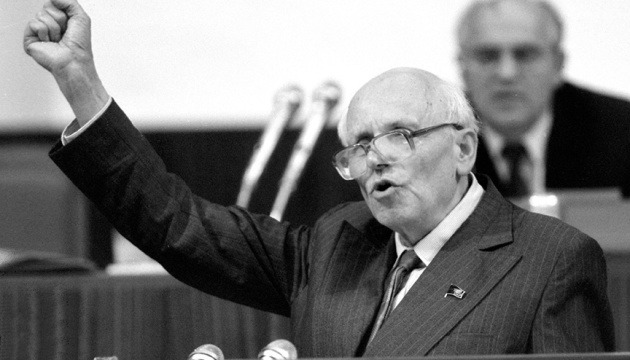
That conversation became key for me: I saw that Chornobyl was not just a tragedy of one plant, but a concentrated manifestation of the Soviet way of thinking. When the system’s reputation matters more than human life, catastrophes are only a matter of time.
We see the same thinking now in Russia’s actions—only the scale is not one plant, but an entire war.
Finally, I will ask a question that Ukrainians often address to Western partners. We live next to Russia, which again and again proves its readiness for aggression. From your point of view, how should we look at the future? Is coexistence next to such a state possible, or will we have to build our lives as if there is a constant source of threat beside us? What would you say to young Ukrainians who are forming their attitude toward Russia today?
I do not have the moral right to give Ukrainians recipes for how exactly they should relate to Russia—you have paid too high a price, and this is your experience. But I can share how I see things from the outside.
First, the desire to distance yourselves from Russia is entirely natural and understandable. You have every right to build secure borders—physical, cultural, and mental.
Second, it is important to remember: Ukraine’s future should not be eternally “tied” to Russia. Your horizons are much broader—Europe, global alliances, your own technologies, your own success stories. Russia is a dangerous neighbor, but it is not the only coordinate of your future.
Third, despite everything, I would advise not to let Russia take your humanity from you. When you are defending yourselves from aggression, it is very easy to start thinking of everyone on the other side of the border exclusively as enemies. But in the long term, that is a trap imposed by the Kremlin’s own logic.
It is much healthier to think like this: we are dealing with a dangerous mafia state and must defend ourselves from it by all possible means, but we do not abandon our own values—dignity, freedom, respect for human life.
Jeffrey, you had a unique position as one of the leading American specialists in international broadcasting and a person who knows well the context of the decision regarding the Budapest Memorandum. Ukraine gave up nuclear weapons in exchange for security guarantees that turned out to be paper. Now we live in a reality where these “guarantees” did not work. How do you view the Budapest Memorandum from the distance of time? Could other decisions have been made then? And how do you today relate to the idea of any new “security guarantees” for Ukraine?
The 1994 Budapest Memorandum concerned not only Ukraine but also Belarus and Kazakhstan—but it was for Ukraine that its consequences turned out to be the most tragic.
At the core of the approach then was the desire to reduce the number of nuclear states and avoid a scenario in which several new nuclear centers appeared on the ruins of the USSR. In Washington, the logic dominated: it would be best if the entire Soviet nuclear arsenal were concentrated in Russia, which was already recognized as a nuclear state.
There were isolated voices that asked: is it really safer to hand all that potential to Moscow? Should we not at least discuss another configuration—for example, leaving part of the potential with Ukraine or Kazakhstan under international control? But these ideas did not become mainstream.
At the time, it seemed that Russia was evolving toward greater predictability, that integration into international structures, participation in the G8, and other formats of cooperation would make war unlikely. In that sense, the Budapest Memorandum was a compromise born in a moment of optimism that now seems naive.
Today, after 2014 and 2022, we see how wrong those expectations were. I understand why, for Ukrainians, mention of the Budapest Memorandum sounds like a bitter joke. Formally, it was not a security treaty but a political declaration. In essence, it was a promise that, when the critical moment came, was not backed by actions.
If I were a Ukrainian politician today, I would treat any new “security guarantees” with maximum caution. Only real mechanisms—membership in defense alliances, concrete commitments regarding weapons and funding, long-term defense cooperation—can matter. Promises like “we respect your borders” without clear mechanisms of implementation are worth nothing.
Even though we talked longer than we planned, this analysis of the Russian system, American policy, and Ukraine’s future was extremely important. Your experience working in the USSR, in the U.S., and in international broadcasters provides a unique perspective. Thank you for this conversation—it truly helps to better understand what stands behind the events we are living through.
It is important for your audience to know: American society is not homogeneous. Yes, there are loud politicians and talk shows that question support for Ukraine, but there are also a very large number of people who sincerely believe that Ukraine has a right to freedom and security.
There is a well-known phrase that, in my view, describes the situation very accurately: if Russia stops fighting, the war will end. If Ukraine stops fighting, Ukraine will not exist.
Most Americans may not articulate it so clearly, but intuitively they feel it. And while that feeling is alive, you have allies—even amid all the political storms in Washington.