Even misogyny is explained by men. Why? | Luba Kassova
Media coverage of violence against women and misogyny is at its lowest level in the past nine years. Last year, only 1.3% of online content worldwide was devoted to these topics. These are the findings of a study published by AKAS, an international consultancy specializing in audience strategy. Its experts analyzed more than one billion online publications since 2017. The highest global readership and viewership for materials about violence and misogyny was in 2018: because of the Me Too movement, it became the peak moment for coverage of this topic. Yet even then, only 2.2% of all online materials concerned violence against women.
Researcher and journalist Luba Kassova said they were trying to find out whether there is a connection between the level of violence against women in a country and the level of media coverage of this issue. The researchers expected to see a direct relationship: the higher the level of violence, the more media would write about it. But they found no such connection.
In the podcast When Everything Matters, journalist Angelina Kariakina speaks with Luba Kassova about the shift in focus in coverage of the Epstein case, the harm caused by sensationalized reporting on such topics, the “Nordic paradox,” and the ignoring of women’s voices in stories about misogyny and violence against them.


Hello, Luba. Thank you so much for finding time for me and for all the work you do. You have been researching the underrepresentation of women in the media and their image in the news for a long time. What exactly prompted you to create the Tracker?
For me, conversations with you are an incredible pleasure. We are talking about the Global Tracker of Misogyny in News Coverage, our seventh report in the Missing Perspectives series. I say “our” because Richard Addy, the project’s chief analyst, and I worked on the research together. What prompted us? We saw that violence against women is a systemic global problem. We know from the statistics that one in three women experiences violence during her lifetime, and that in the past 12 months one in nine has experienced sexual violence. Online, the situation is even worse: six in ten women and one in five girls have faced digital violence. So we thought: if the media were truly unpacking this issue, an issue that affects such a huge number of people around the world, and if they covered it well, it could genuinely change the lives of millions, even hundreds of millions, of women for the better. Journalism can be a catalyst for positive change, and we decided to measure how well and how much attention the media devote to misogynistic harassment and violence against women. That became the main reason for our research.

I have worked in journalism for more than 15 years, and compared with the past, it seemed to me that in the last year or two coverage of sexual harassment had become much more extensive. Every media outlet has at least one or two stories a week. But your report shows that this topic still remains marginal and accounts for only 1.6% of all news content. Why is this happening? Is our perception wrong? After all, the numbers show that this feeling does not correspond to reality.
This is a difficult question, and I have two answers to it. The first is technical. Our study covered more than a billion online publications: we did not analyze television or radio. That is important to keep in mind, although I doubt the situation there is significantly better. We simply do not have the data to prove it. The second reason has to do with how our thinking works and how this coverage is constructed. Often these publications are quite sensationalized. They focus on individual cases, in which perpetrators are described as monsters, and they give too much attention to the acts of violence themselves. We react very emotionally to this sensationalism, so these stories become etched in our memory. That is why it seems to us that there are far more such materials on the internet than there actually are.
But as a continuation of this question: we have obviously witnessed a huge cultural shift. Men who committed violence or abused power are now being fired and are openly and publicly criticized. This practically did not happen before. And at the same time, this cultural shift has not been proportionally reflected in the media. Does this mean that the media are still mirroring the old system rather than the changes that are happening right now?

I would point out two things here. First, I assume you are talking about the Me Too movement, which gained momentum in 2018. That was when everything began to change globally. Perhaps the context in Ukraine was different, but in the world there was a noticeable shift: the scale of misogyny suddenly became obvious to everyone. Yet even in the peak year of 2018, only 2.2% of all online content was devoted to violence against women. So the media really do seem to be catching up with reality. Second, there is now a worrying backlash taking place around the world. After the surge of equality movements in 2020, a visible social backlash began around 2022. Today it is manifesting itself in the growing popularity of far-right governments around the world, with their rhetoric about so-called “traditional roles”: that a woman’s place is in the kitchen, that women should be mothers and should not interfere in public or political affairs, and so on. And the so-called manosphere (from the English “manosphere,” an informal network of online sites, blogs, forums, and communities that brings together various men’s rights movements and ideas of masculinity — ed.) has scaled these anti-feminist movements through social media algorithms. This process is already affecting the media: it is suppressing coverage of feminist topics, and the news increasingly reflects a conservative trend. Incidentally, one of the findings of our report was that the term “gender ideology,” a concept used by far-right conservative movements, is appearing in the news more and more often. From 2020 to 2025, the use of this term in the media increased 42-fold. In other words, the number of materials that normalize or silence violence is growing. And at the same time, the news does not reflect, or more precisely, it mutes, the changes that are actually taking place in society. You once explained this well using Ukraine as an example: women are becoming much more visible in power and in the military, but the media hardly show this.
This is interesting because we, as journalists, have found ourselves in a trap. We are forced to cover the actions of Trump, the MAGA movement, or European conservative forces because they make decisions. You simply have to transmit their agenda. By the way, a small note about Ukraine: our “I Am Not Afraid to Say It” flash mob emerged back in 2016, long before Me Too. This is something Ukrainian society can be proud of, because we were already very progressive then. But to return to your report: what is wrong with the coverage of misogyny on a global scale? What is the main problem?
We took 32 terms that describe different manifestations of misogyny: rape, sexual violence, sexual harassment, and so on. Then we selected 12 terms that were the most frequent and most accurately described this problem. We then used them for a content analysis of more than one billion news stories from around the world, from 2017 to the present. We wanted to understand exactly how many materials, and what share of the news overall, contained at least one of these terms. It turned out that, on average, only 1.6% of all publications mentioned at least one of them. This is an extremely low figure. Moreover, because of the conservative backlash I mentioned, last year this level fell to 1.3%, the lowest value in the past nine years. So one of the main problems is the very low volume of coverage, and globally it continues to decrease. The second problem is whose voices are amplified. Our analysis showed that men are quoted in materials about misogyny 50% more often than women. Men largely control this narrative and determine which stories enter the field of attention. The only exception was 2022, when voices were split equally. But if we look at the entire period overall, men were quoted 50% more often. And last year, already 60% more often. So the situation for women is getting worse. And the third point is the quality of the materials. When such topics do make it into the press, we see enormous professional problems in them.
But if we look at the list of countries, who is doing the best and who is doing the worst? And why?
We decided to make the report global and not go deeply into the analysis of individual states. We wanted to make sure our data were stable enough. When the volume of coverage of a topic is so small, we did not want to take the risk of drawing conclusions that might turn out to be inaccurate. However, we did examine something else: the connection between the level of violence against women in a country and the level of its coverage in that country’s media. We expected to see a direct relationship: the bigger the problem, the more people write about it. Unfortunately, we found no such connection. The highest levels of violence are recorded in zones of armed conflict, fragile states, and island countries. But despite this, the level of coverage there remained extremely low. In other words, the pattern we hoped to see simply does not exist.
That makes sense. If there is a lot of violence, society to some extent perceives it as part of everyday life. The media no longer present it as something shocking, it stops being news, and people simply get used to living that way. That is why I want to ask you about the “Nordic paradox.” What is it?
If your theory, that the more violence there is, the less society reacts to it, were correct, we would still see some kind of pattern, even if it were an inverse one. But there is no connection at all. As for the “Nordic paradox,” this is something we discovered during the research and were shocked by, because neither Richard nor I had heard of it before. The point is that the countries of Northern Europe have one of the highest levels of gender equality in the world, but at the same time they record one of the highest levels of violence against women, both by partners and by other men. Researchers have tried to study this phenomenon, but no one has yet been able to definitively explain its cause. I was struck by a quote from one academic article: the problem remains unsolved simply because not enough people are even asking themselves this question. When we learned that this paradox existed, we decided to look at how the media in the Scandinavian countries themselves cover it. We analyzed 59 million materials from this region and found that the paradox was mentioned in only 58 publications. In other words, in the Nordic countries, there is essentially silence about it. There is not even a discussion there about why, with high equality, such a high level of violence persists. The news completely ignores it. Of course, this is partly a problem of scholars communicating their findings poorly, but it is also a lack of journalistic interest in the topic. And that is incredible.

It really is very surprising. When I read the report, this was one of the points that struck me most. And another part of the study that turned out to be quite unexpected was the coverage of the Epstein files. You went very deeply into analyzing how these materials were covered around the world. What was most interesting to you personally in this case, and how do you explain it?
We analyzed just under a million materials about Epstein, starting from 2017. So it was truly a huge sample. We also studied key terms to understand the angles of coverage. I will give you the fact that shocked me most: 15% of these materials mentioned the word “power,” but only 0.1% mentioned the phrase “violence against women.” These are only two separate indicators. But overall we saw that the coverage of Epstein’s systemic violence against more than a thousand women and girls was very strongly focused on the perpetrator himself, on him and other men around him. In other words, it was a story about power, corruption, money. But it was not a story centered on the violence experienced, sexual exploitation, sexual crimes, and the incredible pain the survivors went through. Throughout this analysis, we saw that the media mostly describe events from the perspective of perpetrators, but almost never ask the question “why.” To really explain what is happening, we need to talk about the fact that women do not have the same level of power as men, that they are much more vulnerable to violence and exploitation. This is not about a few “monsters” who did something terrible, but about a very widespread and systemic problem, a system that effectively protects perpetrators rather than survivors. When there is no explanation of causes, all that remains is a dry description of events. And then there is almost no space for real change. You, as someone who lives journalism, know this even better: despite the huge network of accomplices, the only person who seems to have faced real punishment was Maxwell. It creates an impression of complete impunity for perpetrators: nothing changes.
Well, we saw that Prince Andrew did face serious political accountability. It is not a criminal sentence, but still…
Yes, but such cases are isolated.
But if we think about the coverage itself and simplify it somewhat, there is a general feeling that the story of the Epstein files was covered enormously. The story of Virginia Giuffre, one of the main survivors, was literally everywhere: on Netflix, on the BBC, in global news. But if you look more closely, it was not a story about Virginia herself, who was exploited while still underage, but rather about how Prince Andrew abused his position.
This is probably one of the most apt examples. Prince Andrew, Epstein, Maxwell, and the way Virginia was drawn into the system ended up at the center of attention. But Virginia Giuffre herself, the woman who ultimately died by suicide last year, was almost absent from the center of this narrative.
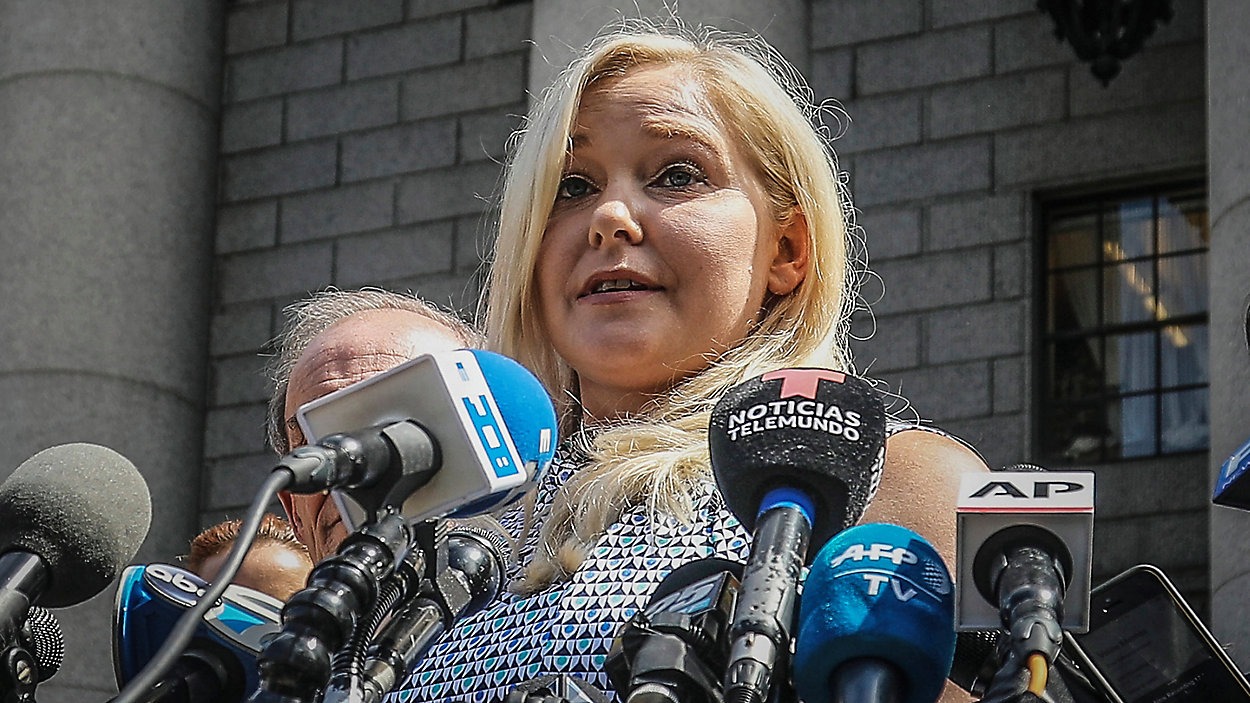
I have to tell the listeners about this. We discussed your report and the topic of misogyny in the media at the International Journalism Festival in Perugia. Before us there was a panel by the American journalist Amy Wallace, who co-authored Virginia Giuffre’s posthumous memoir. The hall was packed, and the audience listened with bated breath to who Virginia really was. But I am interested, and perhaps this moves our conversation into a more practical dimension: when you are doing such a story, the very fact of publicly condemning a person from the royal family is extremely important. Prince Andrew was stripped of his titles and privileges precisely because of the publicity. At the same time, it makes one wonder: did Virginia herself feel overwhelmed or traumatized by the way the media covered her story?
We cannot know for sure. But one thing is obvious to me: she was failed by the media, the legal system, and society as a whole. Perhaps that is why, in the end, she did not find the strength to go on living. I can hardly remember materials that focused on the consequences for her life or provided statistics about how many other women’s lives were broken and how this could be prevented. It simply was not the focus.
Her life beyond this legal process was truly difficult. Of course, we cannot speculate about the reasons for her tragic decision, but from Amy Wallace’s work we know that Virginia later married a man who also abused her. He took their three children, and she lost the ability to be with them and to control her own fate. This depressed her enormously. How does a person recover after something like that at all? This is an extremely important and very deep angle for a conversation. When the documentary series about Epstein came out on Netflix and it told more about Virginia, I caught myself thinking: “Wow, I did not even know she had a family or what happened to her life at all.” This is exactly the human aspect that we, the media, constantly lose sight of when we focus only on the famous names of perpetrators.
There is another important point here. When we did a qualitative analysis of the materials about misogyny that had the most links and shares, we wanted to understand exactly how these texts were constructed. The results were staggering: in 45% of the analyzed publications, not a single woman was quoted. None at all. And in 68% of the materials, the voice of the survivor herself was completely absent: the victim was not quoted and was not involved in the story in any way. So how can society feel empathy or compassion for survivors if they are not even part of their own stories?
That is a very good question. But there is another important factor here: in cases of sexual violence or harassment, many survivors consciously want to remain anonymous. In the case of Virginia and other women, they were effectively forced to speak publicly. They themselves admitted that they did not want to open up this part of their lives, but simply saw no other way to hold the guilty accountable and change something for the future. This is a huge challenge for such cases. It is completely understandable why women avoid publicity: they are protecting themselves from media coverage in which journalists unnecessarily dig into dirty details. And that brings me to the next question. You analyzed these texts in detail. Can you explain why global coverage is so problematic? Not only because of the lack of women survivors’ voices, but also because of the very way these stories are constructed.
Such coverage usually looks like a series of disconnected cases, as if these crimes are not related to each other at all and are merely the acts of individual “monsters.” The media do not show that perpetrators are in fact entirely ordinary people, and that the violence itself is widespread, systemic, and often supported by silent social norms. What do I mean? In the materials we analyzed, 85% of survivors are women, and 78% of perpetrators are men. Yet headlines are almost always phrased in the passive voice: “a woman was raped,” “a woman was killed.” It is not specified who did it. A false abstraction emerges, as if the crime happened by itself, and society simply does not realize that in the absolute majority of cases there is a man behind it. In addition, 82% of the materials contained no statistics at all. We strongly urge journalists: even when local data are lacking, use the huge body of global statistics to show the scale. But these figures are ignored. Likewise, 86% of articles contain no information about help for survivors, not even a basic hotline number. The media effectively erase the victim’s perspective. Instead, 60% of materials are guilty of excessively detailed, graphic descriptions of crimes that make the reader physically sick. Such details do not help the audience, but they can become instructions for potential attackers. I was shocked by a case in which the authors quoted verbatim the prompt that men wrote for artificial intelligence to generate pornography. Who does that help? A criminal can simply take this ready-made prompt and repeat it in any chatbot. In another text, brutal abuse was described in detail, down to a man urinating on a woman. Why do we need to know this? Language is a powerful tool, and the horror of a crime can be condemned without rummaging through dirty details. This is a serious professional failure. And again, as I already mentioned, the absence of a woman’s position in 45% of texts and the lack of the survivor’s own voice in 68% of materials completely erase the female perspective. Of course, women often consciously choose anonymity, and that right is inviolable. But even without revealing their identity, their opinion and lived experience can and should be included in coverage, if this is done delicately, respectfully, and without any pressure.
You also did something very important: you developed a checklist for newsrooms. It seems to me that this is actually the central part of your work, because it is a practical tool that can be shared with colleagues. I can honestly say: there are many journalists who sincerely want to do their work well and want their materials to be useful. But they simply do not know how. They say: “Well, we do cover these stories.” I saw this myself while working on topics of inequality or the rights of the LGBTQ+ community. The same problem kept coming up: supposedly, we write about Kyiv Pride or about radical groups attacking activists, so we are doing everything right. But this is a trap. We grab onto the loudest, most sensational, and hottest stories, while overlooking what actually creates this inequality and leads to such consequences. So, returning to your checklist: what is critically important? What should editors and journalists pay attention to when covering topics related to misogyny?
Strategically, a strong editorial focus is critically important for newsrooms. One reason these stories remain underrepresented is that the male gaze has historically determined what is considered news at all. Leadership positions in the media were long held by men, and they were the ones deciding which topics were priorities. To change the situation, we need more women in editorial positions and more women’s perspectives in journalism itself. One of the best ways to put this into practice is to launch special editorial projects. For example, The Guardian has a separate ongoing series on domestic violence. They systematically publish cases, statistics, and research. This is a wonderful example of a strategic approach. If we are talking about a reporter’s daily work, it is extremely important to use statistics to prove that we are not dealing with isolated cases. These problems permeate every society: in Ukraine, where you are now, in the United Kingdom, where I live, or in Bulgaria, where I am from. The scale is very similar everywhere. It is also necessary to involve more women as experts: academic researchers, social workers, nurses. We almost never hear the voices of the latter. It is not necessary to interview only chief physicians, especially if those positions are mostly held by men; the experience of nurses in such topics is invaluable. At the same time, a focus on the personal story of the survivor is no less important. Show not the perpetrator’s actions, but the consequences: what this trauma is, how it destroys a family, how it affects the future, the ability to work and concentrate. How it changes life at all. Of course, it is important to look for solutions in such topics, to show what can be done about this. For example: which countries have made progress in combating certain forms of violence against women? How exactly did they manage it? Or perhaps some individual cities in the world have successful experience. We need to create more explanatory materials about why this happens at all and how gender inequality manifests itself in practice. And finally, a basic but simplest rule: always offer help. If someone reads your material and it triggers them, they should immediately see contacts of organizations or hotlines where they can get real support. Even implementing this minimal step would already be a huge positive change for the media.
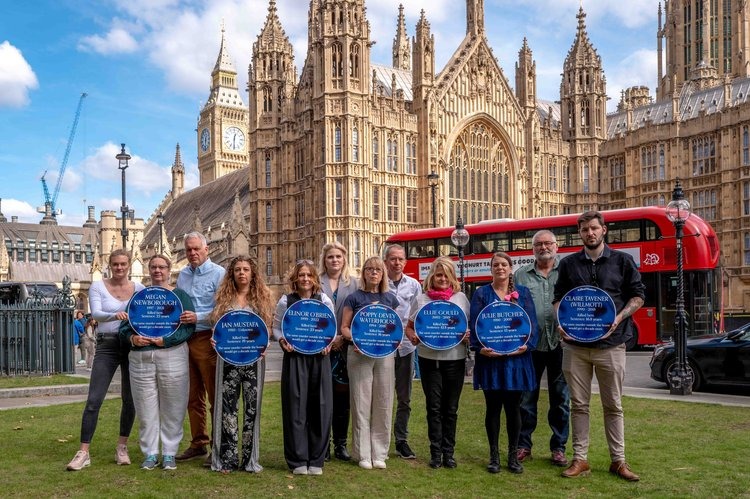
Where do this level and this type of coverage that we have today ultimately lead us? What kind of world are we, so to speak, recreating again and again through this kind of journalism?
Essentially, this approach leads us to a world suffering from amnesia. Every time another tragedy happens, the media treat it as an isolated, unique case, as if it happened for the first time. When society is in a state of such amnesia, and this is very much like Groundhog Day, we are forced to experience the same horror again and again. Under these conditions, there is no room left for real shifts, because all the media do is dryly describe events while completely ignoring the links between them. This is the trap we are trying to break out of. Our goal is to step out of the cycle of constant repetition, superficial descriptions, and forgetting, and finally move toward a world where we see systemic interconnections between things and consciously pursue global change.