Iran at War. What Is Happening Inside the Country?
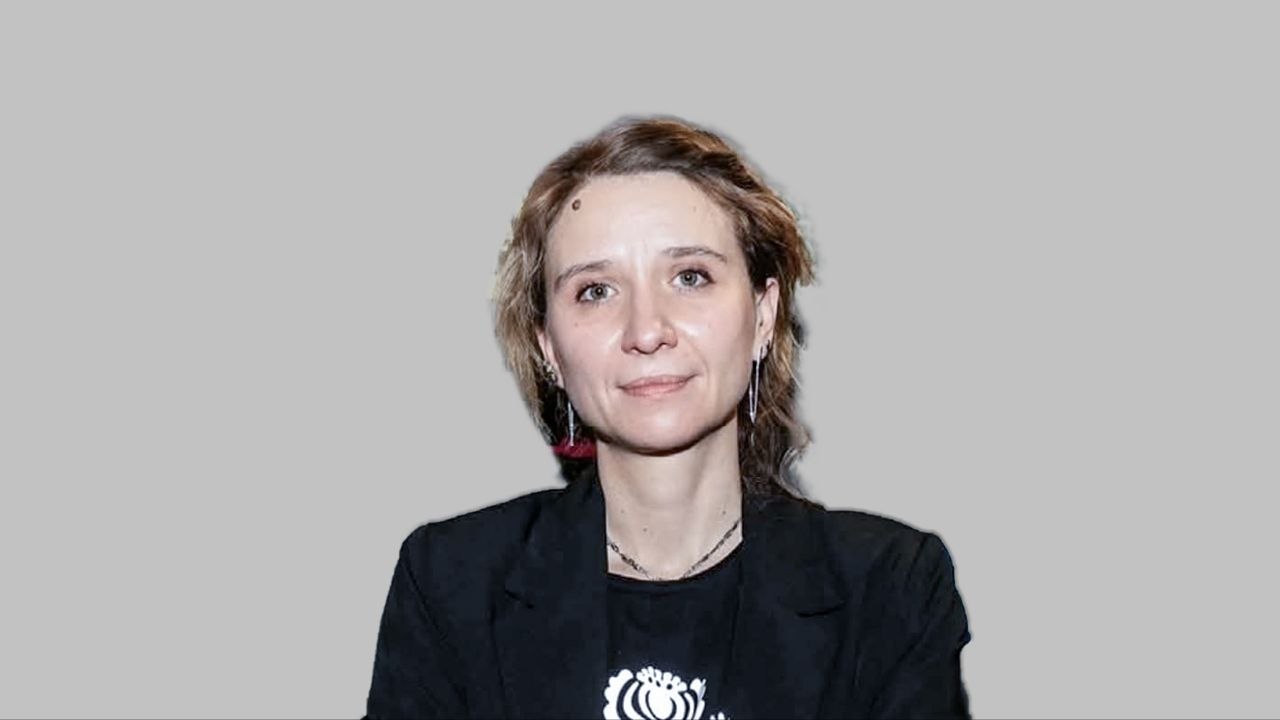
Colombian journalist Catalina Gómez has lived in Tehran since 2007. She first came to Iran because of her deep fascination with the Middle East. Her focus is reporting from military conflicts in the region. Gómez has also covered several presidential elections in Iran and the mass protests during the Green Movement in 2009. Since Russia’s full-scale invasion of Ukraine, she has regularly traveled to the front line to report and has periodically lived in Kyiv. On the first day of the U.S. and Israeli military operation against Iran, Gómez was leaving Ukraine and waiting for her passport in Poland. After receiving her documents, she flew to Turkey, which shares a long land border with Iran. From there, she entered Iran by car and reached Tehran on the third day of the war. There, Gómez saw people living in constant fear. Because of numerous strikes on military bases, police facilities, paramilitary formations, and sites connected to Iran’s nuclear program, ordinary residential neighborhoods were also suffering. Military commanders and people connected to the regime were also being targeted, while no one ever knew for certain who their neighbor was or what was happening in the building next door. Iranians were not receiving information about how to behave, including during drone attacks. So Catalina Gómez had to explain what drones typically sound like, what the danger is, and how people could protect themselves and their families during UAV attacks. She even wrote a post on social media saying that this was precisely the nightmare Ukrainians have been living through since the beginning of the full-scale invasion, including because of Iranian Shaheds.
In the podcast When Everything Matters, journalist Angelina Kariakina speaks with Catalina Gómez about the lives of ordinary Iranians during the current war, how their moods have changed, how they perceive the death of Iran’s Supreme Leader Ali Khamenei and their attitude toward Trump, women without hijabs and in leggings going for runs, what has happened to Iran’s nuclear program, and the drone industry connected to the Islamic Revolutionary Guard Corps.


Catalina, we have wanted to talk to you about Iran for quite a long time. You are one of the very few journalists, if not the only one, working there on the ground and able to see what is happening with your own eyes. Of course, the first thing I want to ask is this: what does it look like for people there, at the level of everyday life?
I am not the only one, but I really am one of the few. There are still reporters from the West, Turkey, Arab countries, and China there, though their voices are isolated. I think no one can feel the pain of Iranians more deeply than Ukrainians, especially those who live in big cities such as Kyiv or Odesa. These were also attacks from the air, but with one difference: aircraft were circling over Tehran nonstop. It was that roar that frightened people the most, because the city had no sirens and no shelters. In effect, almost the entire population found itself in total isolation, cut off from the global internet. We, the journalists, had special SIM cards for communication and reporting, while Iranians were left only with the domestic network. Through it, people in border regions of the country would report that aircraft were approaching. Then each family had to decide on its own whether to keep sleeping or stay alert. People were very scared. Because even when the official targets were military bases, police facilities, or nuclear sites, the scale of the strikes was so large that residential neighborhoods were hit too. The anxiety was also oppressive because people connected to the regime were being targeted, and you never know in advance who your neighbors behind the wall are or whether it is safe to stay in the building next door.
Through the dizzying speed of global events, this may already feel as though it is behind us, but I still want to return to the day Iran’s Supreme Leader Khamenei was killed. For the world, it was a staggering shock. Were you in Iran at the time?
Actually, at that moment I was just leaving Ukraine. When the attack on Iran began, I was in Poland, where I was getting my passport. I managed to reach Iran only on the third day of the war: first I flew to Turkey, and then crossed the border by car. So I reached Tehran only on the third day.
If I am not mistaken, Iran confirmed Khamenei’s death only almost a day later, or even a day and a half later?
Yes, his death was officially announced that same evening. That night was extremely traumatic, and people’s emotions were very different. It was probably the most critical moment of the entire war, because that was how it all began: with a strike on the complex where the Supreme Leader’s residence and office are located, in what is effectively the very heart of Tehran. It is important to understand that the attack happened on Saturday morning, which in Iran is the first working day of the week. Thousands of people were in the city center and saw the aircraft and huge bombs flying toward the complex with their own eyes. Ukrainians can easily imagine this. These were not ordinary missile strikes, so for the residents of the city it was a profound shock. Memories of the January protests, brutal repression, and thousands of deaths instantly came back, which is why society’s reaction was so deeply contradictory. Some nurtured the hope that this strike would change the country’s fate and bring the freedom they had dreamed of. Others were categorically against the war, even though they rejected the regime. Many people admitted that they secretly felt joy at the news of Khamenei’s death, while others sincerely cried. Society was split in half at that moment, although later, as the war unfolded, these moods began to change.
If the word “strange” is even appropriate here, then this whole war, and the way it is being waged, really does seem bizarre. At times it is simply impossible to grasp what is actually happening: there are entire weeks when everything around you is shrouded in a dense fog of uncertainty. But let us return to what Iran was living through from within. I remember that after the top of the regime was killed, many people felt a glimmer of hope, a hope that the ice had finally broken and irreversible changes would begin in the country. Especially since different centers of influence have always competed within the Iranian leadership. Looking back at those days now, why do you think the regime did not collapse? What keeps it standing, and what actually protects it from falling apart?
I think the regime had prepared in advance for this fatal moment. In the end, everything that had been happening in Iranian politics over the past decade was a hidden preparation for the day when the Supreme Leader would no longer be there. At the same time, they were also calculating the scenario of a major war. This system has never rested on one figure or a single authoritarian leader. It is an extremely complex architecture in which different centers of power carefully monitor one another, balancing across different levels of governance. The twelve-day June war with Israel in 2025 was also an important hardening experience before the current confrontation. Back then, the authorities were far less prepared and were caught off guard. But after those events, both the country’s leadership and society itself were already living with a clear sense that this was only the calm before the storm. So they had time to strengthen the vertical of power and build a chain of command in which, if one link was killed, another would immediately take its place. They had a clear plan for how to govern the state without the Supreme Leader. The country is now temporarily ruled by a triumvirate: parliament, the National Security Council, and one other key figure. In addition, in recent years the Islamic Revolutionary Guard Corps has monopolized control over the country. So even if people are disoriented and have no idea who their new leaders are, even if they have never seen Mojtaba Khamenei or heard his voice, they clearly understand that the steering wheel of power is in the reliable hands of the IRGC. People are confused, rumors are everywhere, but one thing is obvious: the country remains governable, and the authorities are still holding the line. At the same time, I am barely mentioning the president. The reason is that over the 47 years of the Islamic Republic, elected offices have changed. Today the president is more like a prime minister who deals with everyday routines: the economy, roads, healthcare. But he does not command the defense sector and does not make strategic decisions. Even the foreign minister, although appointed by the president, is effectively subordinate to the Supreme National Security Council. The president is only one of its members, not the one who has the final word. It is this multi-layered, flexible system that allows the regime to withstand even the most difficult moments so firmly.
It seems to me that many Ukrainians find it difficult to fully grasp what it means to be such an enormous country. Iran is a vast state in terms of both territory and population, so any tectonic changes there do not happen instantly.
I think Iranians could feel that too, because in terms of scale they are far ahead of us. By the way, when this war began, Ukraine had somewhere around 42 or 43 million people?
Well, more like 38 million, roughly.
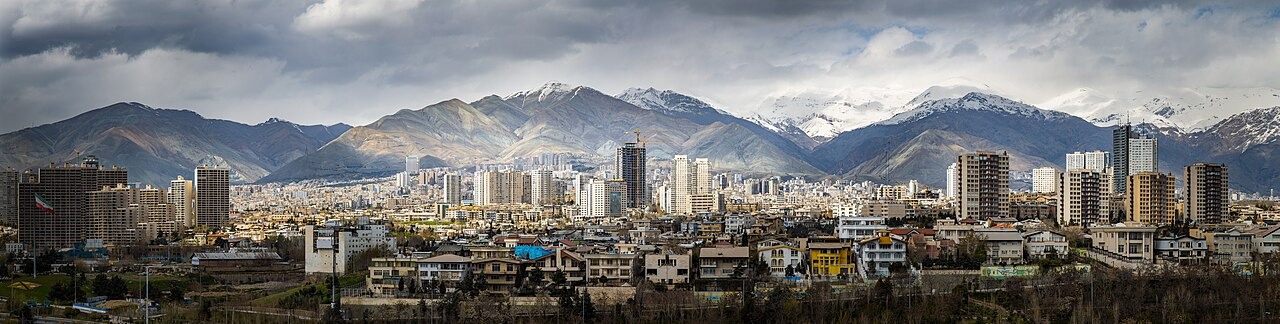
And Iran has more than 90 to 92 million people, which is truly an incredible number. If Ukraine is considered large by European standards, Iran is at least three times larger in area. The country also has an extremely complex geography: majestic mountain ranges and rocky terrain that have long served as natural protection. It is in these inaccessible rocks that secret underground complexes have been built for years, real micro-cities where missile arsenals and nuclear program facilities are hidden. The Islamic Republic, especially after the fall of Saddam Hussein’s regime in 2003, prepared for exactly this kind of scenario quite seriously and consistently.
They learned the lesson of Iraq. What is interesting here is something else: what role does society play in all of this? Although we understand that the term “civil society” needs to be reconsidered when applied to Iran, given how harshly any civic activity is suppressed there. At the same time, Iranians are incredibly passionate and brave people. They prove it constantly: every few years they take to the streets again and again, desperately fighting for their rights. But I am making this clarification deliberately, so that we in Ukraine can clearly imagine what a social movement means in the Iranian context.
The very idea of civil society is precisely what the Islamic Republic has been mercilessly fighting for decades. Any independent associations capable of coming together and demanding reforms come under attack. I remember that even twenty years ago there were women’s movements in the country: they defended their rights and tried to create platforms for protection, but the authorities consistently burned out those shoots of democracy through arrests, persecution, and prison. And yet people find ways to unite. There are invisible communities of like-minded people. Even without direct interaction, they are held together by a common goal for which they continue their quiet struggle. But the very definition of the civic sector in Iran is highly ambiguous, because it is effectively split into two camps. If a structure operates inside the system and agrees to compromise with it, it is allowed to exist under that label. But if you find yourself outside the regime’s ideological framework, creating even a small legal association becomes extremely difficult, and often simply impossible.
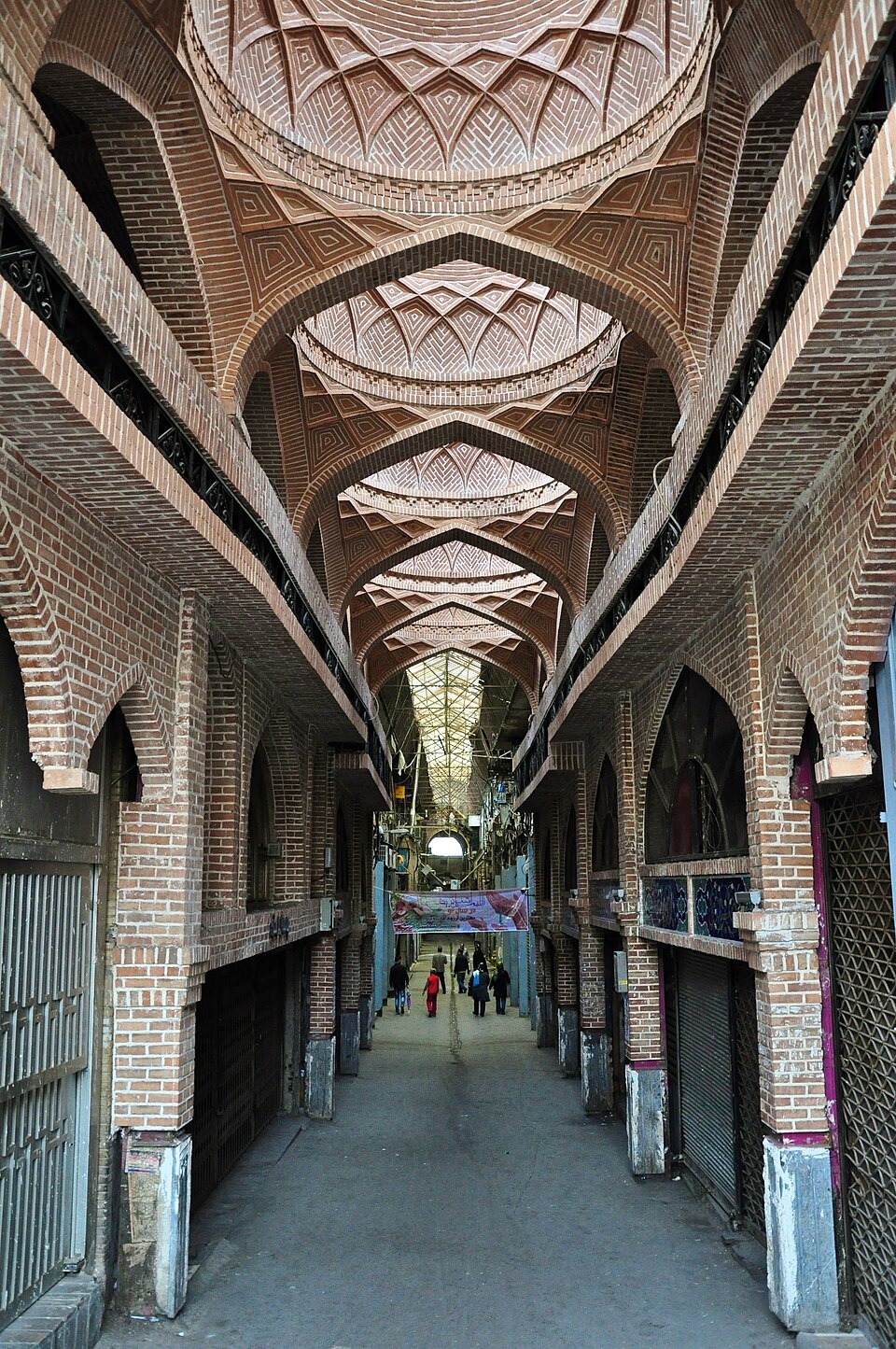
Of course, most of this exists semi-underground. But I want to look more deeply into the system of internal counterweights in Iran and understand who actually has real leverage over events in the country. We know that one powerful force is big Iranian business, especially the Bazaar, the influential environment of merchants. It was one of the driving forces of the winter protests. What is their position today? Clearly, this is not a monolithic group, but still: where do representatives of small business and merchants fit into this war? Have they also taken a wait-and-see position, or are other processes maturing inside this community?
What is happening now cannot be described in simple terms. The January explosion largely triggered an economic collapse: wild inflation and jumps in the dollar exchange rate pushed people to the edge. At that time, society openly said it was tired of the system and of politicians destroying the country. That feeling has not gone anywhere, and chronic distrust of the authorities remains. But now, for many people, another priority has come to the fore: the survival of Iran itself and its defense against an external threat. During the intense fighting, the Bazaar was closed for a long time. Now, as shopkeepers gradually return to work, everything is overshadowed by an animal fear of a financial abyss. Because the destruction of the economy, in my view, will become the most painful problem of the coming months, when the full scale of the losses becomes visible. Still, the Bazaar, as a fairly traditional and conservative environment, thinks in somewhat different categories. In Iran, national pride and respect for statehood have very deep roots. So now, in private conversations or outward behavior, there is no sense of readiness to return to the barricades. The impression is that even while not supporting the Islamic Republic in its current form, the merchants stand firmly for Iran itself as their homeland.
That is interesting. Of course, there can be no direct comparison here, but for many Ukrainians this logic will be entirely understandable if we look, for example, at the level of support for Zelenskyy. Even among his harshest critics, including in the context of future peace negotiations, many people still support the institution of the presidency as the embodiment of the state itself.
Full parallels should not be drawn here, but there is a certain similarity. You are defending your home, and at that moment the leader represents the country for you and fights for its unity. In a sense, it is a similar situation. People in Iran also understand that the country has many problems and that many dislike their leaders. But right now, for many of them, the main thing is to defend Iran itself as a state.
So can we assume that the moment chosen by the United States and Israel for the strike, when they were presumably counting on the regime’s rapid collapse, turned out to be the wrong one? Despite the recent brutal protests and such a large-scale internal opposition in the country.
It is hard to say for certain what their calculations were. Of course, after the January upheavals it was obvious that the system had cracked. Even some former supporters had been shaken, demanding answers from the authorities for their actions. Here it is worth making an important clarification. Even if we do not rely on HRANA human rights data about 7,000 victims or Trump’s claims of 42,000, but only on the official figures of the Islamic Republic itself, we are talking about 3,117 people killed. That is an enormous, horrifying number for such a short period of time. And all of these people died during the protests. So the scale was enormous, and society really was very angry. We saw protests at every level of society and literally in every small city in Iran. It was not only about big cities or privileged or middle-class groups. The protests spread to very poor areas and small towns where people had never before even thought of speaking out against the Islamic Republic. These people also saw the authorities killing protesters or throwing them into prison.
That is probably why Washington and Tel Aviv decided that the moment had come. But they failed to account for two fundamental factors: powerful Iranian nationalism and the high degree of the system’s own preparedness for defense. Especially if we analyze the steps with which Tehran responded to the challenge from the United States and Israel. There was no improvisation in its actions. The Iranian leadership had been talking about this exact scenario for years: closing the Strait of Hormuz and striking the other side of the Persian Gulf, including Dubai and Saudi Arabia. That long-cultivated strategy was exactly what was put into practice. I think that when, with the first salvos of the war, the regime became convinced that its ability to strike back was real, it felt its former confidence and strength again.
I have two questions then. The first is: what is the attitude toward Trump now, and what is his reputation in Iran? It is clear that there are very different groups within society, and we know about all those huge billboards and graffiti in Tehran saying “Death to America” or “Death to Israel.” But how is Trump perceived as an individual political figure, especially by those Iranians who oppose the regime and take part in protests?
Among the protest community, the split was so deep that even close friends who equally wanted the Islamic Republic to fall stopped speaking to one another because they had different views of the role of the United States. During the war, this became especially noticeable and, to be honest, very striking. Some insisted that he was the only one who had finally dared to intervene in order to save the country and bring long-awaited change. Others objected: “This man is insane. They are destroying our home without any strategy, attacking without even understanding what goal they want to achieve.” People saw the country being destroyed. When the police came under attack, the police that are associated with repression but also provide basic law and order, people started asking: “If something happens, who are we going to call? If there is a robbery or something else?” This was already about basic survival and the functions of the state. The mood shifted especially sharply after Trump’s loud threats along the lines of “we will send you back to the Stone Age” or promises to destroy energy infrastructure and dams. More and more people began to understand that this was not about freedom, rights, or protecting Iranians, but about U.S. interests and Israel’s interests. People saw that very clearly. Of course, I still meet people who like Trump. But there are fewer and fewer of them. For supporters of the regime, he predictably became the absolute embodiment of the same “evil” they traditionally associate with the West. In addition, there is now a very widespread view in Iran that Trump is not acting independently but has effectively fallen under Netanyahu’s influence.
So Israel is perceived as the greater evil?
No, not exactly. For the Iranian power vertical, Israel is undoubtedly the main enemy. But at the same time, there is another view among people: many are surprised by how naive Trump turned out to be in trusting Netanyahu. Israel has one of the most powerful armies in the world, and they could not have failed to understand that Tehran would respond exactly as it did, that underground citadels in the mountains are not so easy to destroy, and that the country would survive. So quite a lot of Iranians came away with the impression that Trump had simply recklessly yielded to someone else’s influence.
As for the strikes on neighboring states, the footage of drones over Dubai was mesmerizing in its surrealism. But if we explain this for Ukrainian readers: why did Iran attack Dubai at all? Why the Emirates or Qatar?
The main reason is the U.S. military bases deployed there. At least this is the thesis voiced on the streets by regime supporters, and the same one repeated tirelessly at the nightly mass mobilizations that have not stopped since the beginning of the war. Every day, the authorities gather people in the central squares of Tehran and other cities: flags, slogans against Israel and America. All of this has become a daily ritual. On specially built stages, speakers appear every evening and promote the key narrative: America must leave the region completely and irreversibly. Tehran had previously threatened strikes on facilities in Bahrain or Kuwait, but the real shock was that civilian infrastructure in major cities came under threat: in Dubai, Doha, and other cities in Qatar. This caused particular surprise, because Qatar and Oman, which also came under attack, had traditionally been considered among Iran’s closest partners. Relations with the Emirates had always been somewhat more tense, but at the same time a significant part of the Iranian economy passes through them. Under severe global sanctions, the country cannot import goods directly. The survival scheme works like this: many goods are first brought into Dubai and only then re-exported to Iran.
Yes, in Iran it can sometimes be difficult to find things on the official market, and many people are used to constantly traveling to the Emirates.
Dubai’s own economy is also closely intertwined with Iran. It holds not only the fortunes of the wealthiest Iranians, but also the capital of people integrated into the system of power. The entire financial life of the republic passes through the Emirates in one way or another, so for local business they have a sacred significance. That is why Iranians were asking: why strike Dubai? The consequences came quickly. The Emirates began massively canceling or simply refusing to issue visas to Iranian citizens, and many Iranians now have serious problems there. Thousands of Iranians live in Dubai. Almost every wealthy Iranian has an apartment there. So no one fully understands this strategy. Perhaps the idea was to pressure these countries and force them to push the Americans out of the region. But the consequences of the strikes on Qatar and the Emirates turned out to be very serious for ordinary Iranians, for people who have businesses and effectively keep the economy moving. For example, there are shops in Iran that sell hard-to-find imported goods: European mustard, good olive oil, or other foreign products that do not enter the country directly. And now people are being told: forget about this for a while, because nothing is coming from Dubai anymore. This remains an open and painful issue. Although, again, in Iran you can still find almost everything. It is more about certain more “luxury” products or things unusual for local culture. If mustard suddenly disappeared in Ukraine, everyone would notice, because it is on every table. In Iran, such products matter mostly to expats or to those who have lived or studied in the West for a long time.
But speaking more broadly, there is a great deal of criticism inside society regarding the authorities’ military decisions. And not only from opposition-minded citizens. Even within the corridors of the system itself, there were fierce disputes over how exactly the country should respond to the challenges. Here it is important to understand that the response to the attacks was fully controlled by the Islamic Revolutionary Guard Corps. They were the ones deciding what to do and what targets to hit. At that moment, serious disagreements also existed inside the system.
You just mentioned that no one fully understands the logic of events or Trump’s plans. Perhaps you saw the New York Times article about Mahmoud Ahmadinejad and the alleged plan to bring him back as Iran’s leader? For those who remember that period and understand Iran, this sounds insane. What do you think about it? Why him specifically, how plausible could it be, and was there any reaction? Can you imagine Iranians accepting him again, especially now that he is under house arrest and positions himself as an opponent of the regime?
Even system analysts and commentators admitted before the January events that, whether people liked it or not, Ahmadinejad remained the most popular politician of the Islamic Republic. Of course, not among the educated elites, but among the working class and in the provinces. He was a classic populist: he talked about helping people, about oil money for the people, and about improving life. Ordinary Iranians felt that he was closer to them than Tehran’s religious or political elite. He was “one of us.” Even now, he sometimes meets with people. Although after two presidential terms, he was president from 2005 to 2013, he had to leave. And in 2017 he was not allowed to run again. The system does not let him in. At the same time, he was never truly imprisoned.
But he was under house arrest, wasn’t he?
Yes, to some extent. But he can still meet with people and give interviews. For example, reformist president Mohammad Khatami, who governed before him and was seen as a leader capable of bringing more freedoms, is completely barred from speaking to the press. But even a year ago, one could come to Tehran and calmly get an interview with Ahmadinejad. Still, the very idea that Ahmadinejad could have been considered as a possible replacement sounds very strange. He has long lost his connection with the Islamic Revolutionary Guard Corps, and the generals who once supported his rise to power are no longer on his side. He has no real power inside the system, so it is hard to believe. Perhaps the only explanation is that he knows the system well, is a populist, and still has support in small towns. But what exactly was in the minds of the authors of the plan, I do not know. For most Iranians, Mahmoud Ahmadinejad is already a politically dead figure.
Especially since previous waves of protest were directed precisely against his policies. For today’s demonstrators, if they even remember that time at all, since many of them are young people who were children then, his return would look completely unacceptable.
Of course. And today all of this seems even more surreal, because Mahmoud Ahmadinejad himself has changed a great deal. Now he effectively supports women without hijabs.
Has he said that openly?
Not entirely openly, but he clearly does not oppose it and generally allows for such a possibility. Moreover, he now supports the idea of dialogue with the West, although he once spoke about destroying Israel and called for wiping it off the map. I do not know how sincere this evolution of views is, and how much of it is simply a political game. His closest circle has also changed, including the people who used to be his right hand. They turned into a kind of messianic figures, started talking about freedom, and increasingly moved away not only from the ideology of the republic, but also from traditional Islam. That is why it is strange that the bet was placed on him. If outside forces were looking for a moderate figure, it would have been more logical to think of Rouhani or Khatami. But no, they chose Ahmadinejad. And there is another mysterious point here. When, on the first day of the war, there was a strike in the area where he was staying, we initially thought his house had been attacked. It is now known that the targets were neighboring IRGC facilities and security units. We immediately began calling people around him to check rumors that he had been killed. We were told he was alive. But the strange thing is this: since then, no one has seen him. There has been no statement, no post, not even a word. The article said he had been wounded, but we do not have confirmation of that. At the same time, he has not appeared publicly at all: no interviews, no social media activity. A complete vacuum.
Do you think he was hurt after all?
Or he was simply ordered to stay silent, completely forbidden from saying anything, both him and the people around him. We do not know. We do not have access to that information.
If we think about women’s rights and the large-scale movement against compulsory hijab, has anything changed in the culture itself after all these waves of protest that flare up and then fade? Can you meet women without headscarves in Tehran today, or are they still imprisoned for that?
It is striking how much society has transformed. After the death of Mahsa Amini in September 2022, Iran became a completely different country. This Kurdish girl, who had come to Tehran, was detained by the “morality police” near a metro station in Tehran. Along with thousands of other girls, she was taken to a police station, and there she suffered a brain hemorrhage and died. She was killed. The authorities denied this, but she was likely beaten. We do not know all the details, but the fact is that she died after being detained. This tragedy sparked an enormous wave of protests led by very young girls and boys. They bravely went out into the streets and took off their hijabs. The security forces acted brutally: more than 500 people were killed, many were shot directly in the face, causing protesters to lose their eyes. But even after the protests died down, society had already changed irreversibly. Girls rejected not only hijabs en masse, but also the manteau, the long outer garment. Now it is worn mainly in very traditional families. Women now simply wear ordinary clothes: T-shirts, shirts, often even without a headscarf. Some still leave a small scarf on their head, but more symbolically than anything else.
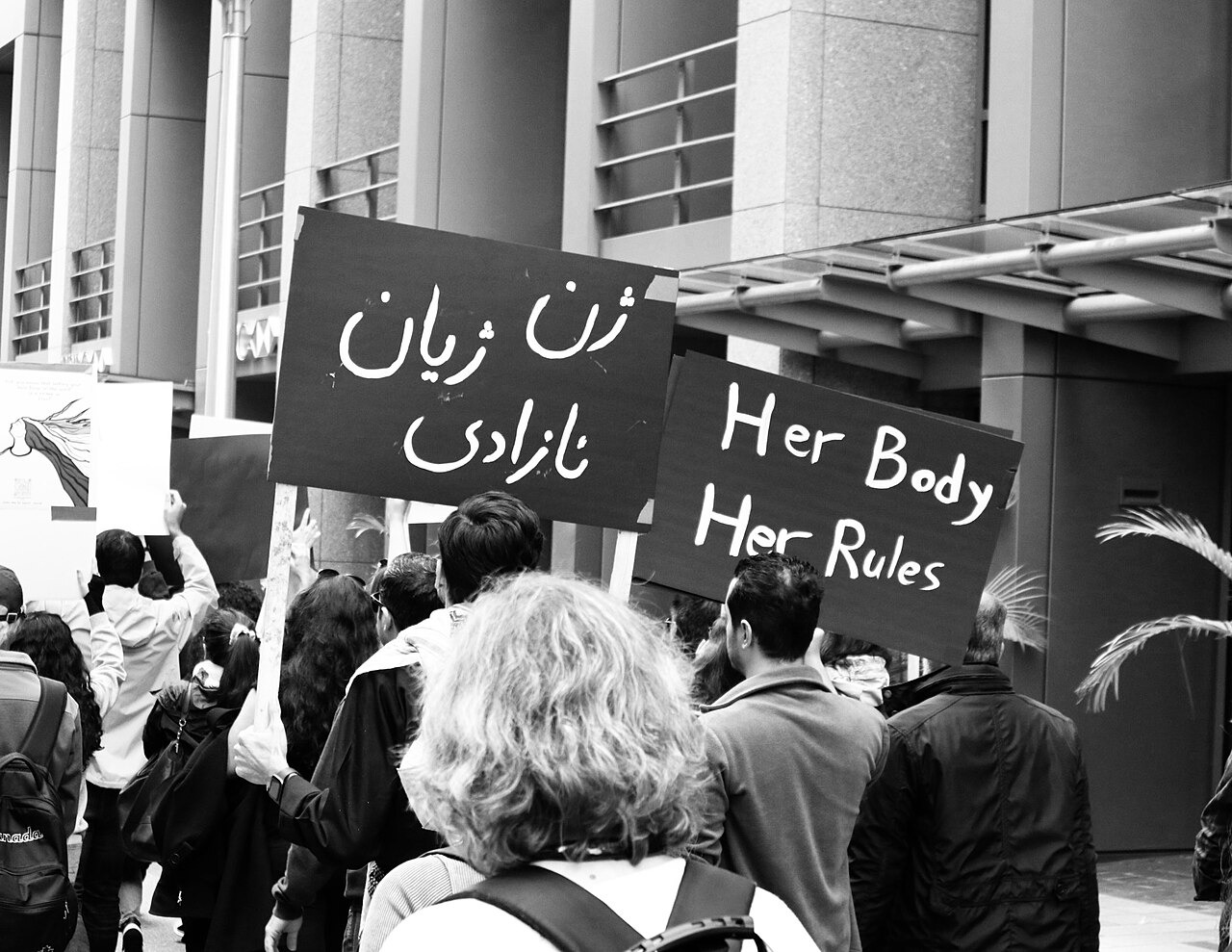
And if this rupture took place in the period between Mahsa Amini’s death and last year’s fighting, then the latest war, which has now shifted into a ceasefire, brought the final transformation. Women simply stopped paying attention to the bans. And this is not only about the capital. Everyone who knows Iran has heard of Isfahan, a fantastic historic city that has always been considered very conservative and religious. I was there three weeks ago, before leaving the country. I saw girls in leggings and short T-shirts with my own eyes: running along the river, riding bicycles, playing volleyball with men. Just a few years ago, something like that, especially in Isfahan, would have been impossible to imagine.
I myself was in Isfahan sometime in 2009 or 2010, and I remember very well how carefully I had to monitor my appearance. Although foreigners are treated more leniently there, I still wore both a hijab and a manteau, especially in Isfahan. Do you cover your head yourself when you are in Tehran?
If I am working on television, yes. But if I am simply going, for example, shopping, then no. I took it off. I also walked around Isfahan without it. For me, that was a great surprise.
And no one, neither the Basij, nor the police, nor other security forces, detains you for that?
No, that no longer happens. Although the regime is still trying to resist, because different groups inside the system are struggling with one another. The radical wing wants to tighten the screws, while the pragmatists argue: if we want to unite the country in the face of war with Israel and the United States, we cannot send the police against our own women, because that would simply blow society apart from within. So the conservatives changed their tactics. They no longer detain girls in the streets, but they put pressure on businesses. They can come to a café and threaten to close it if the waitresses work with uncovered heads. Then the staff put on headscarves for a day or two, and then take them off again. In other words, the system has effectively already lost this war of endurance. The authorities are trying to pretend they control the situation, but the reality on the streets is completely different.
Has this changed relationships within society? Iranian women were already quite emancipated compared with women in other Muslim countries of the region: they drove cars, worked, and had significantly more rights. Has this process deepened now, and how are men reacting to these changes?
Absolutely. Not at the level of laws, but mentally, Iranian men acknowledge that women have become the main driving force of change in the country. People say this openly: without women’s courage and their struggle for the right to live and dress freely, society would never have transformed so quickly. In Iran today, there are two parallel realities. One is the patriarchal façade of power: the clergy, politicians, and government, where there is only one female minister. The other is the living street, where women run businesses, shops, and in effect keep the economy moving. More than fifteen years have passed since the 2009 protests we mentioned. Those who were eighteen then now have children of their own. And this new generation of men understands and respects women’s strength very well, so they actively support them in this struggle.
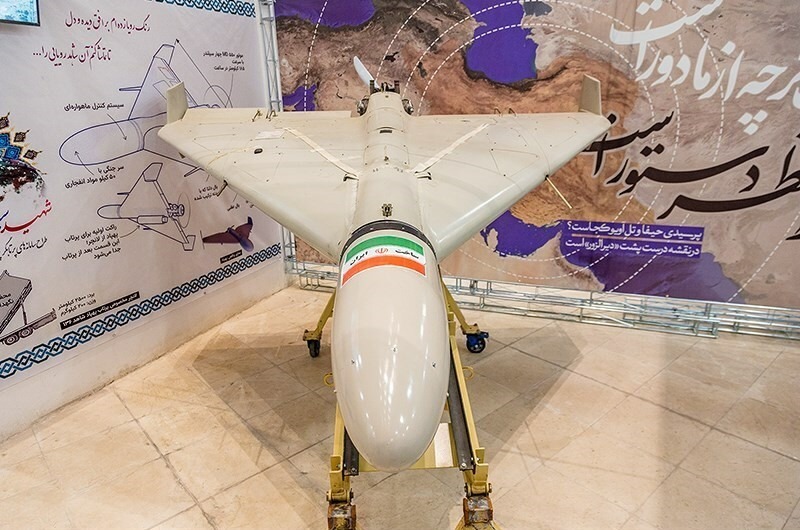
Let us return to Iranian-Ukrainian relations. In Ukraine, everyone knows the word “Shahed” because of Iranian drones. But how is this military industry perceived inside Iran itself? Is it felt as a powerful part of the technological and economic reality for ordinary citizens?
For ordinary Iranians, absolutely not. It is nothing like Ukraine, where drones have become part of everyday life and even children can distinguish between types of UAVs. In Iran, this sphere is completely closed. I remember an almost anecdotal incident. At the beginning of the war, the Americans launched their kamikaze drone, Lukas, which visually looks very similar to a Shahed. I was in central Tehran when it appeared in the sky. Passersby looked up in surprise and asked, “Is that a Shahed?” and then looked at me in confusion, not understanding what was happening. In reality, at that moment I was the only one who clearly understood the essence of what was going on. When air defense began working in Iran, exactly the way Ukrainians experience it every night during air attacks on Kyiv, local residents were simply lost. I had to literally explain to acquaintances on my fingers how to behave during such strikes, what that specific sound was, and why it was dangerous. I even wrote a post saying that Iranians had finally seen with their own eyes the nightmare in which Ukrainians have been living for years because of these very Shaheds. Until that moment, Iranian society had not realized this at all.
We know that technical education in Iran has traditionally been very strong, and that being an engineer is both prestigious and quite common. Education is accessible, and the level of professional training is high. For the country, this is normal. But an engineer working in unmanned technologies is a completely different, much more closed story, isn’t it?
Yes, almost every Iranian family dreams of their child becoming either a doctor or an engineer. But when it comes to drone production, this is not something people talk about openly, and for the broader public the field is invisible. The entire drone industry is monopolized by the Islamic Revolutionary Guard Corps. It is a purely state-controlled structure, not a private or market-based one, although its scale is enormous. During this war, another important detail was revealed: the technology laboratories of the country’s leading universities came under attack, precisely the centers where artificial intelligence was being studied and UAVs were being designed. In other words, higher education is the intellectual core of this program. In addition, production lines of supplier companies were directly attacked as well, at least according to Israel’s reports, because Tehran never officially acknowledges such losses. Today, this industry is a cornerstone of the IRGC’s military structures, although ordinary Iranians do not fully realize all of this. Before this war, they also had not realized the powerful psychological effect drones can have. After all, American Lukas drones, effectively analogues of the Shaheds, began confidently hunting checkpoints right in the middle of city streets.
Were there checkpoints in the streets?
Yes. With the first salvos of the war, thousands of checkpoints were set up in Tehran, manned by paramilitary formations. Officially, this was described as a search for collaborators, but people understood perfectly well that it was simple intimidation meant to prevent internal protests. It was incredibly revealing to watch how the behavior of the security forces themselves changed. In the first days, they demonstratively stood at intersections with Kalashnikov rifles. But within a week, after several targeted Lukas raids, the bravado disappeared. The guards began hiding their motorcycles, taking cover under awnings and building roofs, leaving only one person near the cars to check documents. Everyone was terrified of becoming a live target. Perhaps they did not fully experience the everyday reality of Ukrainians, but on their own ground they grasped how strongly this almost silent terror from the sky presses on the psyche.
Does the state make any attempt to run public recruitment campaigns, calling on young specialists to join the ranks of drone developers?
No, the authorities try to keep this topic in absolute silence. Instead, they are doing something else, and to Ukrainians it will sound completely absurd. In your case, the enemy is standing directly on the border, and a grinding trench war is taking place along an enormous front line. In Iran, the situation is completely different: there are no American bases right next door, and Israel is thousands of kilometers away. And yet civilian supporters of the regime are now being actively taught at mass gatherings how to assemble and disassemble Kalashnikov rifles. This is pure psychological manipulation. The authorities are desperately trying to revive the military pathos of the Iran-Iraq War era, this cult of martyrdom, sacrifice, and revolutionary ideals. It looks wild: instead of teaching the population basic civil defense in the conditions of a modern technological conflict, how to act during missile strikes or recognize UAVs, people are being forced to shoot rifles, which in the realities of this war has almost lost its meaning.
It looks especially ironic for a country that itself created the concept of mass drone terror.
Moreover, according to our information, at a certain point the Israelis or Americans later adopted a tactic actively used on the Ukrainian front: a large carrier drone drops swarms of FPV drones deep into the territory, and they then separate and strike specific targets. The authorities did not teach anyone how to counter this.
And how did they shoot them down?
There are now heavy machine guns mounted on many vehicles, but to be honest, they are not very effective. There are also air defense systems, but at the beginning the air defense of cities was frankly weak: mostly heavy machine guns on pickup trucks, similar to those that protect the sky over Kyiv, though of a larger caliber. Israel had knocked out a significant share of the stationary systems back in June 2025, and destroyed the rest at the beginning of this campaign. But later I had a very strange feeling, one almost no one wrote about: suddenly something much more powerful began sounding in the sky. The air defense started working in a completely different rhythm and according to different algorithms. There was a strong impression that the regime had urgently received reinforcement from outside, specifically to fight low-flying targets. After that, fear of drones became even stronger. But even despite this, you still almost never see drones exploding in the sky the way we sometimes see here in Ukraine.
What about the nuclear program? To what extent is there now an understanding, although of course no one can say for certain, that the Americans and Israelis did achieve their goal and that Tehran is currently deprived of the ability to create a nuclear weapon?
In fact, the situation is still unclear. Yes, Natanz came under attack, a vast complex on the road between Tehran and Isfahan. But its structure is complicated: some facilities are on the surface, some are underground, and some are on the other side of the mountains. From the road, you can see only a few destroyed buildings and several damaged structures. But how serious the damage to the underground bunkers was is unknown. Whether they have other classified locations is also a mystery. These mountain ranges are immense, so it is too early to draw final conclusions. It is entirely possible that the allies hit part of the infrastructure, but Iran had spent decades calculating precisely this scenario, creating backup capacities and reserve options. So it cannot be ruled out that the country’s nuclear potential has survived.
My last question moves from security and geopolitics back to everyday life. Speaking with Iranian friends about daily life, I hear a shared view: living in the country has become incredibly difficult, prices are rising rapidly, and familiar goods are disappearing. What does everyday life look like today for an ordinary Iranian middle class? What is happening with wages, inflation, and access to basic things?
Inflation is simply killing people, truly killing them. I usually give one simple but telling example: a portion of salad in a café that used to cost 300,000 rials now costs 800,000. Chicken eggs have become five or six times more expensive. Even fuel, which had always been almost free here, has risen significantly in price. Everything connected to plastic has become much more expensive, and because Iran has a developed petrochemical industry, Iranians consume enormous amounts of it. This sector of production suffered the most from airstrikes during the war. This is only the tip of the iceberg. It is becoming harder and harder for an ordinary family simply to stay afloat. When I moved to Iran almost twenty years ago, despite my Latin American background and my deep understanding of social inequality and poverty, I was struck by what I saw. Back then, the country had a strong basic standard of living: even poorer groups could afford quality food, necessary purchases, and a decent everyday life. No luxury, of course, but there were no hungry people in the streets. Now, unfortunately, that stability is finally receding into the past.
Food was always affordable, even meat.
Meat, and even chicken, have now become a luxury. Many families have removed this product from their diet altogether, buying it perhaps once a month. Life is becoming increasingly uncompromising. Iran traditionally had a strong middle class, which is now visibly losing its purchasing power. Citizens acutely feel how quickly they are becoming poorer. Of course, in a country of ninety million people, there is still a layer of wealthy and extremely rich people, but in everyday life the overall impoverishment is impossible to miss. For example, the owner of a small shop in my neighborhood — and in Iran, as in Ukraine, the culture of neighborhood shops is very developed — admitted that he is now selling barely 30 percent of last year’s volumes. Consumers have simply given up many things they used to consider normal. And in the coming months, the crisis will only deepen. A wave of unemployment is rolling across the country, because strategic industrial giants have come under attack: petrochemicals, metallurgy, the gas and oil sectors. Small business is also feeling the destructive consequences. Merchants who used to employ several workers now keep one. Small workshops are cutting their staff in half. For employers, this is also a personal tragedy, because they are forced to show their own people the door. We will see the full scale of this social catastrophe somewhat later. The Iranian authorities understand this. Inside the power vertical itself, there is no unity. The civilian government of Masoud Pezeshkian and his ministers are desperately looking for alternative ways to save the economy. The military wing, by contrast, which controls autonomous financial flows and resources, is concerned exclusively with the regime’s survival and maintaining control under martial conditions. So a period of serious turbulence lies ahead. For ordinary Iranians, this battle did not end with the lull at the front: the financial exhaustion ahead will be no less brutal.
But for now, strangely enough, this war has united Iranian society more than divided it, in the sense that people felt the need to survive in the face of an external threat. At least at this stage. But no one knows how the situation will develop further.
Yes, perhaps that is the paradox. For now, society has mobilized around the very idea of survival. The structure of power itself is also trying to demonstrate monolithic unity. Despite the elimination of key commanders, prominent politicians, and the Supreme Leader himself... Even though Mojtaba Khamenei still has not appeared in public and the country has not heard his voice, society still has the feeling that the regime retains an iron core. But the conflict continues. The formal ceasefire is only a fragile pause. Time will show whether the leadership can hold onto this forced unity. It is an enormous challenge for the ideologues, for the government, and for every Iranian family. To be honest, no one is willing to look into the future right now.