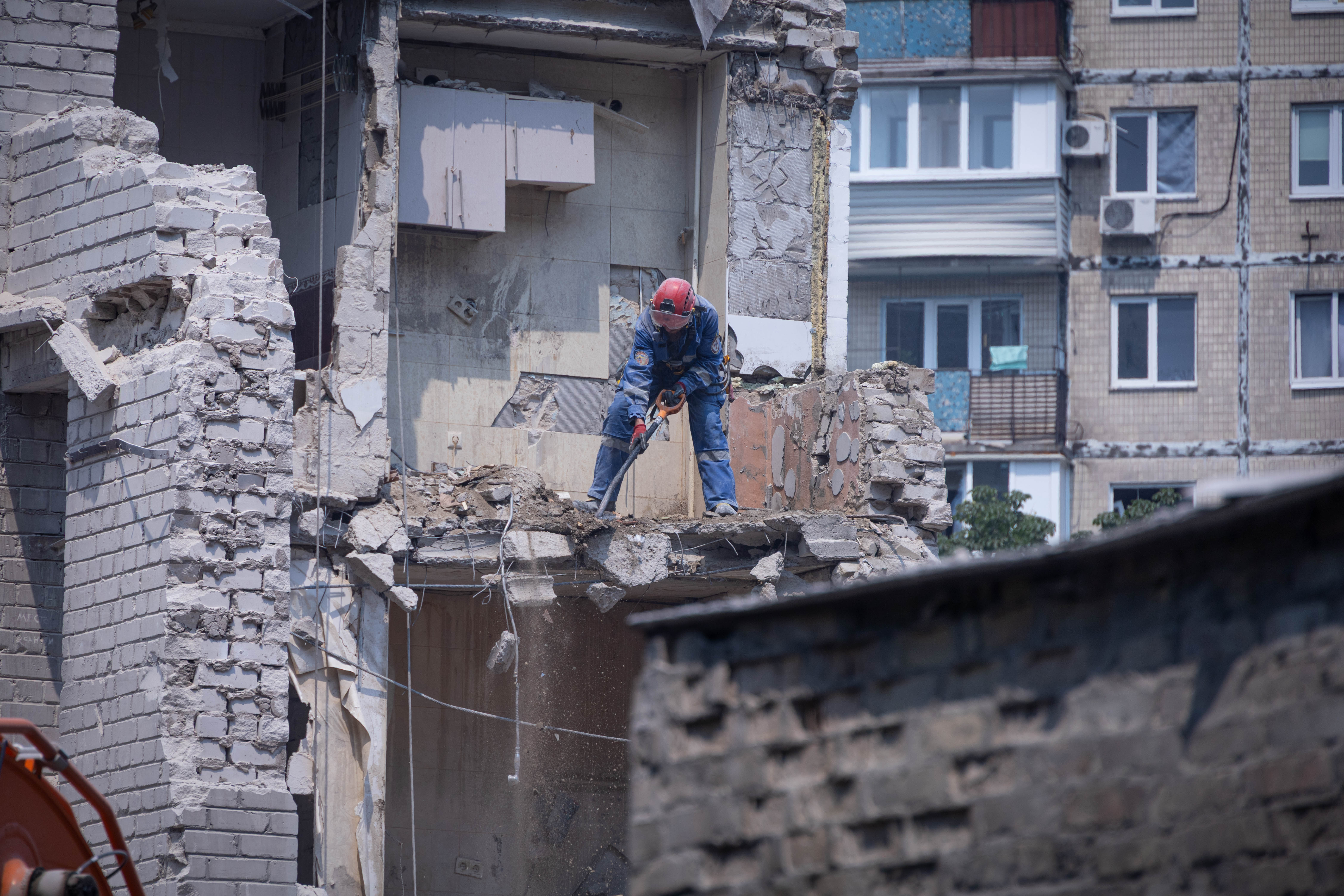
Overnight on June 15, the Russian army struck the thousand-year-old Orthodox monastery of the Kyiv-Pechersk Lavra, which is part of the UNESCO World Heritage. According to reports from the Air Force of the Armed Forces of Ukraine, a Shahed drone crashed into the roof of the Dormition Cathedral. A fire broke out, which was extinguished until morning by more than 20 State Emergency Service crews.
Rescuers worked despite the air raid danger. All night, explosions of Russian missiles and drones echoed in Kyiv. When the rescuers had almost managed to overcome the fire in the Lavra, a second Russian drone approached the monastery. However, it caught onto a cross on one of the monastery's towers, changed its trajectory, and crashed into the "Mystetskyi Arsenal" museum complex, which also caught fire.
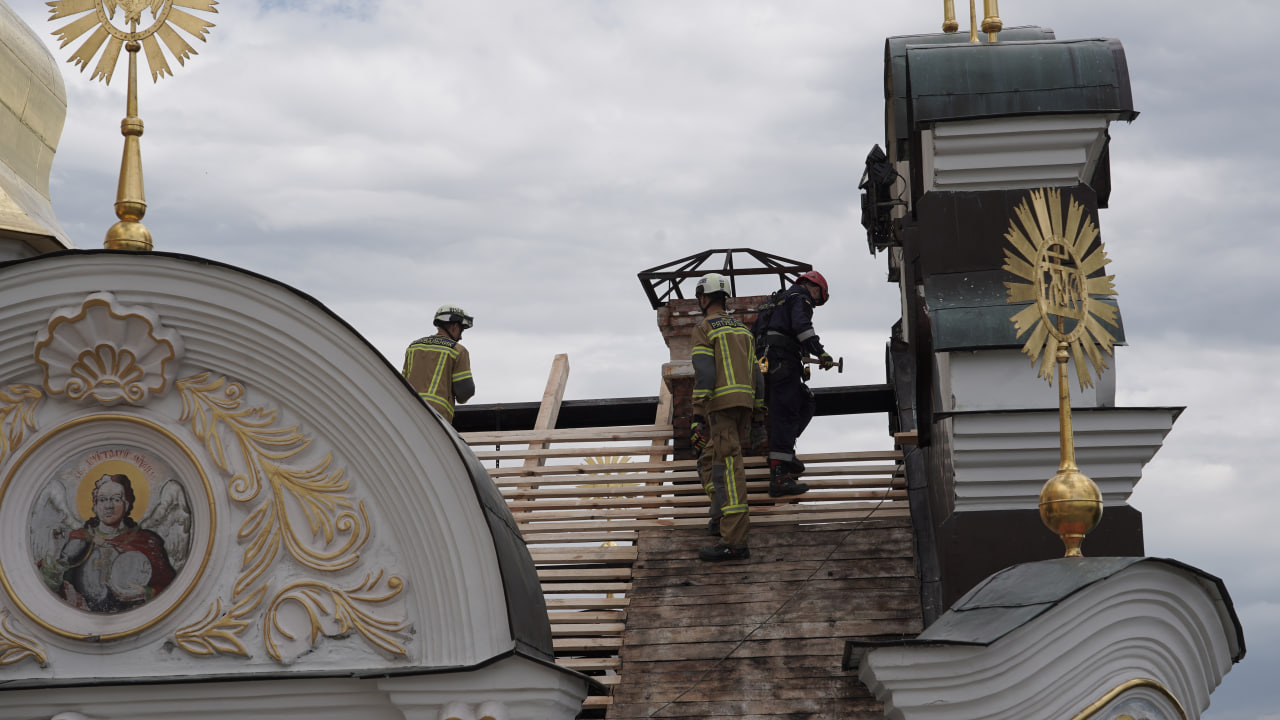
Had the drone hit the cathedral, the firefighters on the roof could have died, and the burnt roof structure with the domes could have collapsed inside the building, destroying one of the largest iconostases in Ukraine, 25 meters high.
Two days after the fire, the "Kyiv-Pechersk Lavra" National Preserve held a tour for journalists and showed the destruction. Four of the six domes of the Dormition Cathedral, covered in gold leaf, were not damaged. However, two domes will have to be restored. The entire roof structure will also be rebuilt. Restoration work could last up to two years.
Inside the cathedral, all the murals and icons survived — they were only covered in soot. However, it is too early to say that the fire passed with "minor losses".
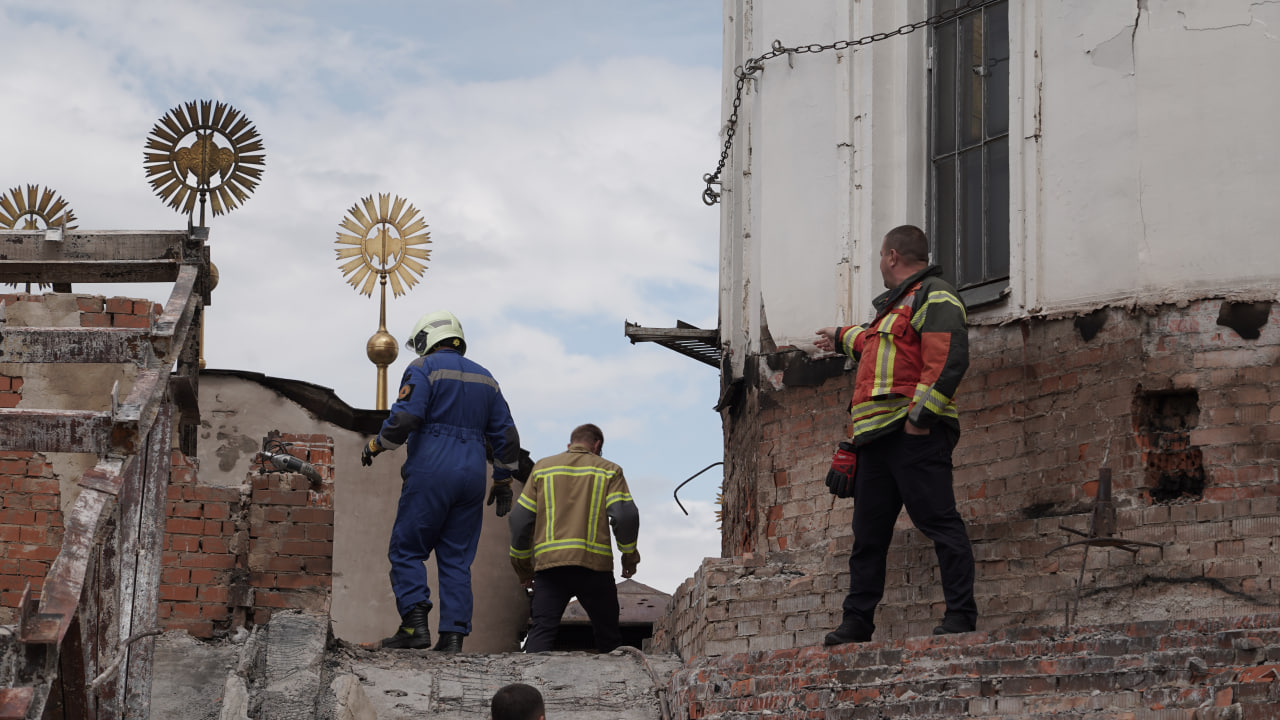
The walls of the cathedral and the iconostasis are heavily waterlogged. The consequences could be tragic — the iconostasis is assembled from metal and wood; it is impossible to dismantle it into separate structures and dry it. It is also unknown how the walls of the cathedral with the murals will dry — there is a threat that over time, the paintings will begin to flake off and become covered in mold.
Currently, the cathedral is being dried with special devices, and the degree of humidity is being measured. The roof was temporarily covered with boards and plastic sheeting.
According to the director of the "Kyiv-Pechersk Lavra" Preserve, Maksym Ostapenko, the restoration of the Dormition Cathedral after the Russian attack is an opportunity to rethink the recent history of the preserve, when for 23 years the Ukrainian Orthodox Church of the Moscow Patriarchate held services in the Dormition Cathedral (from 2000 to 2023). In particular, to change the mural on the cathedral wall featuring the portraits of the former vicar of the Lavra Pavlo, the current head of the UOC-MP Onufriy, and the late head of the church Volodymyr. The painting appeared in the cathedral bypassing the approved mural plan of the UNESCO monument.
According to Ostapenko, during the explosion in the Lavra, not only the Dormition Cathedral was damaged, but also 18 other buildings that housed various museums of national importance. The windows in these buildings were shattered. The preserve preliminarily estimated the damage at 500 million hryvnias.

Deputy Prime Minister for Humanitarian Policy – Minister of Culture of Ukraine Tetyana Berezhna stated that overnight on June 15, the Russian military carried out "one of the largest attacks on the cultural heritage of Ukraine," damaging 13 cultural heritage sites in Kyiv, Kharkiv, and Dnipro.
The Dormition Cathedral of the Kyiv-Pechersk Lavra was built by monks in 1073–1078. It was destroyed during the earthquake of 1230, burned during the Mongol invasion of 1240 and an accidental fire in 1718, and was almost entirely destroyed by an explosion in 1941, when Soviet sabotage groups were retreating from Kyiv and planted explosives in the Lavra.
In the 2000s, the Dormition Cathedral was rebuilt, recreating it in the Baroque style — just as it was from the time of Hetman Ivan Mazepa until its destruction during World War II.