“For Poles, the UPA has a very specific meaning. It is difficult to change that” — Edwin Bendyk
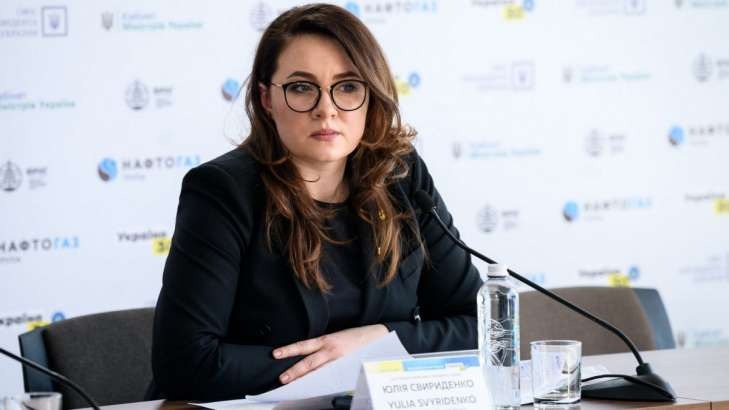
In late June, the Ukraine Recovery Conference was held in Gdańsk, Poland. A total of 160 agreements worth more than €10 billion were signed, while the European Union disbursed the first tranche of its €90 billion loan for Ukraine — more than €3 billion. President Volodymyr Zelensky did not attend the forum amid a new deterioration in relations between Ukraine and Poland. Ukraine was represented at the conference by Prime Minister Yulia Svyrydenko.
In the podcast When Everything Matters, journalist Nataliya Gumenyuk speaks with Polish journalist and publicist Edwin Bendyk about the conference’s outcomes, the differing perceptions of the UPA in Ukraine and Poland, anti-Ukrainian sentiment, fears of a possible Russian attack, and the political future of Ukrainians in Poland.


Edwin, we are speaking immediately after the Ukraine Recovery Conference in Gdańsk. It took place against the backdrop of perhaps the sharpest debate between Ukraine and Poland over their shared historical past since the beginning of the full-scale invasion. How do you assess the conference’s outcomes, including the financial agreements, the state of Ukrainian-Polish relations, and President Zelenskyy’s absence?
We were concerned that political tensions between the two countries would complicate the conference. The opposite happened: participants tried to demonstrate that historical and political disputes should not obstruct cooperation. Historical issues were present in the speeches by Donald Tusk, Friedrich Merz, and Yulia Svyrydenko, but the main emphasis was on the future.
This was, above all, a business conference. Most participants came with specific objectives, and many achieved concrete results. Representatives of the Polish-Ukrainian Chamber of Commerce, the Polish Business Council, and the European Business Forum told me that Zelenskyy’s absence may even have lowered the political temperature and allowed businesses to focus on practical matters.
At the same time, his absence — along with that of Verkhovna Rada Speaker Ruslan Stefanchuk and Foreign Minister Andrii Sybiha — was noticeable. This was a pan-European conference, and its status called for appropriate representation.
This time, the discussion took place within a new paradigm. Previous conferences had focused on helping Ukraine as a recipient of support. In Gdańsk, the conversation had already shifted toward a shared security architecture. Ukraine is increasingly seen as a partner capable of strengthening Europe with the knowledge and experience it has gained during the war.
That is why I believe President Zelenskyy’s absence was a tactical mistake. It would have been better had he joined the conversation as an equal player. Still, it was not a critical failure: measured by the number of agreements concluded, the conference was successful.
What is the real state of Ukrainian-Polish relations today? In Poland, there is a domestic political confrontation involving Donald Tusk’s government, President Karol Nawrocki, and various political camps. How deep is this divide, and what could ease the tension?
I think the next step must come from President Zelenskyy, since the decision not to travel to Gdańsk was his personal choice. The conference was constructive and created some conditions for reducing tensions, but I do not expect any rapid “thaw.”
Polish policy toward Ukraine is highly fragmented. There are right-wing radicals, the presidential camp, the government, and divisions within the government itself. Donald Tusk takes a more moderate position, but he cannot ignore public sentiment. Even among his voters, there is demand for tougher measures.
The Polish People’s Party and its leader, Minister of National Defence Władysław Kosiniak-Kamysz, hold a distinct position. On many issues, his views on Ukraine are close to the rhetoric of Law and Justice.
The first signals from Gdańsk were encouraging, but they concerned business above all. History remains the elephant in the room. I still do not know how the conference’s economic momentum can be translated into political understanding.
For Ukrainians, the UPA is primarily a symbol of anti-colonial struggle against the Soviet Union and Russia. For Poles, it is part of a painful memory of Volhynia and Galicia. What does Polish society expect from Ukraine in this conversation?
The problem lies in the asymmetry of perception, although there is a lack of knowledge on both sides. I often explain to Ukrainian friends that Polish attitudes toward the UPA and the Volhynia tragedy are not an artificial product of Russian propaganda or radical activism, but a genuine national trauma.
In Poland, the UPA is associated almost exclusively with Volhynia and Galicia. Very little is known about its struggle against the Soviet Union. In Ukraine, it is the opposite: after the Revolution of Dignity, the UPA became a symbol of anti-Soviet and anti-Russian resistance, without an explicit anti-Polish meaning.
I try to explain this difference to Polish readers. The fact that Ukrainians heroise the UPA does not mean they are anti-Polish. But in the Polish consciousness, the UPA is a deeply rooted archetype, and changing it is difficult.
Poles also find it difficult to discuss the policies of the Second Polish Republic, colonisation, and the radicalisation of Ukrainian youth in response to those policies. Unfortunately, historical issues are increasingly becoming instruments in the hands of politicians.
How does this intersect with broader anti-immigrant sentiment in Poland? Do Ukrainians face a real threat?
Ukrainians have become the largest immigrant group in Poland, while Polish society is generally wary of immigration. It resembles the situation of Poles in the United Kingdom twenty years ago: at first they were welcomed as needed workers, but later politicians began portraying them as a source of problems.
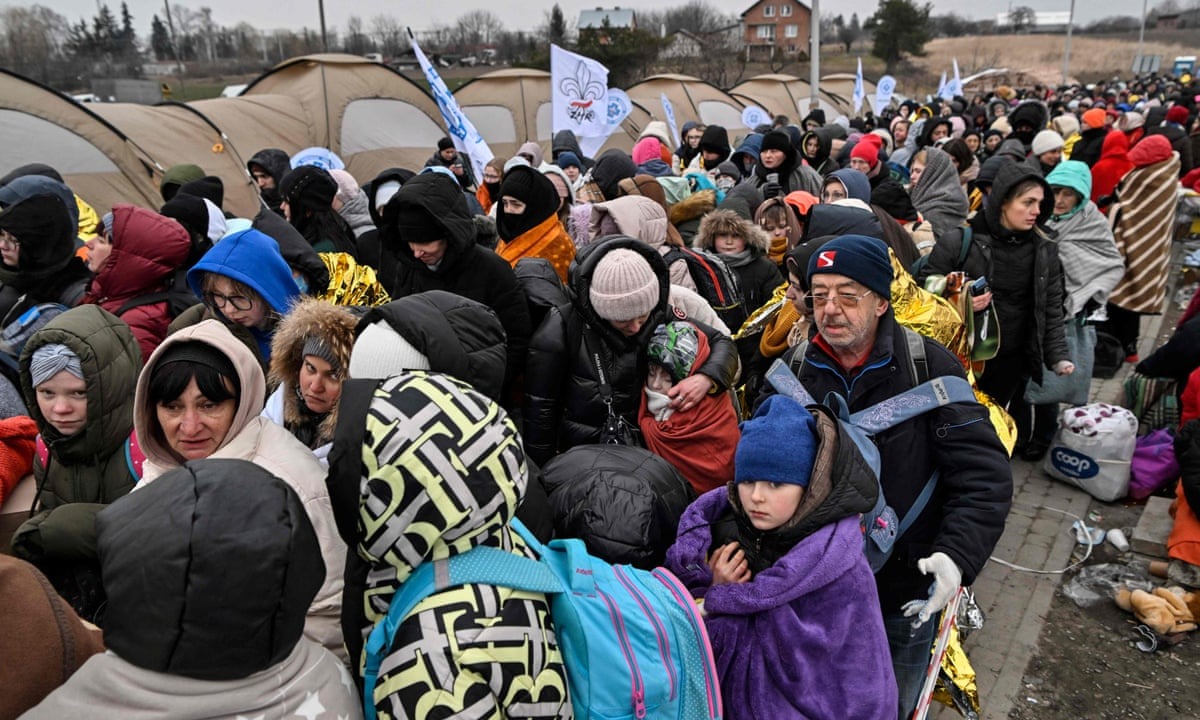
After 2022, a large number of refugees arrived very quickly. As Ukrainian became a constant presence in public space, some Poles began to feel threatened by a supposed “Ukrainisation.” Politicians also started exploiting the issue of spending on refugees, even though the employment rate among Ukrainians in Poland is around 70 percent, and they pay taxes and social contributions.
At the same time, it is important to distinguish between attitudes toward an abstract “group” and attitudes toward specific people. In everyday life, there is less xenophobia than opinion polls may suggest. But the danger is real: we see Ukrainian children being bullied in schools and other expressions of hatred. Civil society organisations are working with the police so that such cases are classified as ethnically motivated violence rather than ordinary street incidents.
I often feel how close our countries are: Warsaw has become a “home” airport for many Ukrainians, and Ukrainian people are a constant presence in Polish cities. Ukrzaliznytsia’s office in Kyiv is located on Jerzy Giedroyc Street, and his name appears every time on a Kyiv–Chełm ticket. Where are we now in relation to what Giedroyc sought to achieve? Have we truly advanced in Polish-Ukrainian dialogue?
We need to return to 1989, Poland’s emergence from communism, and Ukraine’s declaration of independence in 1991. Poland was the first country to recognise Ukrainian independence, and we are proud of that. But it was a decision made by elites who thought in Jerzy Giedroyc’s terms: partnership with Ukraine was part of Poland’s security strategy in the face of the threat from Russia.
Public attitudes were different at the time. In the early 1990s, only a small share of Poles viewed Ukrainians positively, while the majority viewed them negatively. This was a consequence of anti-Ukrainian propaganda in communist Poland. It focused on the UPA, Bandera, the Bieszczady region, and Operation Vistula, because Volhynia itself could not be discussed openly in the Soviet era.
Attitudes gradually improved, especially during the Orange Revolution and the Revolution of Dignity. At the same time, Poland’s accession to NATO and the European Union changed how Polish elites thought. Security came to be associated primarily with Western alliances, while Ukraine was seen more as a buffer between Poland and Russia than as an active part of a shared security architecture.
Economic ties remained weak for a long time, cross-border movement was much more limited, and Polish society increasingly lost sight of what was happening in Ukraine. The country was often perceived as weak and trapped in permanent crisis.
In 2022, there was a major revelation: Ukraine turned out to be an entirely different country. Only now — although the process is slow — are Polish elites beginning once again to recognise it as an important strategic partner.
This may create space for a calmer conversation about history. When Ukraine is not seen as strategically important, the relationship is dominated almost exclusively by the past. When a shared future becomes real policy, historical disputes can be discussed differently.
Ukraine has spent years persuading its partners that it is fighting for the security of the entire continent. Are Polish military and political elites beginning to understand modern warfare more clearly, as well as Poland’s security dependence on Ukraine?
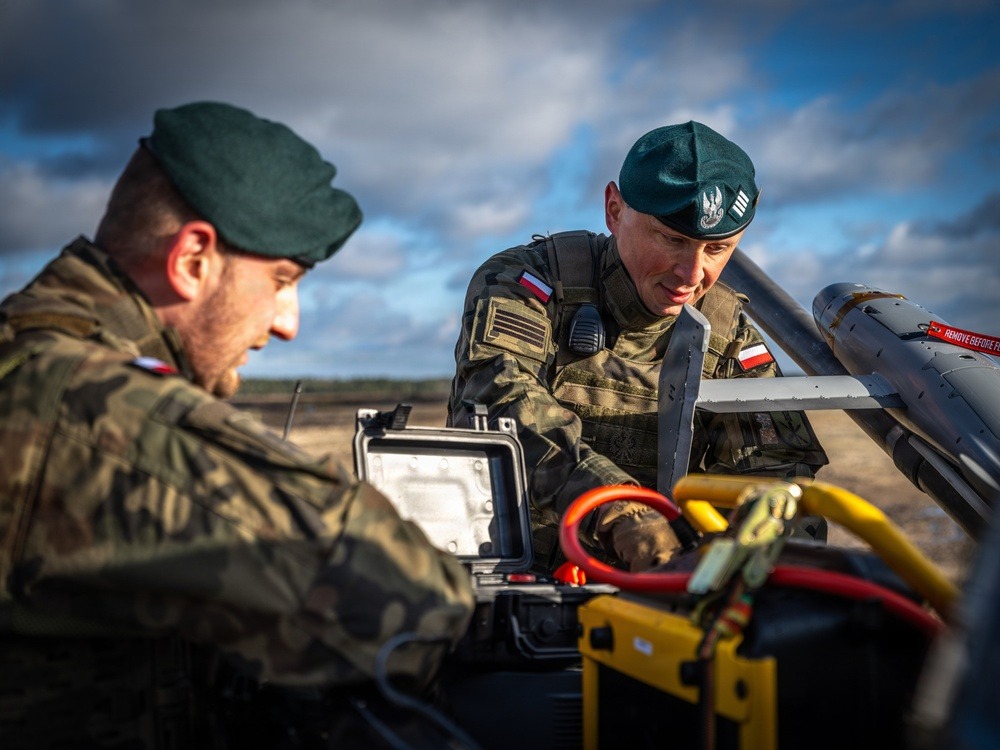
This process is moving forward, although military institutions are fairly conservative. A turning point was the incident involving a Russian drone in Polish airspace. Poland responded quickly, but it also realised that in the event of a large-scale attack involving hundreds of drones, its defence system might not be able to cope.
There is also a growing understanding that Poland is already a target of Russian hybrid attacks. At the same time, part of the right-wing elite still believes in a “special relationship” with the United States and hopes that American troops stationed in Poland will guarantee security even if the United States withdraws from Europe.
Society finds it difficult to accept that the world has changed and that Europe needs to build its own security architecture. This is compounded by the need to rethink relations with Germany, which is also psychologically difficult because of historical memory.
How should this be addressed going forward?
Different levels of the discussion must be connected. Recognition of Ukraine as “part of the solution,” rather than a problem, needs to be institutionalised. Preparations for its accession to the EU should proceed through the practical integration of legislation, the economy, and security mechanisms.
This process will be difficult, but that very difficulty creates an opportunity. Work can proceed on several tracks at once: lowering emotions around history or agricultural disputes while reaching concrete agreements, such as on the joint production of drones.
We can acknowledge historical differences while acting as allies working together on security.
How seriously does Polish society view the threat from Russia? Could the security dimension change the tone of Ukrainian-Polish relations?
The threat is taken very seriously. The sense of war in Polish society is stronger than in many other European countries. For the first time in decades, a large share of Poles say they fear the loss of independence.
Is this a fear that paralyses, or one that mobilises?
It works paradoxically. On the one hand, there is broad consensus on increasing defence spending: many people are prepared to sacrifice other budgetary expenditures in order to strengthen the military.
On the other hand, excessive fear creates a desire to avoid war at any cost. This fuels the so-called “parties of peace,” which argue that “this is not our war” and that an agreement with Russia is possible.
When Ukrainians insistently call for support, part of Polish society interprets this as an attempt to “drag Poland into the war.” This shift is especially visible among young people: the youngest generation is becoming less inclined to support Ukraine and more likely to express anti-Ukrainian views.
Sergei Lebedev, while researching Soviet archives and cinema, noted that Bandera and the UPA were demonised even in minor Soviet films. As a result, Russian propaganda itself turned Bandera into a symbol of protest. At the same time, Ukraine lacks high-quality research on this figure that is neither apologetic nor demonising. Why has Volhynia become such a central trauma for Poles?
Anti-Ukrainianism was one of the foundations of Polish communism. After the war, despite its internationalist rhetoric, the communist authorities built an ethnically homogeneous state and used anti-Ukrainian sentiment to consolidate society.
The memory of Volhynia lived on among people resettled from territories incorporated into Soviet Ukraine, but it could not be discussed publicly. Instead, propaganda constantly reproduced the image of the UPA as the principal enemy — through cinema, literature, and the cult of General Karol Świerczewski, who was killed in a UPA ambush.
After 1989, a dialogue began in which Presidents Aleksander Kwaśniewski and Leonid Kuchma played an important role. Yet in Polish public memory, Volhynia remains not “one tragedy among many,” but a foundational experience. That is why any comparison with other crimes is often perceived as relativisation.
The Polish parliament uses the term “genocide” in reference to the Volhynia tragedy. How justified is this politicisation? And is a ban on UPA symbols on the same level as Nazi symbols realistic?
The issue is excessively politicised, as is the Polish parliament’s response. In legal terms, applying the term “genocide” to the actions of a non-state entity raises difficult questions. Polish historians stress that the mass killings were organised and carried out on the basis of command decisions, but the UPA and the OUN were not an internationally recognised state.
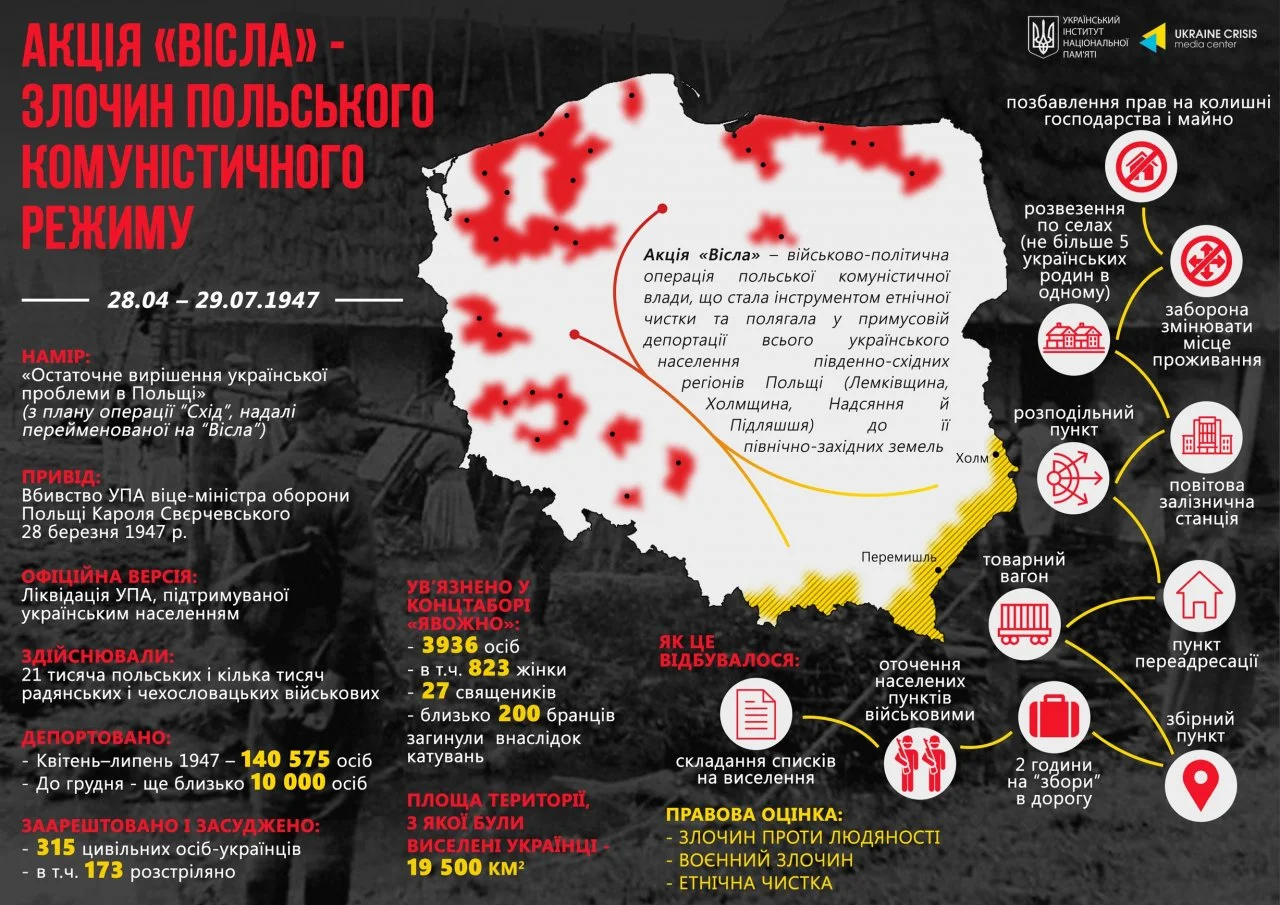
In the Polish public consciousness, the problem of relativisation matters more than legal subtleties. When Volhynia is placed alongside Operation Vistula, many Poles see this as diminishing the tragedy, even though Operation Vistula itself was a brutal act of ethnic cleansing.
Another mistake was turning the exhumation of Polish victims into an instrument of political bargaining. This was a humanitarian issue that should have been resolved outside politics. The situation began to change following agreements between Radosław Sikorski and Andrii Sybiha. For Poles, the right to bury the dead is part of fundamental memory — just as recognition of Russian crimes is a matter of principle for Ukrainians.
Finally, I would like to ask about the Ukrainian community in Poland. It consists of millions of people with different experiences and legal statuses. Can they develop a political voice of their own?
There is no single “Ukrainian minority” in Poland. There are Polish citizens of Ukrainian origin whose families have lived here for generations; migrants who arrived after 2014; and refugees who came after 2022. They have different legal statuses, backgrounds, linguistic experiences, and forms of self-identification.
Tensions sometimes arise between these groups. Polish Ukrainians may feel that newer migrants do not regard them as “real” Ukrainians. Many of those who arrived after 2022 come from eastern Ukraine and use Russian in everyday life.
At present, I do not see a drive to create a single political representation. But one may emerge in the future — including as a form of self-defence in response to growing anti-Ukrainian sentiment.
Ukrainians are already highly active in civil society, business, and IT. Tens of thousands of Ukrainian companies and more than one hundred thousand Ukrainian entrepreneurs operate in Poland. Over time, people who have lived here for many years will acquire Polish citizenship and full political rights.
This is a long process of adaptation that may gradually transform us from neighbours with mutual grievances into partners within a shared political space.
Thank you.