“Trump does not care whether he looks consistent” — Daniel Kurtz-Phelan
D
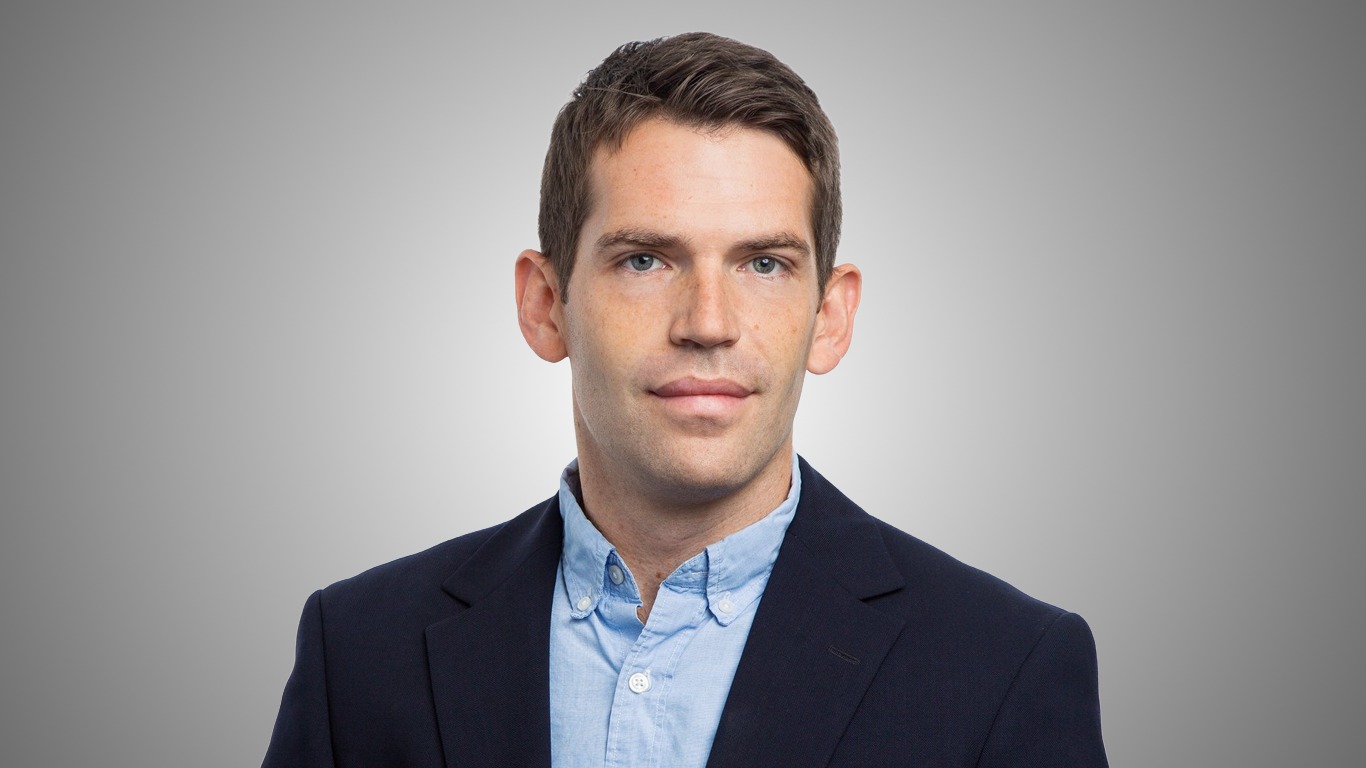
Daniel Kurtz-Phelan has been editor of Foreign Affairs for five years. He specializes in U.S. foreign policy and China. Despite the inconsistency and contradictions of Donald Trump’s policy, during his second term he changed both his rhetoric and his overall approach to China. According to Kurtz-Phelan, the American president is now much more interested in maintaining stable and, in some places, even quite warm relations with Chinese leader Xi Jinping. To do this, he has made certain concessions on Taiwan, one of the most contentious issues in U.S.-China relations. China’s leadership now feels that events around Taiwan are moving in its favor. A Chinese military invasion of the island is not to be expected at this point. Still, the risks may grow in a few years. The editor of Foreign Affairs points to 2028 as a possible moment of escalation. That is when presidential elections will take place both in Taiwan and in the United States. “The interaction between these two political processes may prove destabilizing and change China’s approach,” Kurtz-Phelan says.
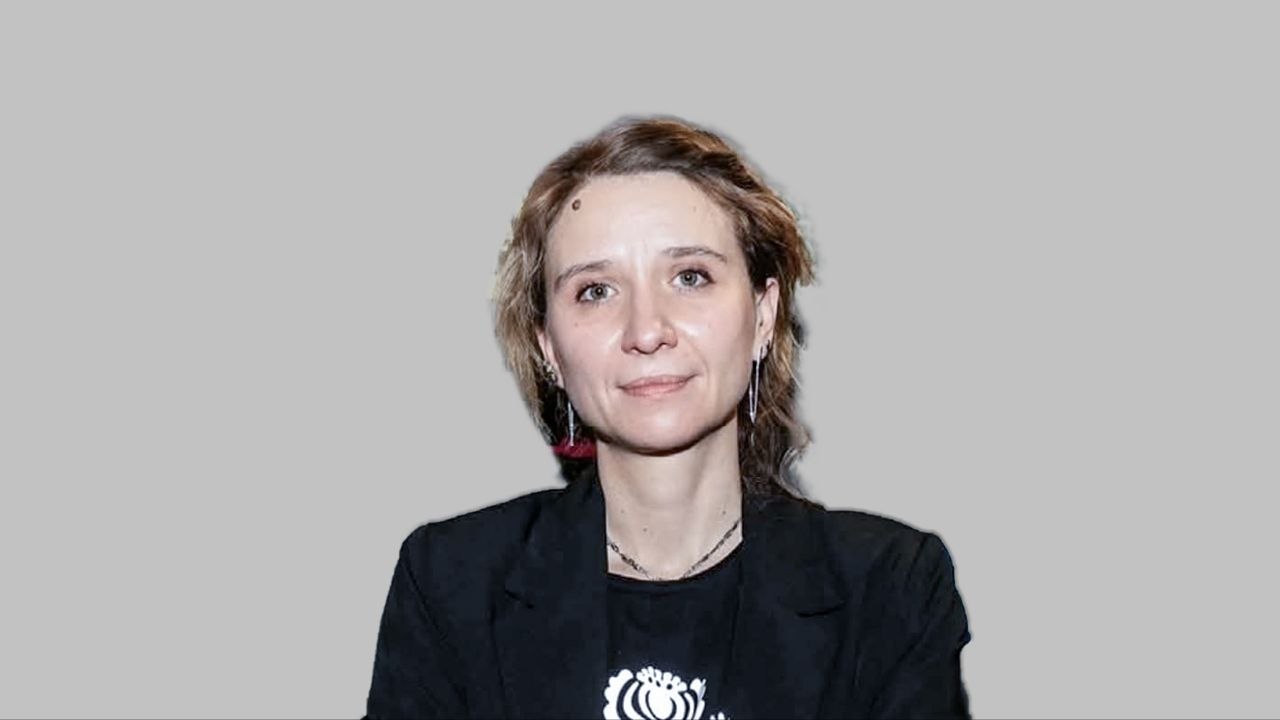
In the podcast “When Everything Matters” journalist Nataliya Gumenyuk speaks with the editor of Foreign Affairs about the U.S.-China rivalry and Trump’s changing approach, relations between Beijing and Moscow, the imprint the Soviet past left on those relations, how the White House views Russia’s war in Ukraine, and the mistaken perception of Trump as an isolationist.



Daniel, I’m glad to speak with you. Your expertise covers global geopolitics, but I suggest we begin with U.S.-China relations, especially given your book The China Mission, about U.S. policy toward China in the 1940s. How would you describe what is happening now? What does Washington actually want in its relations with Beijing, and how realistic are U.S. goals in the region at all?
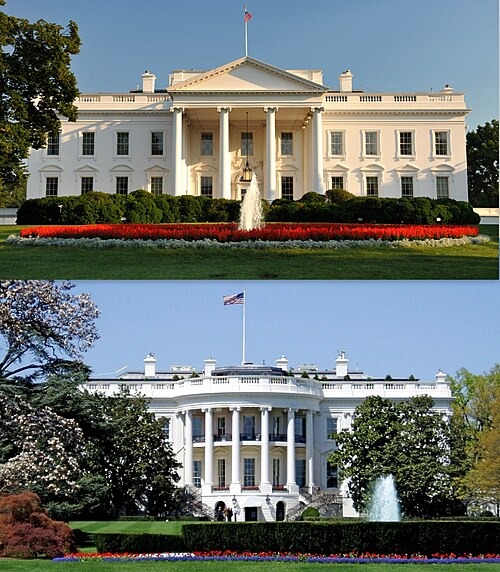
If we step back from the immediate situation, the main problem today for analysts of American foreign policy is simply understanding Trump’s logic. What can be said without making any value judgments is this: this administration is not especially inclined to spend time clearly formulating its own vision or the theoretical basis of its policy. But if you look at the broader perspective of the past fifteen years, when I was working in the U.S. government, you can see how, around 2008, against the backdrop of the financial crisis and the Beijing Olympics, Washington’s views of China began to harden. That process reached its culmination during the first Trump administration. Trump ran in 2016 and was elected as a politician with a very tough position on China. He claimed that China had “stolen” American jobs. I no longer remember the exact Trumpian phrases, but the point was that China had “beaten us,” was “living at our expense,” and so on. That was when we saw the formation of a genuinely new, tougher and more uncompromising policy toward China. Even more, during that period of acute domestic political polarization, countering China became almost the only issue on which there was a solid bipartisan consensus. That position was shared by a broad range of American politicians and officials, and it remained unchanged until Trump’s recent return. Yet the current changes took many people by surprise, even though the first signals came during the 2024 campaign. Trump has significantly changed both his rhetoric and his overall approach to China: he is now much more interested in stable and even warm relations with Xi Jinping. Instead of increasing pressure, he wants to stabilize ties that by then had become very tense and, in many respects, even dangerous. We are recording this conversation shortly after Trump’s visit to Beijing. The leaders’ meeting was deliberately warm. The two sides agreed on a new framework for relations, proposed by the Chinese side. In a certain sense, Trump made concessions on Taiwan, one of the most difficult issues in these relations. There has also been a certain warming on economic issues, although they had previously been very important to Trump. So we are now in a genuinely new paradigm of U.S.-China relations. The main difficulty with Trump lies elsewhere: is this course a thought-through, long-term strategy of his administration, or a situational shift for a few months, after which we will again see a 180-degree turn?
My feeling after 2022 was that for quite a long time, when you came to Washington and spoke with representatives of the U.S. government, it became clear that concern about China was shared by Democrats and Republicans alike. In the end, what exactly are we afraid of from China? What specific risks is everyone trying to minimize?
I think that as soon as a topic in American foreign policy becomes a matter of bipartisan agreement, politicians immediately start making very loud, exaggerated claims about threats and dangers that are not always backed by real arguments. But if we focus on the main point, the United States has not faced for a very long time what we in foreign-policy debates call a true competitor — that is, a country potentially capable of challenging American power across the full spectrum of issues: economic, military and geopolitical. In American politics, this confrontation first began with the economy. China’s rapid rise to dominance in manufacturing, and later in the technological sphere, had a significant effect on the United States. Economists called this the “China shock,” referring to its painful impact on the American labor market, especially in certain industrial regions. So it quickly became an acute political issue. Then, beginning around the 2010s, we saw very aggressive cyberattacks: hacks of American private companies, theft of industrial and commercial secrets and production technologies, as well as attacks against the U.S. government and American citizens. There was also a certain normalization of espionage and the theft of intellectual property. China began to build up its military presence more actively in many regions where the United States or its allies had become accustomed to a certain level of stability or free access. This applies both to the South China Sea and to other places where Chinese policy suddenly began to change significantly. The South China Sea, which no longer appears in headlines as often, was, in my view, the first sign of this process. China asserted its territorial rights and sovereign control over a large part of that body of water, through which an enormous share of world trade passes. Other countries in the region have a completely different view of the issue. I think this became one of the first points of tension. But over the past five or six years, Taiwan has displaced all of that and become the topic that draws the most attention and is seen as the most dangerous. In other words, it suddenly became clear that China had become so powerful that the very scale of its economy and geopolitical presence began to threaten American interests both at home and internationally. After a long period in which U.S.-China relations were quite good, there was a belief in Washington that deep engagement with China, from business and cultural ties to diplomatic and military contacts, would both stabilize these relations and make Beijing play by global rules. But over time it became increasingly clear that those expectations were not being met. During the 2010s, the American establishment gradually woke up and saw a very different China. You mentioned the full-scale invasion. That was another moment when it suddenly became clear that the game was being played by completely different rules from those we had imagined a few decades earlier. Many were surprised by the scale of the China-Russia rapprochement. And of course you know, as do your listeners, the rhetoric of Putin and Xi Jinping in early February 2022, shortly before the attack on Ukraine. Then came Chinese support for Russia in various forms, including supplies of dual-use goods and other things. This again significantly intensified the sense of danger, which became even sharper because of the global nature of the challenge. In American debates, the term “axis of upheaval” is used increasingly often for this. It refers to the informal alliance of China, Russia, Iran and North Korea. And this alliance represents an entirely different kind of threat from those America had long been accustomed to thinking about and preparing for.
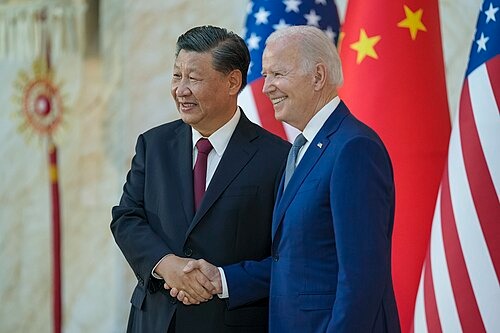
What interested me was that even a year ago, American editors were primarily interested in Ukraine’s dependence on American weapons. That dependence in air defense really remains. But when I spoke with top military officials about the drone revolution, they were no longer talking about American weapons but about Ukraine’s critical dependence on Chinese components and ways to overcome it. This is still one of the leading topics, but its focus has shifted. Ukraine is even trying to promote the idea that we can become “China for Europe,” meaning that we can produce certain goods more cheaply. The question is what stage we are at in the process of reducing this dependence. For us it is completely obvious that Russia could not sustain this war without China. And yet, after the visit of American business to China and Donald Trump’s signals that he is not prepared to defend Taiwan unconditionally, the question arises of how these relations will develop further. We see that American magnates are interested in preserving access to the Chinese labor market and resources. Since China is a global power, big business and tech giants are looking for a way to coexist with it. How do you see today’s relations between Washington and Beijing in the context of Taiwan, business and the economy?
Your words about Ukraine’s dependence on Chinese components reminded me of how American perceptions of the threat from China have evolved. This became especially apparent during the COVID-19 pandemic, when it became clear how dependent American supply chains were on Beijing. This is the result of a deliberate, decades-long strategy by the Chinese government to create such dependencies. The clearest example here is rare-earth elements and critical minerals. This topic, to my mind, was the most visible over the past year after China played this card in response to American tariffs last spring. But here a divergence emerges between the commercial interests of the “broligarchs,” all those magnates who took part in that trip, and the line of the White House. That delegation included representatives of the technology sector as well as traditional business, for example Jane Fraser, the CEO of Citigroup. Under normal circumstances, the presence of the head of such a financial institution on such a trip is entirely natural. Many of them went there because they see China as a huge market and want to use their proximity to Trump to preserve or expand their positions. Trump himself, however, has a somewhat different view. Certain elements of his worldview really do correspond to the idea of dividing the world into spheres of influence: great powers have their own geographic zones where they are allowed to act at their own discretion. At the same time, Trump wants to reduce risks and decouple economies so that the United States, in its own sphere, does not depend on Chinese components. He wants to reduce interdependence, even while recognizing China’s strength in its region. That is why Trump is focused on reducing U.S. dependence on China, and ultimately on any other country. He does not want to return to the globalization approach of the 1990s or 2000s, when economic ties were expected to develop freely in all directions. Trump wants to limit those ties, whereas big business, guided by commercial considerations, does not. But this does not necessarily contradict the idea of maintaining warm relations in which you allow China or other great powers to have influence in their own sphere.
My question here is less about the United States and more about China. For example, as a Ukrainian, I understand very well that Russia, or at least Putin, wants to see the world divided among three great powers: the United States, Russia and China. That is how he imagines it. But Russia is the junior player in this triangle. China, unlike Moscow, does not need symbolic approval or confirmation of its superpower status: it already has that power and is successfully exercising its influence. So what do you think China will do in the current situation? Here I return to Taiwan. We understand that Beijing may see a kind of window of opportunity. The logic could be: “If we decide to invade now, before the end of Trump’s presidential term, there will be no serious reaction from the United States.” That is one possible scenario. At the same time, journalists from Singapore who work in Beijing assured me that “China wants to look like a reasonable empire to Latin Americans, Africans and the rest of the world.” What is your view of Beijing’s current behavior toward Taiwan? How do you assess this state as a power that continues to grow and may act much more decisively, including by using its military potential?
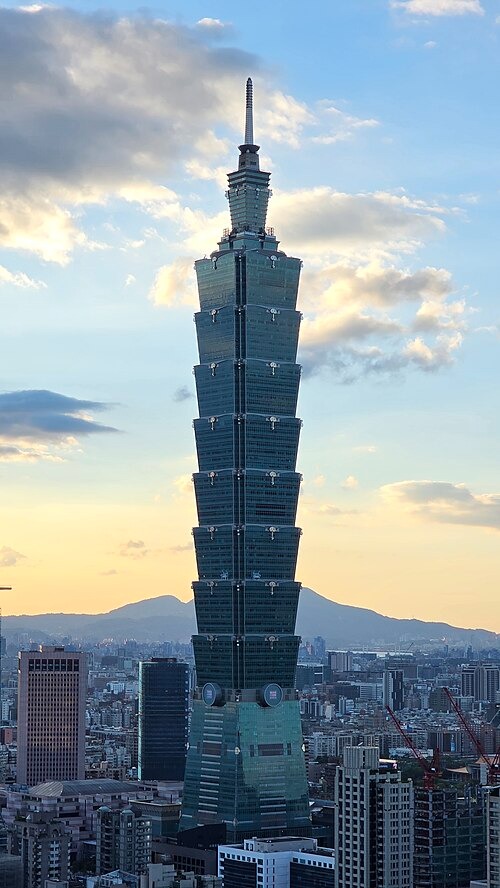
First of all, I would separate these issues and regions. Taiwan is a unique case for China. As you have heard more than once from Chinese representatives, Beijing considers the island its sovereign territory. This is an extremely complex issue with serious practical consequences for global politics, so the question of Taiwan stands apart from other questions. Beijing has also received certain signals from Donald Trump that the American commitment to supporting Taiwan has at least partly weakened over the past several weeks. In particular, this has happened through tying arms sales to conditions that give China some influence over the timing of those deliveries. Previously, American policy did not allow such things to be discussed openly. Some of Trump’s statements after the visit to China really did demonstrate a shift toward the Chinese position. So in Beijing they may be thinking: “We do not need to resort now to a risky use of military force or do anything extremely destabilizing and risky for us. Events are developing in our favor, and we can simply see where this leads.” I think the risks around Taiwan will grow closer to 2028, when presidential elections will take place simultaneously in Taiwan and in the United States. The interaction of these two political processes could become a destabilizing factor and change China’s approach. But for now, the situation will most likely remain calmer.
If we are talking about the rest of the world, China really does seek to project an image of stability and reliability. Its message is very clear: “The United States is a destabilizing, unpredictable country that imposes tariffs on you, cuts aid programs in Africa or Latin America and criticizes its own allies. We Chinese, by contrast, keep our word, fulfill our commitments and play by the rules.” At the same time, many of China’s actions, both economic and military, undermine that message. Countries in Southeast Asia and the Global South are suffering from a powerful flow of Chinese exports that destroys their opportunities for their own economic development. Partly this is a consequence of the American market closing to China, but to a significant extent it is the result of Beijing’s own domestic economic policy. Europe faces similar economic challenges, and there they are also watching China’s support for Russia in the war against Ukraine very closely. So rhetorically, China is trying to present itself as a reliable global power against the backdrop of a “predatory” United States, but Beijing’s actual steps in specific cases spoil that picture. The European case is especially interesting to me. If I had been advising Xi Jinping at the beginning of Trump’s term, I would have told him: “Trump will weaken the transatlantic alliance, make Europeans feel insecure and damage their economy. And events around Ukraine will alarm Europe even more.” With minimal concessions in the economic sphere and some distancing from Russia, a unique window of opportunity would have opened for China to significantly improve relations with Europe. But, as far as I can judge, China has in fact changed neither its rhetoric nor its actions regarding the war in Ukraine and relations with Russia. I think this sent a signal to Europeans. Even among those European leaders who, because of what is happening in the transatlantic alliance, would like to see China as some kind of alternative to the United States, there is very deep skepticism about that possibility. This skepticism is connected above all with China’s actions regarding Ukraine. So I think that, in a certain sense, it undermines the rhetoric of stability and reliability that China is trying to project internationally.
There are things from which China will only benefit in the long run because of the Russia-Ukraine war, and the current status quo suits it quite well. But if we return to Ukraine and U.S.-Russia relations, how is Ukraine perceived today? We are now at an interesting point. President Zelensky published an open letter to Putin proposing a meeting. It is a very polite but ironic message that makes clear that we do not need mediators. At the same time, Ukraine is trying to speak from a position of strength. Drone technologies have created a window of opportunity to reach Russia’s deep rear. The military understands that this is temporary, until the enemy finds countermeasures, but these few months give us strong cards. In this context, when everything is changing so quickly, how are Ukraine and Russia perceived in Washington?

I think that if you went back to January 2025, when Trump took office as president for the second time, and told most American observers, most people in the American foreign-policy world, what would happen after the Oval Office meeting with Zelensky at the end of February — after that “dressing-down” by Trump and Vance — and if you had told them about the almost complete halt of American aid and everything else that has happened in American policy since then, most people, I think, would have said: “Wow. Ukraine will find itself in a very difficult position.” Everyone would have expected catastrophe and Ukraine’s capitulation on Russian terms. But over the past year, Europe has mobilized in a way no one expected, financially and militarily, and Viktor Orbán’s defeat contributed significantly to that. The biggest surprise for everyone, however, has been the resilience and innovation of Ukrainians themselves. The way Ukraine adapted to the scaling back of American support changed the entire narrative. I think that for a long time, for people in the United States, Washington itself was the main focus of this discussion and analysis. But now this story no longer revolves around the United States. The center of attention has shifted to where it probably should have been from the start: to what Ukrainians are doing directly on the ground, both militarily and politically, and to all those garages and workshops where drones are designed and assembled. Everything that has happened on the technological front has, above all, shifted the center of this story to Ukraine and also to Europe. Now everything depends not on Trump’s decisions but on the dynamics at the front. Trump hoped that, in the spirit of great-power politics, he would be able to reach some kind of settlement with Putin. That would have given him another argument in favor of the Nobel Peace Prize. But over the past year and a half, the White House’s interest in this topic has faded because there was no quick success. It is telling how rarely the American government mentions Ukraine at all. Secretary of State Marco Rubio put it clearly: Washington is losing interest in this issue, and whatever happens next, for them it is no longer a priority. That, it seems to me, is what the American discussion of this issue looks like now.
I think significant changes began after the failed counteroffensive of 2023. Since then, the overall narrative has gradually shifted toward the idea that Russia is winning, or at least that Ukraine is losing. But if you look at the events of the past few months, then although one cannot say Ukraine is winning, Russia certainly does not have a significant advantage in anything. That is probably how I would describe the meaning of the present moment. I am interested in whether this can turn into something bigger. I do not even mean Donald Trump personally, with his sympathy for Putin, but the moods among analysts whom the White House might hear. These are no longer the same people as before, but still: can a different perception of Ukraine from the bottom up influence Trump? At least through the fact that Russia is not as powerful as he believes? Can this destroy his illusion that Russia will win anyway and that he is the one who will save Ukrainians from a terrible fate?
It is hard for me to imagine Trump completely changing his position. Of course, he is capable of unpredictable moves, so one should not say this with certainty, but his transformation into an ardent defender of Ukraine is unlikely. Still, we may see something else: a more distant approach on his part. Under current circumstances, that is probably not the worst option. Especially if, after the midterm elections, Congress comes under Democratic control. That would change the nature of the discussion on Capitol Hill, and it would be strongly influenced by precisely these realistic assessments. If we speak of the analytical community, of the people who write for Foreign Affairs, then a view is becoming increasingly clear there: Russia, despite all the imagined geopolitical advantages of the past year and a half, has not achieved real progress. People know the statistics well. Even when it seemed that Russia was advancing in Donbas, it was happening so slowly and at such enormous cost that it would take decades or centuries to capture the territories Putin claims. In addition, the talks involving Steve Witkoff and Jared Kushner effectively led nowhere. So the main analytical question today is: what exactly can change Putin’s calculations? Will there come a moment when economic pressure and strikes on Moscow and St. Petersburg, which Ukraine has carried out in recent months, affect his understanding of the risks to his own power? Is there a way for him to step back without endangering his position in the Kremlin? I think this is now at the center of attention. In the summer of 2023, during Prigozhin’s mutiny, many observers had a sense that Putin’s regime might collapse rapidly. Since then, analysts have largely shed illusions about a sudden collapse from within, although anything can happen in Russia. Such things are very difficult to predict. But the real question now is how to understand Putin’s decision-making logic, his political calculations and the mechanism of power in Moscow.
Speaking of the observers you mentioned, I would like to better understand the situation in Europe. We had an opportunity to observe this back in Davos. That was when a certain move away from the previous state of affairs began. I mean not a rupture of transatlantic unity as such, but rather Europeans’ awareness of their critical dependence on American military support. It took them time to grasp this, and it seems to me they still understand it only partially. But even if there were a different administration in the United States, Europeans would probably still have concluded that the situation had changed and that they could no longer rely entirely on Washington. Do you see Europe actually strengthening militarily? Not just accepting a new reality in which the United States may not come to help if Putin decides to attack Lithuania or another country, but acting practically?
Yes, I do. It strikes me when I think back to January 2025. What surprised me then, and what many people were writing about in Foreign Affairs and other publications at the time, was that Europeans were more surprised by the policy of the second Trump administration than they should have been. And this despite all his talk about the need to develop their own defense capabilities and take responsibility. Of course, certain shifts had already taken place after Russia’s full-scale invasion of Ukraine. Europe began to take its own security more seriously, but it still approached the beginning of Trump’s second term not quite ready. I recall two articles we published over the past year and a half. They were written by the Italian scholar Nathalie Tocci and Matthias Matthijs, who works in the United States but is himself European. The first article, published several months ago, was called “How Europe Lost” and analyzed precisely the unpreparedness of European capitals for pressure and changes in the White House’s course. Then, literally a few weeks ago, they published another piece, “How Europe Found Its Resolve.” For that to happen, serious shocks were needed: open threats regarding Greenland during Davos, the public dressing-down of Zelensky in the Oval Office, the crisis around aid to Ukraine and the United States’ harsh tariff policy. All of this forced Europeans to wake up and look soberly at reality. So recently we have seen concrete steps: increased military spending, expanded support for Ukraine and Europe taking on functions that previously depended entirely on American power. Europe has indeed become more active. At the same time, I understand very well how difficult it will be to maintain this course. If, over the next few years, a far-right party comes to power in one of the three key European countries, this could radically change the situation. In addition, difficult debates continue inside the EU about how to finance common defense and who exactly will control decision-making. Still, what we are seeing, especially after Davos, has significantly changed the overall picture. It has broadened the sense of what is possible both in terms of long-term support for Ukraine and in terms of the role European power will play on the world stage in the coming years.
I remember that about a year ago I was in New York, in the Foreign Affairs office, and asked your deputies: “How are you?” The answer was revealing: before, they could plan ahead, because the publication deals with strategic foreign policy, not daily news. Working in the mode of a live news chronicle is very unusual. Do you see the situation as having normalized now? Have certain norms shifted, and when choosing topics do you now clearly understand what has changed radically and what has returned to its usual course?
I do not think the situation has normalized. Rather, we have adapted to the new reality. You can call it a “new normal,” but not normalization. What distinguishes the current Trump administration from his first term and from classical American diplomacy is the extent to which everything depends on the president’s personal impulses and moods. This is a characteristic feature of personalist systems. For example, Putin’s decision to launch the full-scale invasion of Ukraine in 2022 was made according to a similar logic. Because of this, planning editorial work becomes much harder. You can no longer analyze discussions inside the administration and forecast likely scenarios. The very process of commissioning articles has become fundamentally different.
If we talk about recent events, for example the Venezuelan campaign to remove Maduro or the U.S.-Israeli operation against Iran’s leadership, how do you assess them? Are these simply further examples in a long line of American operations that turned out to be partly successful or failed? I am interested in this because if we think of Iraq, even though Saddam Hussein was eliminated, it is difficult to call that a U.S. success story. The same applies to Afghanistan. So are these campaigns merely a continuation of the old list, or are we seeing something new?
The difference in these cases of using force, although in the case of Venezuela it is hard to call it a full-fledged war, is that Trump does not care at all about the consistency of his own policy. He can insist that he is launching an operation to change the regime in Iran and bring freedom to the Iranian people, and then sharply walk back his words. At the same time, he never acknowledges the retreat and keeps convincing his supporters that everything is going according to plan. He simply declares the result an absolute success, says that this is exactly what Washington wanted from the beginning, and is perfectly satisfied with that outcome. Any previous American president would have seen the failure to achieve a stated goal as a defeat. Voters and commentators would have judged it the same way. That is exactly what makes the Venezuelan operation fundamentally different. If George W. Bush, Barack Obama or Joe Biden had announced that they would use force to restore democracy in Venezuela and ultimately achieved what we have today — perhaps there will be a transition of power there in the coming years, but for now the country is led by the former vice president, the second-ranking figure in Maduro’s regime, who is now not far from me in New York — they would not have been able to present it as a victory. Trump, however, can easily say: “This is a great result. We will get oil deals, and the level of repression will decrease somewhat. This is exactly what I wanted.” For his predecessors, presenting such an outcome as a victory would have been impossible. So the current willingness to act inconsistently and contradictorily is the main change in American policy.
Do you feel a decline in trust in the United States in the Middle East and the Gulf states? Immediately after the meeting between Zelensky and Trump in the Oval Office, I attended a meeting of Arab experts close to the governments of Gulf states. Despite the usual anti-Americanism, they ultimately came to the view: “We may disagree with Trump, but there is no other force besides the United States that can guarantee our security.” Many Arab countries are critically dependent on American military power, equipment and weapons. At the same time, many types of weapons that were considered reliable and that the Gulf monarchies actively purchased turned out to be incredibly expensive. They are now beginning to rethink this issue. But if we talk about the U.S. role as a security guarantor in the region, a role that took shape as far back as the Iran-Iraq war, when Washington supported the Gulf states and began its long-term presence there, how do you assess that role today?
It is hard to predict what all this will look like in ten years. But what is striking in the dynamics of the past few years is that almost regardless of the actions of the United States or Donald Trump, the result in many regions of the world is a paradoxical strengthening of dependence on Washington. So even if officials from Gulf states sharply criticize American decisions regarding the war with Iran, after the ceasefire is announced their defense spending and political steps show that they have no real alternatives. Because Trump has made the region more dangerous, they are forced to rely on American power even more than before. This is confirmed by both economic and military indicators. The enormous scale of American power creates a paradoxical situation: destabilizing actions by Washington, on the one hand, increase dependence on it, but on the other, push both U.S. allies and other countries to actively search for alternatives. Everyone is trying to protect themselves from American unpredictability or aggressiveness. For me, the main question is whether this trend will continue after Trump’s term ends. Will it lead over the next ten or twenty years to a fundamental redistribution of the global balance of power? There are reasons to think this is possible. But another scenario is also entirely plausible: given the scale of American military and economic power, after a more typical president, whether Democrat or Republican, returns to the White House, we may see a return to the previous status quo to a much greater extent than we can imagine now. In other words, the current changes in relations may prove less deep than they appear today. These two dynamics now exist in parallel, and which of them ultimately prevails will be the key question of global geopolitics for the next decade.
We are approaching the 250th anniversary of the United States, and I would like to ask you about a broader topic: the decline of the United States as an empire that, to one degree or another, began to dominate after World War II. I am also interested in how some Foreign Affairs authors and commentators look at this. I remember conversations with experts who work on Eastern Europe and Ukraine. Before the events in Iran and Venezuela, they spoke a lot about isolationism. But after everything that has happened, I no longer understand how one can explain Trump’s policy using that concept. It does not look like isolationism at all, so I am interested in how they themselves now assess their previous arguments. My main question is: are we really talking about a move toward isolationism, or rather about a decline in American power?
You are absolutely right: isolationism does not describe either Trump’s view of the world or his policy. It was a mistaken notion from the very beginning. On the cover of Foreign Affairs a few months ago, we put the theme of a new American hegemony. That is, Trump is not going to withdraw from world affairs. On the contrary, in that article we tried to outline a new vision of American global power. We have published many pieces on this topic, and over the past year and a half the understanding has increasingly taken hold that there is simply no basis for calling this isolationism. In reality, we are seeing a very active and quite aggressive use of American power, and not only military power. We were both at the Munich Security Conference last year, when J.D. Vance gave a speech about domestic politics in Europe, about technology, freedom of speech and right-wing political parties. This did not at all suggest that America was stepping aside. On the contrary, it was a very forceful and insistent formulation of American interests, even beyond what could have been imagined under other administrations. The question of U.S. decline is a separate and quite contested topic. Over the past twenty-five years, many decisions in U.S. foreign and domestic policy seemed catastrophic. Each time, there was a sense that this was the turning point from which decline began. But if you take a step back, you see that the American economy, despite all the growth in Asia, still accounts for roughly the same share of global GDP as before. American military power and the alliance system remain just as strong, and in some respects even stronger. So perhaps this moment will indeed mark the beginning of decline, but earlier predictions of this kind have repeatedly proved wrong.
To conclude, I would like to return to China and its connection with Moscow. Drawing on your historical research into international relations, how do you see China’s role regarding Russia? Is Russia simply a junior partner in a subordinate position for Beijing, while China cleverly plays its own game, one that Putin does not fully grasp? Does China have enough leverage to force Russia to do something if it wants to? We have no illusions that China can become a mediator in this war. Hardly anyone seriously believes that. Still, what place does China assign to Russia in its vision of the world?
I do not know what exactly is happening in the minds of Xi Jinping or Vladimir Putin, but I would return to the period of the 1940s and the early Cold War, which I studied in my research. If we look at relations between Mao and Stalin at that time, at the highest level they appeared very close. The Soviet Union provided enormous support to the Chinese communists. But beneath the surface, on the side of the then junior partner, China, an incredible amount of irritation and resentment accumulated because of a sense of unfair treatment and disrespect. Literally a few years passed, and this mutual suspicion spilled over into the Sino-Soviet split, which later led to the American opening to China. If you are sitting in Moscow and looking at these relations over the next ten or twenty years, sooner or later you will start to feel the same thing: disrespect and disappointment. Eventually, this will begin to change the very nature of the relationship. At the same time, the lesson of history is that such a break can take a very long time. For Ukraine, which is now facing all the horrors of Russian power, this is small consolation, and for the war effort right now it does not mean much. But if we look at the longer term, other leaders will come after Xi Jinping and Putin. We will see new generations of leaders who will most likely also feel this frustration at a subordinate position, and sooner or later it will come to the surface.
We planned this interview for quite a long time, looked decades back and forward, and in effect covered almost a century. I think we can end here. Daniel, thank you very much for the conversation.