“Now, of course, everyone understands that Trump betrayed Ukraine” — Luke Harding
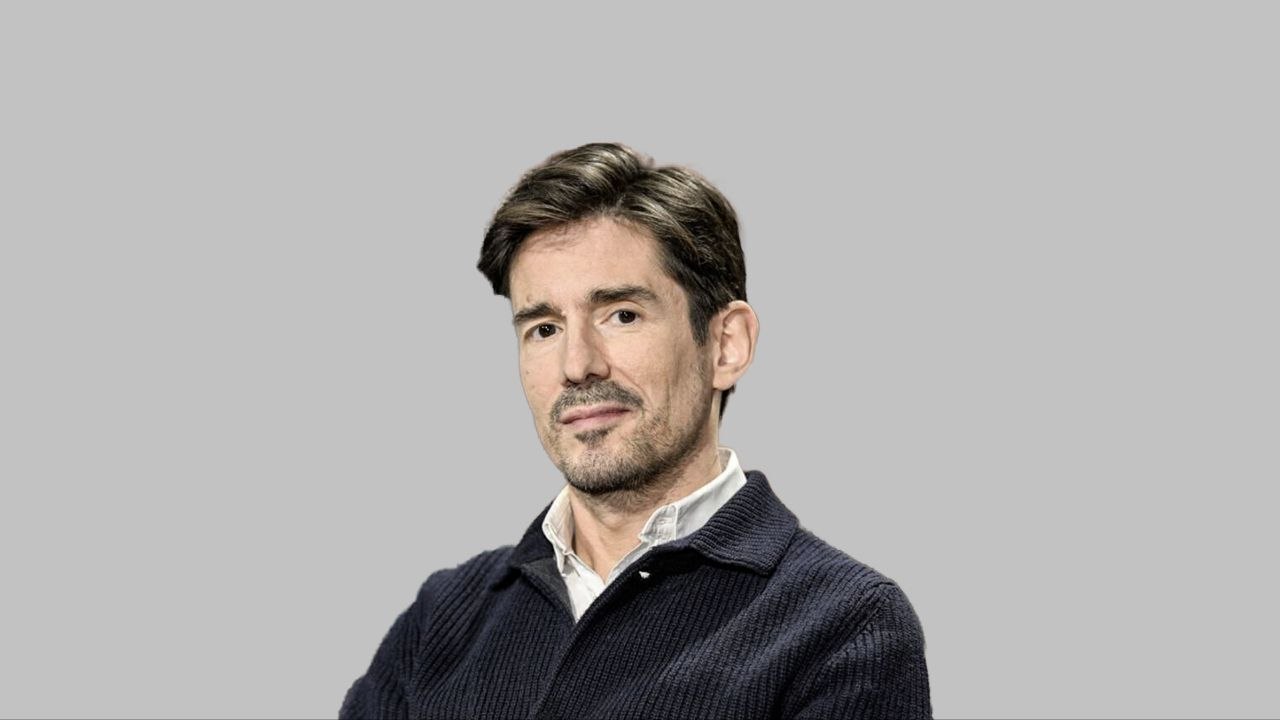
British journalist and writer Luke Harding has been writing about Ukraine, Russia and Russia’s war against Ukraine for many years. In the summer of 2026, he published Betrayal: Trump, Putin and the New Age of Conquest, a book that explores not only Russia’s war against Ukraine, but also new global alliances and changes in the world order.
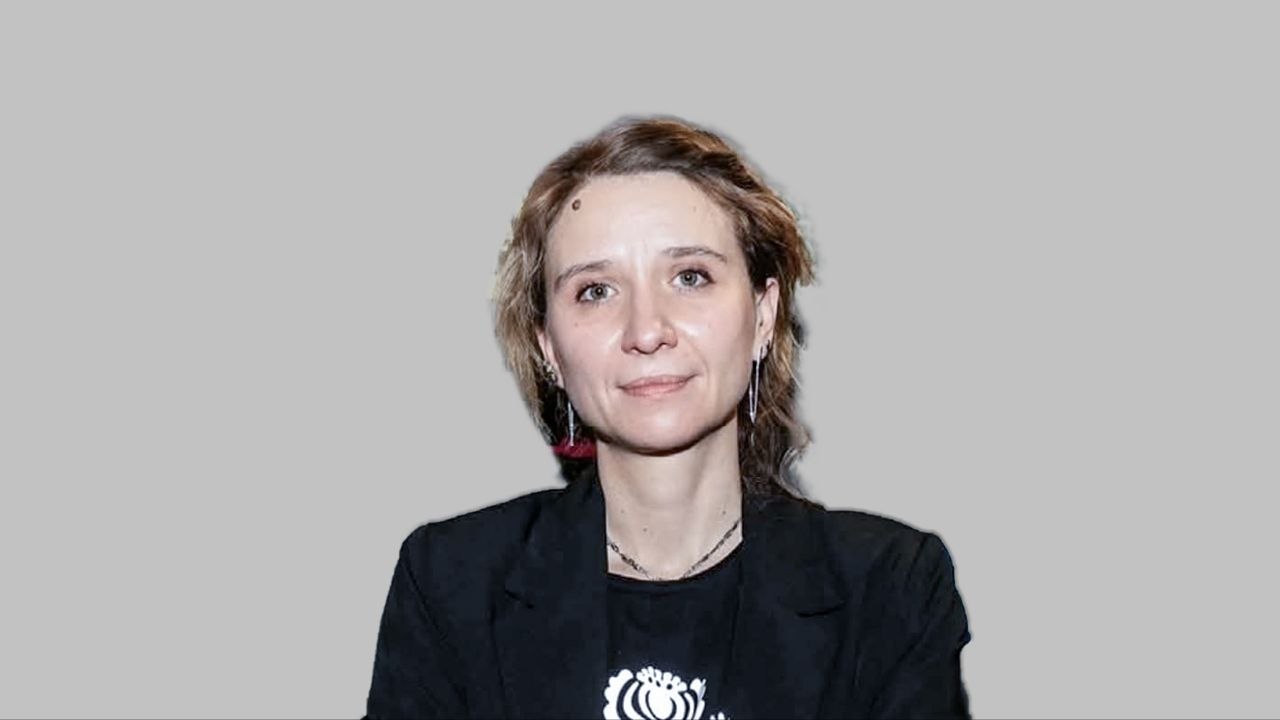
In the podcast When Everything Matters, journalist Nataliya Gumenyuk speaks with Harding about his strangest interview — with North Korean prisoners of war — as well as Russian influence in Britain, British attitudes toward Ukraine and Boris Johnson, Volodymyr Zelenskyy, and the ways in which the war is changing Europe.



Luke, I’m very happy to finally speak with you! Congratulations on the publication of your new book, Betrayal: Trump, Putin and the New Age of Conquest, and its presentation in London. Although you are the author of around a dozen books, half of which I have read, to me you are first and foremost a Guardian correspondent who has been working in Ukraine since 2014. I also remember when you headed the Moscow bureau and faced pressure from the FSB in Russia. You have spent all these years here — in Kyiv, at the front. What have you discovered about Ukraine over these twelve years? What surprised you, and what have you learned? When you tell someone about this country, are there things you think: “This is what I used to think, but this is what the war actually brought and what I came to understand here”?
First of all, I’m very happy to see you and to speak with you. What have I understood over these nearly twenty years? First, Ukraine changes incredibly quickly, unlike stable Britain, where the last great upheaval was the Norman Conquest in the 11th century.
When I first started coming here, I had to explain to an international audience a complicated political system deeply permeated by oligarchic influence: who Viktor Yushchenko was, who Yulia Tymoshenko was, who Viktor Yanukovych was. Above all of this there was always the shadow of oligarchs and, of course, Russia.
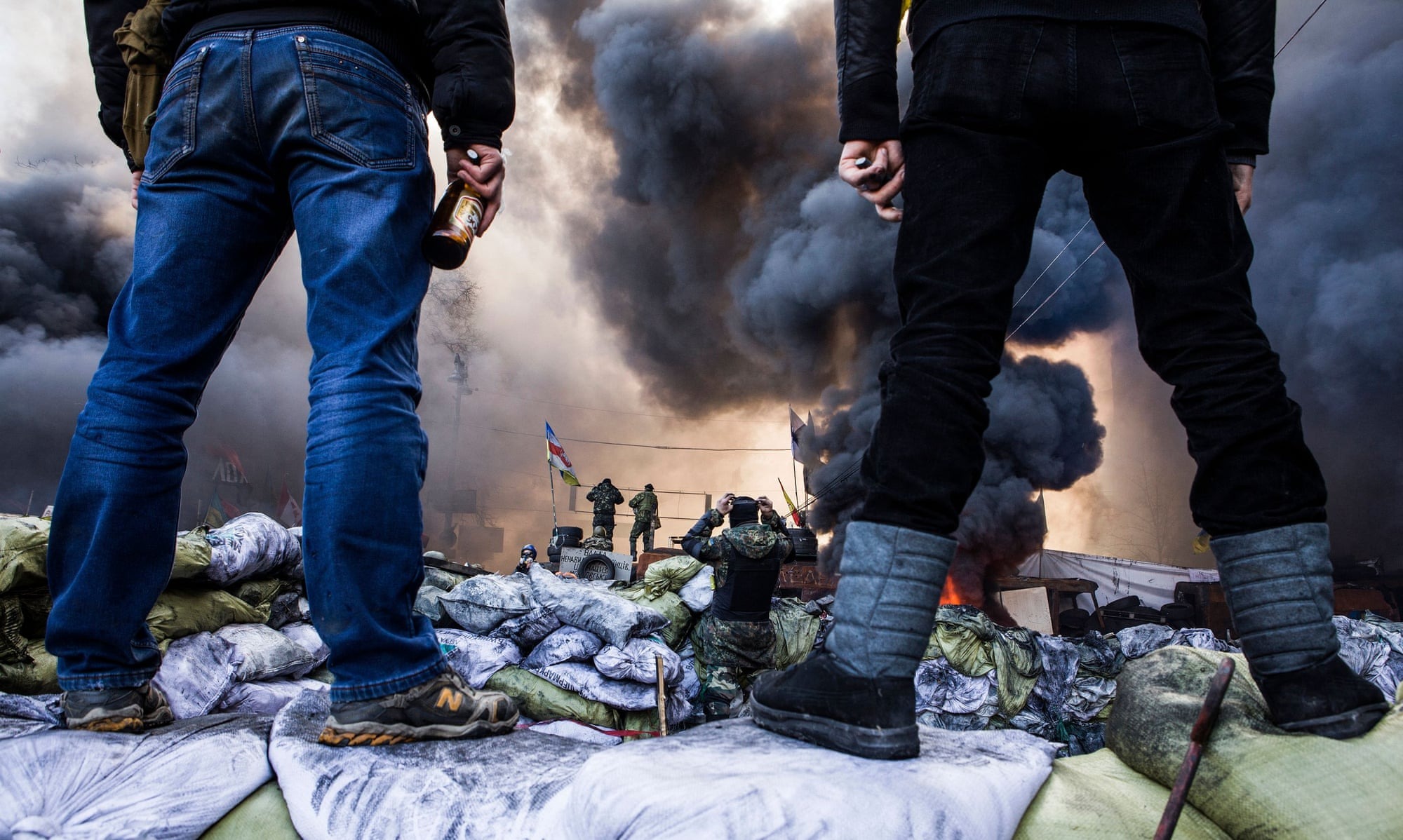
Then came a long process of decolonization and democratization. After the Revolution of Dignity in 2014, it accelerated enormously. I was in Kyiv and in Donbas — in Donetsk and Luhansk — and saw with my own eyes how the so-called “Russian Spring” was born. To me it was obvious that this was not a spontaneous uprising, but a carefully coordinated and planned attack organized by Russian security services, primarily military intelligence.
Ukraine then went through further profound transformations — under Poroshenko, under Zelenskyy, and now in the fire of the full-scale invasion. Everything changes here right before your eyes. For example, in central Kyiv there once stood an ugly Soviet statue of a pilot painted gold. It was removed, and now there is a pleasant little park where people walk their dogs. This is a country that is constantly reinventing itself.
And over these two decades, the most important thing has happened: Ukraine and Ukrainians themselves have become deeply Ukrainianized.
Another fundamental conclusion I have reached is that Ukrainians are absolutely not Russians. The social rhythm is completely different in Ukraine. You feel very strongly that Ukraine is a profoundly horizontal society. Power belongs to the people, governments are temporary, leaders come and go, and there is a strong social contract between society and the state. It is not Russian at all; it is not vertical.
Of course, the country is not perfect, and politicians make mistakes. But the energy of civil society and activism here is so alive and powerful that it surpasses that of Britain. Despite all the horror of this war, that is what gives me a hopeful and optimistic view of Ukraine’s future.
You are British, and The Guardian is a British newspaper. I also write for both American and British media, and I see the difference in their approaches. American journalists in Ukraine are often primarily interested in American support, military aid and Trump — in other words, everything through the lens of Washington. What interests British audiences? What kinds of topics and stories resonate most with British readers?
I can speak only for myself and for what resonates with my own perspective. Of course, I write about big politics — about Trump’s betrayal of Ukraine, the European Union, British leaders and how they are trying to find their way through these extraordinarily difficult times, when the world order as it existed — the rules-based international system — has effectively collapsed.
But at the same time, I always try to combine geopolitics with the living voices of ordinary Ukrainians. These are people whose lives have been consumed by the war, both before and after the full-scale invasion. Often they are people living near the front line. It is important to me to show them as real people, not faceless symbols, statistics or numbers. These stories need to be humanized and told with deep empathy.
And at the same time, to quietly convey a simple truth to the reader: if it were not for the blind accident of geography, it could be them — my British, European or American readers — in these people’s place.
This is not a distant, abstract war in an exotic country. It is a battle that defines the very essence of the international order and what the entire 21st century will look like. It is a moral Rubicon that Ukraine must cross.
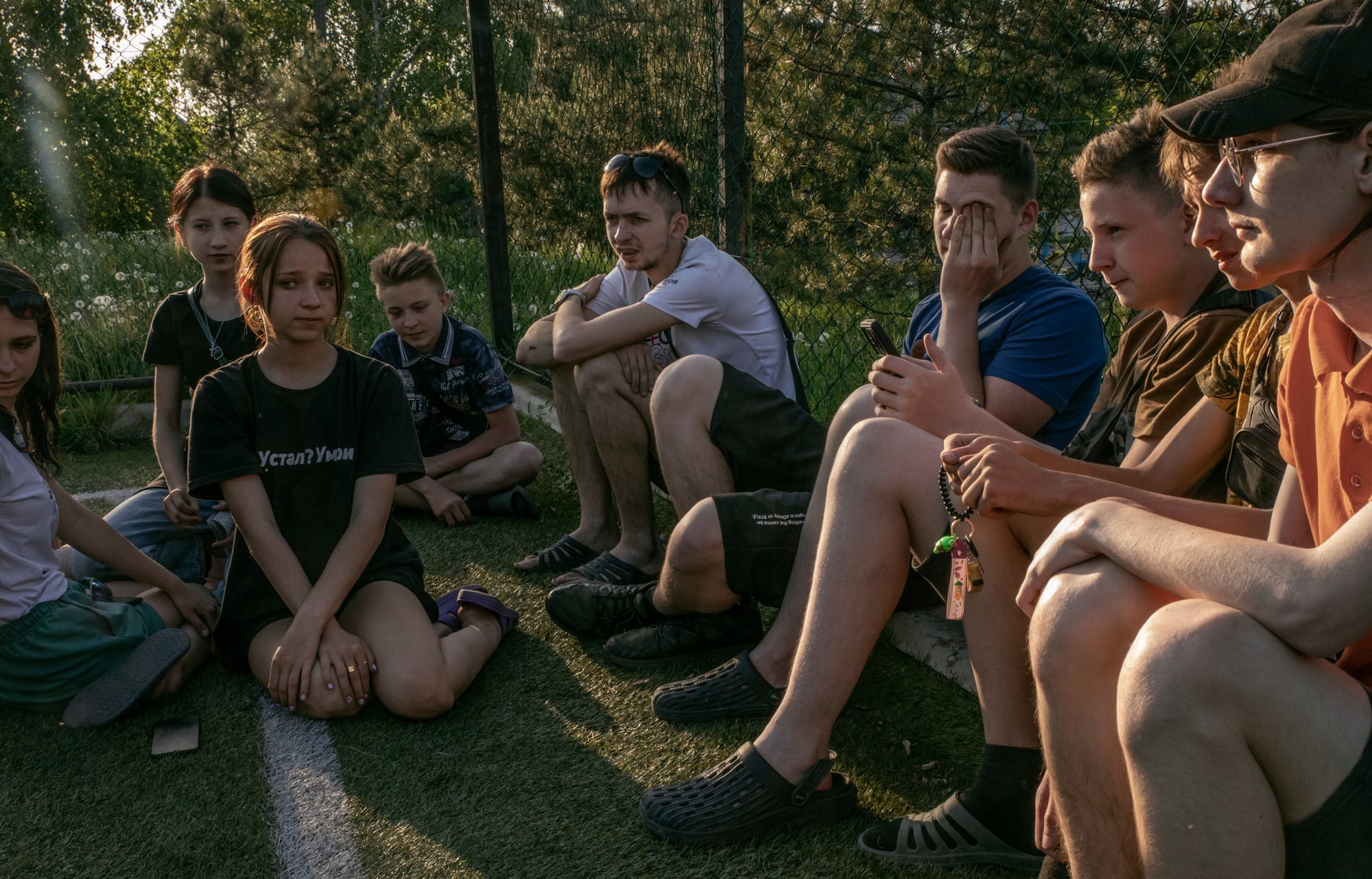
In one chapter of my new book, I describe a trip to Hrodivka in Donetsk region, which was steadily being swallowed up by the Russian offensive. The front line was just 15 kilometers away, and I decided to go there spontaneously.
When I arrived, I saw a group of teenagers. They were sitting on a football field beside an old school, calmly playing cards. It was a beautiful day in May: gentle sunshine, swifts overhead, flowerbeds in bloom, and somewhere in the background the dull rumble of Grad rockets.
I talked to them about their plans for the future. They were already packing their things and preparing to evacuate. As it turned out later, they had done the right thing — the settlement was occupied about three months later.
Those are the stories that are priceless to me. Whether it is young people, elderly people, or that stubborn minority who refuse to leave their homes under shelling until the very last moment. It is important to me to tell their stories and remind the world that global politics is not just a bunch of serious men in expensive suits. It is, above all, human lives that refuse to give up and keep going despite everything.
Your book has a very particular title for Ukrainian ears — Betrayal. The English word sounds somewhat broader, while in Ukraine “zrada” has become almost a national concept of its own. So whose betrayal is it? Who, in your view, has been betrayed, and how did you choose the title?
Yes, of course, I’ll explain. When it comes to the word betrayal, the idea was that it has many different meanings. A husband can betray his wife, a state can betray its citizens, a friend can betray a friend. But in this particular case, the main betrayer is Donald Trump, the President of the United States.
I remember conversations with friends in Kyiv, as well as with some fairly senior people in Zelenskyy’s team in 2024, ahead of the U.S. presidential election. They were already very disappointed with Joe Biden, who was delaying military assistance. They said, “Well, perhaps Trump will help us. Yes, he is unpredictable, but you can expect unexpected moves from him.” And I said, “No, no, no, no. He will betray you.” But they were skeptical.
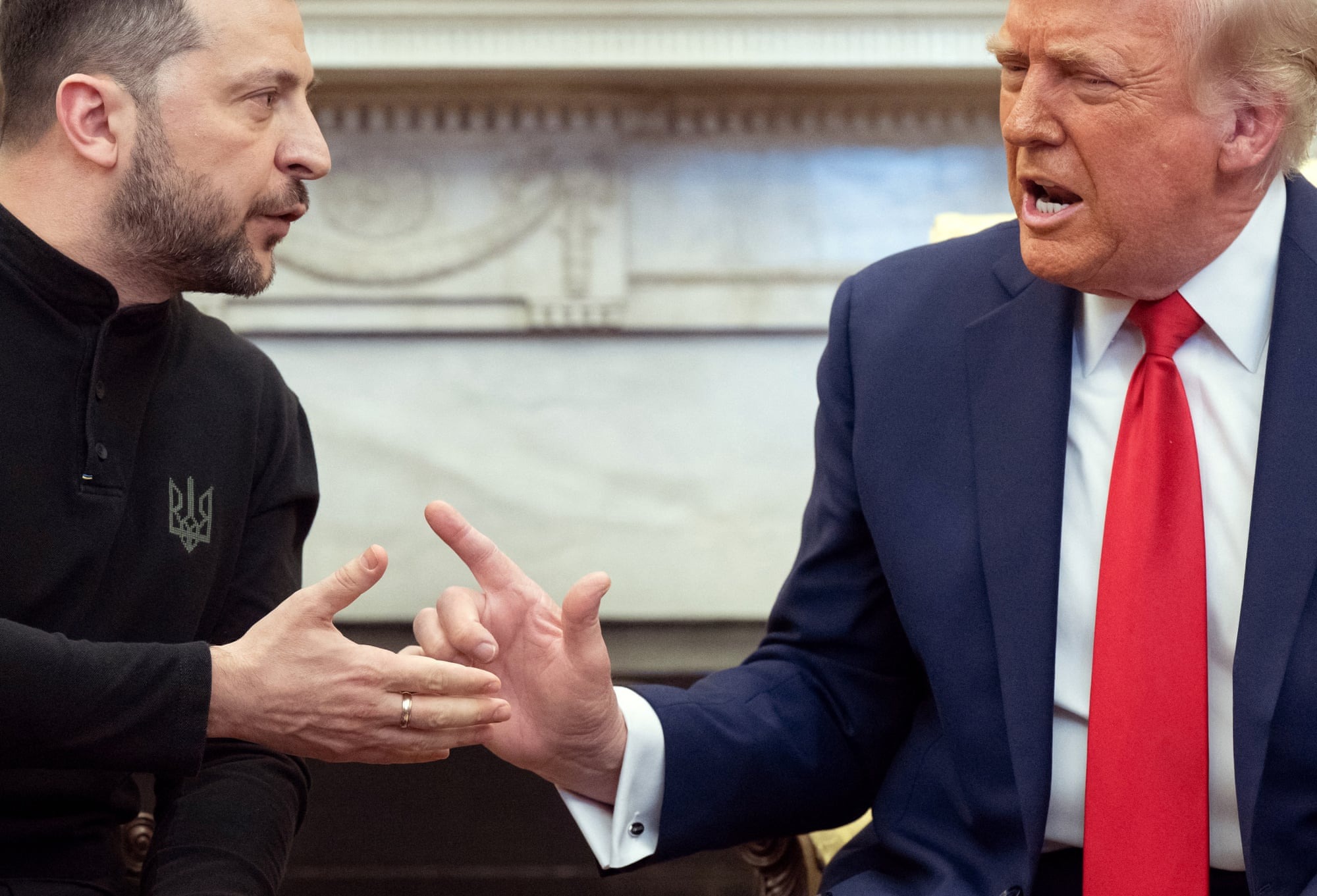
Now, of course, everyone understands that Trump betrayed Ukraine. He cut U.S. military assistance, repeats Kremlin talking points, and last year humiliated Zelenskyy, effectively throwing him out of the Oval Office — I also write about this in the book.
More than that, it seems to me that he has effectively gone over to the other side. He has fundamentally changed the traditional course of American foreign policy and is actually supporting Russia. I would say he is the most pro-Russian U.S. president in the history of the American republic. Either he genuinely wants Putin to win, or he simply does not care what happens to Ukraine and its people, or both.
So he is the main betrayer. But, of course, he has also betrayed Europeans, because the transatlantic alliance has, essentially, almost disappeared. In my view, he has also betrayed the very idea of America as a “shining city upon a hill” — a country that plays a global leadership role and considers the security of Europe and Ukraine part of its own security.
Under his presidency, the United States has become unreliable, predatory, selfish, greedy and, frankly, somewhat clownish — while Trump acts as a fellow imperialist alongside Putin. Putin wants to seize and subjugate Ukraine, while Trump threatens Greenland, Canada and other countries. So I would say that this is the main betrayal. But there are other, smaller betrayals as well.
I had the feeling that you traveled all over the world for this book. But at the same time, it is a deeply researched story about Russia’s war against Ukraine, and it certainly deserves to be translated into Ukrainian. I want to focus on chapters that were not part of your reporting for The Guardian. You had written a lot about North Korean troops, but in the book you describe two prisoners of war in detail for the first time. What did you learn from meeting them in person? What impression did they make on you?
I’m no longer young. I’ve been a foreign correspondent for more than 25 years. But this was probably the strangest interview I have ever conducted — with these two North Korean prisoners of war. It is one of the reasons I wrote this book in the first place.
Before that, I wrote Invasion: Russia’s Bloody War and Ukraine’s Fight for Survival. Its Ukrainian translation was published by the Kharkiv-based Vivat publishing house, and the print run was produced at the Faktor-Druk printing plant before it was destroyed by Russian missiles. Vivat is now translating my new book, Betrayal, so I hope it will also be published in Ukrainian.
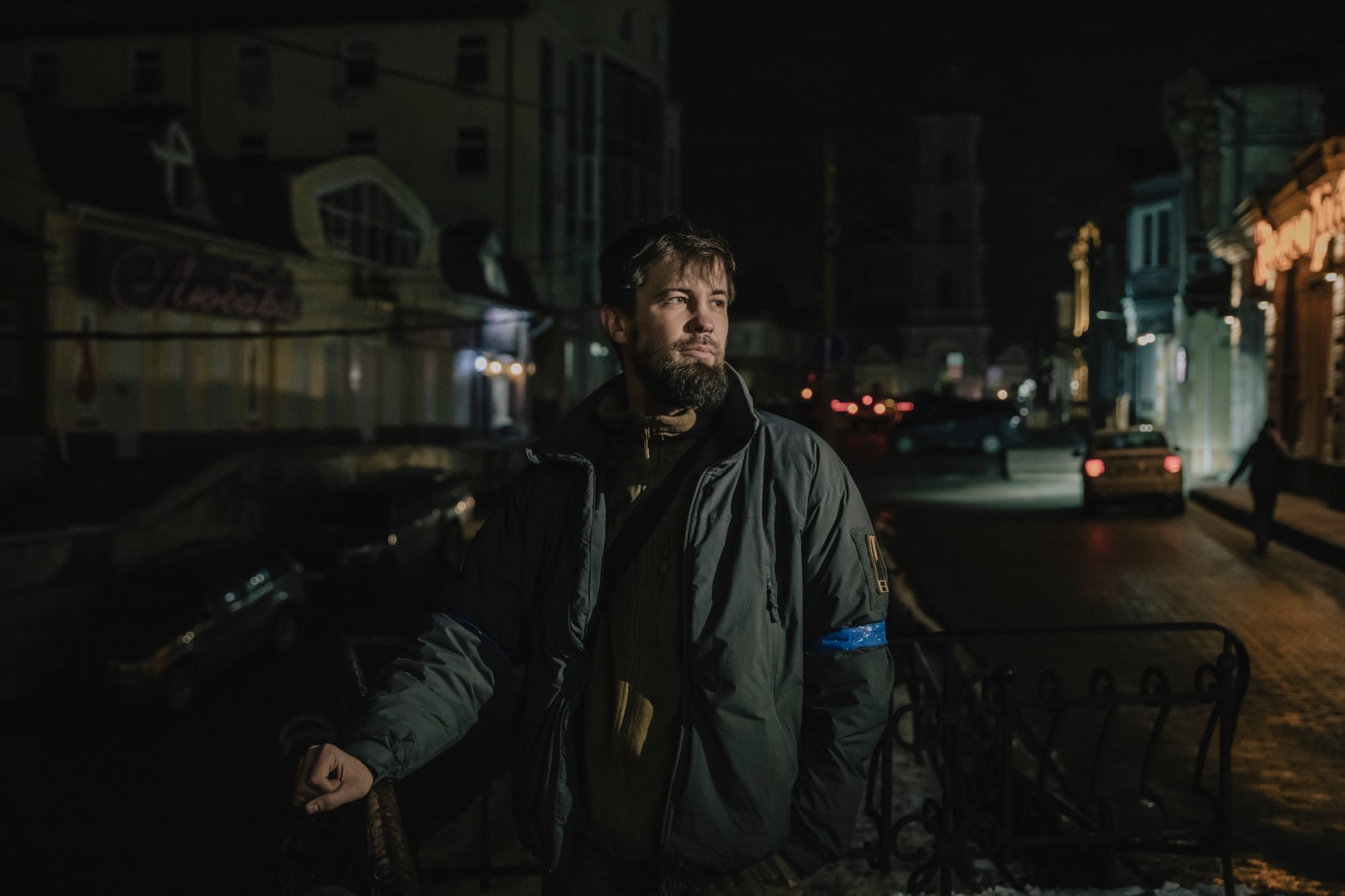
At the time, I was in Sumy speaking with my friend, Ukrainian soldier Vitalii Ovcharenko. We were eating burgers, and suddenly he said, “I’m learning Korean.” I asked, “Why?” And he replied, “Because a contingent of North Korean soldiers is heading here to fight in the Kursk region.”
He was learning phrases like “Put your hands up” and “Put down your weapon.” The very thought that North Korean soldiers could be fighting and dying in Europe seemed completely surreal to me.
My great-uncle fought in the Korean War as part of the British Army. He was captured by the Chinese and spent several years in a Chinese prisoner-of-war camp. And now, 80 years later, we see Kim Jong Un deepening his partnership with Russia and Vladimir Putin and sending soldiers from elite special forces units to kill Ukrainians. It shocked me.
I wrote about this story for The Guardian and then, with enormous difficulty, obtained permission to meet these two captured soldiers. What struck me was how young they were. They knew practically nothing about the world.
The younger one, Pak, initially thought he had been rescued by Russian soldiers. He was very seriously wounded and was being taken to Kyiv in an ambulance. When he saw an American flag on the side of the vehicle, he thought, “My God, these are Ukrainians.” He then tried to kill himself — he reached for a grenade in his backpack, but it had already been taken away.
Even eight months after being captured, Pak kept repeating: “I should have killed myself. Not dying is a disgrace.”
What also struck me was that they essentially lacked the ability to process what was happening independently — the ability to think critically and evaluate reality. There is simply nothing in the North Korean education system that teaches people to think critically and assess evidence.
The older one, Ri, who was about 26, understood that if he returned to North Korea, he would be executed. He showed me his sketchbook. He was a talented artist: there were propaganda images of Kim Jong Un and the ruling family, but also beautiful young women he had seen on South Korean television, Piglet from Winnie-the-Pooh, and sketches of North Korean soldiers.
I thought: what a strange, almost fantastical inner world these people have. They know almost nothing about the outside world — and yet they are sent thousands of kilometers away to kill people in a country they know almost nothing about.
You describe the journey of these two prisoners of war in great detail in the book. How did you manage to conduct the interview and reconstruct their story?
It was really difficult. Some of the information was already known, and they told me some of it themselves. Interestingly, Ri, who was more talkative in the first videos, spoke less during our meeting. Pak, who had barely said anything when he was first filmed, was much more open.
But I found a way around it. Ri did not really want to talk, but he could draw. So I asked him, “When you were secretly transported by ship from North Korea to Vladivostok or the Russian Pacific coast, what did you eat?” He started drawing. Ri drew a Russian military ration pack and then showed me what was inside. That way I understood that they were being given Russian field rations and learned other details.
Then, when I asked him to describe the battle itself, everything was very confused again. So I said, “Draw it.” He drew a pontoon bridge and fir trees, showing the place where Ukrainian drones killed his comrades as they crossed the river. Then he drew one line of trenches, then another, and began explaining: the diversionary group went one way, we went another, and this is where his comrade was killed.
In the end, he made a huge, very detailed diagram for me. From it, I was able to reconstruct the sequence of events. I still have it, by the way — I kept the drawing.
Somehow, by combining Pak’s account, Ri’s drawings and some material that was already publicly available, I was able to piece together an extraordinary story.
To tell a story like this, you really had to be a powerful journalist. These North Koreans have been in captivity for almost two years, but we knew nothing until you said, “Draw.” I won’t go through the whole book, but I was interested in the chapter about former Ukrainian diplomat Oleh Voloshyn — his ties to the Party of Regions, Opposition Platform – For Life, Viktor Medvedchuk and the British far right. How big was this story in Britain?
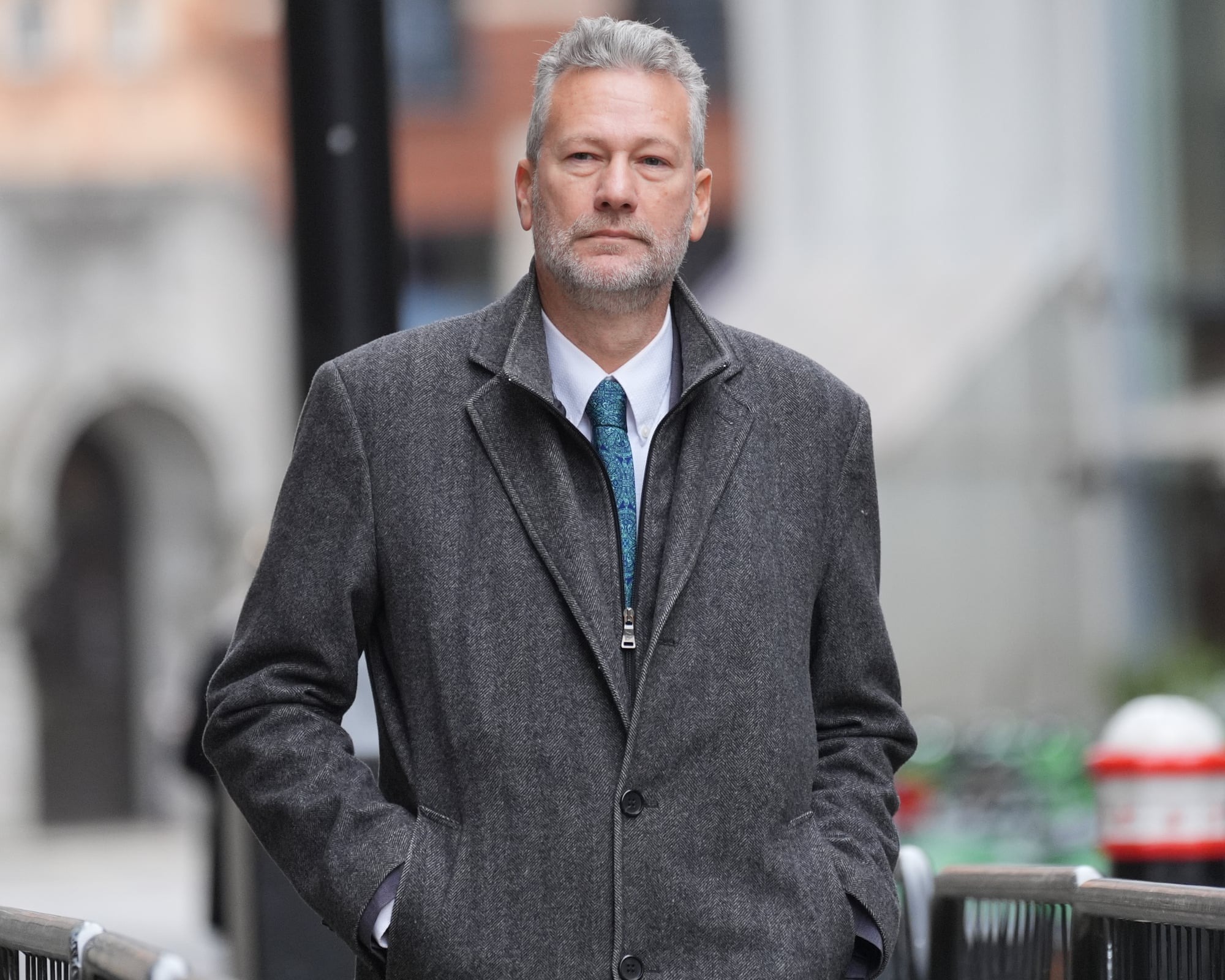
It’s a good question. The scandal remained small, although it should have exploded. At the book launch, together with prominent media figure Alastair Campbell, we asked an audience of 350 people, “Who has heard of Nathan Gill, the European Parliament member who was bribed by Voloshyn?” Only about 50 people raised their hands. And this was in London!
We are talking about a man sentenced to 10.5 years in prison over money from an alleged FSB agent. In my view, part of the reason is that most British newspapers are right-wing and indulgent toward the far right: previously UKIP, and now Nigel Farage’s Reform. It is the only clearly pro-Russian force in Britain.
One of its leaders received money from Voloshyn, whom I have known since 2007–2008, when he was press attaché at the Ukrainian Embassy in Russia. He is intelligent, charismatic and speaks excellent English — like a Japanese bullet train. But he never hid his pro-Russian sympathies, and later returned to the Foreign Ministry under Yanukovych.
I knew Oleh Voloshyn from the period when he was a Foreign Ministry spokesman, and we used to talk. I remember him from the Maidan as well, when I worked at Hromadske.
Yes, he spoke a lot with foreigners — influential figures, members of the British Parliament, me and American journalists. Voloshyn loved gossip and could never resist telling you something. Some of it proved useful and made its way into my book Collusion: Secret Meetings, Dirty Money, and How Russia Helped Donald Trump Win (2017), which became a New York Times bestseller.
I quote him there both under his own name and off the record, but his statements were later confirmed. Spies usually operate in the shadows, whereas Voloshyn was everywhere in plain sight. Because of his open pro-Russian stance, it never occurred to anyone that he might be working for the FSB. But he was.
By the way, he still sends me angry letters from Moscow — one arrived last week. He is furious about my new book and about my suggestion that the FSB reads our correspondence.
But there is another important detail. Shortly before the full-scale invasion, I was in Kyiv trying to arrange an interview with Viktor Medvedchuk — the most prominent pro-Putin figure in Ukraine. I was arranging it through Voloshyn. He promised to set a date, but then suddenly disappeared a few weeks before February 24.
When I asked, he said he was in Belgrade “advising Serbian politicians.” That’s when I realized he had taken his family out and fled because he knew what was coming. From then on, I told everyone that war was about to begin, even though the authorities were urging people not to panic.
Nathan Gill was charged and convicted. Did this have any impact on UKIP, the UK Independence Party?
No. Let me explain to Ukrainian listeners what Nathan Gill was doing. Voloshyn wrote speeches for him containing a classic set of Kremlin talking points: the lack of freedom of speech in Ukraine, the suppression of pro-Russian television channels such as 112 and NewsOne, and discrimination against Russian speakers.
British police have his WhatsApp message: “I’ll write everything.” Gill would read these texts aloud in Brussels and Strasbourg. Afterwards they would have dinner, and Voloshyn would hand him an envelope containing €5,000 in cash.
There are two things here. First, it is a crazy, old-fashioned way of doing espionage. Second, British politicians are astonishingly cheap. I’m not sure €5,000 would have worked as a bribe in Ukraine, but Gill took the money and recruited other British figures to repeat pro-Kremlin talking points.
At the same time, Nigel Farage made friendly statements about Russia, admired Putin and appeared on Russia Today. This is a huge scandal about how Russian intelligence services corrupted British politics, but in Britain it never received the attention it deserved.
I’d like to talk a little more about British-Russian relations. Russia has repeatedly used London as a platform for operations against its political opponents, including assassinations. You have written several books about this — the Skripal case, Litvinenko and others. What can we say about those relations now? And is this connected to Britain’s consistent support for Ukraine? After all, regardless of whether Conservatives or Labour are in power, Britain’s position toward Russia and its support for Ukraine have remained relatively stable.
You are absolutely right about British support for Ukraine. What is interesting is that it does not come only from the top down — Ukraine is supported not just by politicians but by ordinary people as well. Partly this is connected to a very British sense of fairness and sympathy for the weaker side. Everyone understands that Ukraine was attacked, that it is the victim and that it is fighting for its existence.
To some extent this is also connected to the 150,000 Ukrainian refugees — mostly women and children — who settled in Britain after 2022. Active Ukrainian communities emerged across the country. I could be somewhere in the deep countryside of southern England, stop beside a 12th-century church, look up — and see a Ukrainian flag on the spire. Every time, it brings tears to my eyes, because you simply do not see other countries’ flags on churches.
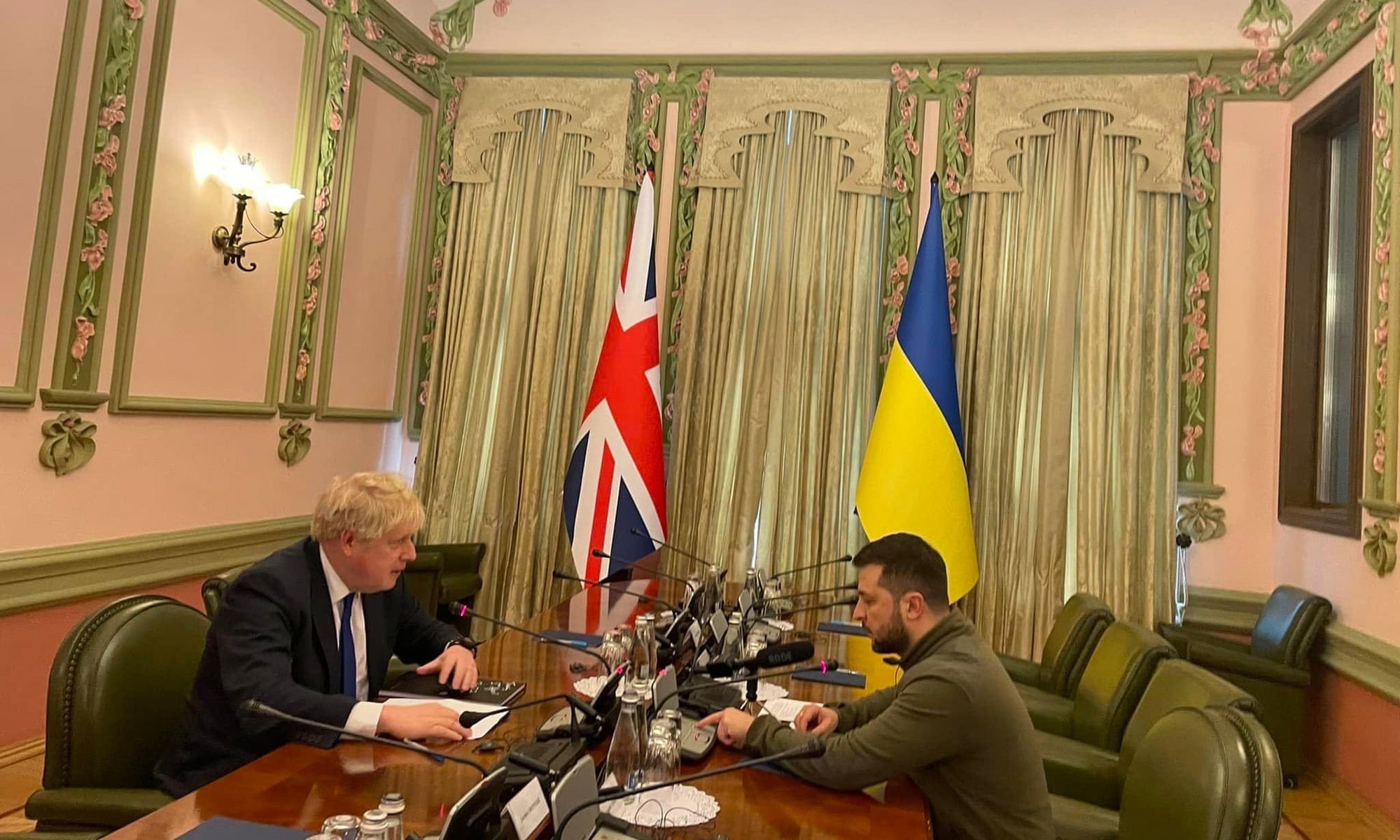
We have developed a sense that we have absorbed what happened in Ukraine into ourselves, and that remains. I meet quite a lot of British politicians in Kyiv — it is probably the only place where I see Boris Johnson at all; he is here constantly.
During one interview with Zelenskyy, I asked him, “Do you miss Boris Johnson?” Zelenskyy smiled and replied, “I can’t miss him. He’s always here.” A wonderful answer!
But Ukraine is also supported by politicians on the left — the ruling Labour Party, the Liberal Democrats and the Scottish National Party. In Britain, this is not a matter of domestic political confrontation, and the people who support Russia are mostly limited to some representatives of the far left or far right.
When it comes to Russian influence, however, the picture is less optimistic. Britain understands what Russia is, but over a series of grim episodes it failed to respond adequately to Putin’s actions. In 2006, Alexander Litvinenko was poisoned in London. Later, an attempt was made to kill Sergei Skripal, and a British woman was killed. There was the war in Georgia, the annexation of Crimea and the full-scale invasion. Britain’s response was formulaic: expel a few diplomats, and that was it. Only in the last few years has our position become tougher.
It also matters that 15 years ago we allowed former KGB officer Alexander Lebedev to acquire several of our newspapers, Boris Johnson made his son Evgeny a member of the House of Lords, and Roman Abramovich was allowed to buy Chelsea. A number of British prime ministers believed they could condemn Russia politically while doing business with it, without understanding that Moscow was using those investments as soft power. It was a mistaken strategy.
You mentioned Boris Johnson. How do you explain to British audiences the admiration Ukrainians have for him? In Britain he is very unpopular because of numerous scandals, whereas in Ukraine he is perceived very differently.
I talk about it with humor because we don’t understand it ourselves. I even suggested to Ukrainian friends: let’s give you Boris Johnson, and you give us some Carpathian honey, tincture or a few poets.
I have to explain to Britons that in Ukraine there was a croissant with white icing named after Johnson, and in central Kyiv you could see a painting of him depicted as a Cossack with a lute.
Seriously, Johnson was a terrible prime minister for Britain, but when it came to Ukraine, he did everything right. In spring 2022, when most countries thought Ukraine would lose, he spoke about victory and the need for resistance, while Britain supplied anti-tank weapons.
He also comes to Kyiv because it is probably the only place where people still want to take selfies with him and laugh at his jokes, which everyone in Britain has long grown tired of. Here he receives a kind of love he has not had at home for a long time.
We were talking about Boris Johnson, and there is this point: it is easy for people to become fascinated by a leader when they do not know much about that country’s domestic politics. There is a certain fascination with Volodymyr Zelenskyy, especially among Americans. You have interviewed him at different points. How do you see his path now, taking his mistakes into account? What are your personal impressions of dealing with him?
It seems to me that there are two Zelenskyys. There is Zelenskyy for the international audience — the one Americans, Britons and Europeans know well. He is genuinely popular and well regarded. He has a special charisma and star quality.
I interviewed him in London in June, and the last time I saw him was quite recently, when Keir Starmer came to Kyiv. Zelenskyy is witty, charismatic, easy to talk to, looks you directly in the eye and actually answers questions.
We were talking and I asked him, “You have a good relationship with King Charles. What did he tell you?” And Zelenskyy replied, “I can’t tell you that, but he helps us. He spoke about Ukraine with Donald Trump — the King is one of the few people Trump respects.”
At first I thought, “This is a front-page story!” and then, “My God, he actually answered the question.” I noticed that if I want to find out what is happening in talks between the British prime minister and the Ukrainian president, there is no point asking the British — they are incredibly reserved and will tell you nothing. But talk to people around Zelenskyy and they will tell you everything. For a journalist, it is almost a dream.
But there is another Zelenskyy — in domestic Ukrainian politics. One of the issues I have been writing about for a long time is his growing unpopularity inside the country. In my view, this is caused by strange personnel decisions, including the dismissal of Fedorov.
It feels as though there is a struggle within Ukraine over what kind of country it will be. The people you speak to in the square in front of the Franko Theatre want to see Ukraine as progressive, European, democratic, pluralistic and modern.
But there are people on Bankova Street who lean toward the old, Soviet-style clan model: decisions are whispered in someone’s ear, deals are made behind closed doors, and certain people enrich themselves through schemes. This constantly pulls the country backward.
In other words, young people are trying to push Ukraine forward, while shadowy players are trying to pull it back. I would bet on the young people — if only because they are younger. And every corruption scandal is also extremely uncomfortable for Zelenskyy internationally and harms Ukraine’s ability to wage the war.
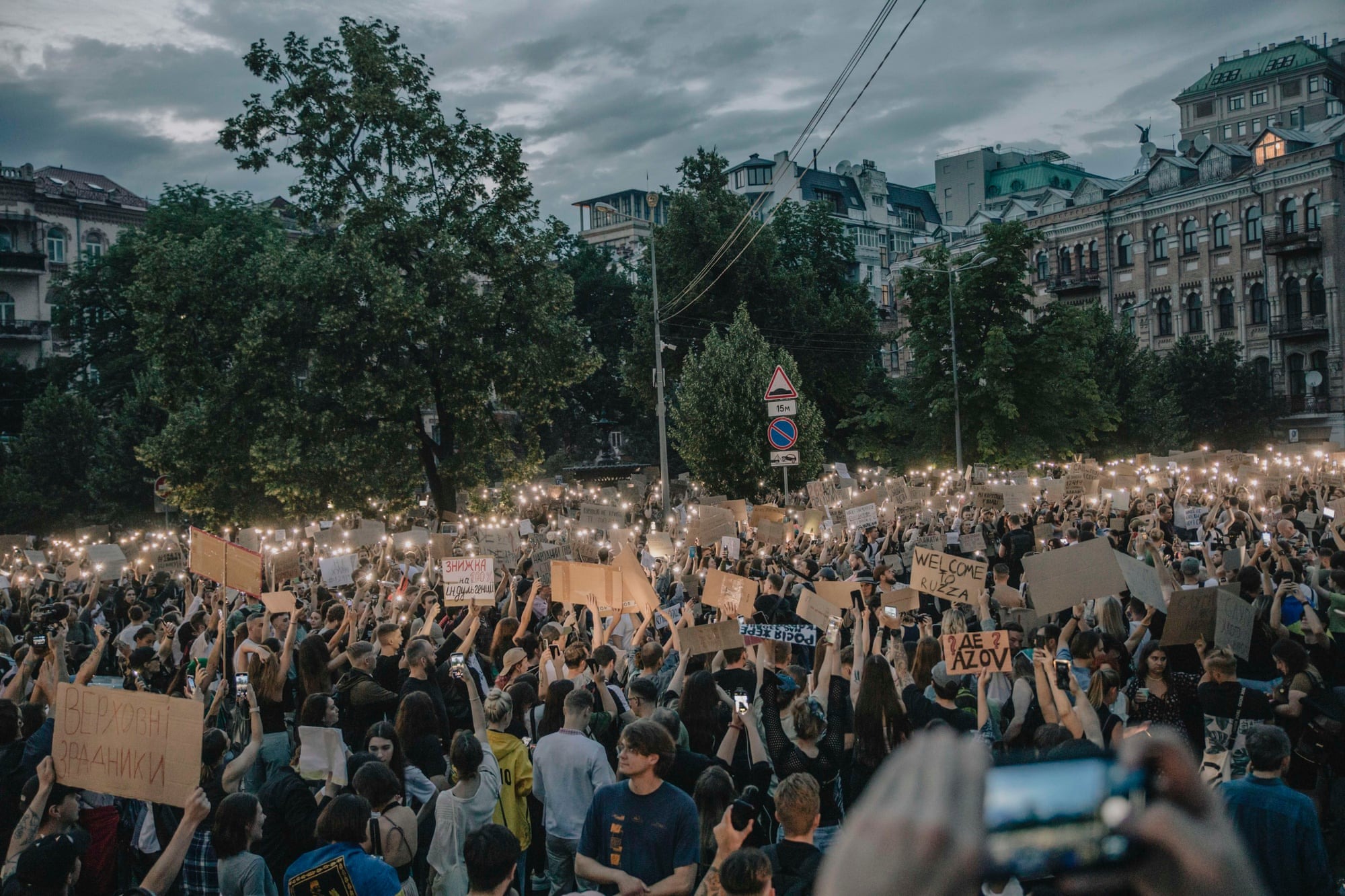
Let me sum it up this way: in Ukraine, everything has an expiration date — and it seems that many people in politics have one too. Finally, on defense: does Britain really understand the need to change its defense policy in light of Russia’s war against Ukraine?
It is a Schrödinger-style answer: both yes and no.
At the conceptual level, they understand everything. They understand that Russia poses an existential threat to European democracies and especially to Britain. They also understand that the war is spreading into Europe — through damage to undersea cables in the Baltic Sea, drone attacks on Poland, Russian bombs at Leipzig airport and attacks on infrastructure.
But what they do not want to say to British society is: “Because of the threat from Russia, we will have to spend more on defense and less on healthcare, education or culture.”
There is a debate about raising defense spending to 3% or 3.5% of GDP. Keir Starmer hesitated over this for a long time, while Andy Burnham promised to do it but did not.
We are still far too complacent. I fear that it will take some kind of “provocation” from Russia for everyone finally to wake up and start acting.
Luke, thank you so much! It was a great pleasure to talk to you. I would like the word “betrayal” never to be the whole story for Ukraine, but only part of it. Here we always have “betrayal” and “victory”, so let us wish victory for all of us.
My book ends on an optimistic note. The last few words are about Zelenskyy: “He had cards in his hand. He had cards.” Because he really does have cards. And Ukraine certainly has them too.