First Russia drops bombs on their homes, then on the care facilities where they find refuge: how older people endure the war
Every second civilian killed and every third civilian injured in Russia’s attacks on Ukraine is an older person, according to the 2024 report of the UN Office of the High Commissioner for Human Rights. Although people over 60 make up 25% of Ukraine’s population, they represent a disproportionately high share of the dead and wounded. This is because older people often lack the physical ability and the financial means to relocate to safer areas. And when they do decide to leave, the care homes where they seek refuge also become targets for Russian forces.
The team of the Public Interest Journalism Lab visited several geriatric institutions in Ukraine and saw how Russian attacks have changed the lives of their residents.


Sumy. “We lived like one family”
On 19 September 2024, Russian forces struck a geriatric care home in the city of Sumy.
A 78-year-old woman was killed and 12 people were injured. The strike occurred in the afternoon, when residents were resting in their rooms.
Most residents survived only because the bomb hit a residential wing, pierced the walls, and exploded outside the building. At the moment of the strike, there were 221 residents and 60 staff members inside. The residents were older people, most over 80, many with disabilities, unable to walk on their own.
Next to the geriatric facility were a children’s hospital, a cardiology center, and an adult hospital. The Prosecutor’s Office launched a pre-trial investigation into violations of the laws and customs of war combined with intentional murder.

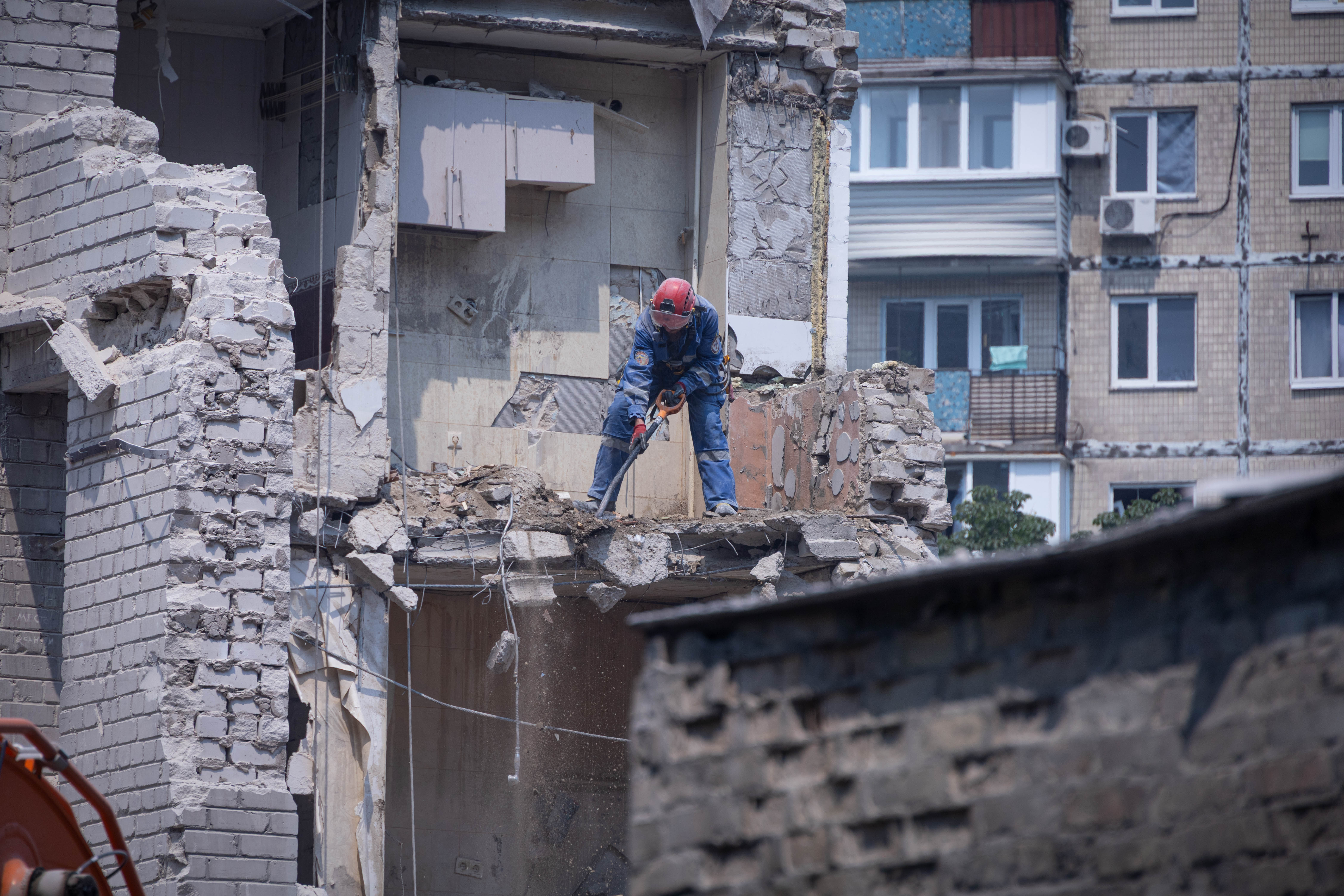
The rescue operation lasted more than five hours. Emergency workers carried residents out in their arms. Rescuers feared a repeat strike, since Russia repeatedly uses in Ukraine the tactic banned by international humanitarian law — double strikes, when the same site is targeted twice in one day. During the second strike, rescue workers are usually the ones who die.
Doctors quickly transported the injured to hospitals and then evacuated them to geriatric institutions in five regions of Ukraine. The evacuation happened quickly, and residents had no chance to take personal belongings or say goodbye to neighbors they had lived with for years.
Older people did not want to be separated. The idea of ending up in unfamiliar places, far from relatives, frightened them. Many asked when they would be able to return home.
“The care home in Sumy was their home,” says the facility’s psychologist, Olha Borshchenko. “We all lived like one family.”
What is happening to geriatric institutions across Ukraine
It is impossible to relocate two hundred residents of one care home together into a single new institution. After 12 years of Russian aggression, Ukraine no longer has facilities large enough; the ones that still operate are overcrowded. Older people evacuated from frontline zones are constantly being moved into them.
Over the three years of Russia's full-scale invasion, 55 geriatric and psychoneurological institutions have been evacuated, with six thousand residents with disabilities and older people relocated, according to the National Social Service of Ukraine in a response to a request from the Public Interest Journalism Lab, which has been documenting war crimes since the beginning of the full-scale invasion. The institutions were evacuated from ten regions under constant shelling to safer areas.
.jpg)
It will also be impossible to restore the care home in Sumy before the war ends. The city is 32 kilometers from the Russian border and is frequently attacked by drones, missiles, and aerial bombs. In 2022, explosions occurred nearby, but the building did not sustain severe damage, and residents refused evacuation to avoid being separated.
Older people are the most vulnerable category of civilians
The first recorded attack on a geriatric institution in Ukraine took place in 2015, when a care home for elderly people in Luhansk region was shelled with Grad multiple-launch rocket systems. The attack came from the Russian-occupied city of Luhansk. Since the full-scale invasion began, attacks on care homes have intensified.
The worst incident in 12 years of war occurred during the second week of the full-scale invasion.
In the town of Kreminna, Luhansk region, Russian forces shot a care home at point-blank range with a tank, killing 80% of its residents.
According to the head of the Luhansk Regional Military Administration, Serhiy Haidai, 56 people died. These figures were later confirmed by the Office of the Prosecutor General of Ukraine and by the US Embassy in Ukraine, which stated:
“The world sees everything. Russia will be held accountable.”
According to the UN Human Rights Office report, 574 civilians were killed and 3,082 injured in Ukraine in 2024. Every second person killed and every third person injured was over the age of 60. The report states that although people over 60 represent only a quarter of Ukraine’s population, they make up a disproportionately large share of casualties. This is because older adults lack the strength and resources to relocate to safer areas.

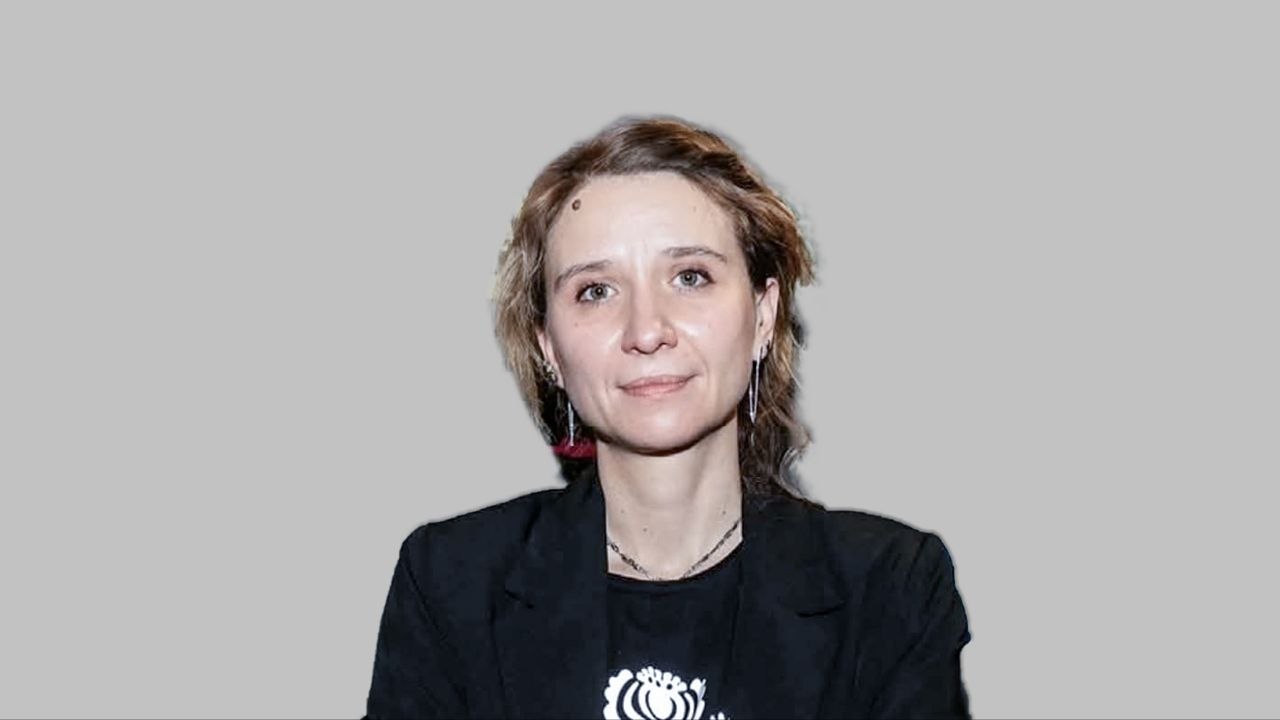
Geriatric institutions become a lifeline for them — places where they find shelter when their homes are destroyed or when they must flee shelling. Yet systematic attacks on such institutions deprive them even of this refuge, explains Anna Mykytenko, an international humanitarian law expert at the Public Interest Journalism Lab.In April 2025, Mykytenko prepared a submission to the UN Independent Expert on the enjoyment of all human rights by older persons. The document included testimonies of 85-year-old Mykola Povieshchenko and 93-year-old Roman Bondarenko, who lived in the Sumy care home and were interviewed by the PIJL team. Ten years earlier they had fled Russian-occupied Donetsk and Luhansk regions — their homes were destroyed by artillery, they opposed occupation, and they feared political persecution. They then lived in the Sumy care home for a decade until it, too, was destroyed by Russian forces.

Part of the Sumy residents were evacuated to a care home in Kyiv, which had also been damaged by shelling in 2022. It has since reopened and is now receiving older people from occupied or heavily shelled areas of Kharkiv, Donetsk, Luhansk regions and Crimea.
In 2022, 81-year-old Valentyna Anufriieva was brought to the Sumy institution after her house was bombed during the Russian advance on Sumy region. She enjoyed living in Sumy — she made new friends, attended folk singing classes, painted and made collages with others until the attack happened. After being evacuated to another care home, she can no longer see her family. Neither Valentyna nor her relatives have the money for long-distance travel.

Transporting older people long distances takes a serious toll on their remaining health. 90-year-old Lidiia Bilyk, who was taken to Kyiv after the Sumy care home was attacked, never made it to her husband. During evacuation, the couple was accidentally sent to different cities. Lidiia had dementia and was unable to walk. Volodymyr, 87, had lost his sight years earlier. He fought to have her transferred to him but didn’t make it in time. He learned about her death by phone. Lidiia was buried in Sumy, and Volodymyr arranged a place next to her for his own burial.